All guides

Author: MarketDeals Editorial

  • Social Media Policy: Complete 2026 Guide for Businesses

    Social Media Policy: Complete 2026 Guide for Businesses

    Every organization that maintains a digital presence needs clear rules governing how employees, partners, and stakeholders represent the brand online. A comprehensive social media policy protects your reputation, ensures legal compliance, and empowers your team to engage authentically while avoiding costly mistakes. Whether you manage a startup's single account or oversee enterprise-level social strategies, establishing written guidelines for online conduct has become a business necessity in 2026. Companies investing in social media marketing to build followers and engagement need especially clear policies to protect their growing digital assets.

    Why Your Organization Needs a Social Media Policy

    Organizations face unprecedented scrutiny for everything published under their name. A single poorly worded tweet, an unauthorized endorsement, or confidential information shared in a LinkedIn update can trigger legal action, regulatory fines, or permanent brand damage.

    Key risks a policy mitigates:

    • Disclosure violations and FTC enforcement actions
    • Data privacy breaches under GDPR, CCPA, and similar regulations
    • Copyright and trademark infringement claims
    • Defamation lawsuits from employees or third parties
    • Loss of trade secrets through accidental exposure
    • Discrimination or harassment complaints stemming from social posts

    According to Pew Research Center data on social media use, approximately 72% of American adults actively use at least one social platform. This ubiquity means your employees, contractors, and partners are constantly online, making informal statements that can be attributed to your organization. Clear written guidelines establish expectations before problems emerge.

    Legal and Regulatory Requirements

    Multiple regulatory frameworks now impose specific social media obligations on businesses. The Federal Trade Commission requires clear disclosure of material connections when employees endorse products, discuss partnerships, or promote your services online. Failure to properly disclose these relationships can result in fines exceeding $50,000 per violation in 2026.

    Financial services firms, healthcare providers, and government agencies face additional sector-specific requirements. FINRA, HIPAA, and Freedom of Information Act obligations all extend into social media communications, requiring specialized policy language beyond general corporate guidelines.

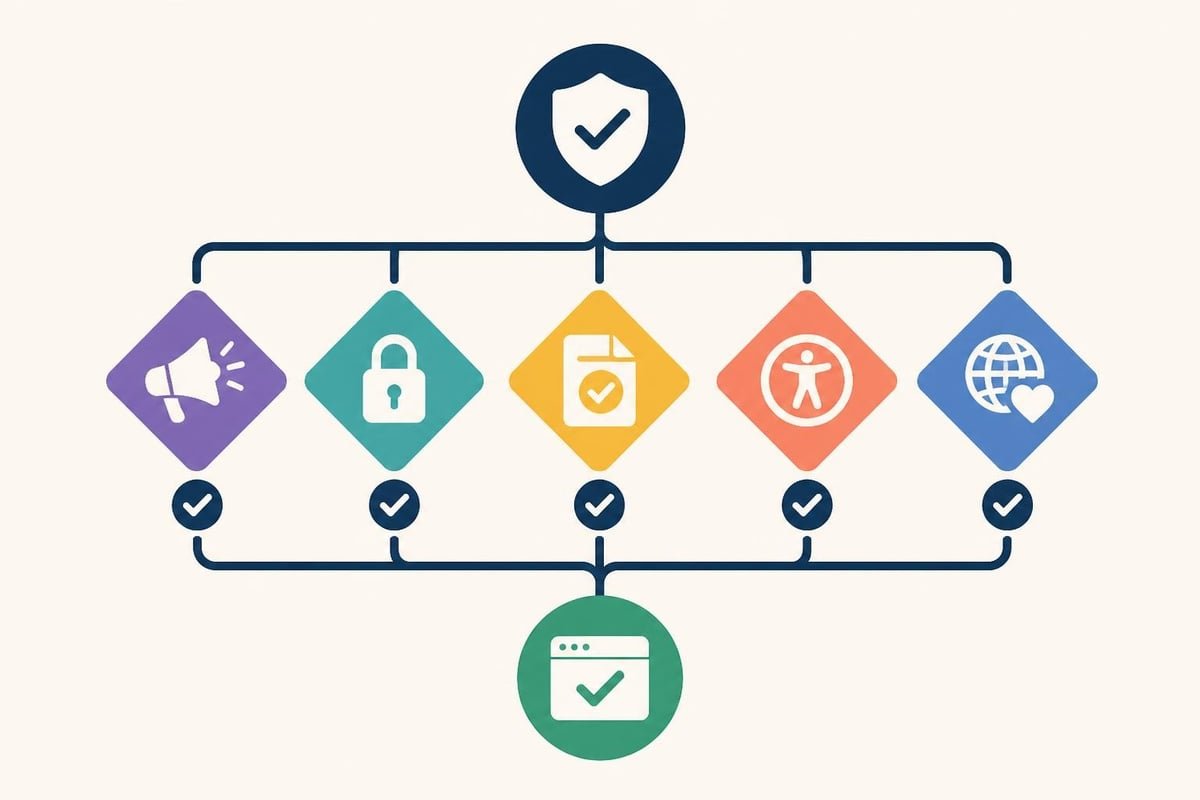
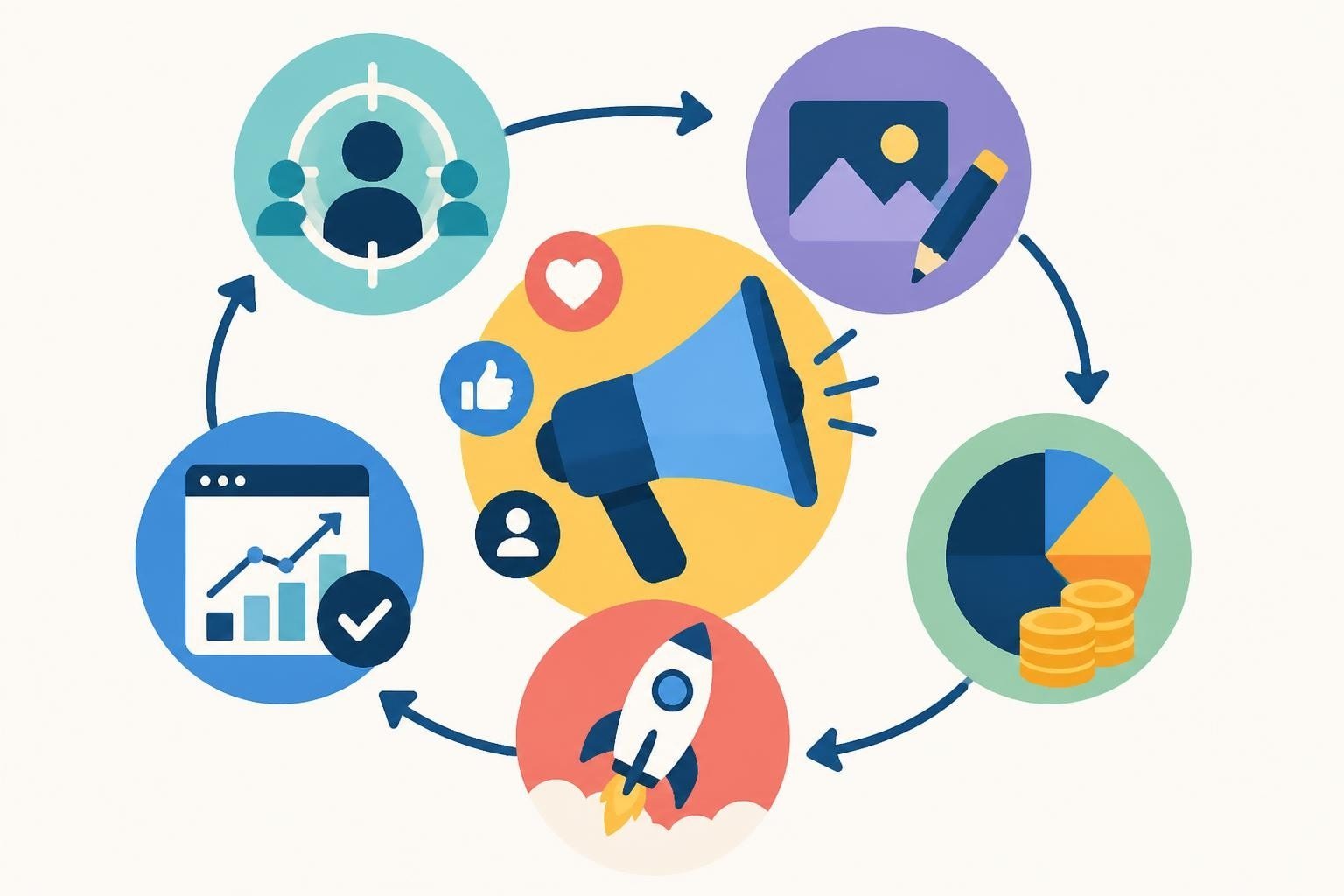
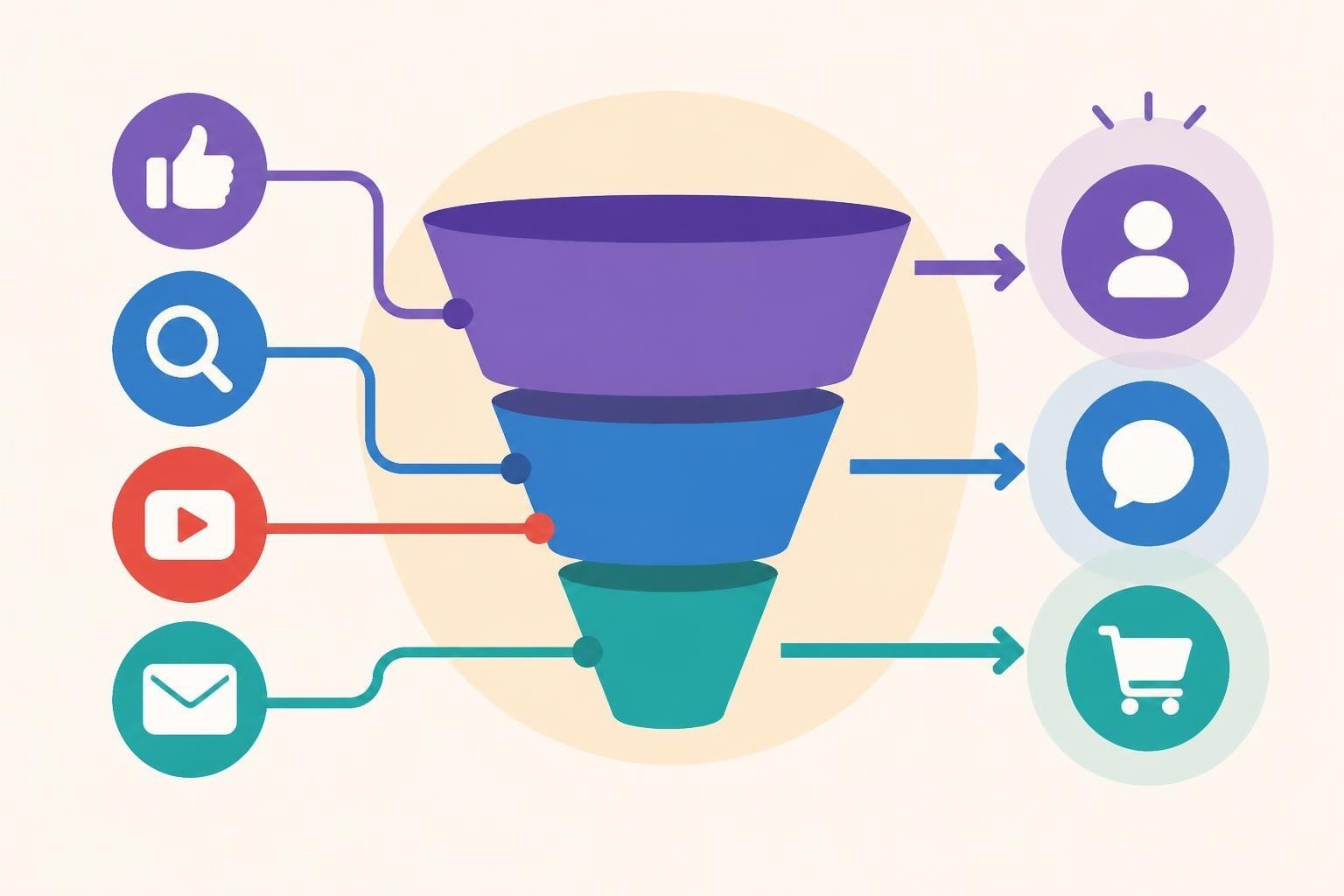
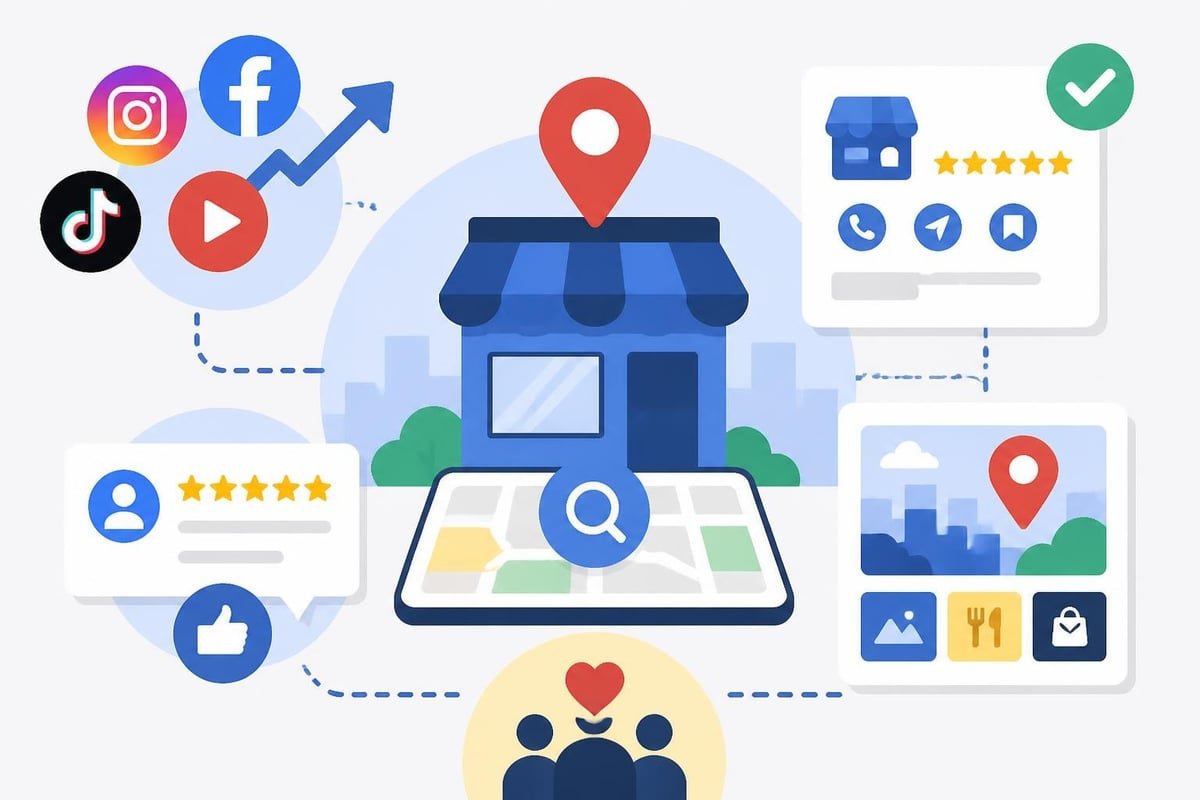
    Framework connecting policy elements

    Essential Components of an Effective Social Media Policy

    Your social media policy should function as both a protective framework and an enablement tool. Structure it to answer the practical questions employees encounter daily while establishing clear boundaries around prohibited conduct.

    Personal vs. Professional Account Guidance

    Most employees maintain personal social profiles separate from official company accounts. Your policy must address both contexts without overreaching into protected personal expression.

    For personal accounts, specify:

    • Required disclaimers when discussing work-related topics ("Opinions are my own")
    • Prohibitions on sharing confidential business information
    • Standards for respectful discussion even in personal capacity
    • Guidance on mentioning the company name or associating with the brand
    • Rules about posting during work hours using company devices

    For official company accounts, define:

    • Who is authorized to post and under what approval process
    • Brand voice, tone, and visual identity standards
    • Required legal reviews for specific content types
    • Crisis communication protocols and chain of command
    • Archiving and record retention requirements

    The SHRM social media policy template provides practical HR-focused language that balances employee rights with organizational protection. Adapt their framework to your specific industry and risk profile rather than copying it verbatim.

    Content Guidelines and Brand Standards

    Consistency across channels builds trust and recognition. Your policy should translate your brand style guide into social-specific rules.

    Content Type Policy Requirements Approval Needed
    Product announcements Legal review, fact-checking, trademark compliance Marketing director
    Customer testimonials Written consent, FTC disclosure, accurate attribution Compliance team
    Industry commentary Factual accuracy, source citation, respectful tone Department head
    Employee spotlights Written consent, photo rights, privacy considerations HR and subject
    Crisis responses Coordinated messaging, legal review, executive approval Crisis team

    Define what constitutes "confidential information" explicitly. Revenue figures, unreleased product details, customer lists, strategic plans, and personnel matters typically fall under this category. Employees need concrete examples to make real-time judgment calls.

    Platform-Specific Rules

    Different platforms carry different risks and serve different purposes. Your policy should acknowledge these distinctions rather than applying one-size-fits-all rules.

    LinkedIn posts from executives may be encouraged for thought leadership, while the same individuals should avoid political commentary on Twitter. Instagram Stories from your retail location might showcase daily operations, while Facebook requires more formal, approved content. TikTok's younger demographic may demand different tone and approach than your LinkedIn presence.

    Address emerging platforms explicitly. When new social networks gain traction, employees shouldn't have to guess whether existing policies apply. Include language like "These guidelines apply to all current and future social platforms, including but not limited to…" with a mechanism for adding platform-specific addenda.

    Compliance and Disclosure Requirements

    Regulatory compliance forms the foundation of any defensible social media policy. Multiple agencies now enforce social media conduct, with penalties increasing substantially in recent years.

    FTC Endorsement and Disclosure Rules

    The Federal Trade Commission's updated guidance requires "clear and conspicuous" disclosure whenever material connections exist between your organization and the person making a recommendation. This applies to employees, contractors, influencers, and anyone receiving compensation or free products in exchange for social mentions.

    Required disclosures for:

    • Employee posts about company products or services
    • Sponsored content, paid partnerships, and affiliate relationships
    • Posts by influencers or brand ambassadors receiving compensation
    • Reviews by individuals who received free products
    • Expert endorsements from paid consultants or advisors

    Disclosure must appear before the "more" button on platforms that truncate content. Hashtags like #ad or #sponsored alone may not suffice if they're buried among many other hashtags. The FTC expects language a reasonable consumer would notice and understand.

    Data Protection and Privacy Considerations

    Social media policies intersect directly with data protection regulations. When employees discuss customers, share user-generated content, or respond to public inquiries, they process personal data subject to privacy law.

    The UK Information Commissioner’s Office social media policy guidance addresses these intersections comprehensively, covering how to handle personal data in social contexts, respond to subject access requests received via social channels, and maintain compliance with data protection principles when engaging audiences online.

    Privacy policy requirements:

    • Never post customer information without explicit written consent
    • Blur or redact personal details from screenshots and photos
    • Obtain model releases before posting recognizable images
    • Establish processes for deletion requests received via social channels
    • Maintain separate documentation of consent for different uses
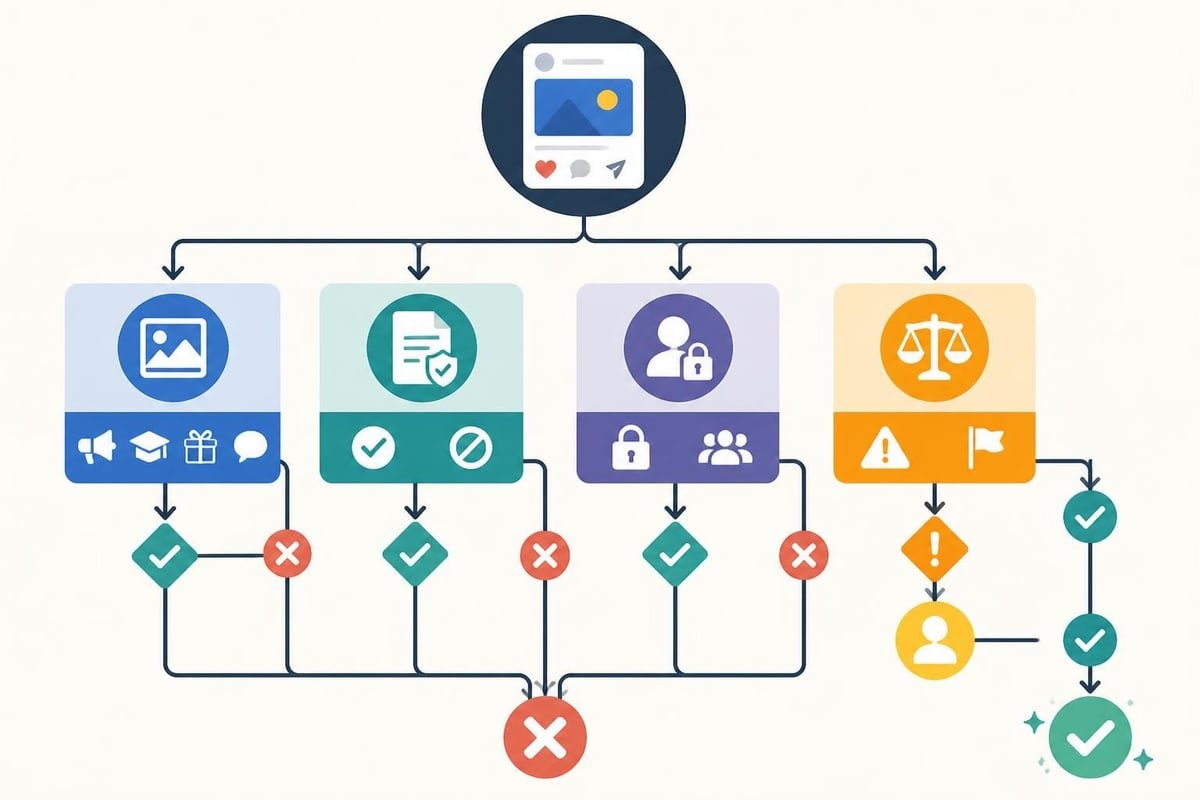
    Compliance workflow

    Security and Access Control

    NIST cybersecurity guidance includes specific controls for social media use within organizational risk management frameworks. Treat social media credentials with the same security rigor as other business systems.

    Implement these security requirements:

    1. Unique credentials for each authorized user (no shared passwords)
    2. Multi-factor authentication on all business accounts
    3. Immediate credential revocation when employees leave or change roles
    4. Regular access audits to remove dormant authorizations
    5. Encrypted storage of login credentials using password management tools
    6. Logging and monitoring of all posts for forensic purposes

    Social media accounts represent valuable digital assets. An Instagram account with 500,000 followers or a YouTube channel with established monetization carries significant financial value. Protect these assets with the same diligence you'd apply to physical property or financial accounts.

    Employee Training and Implementation

    Even the most carefully written policy fails without effective training and consistent enforcement. Employees can't comply with rules they don't understand or haven't seen.

    Onboarding and Ongoing Education

    Incorporate social media policy training into new employee onboarding. Don't simply hand new hires a PDF to sign; walk through real scenarios and explain the reasoning behind each requirement.

    Effective training includes:

    • Interactive scenarios demonstrating proper disclosure language
    • Examples of posts that violated policy and the resulting consequences
    • Platform-by-platform demonstrations of privacy settings
    • Role-specific guidance for departments with different social responsibilities
    • Regular refresher training when policies update or incidents occur

    Annual refresher training keeps the policy top-of-mind. Social platforms evolve constantly, introducing new features and changing privacy defaults. Schedule yearly updates that address emerging platforms, new regulatory requirements, and lessons learned from recent incidents.

    Research from Harvard Business Review on social media policy implementation demonstrates that organizations with regular training programs experience 60% fewer policy violations than those that treat the policy as a one-time requirement.

    Enforcement and Consequences

    Clear consequences for policy violations create accountability. Your policy should specify escalating responses based on violation severity and intent.

    Violation Type First Offense Second Offense Severe Violations
    Minor (missed disclaimer) Warning and retraining Written reprimand N/A
    Moderate (unauthorized post) Written reprimand Suspension N/A
    Serious (confidential disclosure) Suspension Termination Immediate termination
    Illegal (harassment, discrimination) Immediate termination N/A Legal action

    Document all violations and responses. This documentation protects you in wrongful termination claims and demonstrates consistent enforcement across the organization. Selective enforcement undermines the entire policy and creates legal liability.

    Monitoring and Auditing

    You can't enforce what you don't detect. Establish monitoring processes that balance employee privacy with organizational protection.

    Public posts on official company accounts should be logged automatically. Many social media management platforms include native archiving features that capture every post, edit, and deletion for compliance purposes.

    Private employee accounts present more complexity. Avoid broad social media surveillance that invades privacy or chills protected speech. Instead, respond to specific complaints or concerns, and rely on stakeholder reports when employee social media conduct becomes publicly problematic.

    Special Considerations for Different Sectors

    Industry-specific regulations often impose additional social media requirements beyond general business obligations. Tailor your policy to address your sector's unique compliance landscape.

    Healthcare and HIPAA

    Healthcare organizations must prevent unauthorized disclosure of protected health information (PHI) across all social channels. A seemingly innocent post celebrating a successful treatment could violate HIPAA if it reveals identifiable patient information.

    Healthcare social media rules:

    • Never photograph patients without written authorization specifying social use
    • Avoid sharing details that could identify individuals even without names
    • Establish separate review for any health-related claims or advice
    • Train staff to recognize indirect identifiers (rare conditions, small communities)
    • Implement immediate takedown procedures when violations occur

    The World Health Organization’s guidance on combating misinformation provides valuable frameworks for healthcare organizations navigating social media's information challenges while maintaining public trust.

    Financial Services and FINRA

    Financial services firms operate under extensive communication regulations that extend to all social media activity. FINRA requires supervision of all business communications, including social posts, with specific retention and approval requirements.

    Registered representatives can't recommend securities via social media without proper disclosures and supervisory approval. Customer testimonials must include specific disclaimers. Even "liking" a customer's positive comment about your services may constitute an endorsement requiring disclaimer language.

    Government and Public Sector

    Government agencies face unique constitutional constraints when managing social media. The ACLU’s analysis of public official social media use highlights First Amendment issues that arise when officials block constituents, delete comments, or restrict access to government social media accounts.

    Public sector policies must:

    • Preserve public comments as government records subject to FOIA
    • Establish content-neutral moderation standards
    • Avoid viewpoint discrimination when removing comments
    • Archive deleted content with documentation of removal reasons
    • Clarify personal vs. official capacity for elected officials

    Sector-specific policy additions

    Crisis Management and Reputation Protection

    Even organizations with excellent policies occasionally face social media crises. Your policy should include clear protocols for identifying, escalating, and responding to emerging problems.

    Identifying and Escalating Issues

    Define what constitutes a social media crisis for your organization. Thresholds vary by industry, size, and risk tolerance, but common triggers include:

    • High volume of negative comments or mentions within short timeframes
    • Media inquiries resulting from social media posts
    • Posts alleging illegal conduct, safety issues, or discrimination
    • Coordinated campaigns or hashtags targeting your organization
    • Viral spread of misleading information about your products or services

    Establish clear escalation paths. Frontline social media managers should know exactly who to notify when specific scenarios occur, with contact information for after-hours emergencies.

    Response Protocols

    Speed matters in crisis response, but accuracy matters more. Your policy should balance the need for quick acknowledgment with thorough fact-finding.

    Crisis response framework:

    1. Acknowledge immediately (within 1-2 hours): Confirm you're aware and investigating
    2. Investigate thoroughly (2-6 hours): Gather facts before making substantive statements
    3. Respond substantively (6-24 hours): Address the issue with accurate information
    4. Update regularly: Provide additional information as situations develop
    5. Follow through: Report resolutions and corrective actions taken

    Never delete posts or comments unless they violate clearly stated community standards (spam, harassment, illegal content). Deletions appear deceptive and often generate more controversy than the original problem.

    Updating and Maintaining Your Policy

    Social media policies require regular maintenance. Platforms change, regulations evolve, and new risks emerge constantly.

    Schedule annual comprehensive policy reviews, with interim updates as needed when:

    • New platforms gain significant user adoption
    • Regulatory agencies issue updated guidance or new requirements
    • Your organization experiences a social media incident revealing policy gaps
    • Court decisions clarify employer rights or employee protections
    • Your business model, products, or services change substantially

    Track policy version history and ensure all employees acknowledge the current version. When significant changes occur, provide supplemental training rather than assuming employees will read updated documents on their own.

    Maintain a living FAQ document that addresses common questions and edge cases that arise between formal policy updates. This helps employees navigate ambiguous situations without waiting for the next policy revision.

    Balancing Protection and Empowerment

    The most effective social media policies protect the organization without stifling authentic engagement. Overly restrictive policies that require excessive approvals for routine posts discourage social media use entirely, causing you to miss valuable opportunities for customer connection and brand building.

    Empower employees to engage authentically within clear boundaries. Provide examples of encouraged content alongside prohibited topics. Celebrate employees who exemplify good social media citizenship to model desired behavior.

    Consider tiered authorization levels. Customer service teams responding to routine inquiries need different permissions than executives sharing strategic insights or marketing teams launching campaigns. Match approval requirements to actual risk levels rather than applying uniform restrictions.

    Some organizations successfully encourage employee advocacy by providing pre-approved content libraries employees can share. This approach combines brand consistency with individual authenticity when employees add personal context to shared company updates.


    A well-crafted social media policy serves as both shield and guide, protecting your organization from avoidable risks while enabling your team to build authentic connections with your audience. By addressing legal requirements, establishing clear guidelines, providing thorough training, and maintaining regular updates, you create a framework that scales with your digital presence. Organizations building their social media reach can compare social growth providers to accelerate follower growth while maintaining the professional standards established in their social media policy.


  • Social Marketing: Strategy, Tactics & ROI for 2026

    Social Marketing: Strategy, Tactics & ROI for 2026

    Social marketing represents one of the most powerful approaches to influencing behavior and driving meaningful outcomes through social media platforms. Unlike traditional social media marketing focused purely on brand awareness or sales, social marketing applies commercial marketing principles to promote beneficial social change, public health initiatives, or community behaviors. Organizations ranging from nonprofits to government agencies and socially conscious brands use social marketing to address issues from environmental sustainability to public health compliance, leveraging the reach and targeting capabilities of platforms like Facebook, Instagram, TikTok, and YouTube.

    Understanding how to build effective social marketing campaigns requires mastery of audience segmentation, behavioral psychology, platform-specific content formats, and measurement frameworks that track real-world outcomes beyond engagement metrics. Whether you're comparing approaches through resources like social media growth services or developing campaigns from scratch, the strategic fundamentals remain consistent across contexts and platforms.

    Understanding Social Marketing Fundamentals

    Social marketing differs from commercial marketing in its primary objective: changing behaviors for social good rather than driving product purchases. The discipline emerged in the 1970s when researchers recognized that commercial marketing techniques could be adapted to promote health behaviors, environmental conservation, and social welfare initiatives.

    The core framework relies on the "4 Ps" adapted for behavioral change:

    • Product: The desired behavior or practice being promoted
    • Price: Barriers (time, effort, social cost) the audience must overcome
    • Place: Where and when the target audience can adopt the behavior
    • Promotion: Communication strategies across channels to motivate action

    Modern social marketing adds digital sophistication to this foundation. Platforms now offer unprecedented targeting precision, allowing campaigns to reach specific demographics based on interests, behaviors, location, and life events. According to recent data on Americans’ social media usage, platform adoption varies significantly by age group, making audience research essential before campaign planning.

    Audience Segmentation and Behavioral Insights

    Successful social marketing begins with deep understanding of target audiences. Rather than broad demographic categories, effective campaigns segment audiences by psychographic factors, current behaviors, readiness to change, and perceived barriers.

    The Transtheoretical Model (Stages of Change) provides a valuable framework:

    Stage Audience Mindset Marketing Approach
    Precontemplation Unaware or resistant to change Awareness content, problem education
    Contemplation Considering change, weighing pros/cons Benefits messaging, testimonials, barrier reduction
    Preparation Planning to act soon Practical how-to guides, resources, support systems
    Action Recently adopted behavior Reinforcement, troubleshooting, community building
    Maintenance Sustained behavior over time Recognition, advanced tips, relapse prevention

    Tailoring content and messaging to each stage dramatically improves campaign effectiveness. A person unaware of an issue needs different messaging than someone actively seeking implementation tools.

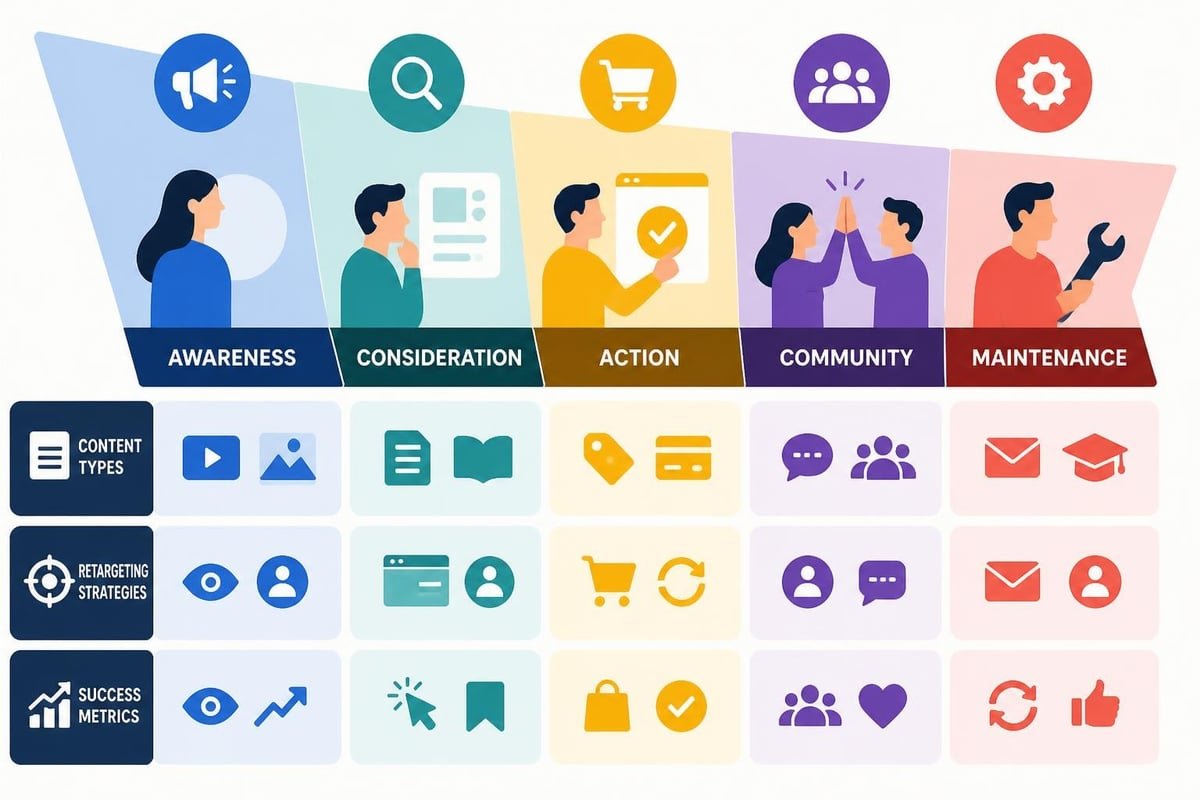
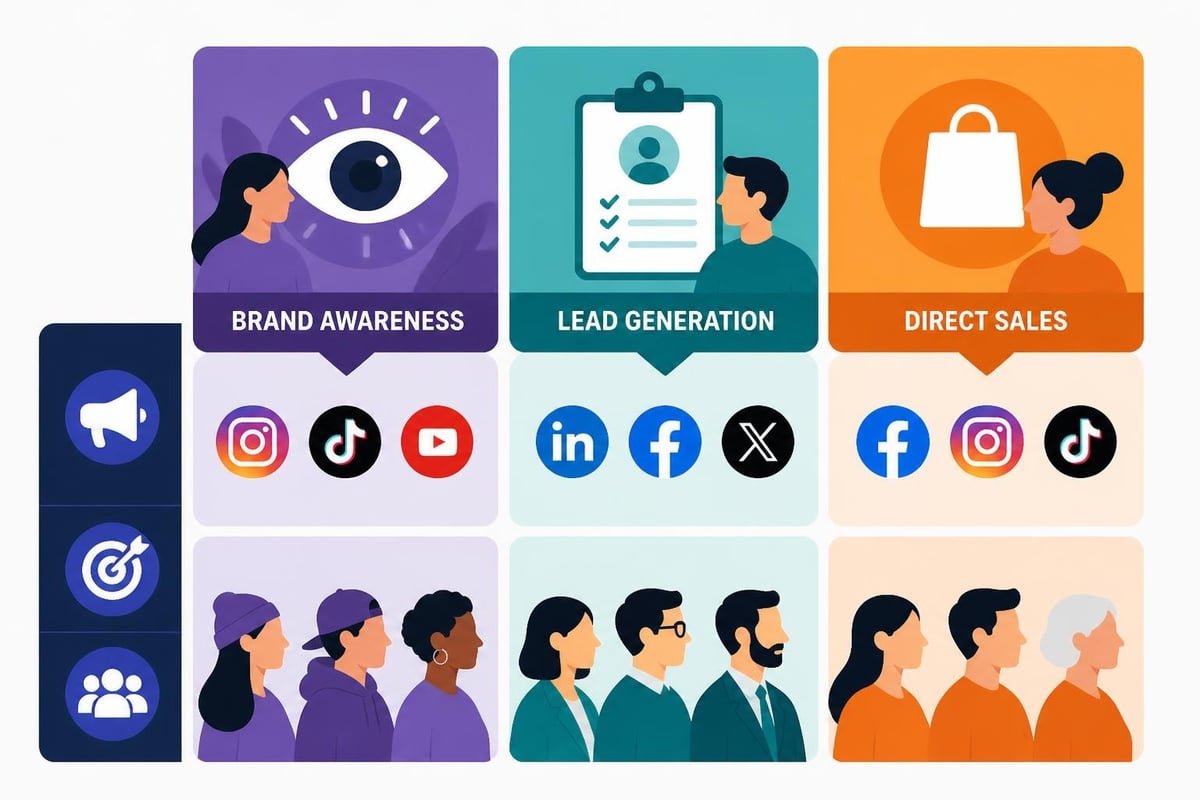
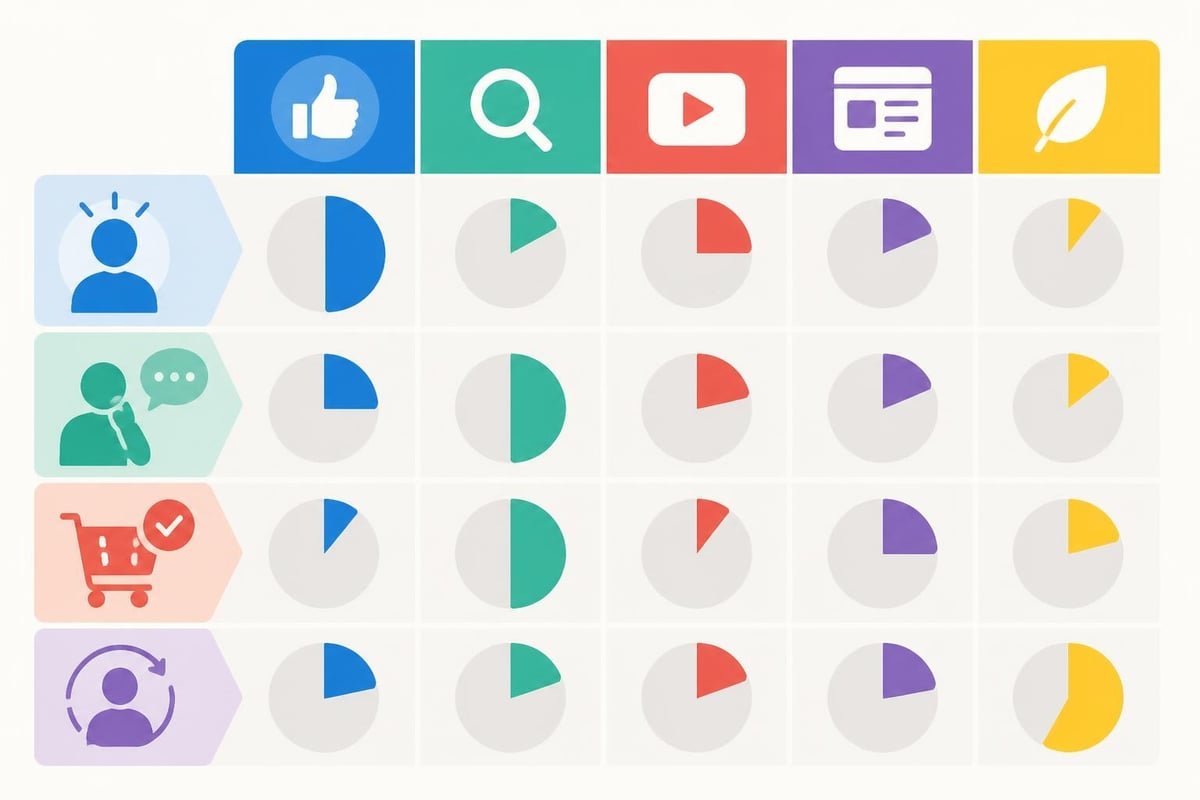
    Stages of behavior change

    Platform Selection and Content Strategy

    Choosing the right platforms forms the foundation of any social marketing campaign. Each platform attracts distinct demographics, supports specific content formats, and enables different engagement patterns. Strategic platform selection aligns with where target audiences already spend time and which formats best communicate your behavioral change message.

    Platform Demographics and Use Cases

    Platform choice should reflect both audience presence and message fit. Instagram and TikTok excel at visual storytelling and reaching younger demographics, while Facebook maintains broader age representation and sophisticated targeting for localized campaigns. YouTube dominates for educational long-form content, and LinkedIn serves professional behavioral change initiatives.

    Consider these platform strengths:

    • Facebook: Broad demographics, community building, event promotion, precise geographic targeting
    • Instagram: Visual storytelling, younger adults, lifestyle integration, Stories for daily engagement
    • TikTok: Gen Z and Millennials, short-form education, trend participation, authentic messaging
    • YouTube: In-depth tutorials, testimonials, sustained engagement, searchable evergreen content
    • LinkedIn: Professional audiences, workplace behavior change, B2B social initiatives

    Research from Think with Google on video trends shows that short-form video continues dominating attention in 2026, with audiences expecting quick, actionable content that fits mobile consumption patterns.

    Content Formats That Drive Behavior Change

    Social marketing content must do more than inform. It must motivate action by addressing emotional drivers, removing barriers, and making desired behaviors feel achievable and rewarding. The WHO’s guidance on actionable communications emphasizes creating messages that are specific, immediate, and easy to implement.

    Effective content formats include:

    1. Transformation stories: Before/after narratives showing real people achieving the desired behavior
    2. How-to tutorials: Step-by-step guides removing knowledge barriers
    3. Social proof content: Community members demonstrating widespread adoption
    4. Barrier-busting tips: Practical solutions to common obstacles
    5. Progress tracking tools: Shareable milestones that build momentum

    Video consistently outperforms static content for behavioral messaging. A 60-second clip demonstrating proper recycling techniques generates higher retention and action than an infographic with the same information. User-generated content adds authenticity that professionally produced material often lacks.

    Building Campaign Infrastructure

    Successful social marketing campaigns require more than compelling content. They need robust infrastructure including measurement frameworks, compliance protocols, partnership strategies, and optimization systems that improve performance throughout the campaign lifecycle.

    Measurement and Analytics Frameworks

    Tracking the right metrics separates effective social marketing from wasted effort. While vanity metrics like followers and likes provide surface-level feedback, behavioral change campaigns must track deeper indicators tied to actual outcomes.

    Metric Type Examples Strategic Value
    Awareness Reach, impressions, view-through rate Understanding message penetration
    Engagement Saves, shares, comments, click-through Measuring resonance and interest
    Consideration Landing page visits, resource downloads, sign-ups Tracking intent and information-gathering
    Action Behavior adoption reports, participation, commitments Measuring actual behavior change
    Maintenance Repeat engagement, community participation, peer influence Assessing sustained change

    The IAB’s measurement guidelines provide standardized definitions ensuring consistent tracking across platforms. Establishing clear measurement protocols before launch allows for meaningful optimization and ROI calculation.

    Attribution becomes particularly complex in social marketing. Unlike e-commerce where conversions happen on-platform, behavioral change often occurs offline or across extended timeframes. Multi-touch attribution models, control group comparisons, and longitudinal surveys help connect social media exposure to real-world outcomes.

    Compliance and Ethical Considerations

    Social marketing campaigns face heightened ethical responsibilities since they attempt to influence personal behaviors. Transparency, honesty, and respect for audience autonomy must guide every campaign decision.

    Key compliance areas include:

    • Disclosure requirements: When partnering with influencers or paying for promotion, follow FTC endorsement guidelines requiring clear, conspicuous disclosures
    • Data privacy: Obtain proper consent for retargeting and audience data collection under GDPR, CCPA, and platform policies
    • Truthful messaging: Avoid exaggeration, fear-mongering, or misleading claims about behavior outcomes
    • Accessibility: Ensure content includes captions, alt text, and accommodations for diverse audiences
    • Cultural sensitivity: Test messaging with target communities to avoid offense or misunderstanding

    Organizations working on sensitive topics like health behaviors or social issues should consult legal counsel and community representatives before launching campaigns.

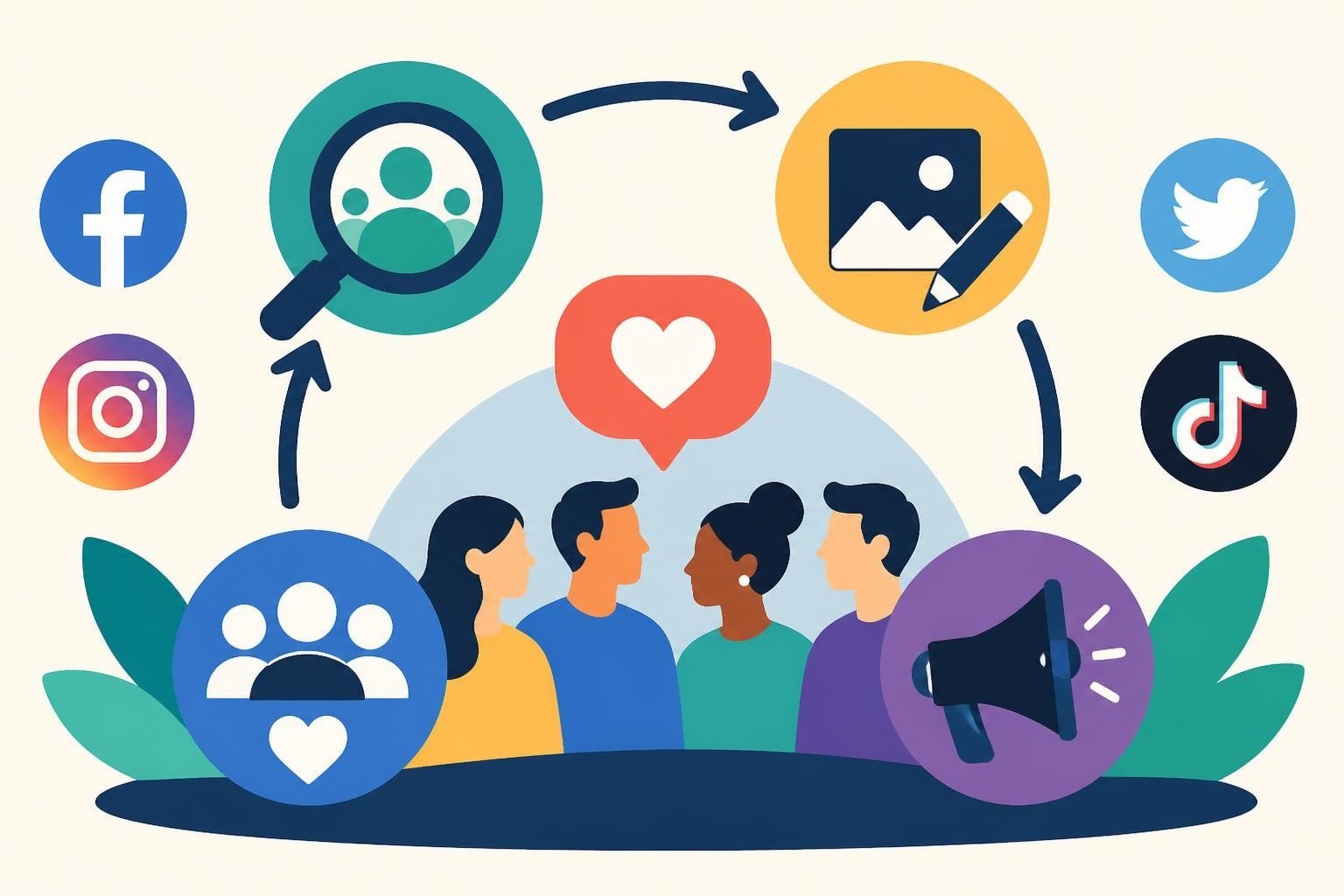
    Social marketing compliance framework

    Influencer and Creator Partnerships

    The creator economy has transformed social marketing effectiveness. Rather than brands speaking directly to audiences, partnering with trusted creators allows messages to reach communities through authentic voices with established credibility.

    Strategic Creator Selection

    Not all influencer partnerships deliver equal value in social marketing contexts. Mega-influencers with millions of followers often generate impressive reach but limited engagement. Micro-influencers (10,000-100,000 followers) and nano-influencers (1,000-10,000 followers) typically deliver higher engagement rates and stronger community trust.

    Selection criteria should prioritize:

    1. Audience alignment: Creator's followers match target demographic and psychographic profiles
    2. Authentic connection: Creator genuinely supports the cause or behavior
    3. Engagement quality: High comment rates and meaningful interactions, not just likes
    4. Content expertise: Creator produces formats (tutorials, stories, reviews) that fit campaign needs
    5. Values alignment: Creator's public positions and past content align with campaign messaging

    Harvard Business Review’s analysis of the creator economy emphasizes long-term partnerships over one-off promotions. Creators who become genuine advocates produce more authentic, effective content than those fulfilling transactional sponsorships.

    Collaboration Models and Content Co-Creation

    The most effective creator partnerships involve true collaboration rather than top-down directives. Creators understand their audiences better than brands do. Providing creative freedom within strategic guardrails typically produces better results than scripted content.

    Partnership structures include:

    • Ambassador programs: Long-term relationships where creators consistently feature the behavior
    • Challenge campaigns: Creators initiate behavior-change challenges encouraging audience participation
    • Educational series: Multi-part content co-developed with subject matter experts
    • Community takeovers: Creators moderate brand channels, bringing their audience into the conversation
    • User-generated campaigns: Creators prompt their followers to create and share their own content

    Compensation models vary from monetary payment to product donations, platform support, or revenue sharing. For social marketing campaigns, many creators appreciate opportunities to contribute to causes they care about, making mission alignment a powerful recruitment tool.

    Optimizing Campaign Performance

    Social marketing campaigns require continuous optimization based on performance data, audience feedback, and platform algorithm changes. The most successful campaigns treat launch as the beginning of an iterative improvement process rather than a finished product.

    A/B Testing and Creative Iteration

    Systematic testing reveals which messages, formats, and calls-to-action drive the strongest behavioral outcomes. Rather than guessing what will work, test variations and let data guide decisions.

    Test variables include:

    • Messaging angles: Fear-based vs. benefit-focused, individual vs. community framing
    • Visual styles: Photography vs. illustration, light vs. bold colors, minimal vs. detailed
    • Content length: 15-second vs. 60-second videos, single-image vs. carousel posts
    • Call-to-action: "Learn more" vs. "Take action today" vs. "Join the movement"
    • Posting times: Morning vs. afternoon vs. evening across different days

    Start with larger variations testing fundamentally different approaches, then narrow to optimize successful concepts. A minimum sample size of several thousand impressions per variant ensures statistical significance before drawing conclusions.

    Retargeting and Funnel Optimization

    Moving audiences from awareness to action rarely happens with single exposure. Retargeting campaigns nurture prospects through the behavior change journey, providing stage-appropriate content at each step.

    A typical social marketing funnel might include:

    1. Awareness content: Broad targeting introducing the issue and desired behavior
    2. Consideration retargeting: Showing detailed how-to content to engaged viewers
    3. Action prompting: Retargeting considerers with specific calls-to-action and barrier removal
    4. Community building: Inviting new adopters to join ongoing support groups
    5. Maintenance reinforcement: Ongoing content preventing relapse and celebrating progress

    Each funnel stage requires different creative, messaging, and frequency. Awareness content can reach cold audiences, while action prompts work best with warm audiences who've engaged with previous content. Building this infrastructure properly often involves coordinating efforts across multiple platforms and formats, which is where services that help manage social media growth can provide strategic support for scaling campaigns efficiently.

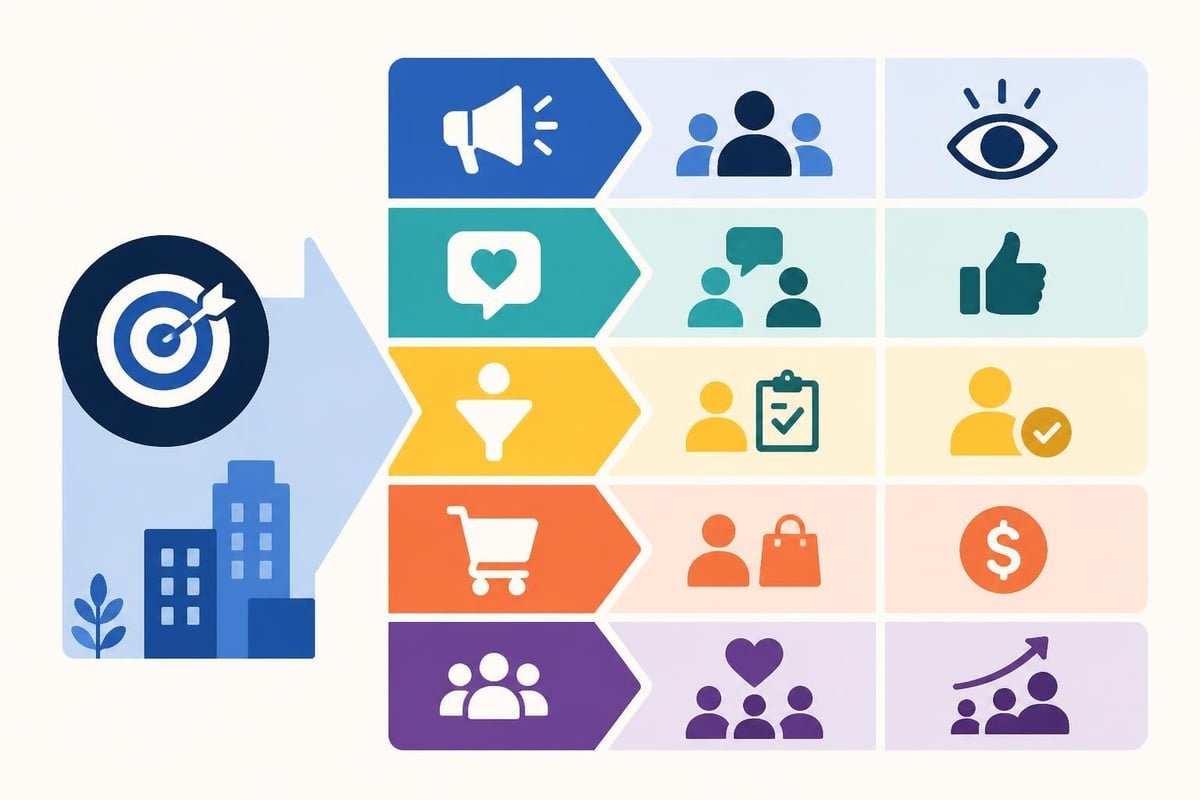
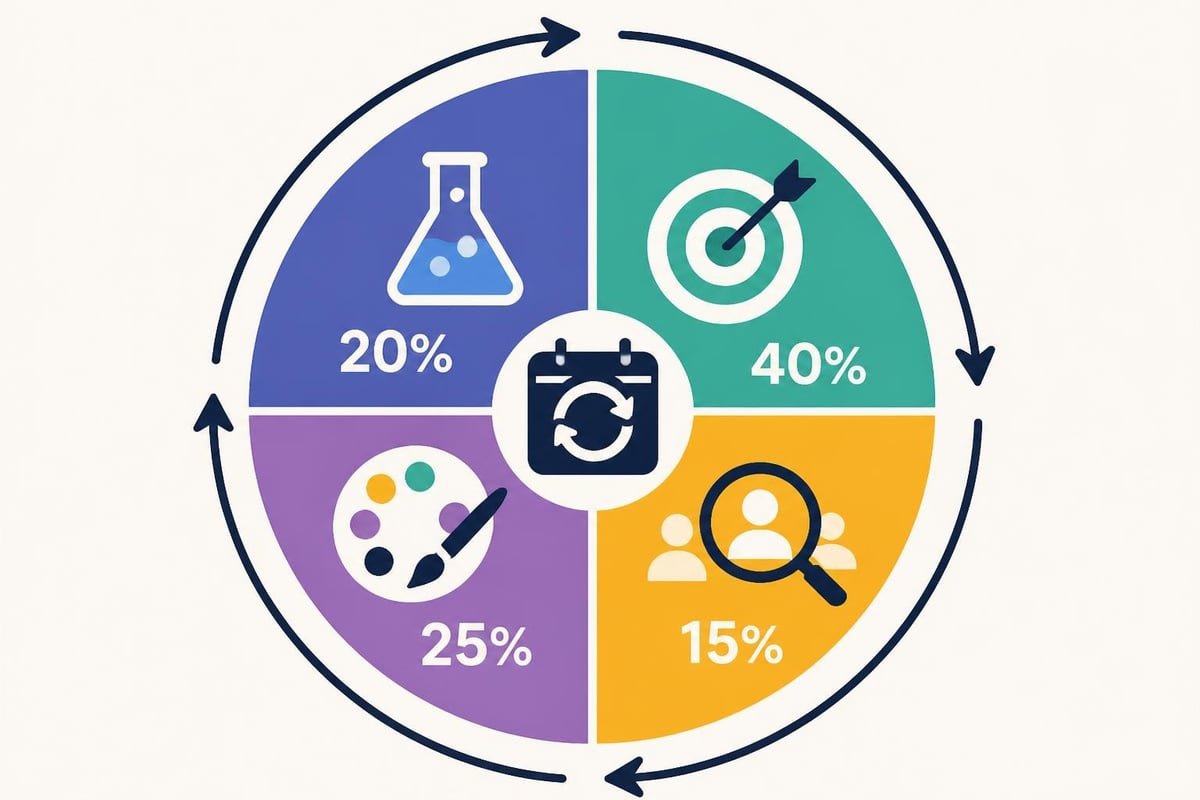
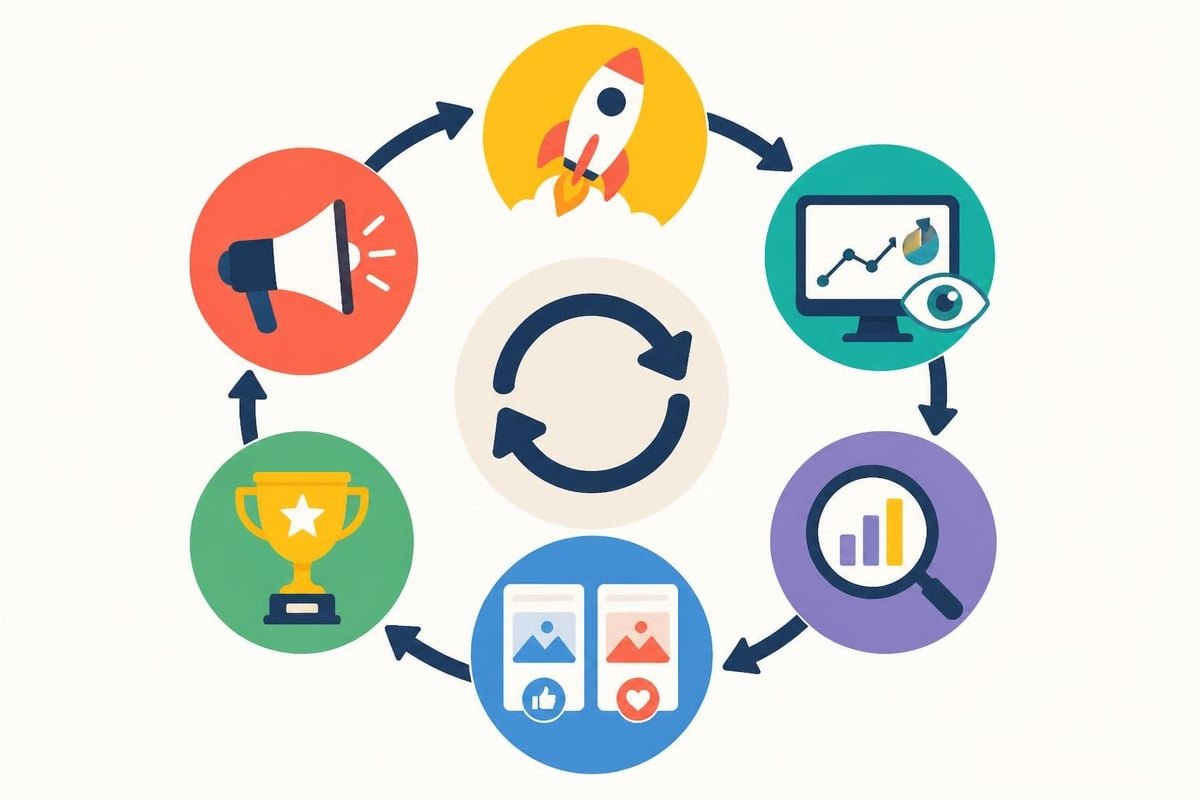
    Social marketing optimization funnel

    Budget Allocation and ROI Calculation

    Demonstrating return on investment remains challenging in social marketing since benefits often manifest as societal outcomes rather than direct revenue. Nevertheless, establishing clear budget frameworks and value calculations proves essential for securing funding and optimizing resource allocation.
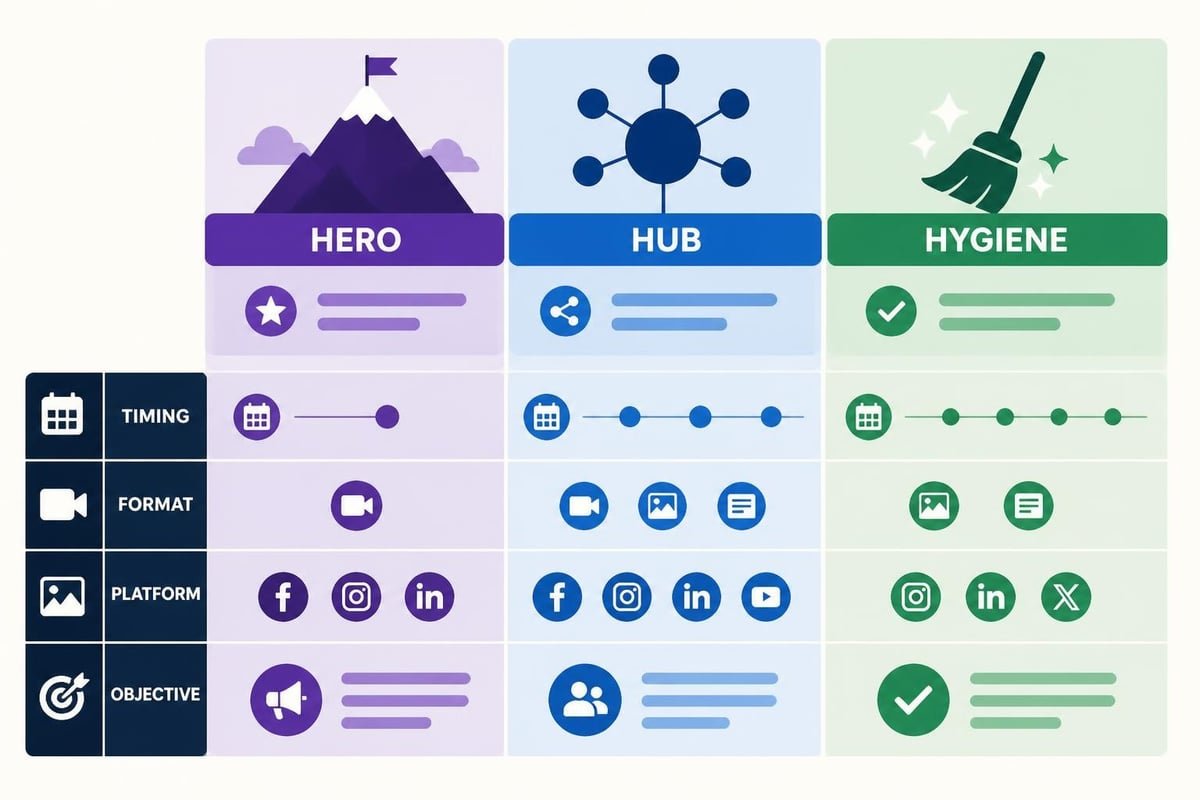
    Strategic Budget Distribution

    Social marketing budgets typically divide across several categories. The optimal allocation depends on campaign goals, platforms, and available resources, but typical distributions provide starting guidance:

    Budget Category Recommended % Purpose
    Content production 25-35% Video, graphics, photography, copywriting
    Paid media 30-40% Platform advertising, promoted posts, sponsored content
    Creator partnerships 15-25% Influencer fees, product donations, collaboration costs
    Tools and technology 5-10% Analytics software, scheduling tools, management platforms
    Research and testing 5-10% Audience research, A/B testing, performance analysis

    Smaller campaigns might allocate more heavily toward organic content and community building, while larger initiatives benefit from paid amplification to achieve necessary reach. The key is ensuring every dollar connects to measurable outcomes rather than arbitrary spending.

    Calculating Social Marketing ROI

    Traditional ROI calculations divide profit by investment. Social marketing requires adapted frameworks that quantify behavioral change value. Methods include:

    Cost per behavior change: Total campaign cost divided by number of people who adopted the desired behavior. Surveys, tracking pixels, and community reporting provide adoption data.

    Social value calculations: Assigning monetary value to outcomes (healthcare costs avoided, environmental impact reduced, productivity gained) and comparing to campaign investment.

    Comparative effectiveness: Measuring cost per outcome against alternative intervention methods (direct mail, events, traditional advertising) to demonstrate relative efficiency.

    Long-term impact modeling: Projecting sustained behavior change over time and calculating cumulative value of campaign-initiated actions.

    A public health campaign might calculate that each person adopting regular exercise through social marketing interventions generates $2,800 in lifetime healthcare savings, making a $50 cost-per-adopter extremely cost-effective.

    Emerging Trends and Future Directions

    Social marketing continues evolving as platforms introduce new features, audiences shift consumption habits, and technology enables more sophisticated targeting and measurement. Staying current with emerging trends separates cutting-edge campaigns from outdated approaches.

    Platform Evolution and New Opportunities

    Social platforms constantly experiment with new formats and features. Early adoption of emerging formats often delivers outsized reach as algorithms favor novel content types:

    • AI-powered content creation: Tools generating personalized variations at scale for different audience segments
    • Augmented reality filters: Interactive experiences that normalize desired behaviors through play
    • Social commerce integration: Removing friction between inspiration and action through in-app purchasing
    • Community-first features: Platform evolution toward closed groups and intimate sharing over public broadcasting
    • Audio and podcast integration: Growing importance of voice-based content and audio storytelling

    Short-form video continues dominating, but platforms are expanding monetization for creators, making influencer partnerships more accessible for campaigns with modest budgets. Algorithms increasingly favor content that generates saves and shares over passive views, rewarding genuinely useful information.

    Privacy Changes and Targeting Adaptations

    Platform privacy changes driven by regulation and user demand are reshaping targeting capabilities. Cookie deprecation, iOS tracking limitations, and increased data restrictions require adapted strategies:

    1. First-party data building: Creating owned audiences through email lists, community memberships, and direct relationships
    2. Contextual targeting: Placing content based on environment rather than individual tracking
    3. Broad targeting with creative testing: Allowing algorithms to find audiences while testing creative variations
    4. Privacy-compliant measurement: Implementing aggregated, anonymized tracking that respects user preferences

    These changes actually benefit social marketing by forcing focus on message quality and genuine value rather than intrusive retargeting. Campaigns built on compelling content and community building prove more sustainable than those dependent on invasive tracking.

    Integration with Broader Marketing Ecosystems

    Social marketing increasingly connects with other channels in coordinated campaigns. Email marketing, events, traditional media, and community programs reinforce social messaging, creating multiple touchpoints that improve behavior change rates.

    Coordinated campaigns might include social media driving awareness, email providing detailed implementation guides, in-person events offering hands-on support, and traditional media reaching audiences less active on digital platforms. Each channel serves specific functions within the broader behavior change strategy.

    Advanced Tactics for Behavior Change

    Beyond fundamental strategies, advanced social marketing practitioners employ sophisticated techniques drawn from behavioral economics, psychology, and persuasion science. These tactics amplify campaign effectiveness when applied ethically and strategically.

    Behavioral Science Applications

    Modern social marketing leverages decades of research on what actually motivates behavior change. Key principles include:

    Social proof and normative messaging: People adopt behaviors they perceive as common and normal. Highlighting that "7 out of 10 neighbors already recycle" proves more effective than "You should recycle."

    Loss aversion framing: Emphasizing what people lose by not acting (wasted money, missed opportunities, health risks) often motivates more strongly than equivalent gains.

    Implementation intentions: Prompting specific plans ("I will exercise Monday at 6am at the gym") dramatically increases follow-through compared to general goals.

    Commitment devices: Public pledges, signed agreements, or small initial commitments increase likelihood of sustained behavior change.

    Feedback loops: Providing visible progress tracking (steps walked, pounds lost, money saved) maintains motivation through tangible evidence of success.

    These principles should be applied ethically, enhancing genuine benefits rather than manipulating audiences into actions against their interests.

    Community Building and Peer Support

    Sustainable behavior change rarely happens in isolation. Building communities around desired behaviors creates social support, accountability, and positive reinforcement that maintains long-term adoption.

    Effective community-building tactics include:

    • Creating branded hashtags that gather adopters in searchable conversations
    • Establishing Facebook Groups or Discord servers for ongoing discussion
    • Featuring user stories and celebrating member milestones
    • Facilitating peer mentorship between experienced adopters and newcomers
    • Organizing virtual or in-person events that strengthen community bonds

    Communities transform individual behavior change into collective identity. Members maintain behaviors partly because they've become "the kind of person who does this" within a supportive social context.

    Crisis Response and Real-Time Engagement

    Social marketing campaigns must adapt to current events, platform changes, and emerging conversations. The most effective campaigns maintain flexibility to respond to opportunities and challenges as they arise.

    Real-time tactics include:

    1. Trend participation: Adapting relevant trending formats, sounds, or hashtags to campaign messaging
    2. Newsjacking: Connecting campaign themes to breaking news when authentically relevant
    3. Rapid response: Addressing misinformation or concerns that emerge in comments and discussions
    4. Seasonal alignment: Timing campaign pushes to match relevant holidays, events, or seasonal behaviors
    5. Crisis pivoting: Adjusting messaging when external events make original framing insensitive or ineffective

    Real-time engagement requires monitoring tools, clear approval processes, and team members empowered to make quick decisions within established guidelines.


    Social marketing represents a powerful methodology for driving meaningful behavior change through strategic use of social media platforms, creator partnerships, and audience-centered messaging. Success requires deep understanding of target audiences, platform-specific tactics, measurement frameworks that track real outcomes, and continuous optimization based on performance data. If you're ready to amplify your social marketing campaigns or need to scale engagement efficiently, explore Best Social Media Growth Services 2026 to compare providers on pricing, delivery speed, and platform coverage with live calculators that show exactly what results cost across different services.

  • Likes Views: What Matters for Social Media Growth in 2026

    Likes Views: What Matters for Social Media Growth in 2026

    Social media success in 2026 hinges on understanding how engagement metrics interact. Likes and views represent two distinct but complementary forms of validation that platforms use to evaluate content quality and distribute it to wider audiences. While views demonstrate reach and initial interest, likes signal active approval and stronger engagement. Together, these metrics form the foundation of social proof that influences both algorithmic promotion and human decision-making. Whether you're building a brand, launching a product, or establishing thought leadership, knowing how likes views function as a system rather than isolated numbers can transform your social media strategy.

    Understanding the Fundamental Difference Between Likes and Views

    Views measure passive consumption while likes indicate active endorsement. This distinction matters because platforms weight these signals differently when determining content quality and distribution priority.

    A view typically registers when someone scrolls past your content and it appears on their screen for a minimum threshold period. According to the Media Rating Council’s cross-media audience measurement standards, video content generally requires at least 50% of pixels in view for two continuous seconds to count as a valid impression. Different platforms apply variations of this standard, but the core principle remains consistent.

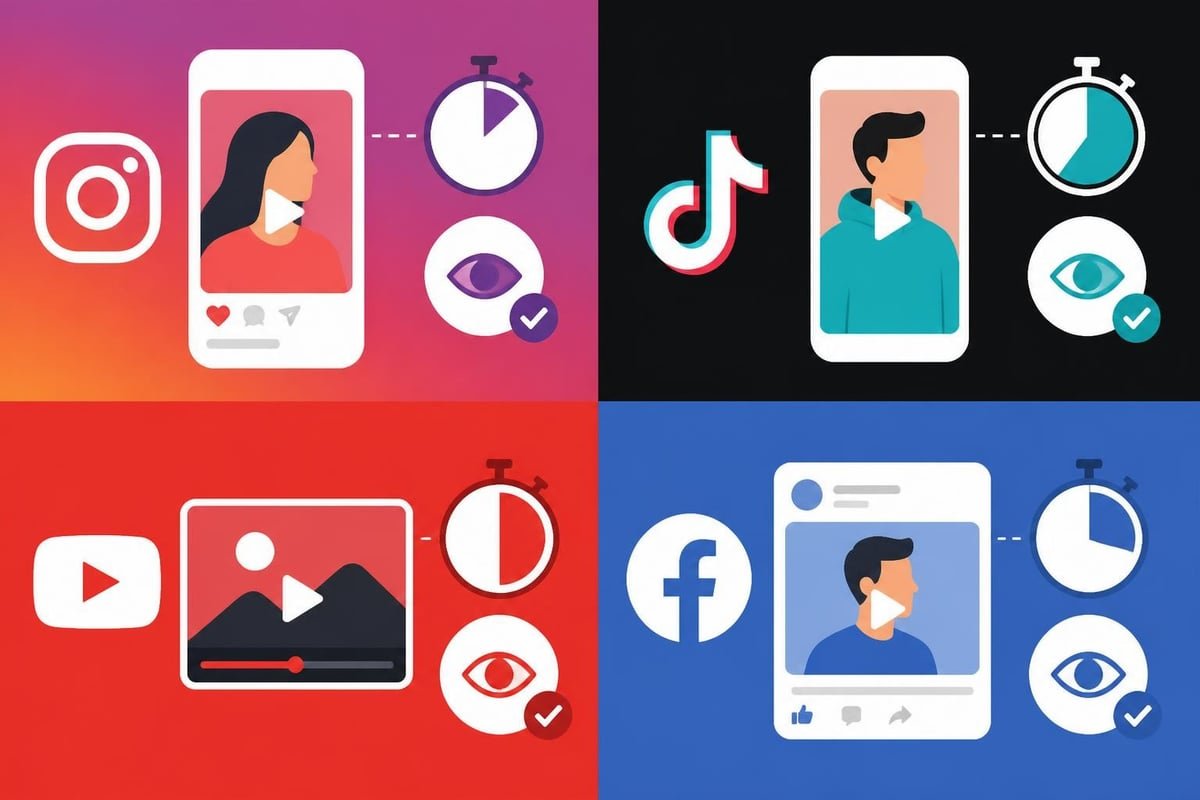
    Platform-Specific View Counting Rules

    Each social network implements its own technical thresholds for registering views:

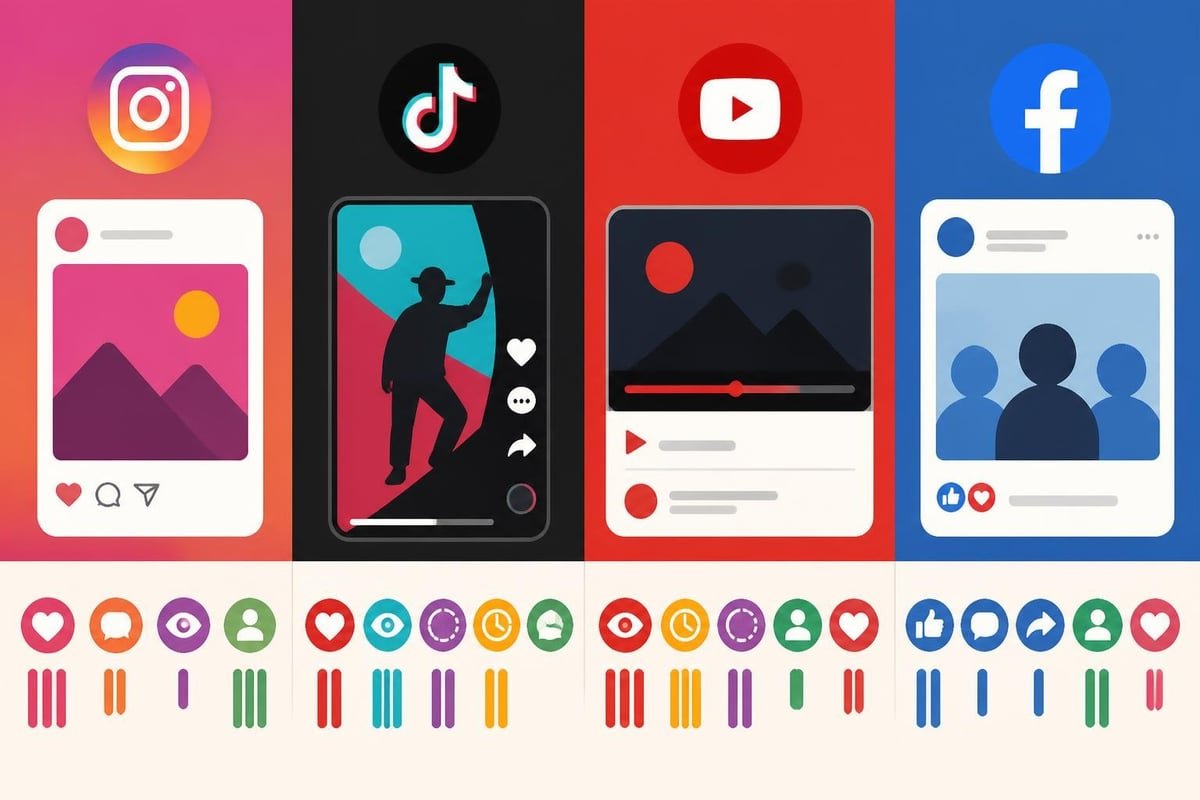
    • Instagram: Reels and videos count a view after 3 seconds of watch time
    • TikTok: Views register almost instantly when content appears on screen
    • YouTube: A view requires approximately 30 seconds of watch time
    • Facebook: Video views count after 3 seconds with at least 50% visibility

    These variations mean that view counts aren't directly comparable across platforms. A thousand TikTok views represents significantly less engagement time than a thousand YouTube views, making context essential when evaluating performance.

    Platform view counting rules

    Likes, conversely, require deliberate action. Someone must pause, process your content, and choose to tap or click an approval button. This makes likes a stronger quality signal in most algorithmic systems, even though views typically outnumber likes by substantial margins.

    How Algorithms Weight Likes Views in Content Distribution

    Modern recommendation algorithms use engagement metrics as proxy measures for content quality and relevance. The relationship between likes views serves as one input among dozens that determine whether your content reaches explore pages, for you feeds, or suggested video sections.

    The Engagement Rate Formula

    Platforms calculate engagement rate by comparing active interactions to total reach:

    Engagement Rate = (Likes + Comments + Shares) ÷ Views × 100

    Industry benchmarks for 2026 vary by platform and niche:

    Platform Average Engagement Rate Strong Performance
    TikTok 4.5% – 6.0% 8.0%+
    Instagram Reels 2.0% – 3.5% 5.0%+
    YouTube Shorts 1.5% – 2.5% 4.0%+
    Facebook Video 0.8% – 1.5% 2.5%+

    Content that maintains engagement rates above these thresholds signals to algorithms that audiences find it valuable, triggering expanded distribution. The arXiv analysis of video popularity drivers demonstrates how engagement velocity (how quickly likes accumulate relative to views) correlates even more strongly with viral success than absolute numbers.

    Velocity Versus Volume

    A video earning 1,000 likes on 10,000 views within the first hour performs better algorithmically than content reaching 5,000 likes on 50,000 views over three days. The algorithm interprets rapid engagement as strong relevance to current interests, rewarding it with immediate distribution boosts.

    This creates a critical window in the first 60-90 minutes after posting when the ratio of likes views determines whether content gains momentum or stalls. Many creators strategically time posts when their core audience is most active to maximize this early engagement velocity.

    The Psychology of Social Proof and Decision-Making

    Human psychology treats likes views as credibility markers that influence whether newcomers engage with content. Research on social validation shows that people use engagement metrics as mental shortcuts when deciding what deserves their attention.

    The PLOS ONE study on social media feedback and opinion expression found that visible engagement metrics significantly affect how people interpret content quality and whether they choose to interact. Content with higher visible engagement receives more subsequent engagement, creating a reinforcing cycle.

    The Credibility Threshold Effect

    Most users scroll past content below certain engagement thresholds without conscious consideration:

    • Videos under 1,000 views often get dismissed as unproven
    • Posts with fewer than 50 likes appear less authoritative
    • Content showing zero engagement triggers skepticism about quality

    These aren't rational calculations but instinctive filters people apply when processing hundreds of pieces of content daily. Building past these psychological thresholds requires either patience while organic growth accumulates or strategic investment to accelerate past credibility barriers.

    When evaluating options to boost initial momentum, comparing providers on delivery quality and platform-specific expertise helps ensure services deliver engagement that appears natural. You can compare social growth providers using live price calculators that show real costs across different platforms and package sizes.

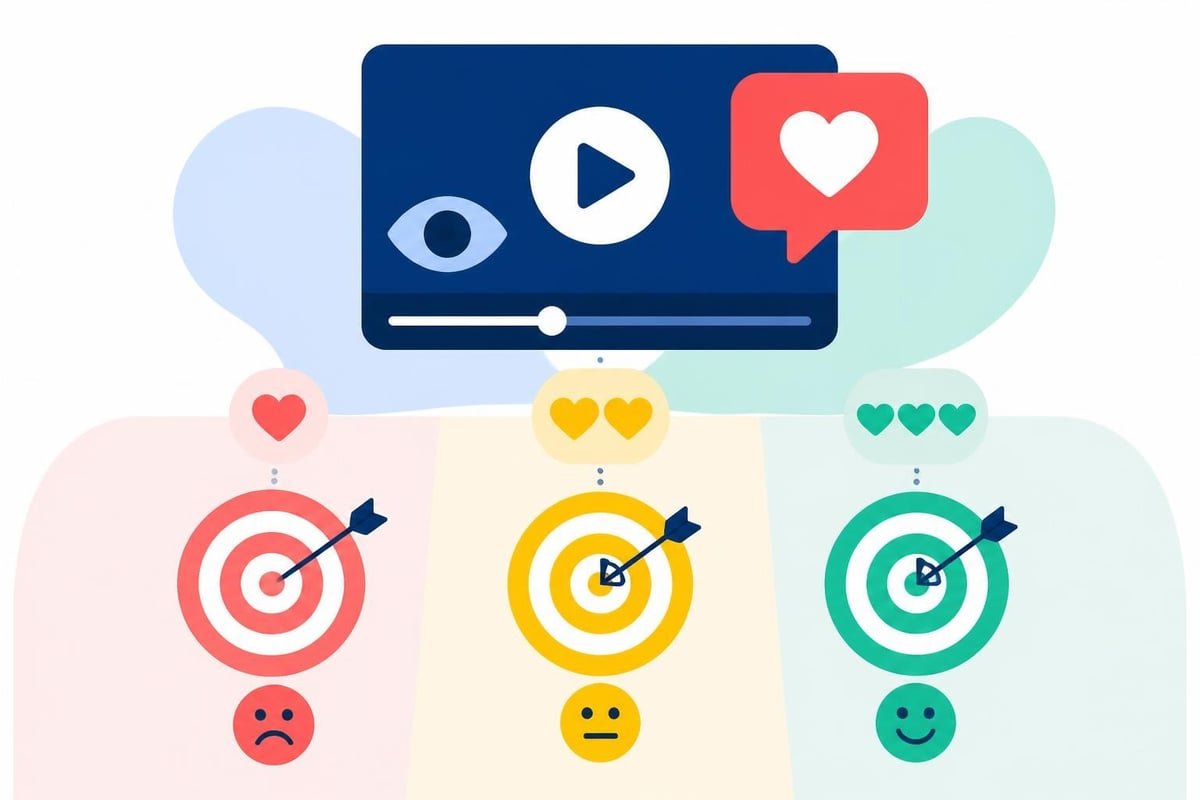
    What Different Like-to-View Ratios Reveal About Content Performance

    The relationship between likes views acts as a diagnostic tool showing how well content resonates with its actual audience versus attracting casual scrollers.

    Analyzing Ratio Patterns

    Ratio Interpretation Typical Causes
    10%+ likes per view Exceptional resonance Highly targeted audience, premium content quality
    5-10% Strong performance Good audience-content fit, compelling hooks
    2-5% Average/acceptable Broad appeal, casual viewing
    Under 2% Weak engagement Mismatched audience, weak call-to-action, poor quality

    Content consistently hitting low ratios despite decent view counts signals audience mismatch. The algorithm may be distributing your content to people outside your target demographic, or your hooks attract clicks but content doesn't deliver on expectations.

    Like to view ratio analysis

    Platform-Specific Ratio Expectations

    Different platforms establish different behavioral norms that affect expected ratios. According to Pew Research’s analysis of TikTok usage patterns, younger audiences engage more actively with content, leading to higher like rates on platforms where they concentrate.

    TikTok users exhibit higher engagement rates than Facebook users partly due to demographic differences and platform design encouraging quick interactions. Understanding these baseline differences prevents misinterpreting performance when comparing cross-platform campaigns.

    Strategic Approaches to Balancing Likes Views for Growth

    Building sustainable social media presence requires coordinating likes views growth rather than pursuing either metric in isolation. Different growth stages call for different priorities.

    Early-Stage Strategy: Views Before Likes

    New accounts benefit from prioritizing view growth initially to:

    1. Train the algorithm on which audiences engage with your content
    2. Test content formats to identify what resonates before scaling
    3. Build baseline reach that makes subsequent engagement more achievable
    4. Establish proof of concept showing content attracts attention

    During this phase, expect lower like-to-view ratios as the algorithm experiments with distributing your content to various audience segments. Focus on creating enough content volume that the platform gathers sufficient data to optimize distribution.

    Growth-Stage Strategy: Optimizing Engagement Rate

    Once you've established consistent view counts, shift focus toward improving engagement rate:

    • Strengthen calls-to-action prompting viewers to like if they found value
    • Increase content quality to convert more viewers into active engagers
    • Refine targeting to reach audiences more likely to engage deeply
    • Experiment with formats that naturally encourage interaction

    The JMIR systematic review of engagement drivers identifies specific content elements that consistently improve engagement across health and lifestyle categories, including personal storytelling, practical utility, and emotional resonance.

    Maturity-Stage Strategy: Leveraging Social Proof

    Established accounts can use existing engagement as a growth accelerator:

    • Highlight popular content in profiles and featured sections
    • Reference engagement milestones in content itself
    • Cross-promote high-engagement posts to new audience segments
    • Repurpose proven content into different formats

    At this stage, likes views function as marketing assets demonstrating authority and attracting partnership opportunities, media coverage, and audience growth through credibility signaling.

    When Investing in Likes Views Makes Strategic Sense

    Organic growth builds authentically but slowly. Strategic investment in engagement acceleration serves specific business objectives when applied correctly.

    Valid Business Cases for Purchasing Engagement

    Launching new accounts face algorithmic disadvantages since platforms lack data to optimize distribution. Initial engagement investment helps algorithms categorize your content and identify target audiences faster than organic methods alone.

    Overcoming credibility thresholds matters when entering competitive niches where audiences expect certain engagement levels before taking content seriously. Professional services, B2B brands, and premium products particularly benefit from appearing established.

    Seasonal opportunities create time-limited windows where slow organic growth means missing market opportunities. Product launches, event promotion, and trend participation often justify acceleration to capitalize on timing.

    Testing market demand becomes more cost-effective when you can quickly push test content to meaningful audience sizes rather than waiting weeks for organic distribution to build sample sizes large enough for valid conclusions.

    Quality Considerations When Purchasing Engagement

    Not all engagement services deliver equal value. The IAB guide to digital video advertising and measurement outlines fraud considerations and quality markers that apply equally to organic and purchased engagement.

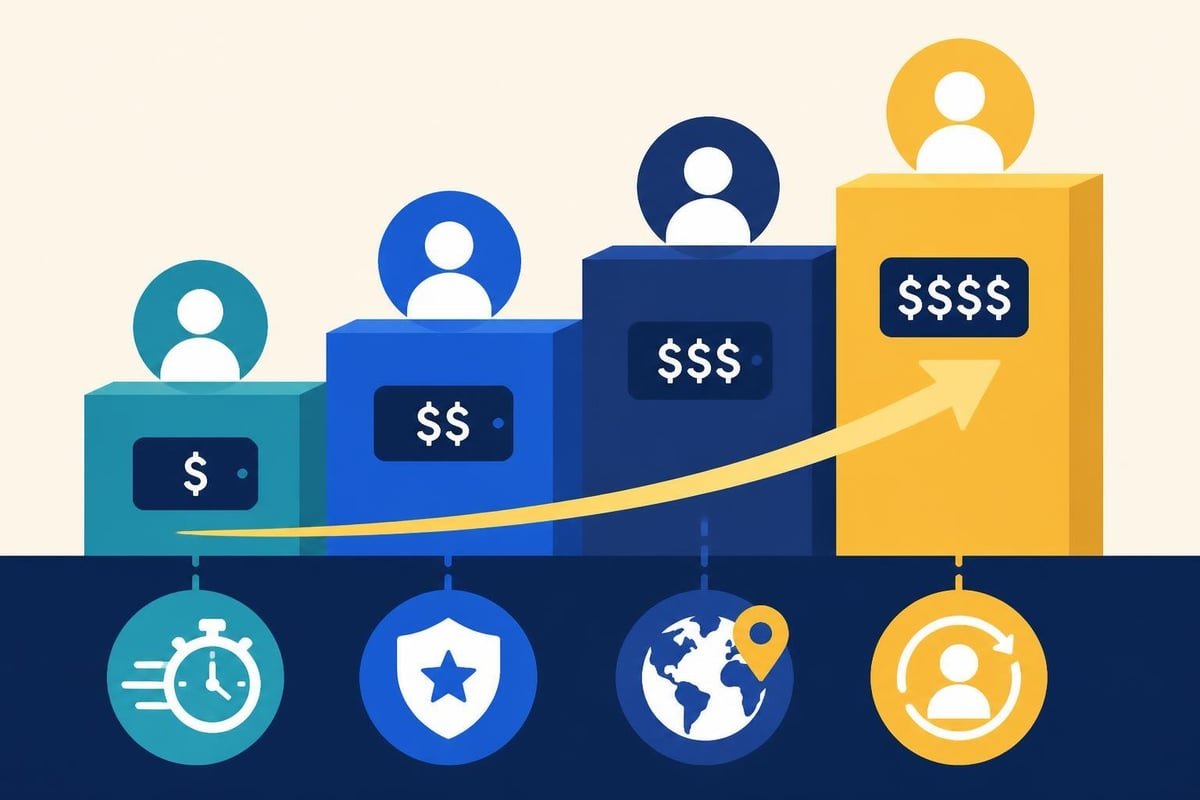
    Key quality indicators include:

    • Gradual delivery that mimics organic growth patterns
    • Geographic targeting matching your actual audience location
    • Account diversity ensuring engagement comes from varied profiles
    • Retention rates where purchased engagement doesn't immediately disappear

    Services delivering instant spikes of engagement from obviously fake accounts often trigger platform audits and can result in content penalties or account restrictions.

    Platform-Specific Considerations for Likes Views Strategy

    Each major platform treats engagement metrics differently, requiring adapted approaches for optimal results.

    Instagram: Visual Impact and Timing

    Instagram's algorithm heavily weights early engagement velocity during the first 30-90 minutes after posting. Content that quickly accumulates likes relative to reach receives expanded distribution through explore pages and hashtag rankings.

    Stories and Reels follow separate algorithmic logic from feed posts, with Reels prioritizing watch time and completion rate alongside likes. A Reel with 10,000 views and 500 likes but low completion rates underperforms one with 5,000 views, 400 likes, and high retention.

    TikTok: Completion Rate Supremacy

    TikTok's recommendation system weighs completion rate (percentage of viewers watching to the end) more heavily than likes when evaluating content quality. The platform treats likes primarily as a secondary signal confirming content that already demonstrated strong retention deserves wider distribution.

    This creates unique dynamics where likes views ratios matter less than completion rates and rewatch behavior. Content can succeed with relatively low like rates if it retains viewers effectively.

    YouTube: Long-Term Value and Watch Time

    YouTube algorithms optimize for total watch time rather than individual view counts. A video with 1,000 views averaging 8 minutes watched contributes more platform value than one with 10,000 views averaging 30 seconds.

    Likes influence click-through rates for suggested videos and search rankings but carry less algorithmic weight than watch time, retention graphs, and returning viewer behavior. Focus your YouTube strategy on creating content that keeps people watching rather than maximizing vanity metrics.

    Facebook: Engagement Depth Over Breadth

    Facebook de-emphasizes passive metrics like views in favor of meaningful interactions including comments, shares, and reactions. A post with 500 views and 50 comments typically outperforms one with 5,000 views and 50 likes.

    The platform explicitly downranks engagement-bait content attempting to game the system through artificial interaction requests. Focus on generating genuine conversation and value-sharing behaviors rather than optimizing purely for likes views counts.

    Platform algorithm priorities

    Measuring ROI on Engagement Metrics

    Understanding which engagement metrics actually drive business outcomes prevents wasting resources optimizing vanity metrics that don't contribute to revenue or strategic goals.

    Connecting Engagement to Business Outcomes

    Track how changes in likes views correlate with meaningful business metrics:

    1. Website traffic from social profiles
    2. Lead generation through contact forms or email signups
    3. Sales conversions attributed to social referrals
    4. Brand search volume indicating awareness growth
    5. Partnership inquiries from brands and collaborators

    Content generating 50,000 views but zero website clicks delivers less business value than posts earning 5,000 views and 100 site visits. Optimize for downstream outcomes rather than upstream metrics.

    Building Attribution Models

    Most social platforms don't generate direct sales but instead serve as awareness and consideration channels within longer customer journeys. Multi-touch attribution helps quantify social media's true contribution:

    Customer Journey Stage Primary Metric Business Impact
    Awareness Views, Reach Brand discovery
    Interest Likes, Saves Content resonance
    Consideration Profile visits, Link clicks Active research
    Conversion Website traffic, Signups Revenue potential
    Loyalty Comments, Shares Community building

    Sophisticated marketers track how users progress through these stages rather than treating each engagement type as equally valuable.

    Common Mistakes That Sabotage Likes Views Performance

    Even experienced creators make tactical errors that suppress engagement and limit growth potential.

    Mistake One: Inconsistent Posting Schedules

    Algorithms favor accounts demonstrating reliable content production. Sporadic posting confuses the distribution system, which can't predict when to prepare audiences for your content or build anticipation through notifications.

    Establish sustainable posting frequency you can maintain long-term:

    • Daily posting: Ideal for TikTok, Instagram Stories
    • 3-5 times weekly: Effective for Instagram feed, YouTube Shorts
    • Weekly: Minimum for YouTube long-form, LinkedIn

    Mistake Two: Ignoring Platform-Specific Formats

    Cross-posting identical content across platforms wastes each network's unique strengths. TikTok vertical videos exported to YouTube as Shorts perform adequately, but content optimized specifically for each platform's culture, editing style, and pacing patterns significantly outperforms generic material.

    Mistake Three: Buying Low-Quality Engagement

    Purchasing engagement from providers delivering obvious bot accounts or instant delivery spikes creates more problems than benefits. Platforms increasingly detect and penalize artificial engagement, potentially suppressing all your content's organic reach when caught.

    Quality services deliver gradual, natural-looking growth from accounts exhibiting realistic activity patterns. When comparing options for social media marketing services, prioritize providers transparent about delivery methods and offering retention guarantees.

    Mistake Four: Optimizing for Algorithms Over Audiences

    Algorithms exist to serve user interests, not creator ambitions. Content designed purely to game algorithmic preferences without delivering genuine value eventually gets penalized as platforms refine detection systems.

    The most sustainable approach balances algorithmic best practices with authentic value creation that would resonate even without platform promotion.

    Advanced Tactics for Maximizing Likes Views Synergy

    Once you've mastered fundamentals, sophisticated techniques can extract additional performance from existing content and audiences.

    Recycling High-Performing Content

    Content that previously achieved strong likes views ratios likely still resonates with your audience. Strategically re-share or repurpose this material:

    • Update and repost evergreen content quarterly
    • Repurpose across formats (turn popular post into video, infographic into carousel)
    • Create sequels building on concepts that proved successful
    • Compile "best of" collections featuring top-performing content

    Collaborative Engagement Boosting

    Partner with accounts in complementary niches for mutual benefit:

    • Engagement pods where groups agree to interact with each member's content
    • Shoutout exchanges introducing your audience to partners and vice versa
    • Collaborative content appearing on both accounts simultaneously
    • Feature swaps where you highlight partners in your content and receive reciprocal promotion

    These strategies work best when partners target similar demographics but offer non-competing products or services, allowing genuine cross-promotion rather than competitive cannibalization.

    Audience Participation Mechanics

    Content that transforms passive viewers into active participants naturally generates stronger engagement:

    • Polls and questions that require viewer input
    • Challenges and tags encouraging content creation and sharing
    • Contests and giveaways incentivizing engagement actions
    • Choose-your-own-adventure formats where audience votes determine next steps

    These mechanisms increase both likes views simultaneously by giving people reasons to return, share with friends, and engage repeatedly with single pieces of content.


    Understanding how likes views work together as complementary social proof signals helps you build sustainable audience growth across any platform. The metrics matter not as vanity numbers but as algorithmic inputs determining content distribution and psychological triggers influencing whether people engage with your brand. When organic growth needs acceleration to meet business timelines or overcome credibility thresholds, Best Social Media Growth Services 2026 provides independent comparisons of providers on price, delivery speed, platform coverage and refund terms, helping you choose services that deliver quality engagement matching your specific goals.

  • TikTok Followers View: How Visibility Drives Growth

    TikTok Followers View: How Visibility Drives Growth

    Understanding how the tiktok followers view system works is essential for anyone trying to build influence on the platform in 2026. When users look at your profile, they see a curated presentation of your content, follower count, and engagement metrics. This visibility directly influences whether they decide to follow you. The way TikTok displays your follower count and content preview affects trust, credibility, and conversion rates from casual viewers to committed followers. For creators and brands alike, mastering this visibility mechanism determines whether your growth accelerates or stalls.

    The tiktok followers view feature encompasses more than just a number displayed on your profile. It represents the gateway to audience growth, combining profile presentation, content quality, and algorithmic amplification. When potential followers land on your page, they make split-second decisions based on what they see. If you're serious about building a genuine presence, you can compare social growth providers to understand which services deliver followers that actually engage with your content rather than inflating numbers without impact.

    Understanding TikTok's Follower Visibility System

    The tiktok followers view architecture operates on multiple layers. First, your follower count serves as social proof when users visit your profile. Research from Pew Research Center shows that specific demographics engage with TikTok differently, meaning your follower composition affects which new audiences find your content credible.

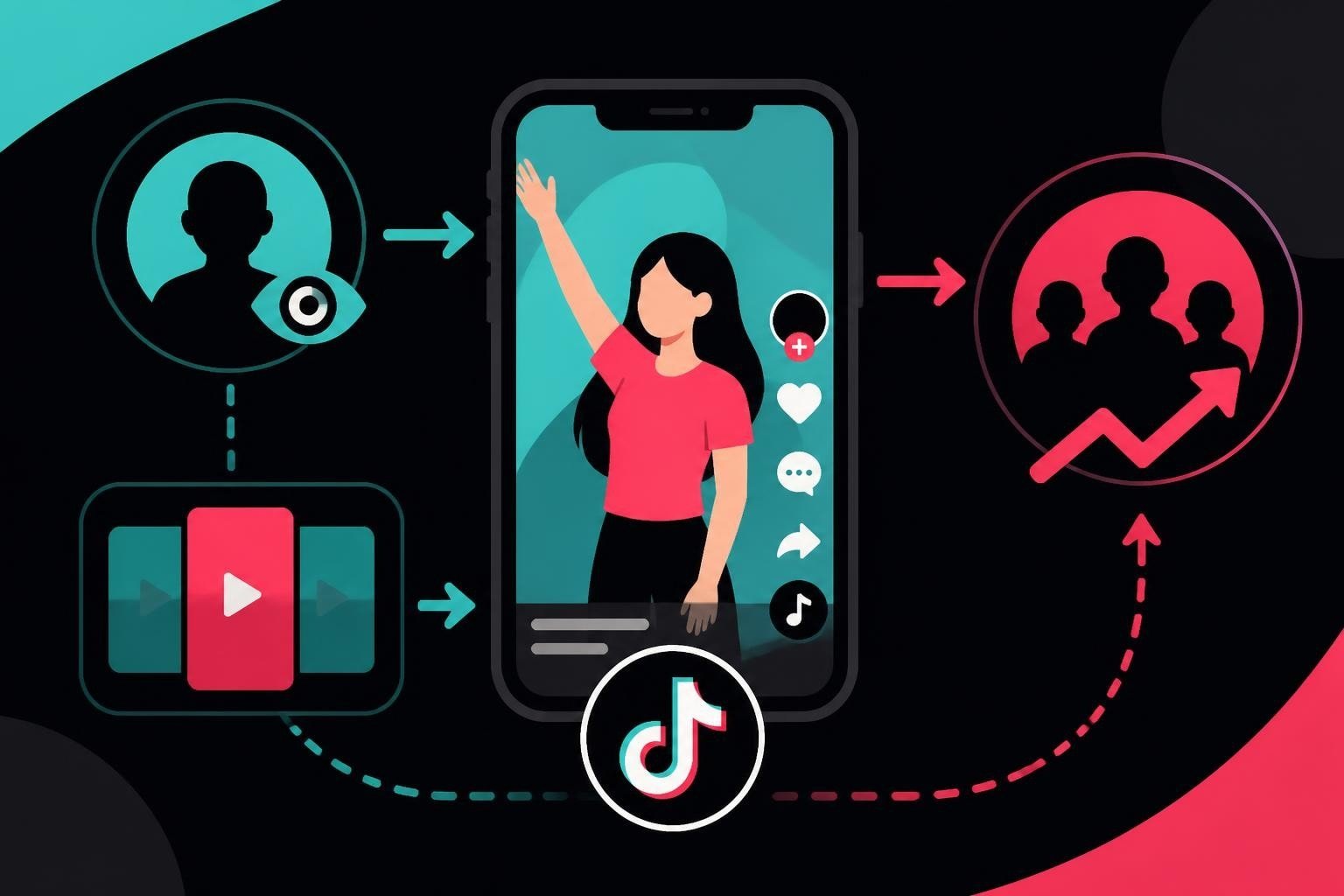
    When someone views your profile, TikTok displays:

    • Total follower count
    • Total likes across all videos
    • Profile bio and link
    • Pinned videos
    • Most recent content in chronological order

    TikTok profile visibility elements

    The Psychology Behind Follower Count Display

    Numbers matter. A profile with 500 followers converts visitors differently than one with 50,000. This isn't vanity; it's cognitive bias at work. Potential followers use your existing audience size to assess value. They assume popular accounts offer better content, though this correlation doesn't always hold true.

    The visibility of your follower count creates what researchers call social validation. When viewers see thousands of followers, they're more likely to follow without thoroughly reviewing your content. Conversely, smaller accounts must work harder to prove value through exceptional content quality and niche expertise.

    Follower Range Typical Conversion Rate Trust Signal Strength Content Quality Importance
    0-1,000 2-5% Low Critical
    1,000-10,000 5-12% Moderate High
    10,000-100,000 12-25% High Moderate
    100,000+ 25-40% Very High Moderate

    These conversion rates represent typical profile visit-to-follow percentages based on 2026 platform behavior patterns. Your actual rates depend on niche relevance and content alignment with visitor expectations.

    How the Algorithm Uses Follower Views to Determine Reach

    TikTok's recommendation system analyzes how users interact with your profile once they arrive. The platform tracks several behavioral signals that influence future content distribution. According to research on TikTok’s personalization mechanisms, the algorithm balances exploration (showing content to new audiences) with exploitation (doubling down on what works).

    Key Signals TikTok Monitors

    When someone views your follower count and profile:

    1. Dwell time – How long they stay on your profile
    2. Video sampling – Which videos they watch and for how long
    3. Follow action – Whether they click the follow button
    4. Content interaction – Likes, comments, or shares from the profile view session
    5. Navigation pattern – Whether they watch one video or scroll through multiple posts

    The algorithm interprets high-quality profile engagement as a signal that your content deserves broader distribution. If profile visitors consistently watch multiple videos and follow you, TikTok pushes your content to more users through the For You page. This creates a growth flywheel: better content leads to more engaged profile visitors, which signals quality to the algorithm, resulting in increased reach and more profile views.

    View-Through Impact Beyond Direct Follows

    TikTok distinguishes between direct engagement (likes, comments, follows) and passive consumption (views without interaction). The platform's measurement systems track view-through metrics that influence long-term growth. TikTok’s attribution framework shows how views contribute to later conversions, even when users don't immediately follow.

    A viewer might watch three of your videos during a profile visit without following. Days later, when your content appears on their For You page again, they recognize your style and engage more readily. This delayed conversion still contributes to growth, though it's harder to track than immediate follows.

    TikTok algorithm signals

    Optimizing Your Profile for Maximum Follower Conversion

    Converting profile views into followers requires strategic optimization. Your tiktok followers view experience should be intentionally designed to reduce friction and communicate value immediately.

    Profile Element Priority

    Focus your optimization efforts on these high-impact areas:

    1. Profile Bio Clarity
    Write a bio that instantly communicates your niche and value proposition. You have 80 characters to explain why someone should follow you. Avoid vague descriptions like "creating content" in favor of specific promises: "Daily AI business tips" or "Food science explained simply."

    2. Pinned Video Selection
    Your pinned videos serve as your portfolio. Choose content that:

    • Represents your best work
    • Showcases your unique angle or style
    • Performs well with cold audiences (high completion rates from non-followers)
    • Demonstrates the type of content followers can expect regularly

    3. Consistent Visual Identity
    Profile visitors scan your content grid looking for patterns. Maintain consistent video formats, thumbnail styles, or opening hooks that create visual coherence. This consistency signals professionalism and helps viewers quickly understand your content category.

    4. Engagement Indicators
    Display active engagement by responding to comments on recent videos. Viewers who dig into your comment sections before following want to see that you interact with your community. A creator who responds thoughtfully to comments converts better than one who posts and disappears.

    The Follower Count Threshold Effect

    Certain follower count milestones trigger psychological shifts in how viewers perceive your account. These thresholds vary by niche but generally include:

    • 1,000 followers: Transition from "new account" to "established presence"
    • 10,000 followers: Creator Fund eligibility and perceived expertise
    • 100,000 followers: Influencer status with potential brand partnership credibility
    • 1,000,000 followers: Celebrity tier with mainstream recognition

    Reaching these thresholds changes how the tiktok followers view experience affects conversion. A profile with 9,800 followers converts at one rate; crossing 10,000 often produces a measurable jump in conversion percentage as the psychological threshold shifts viewer perception.

    Strategic Approaches to Increasing Follower Visibility

    Growing your visible follower count requires both organic tactics and, when appropriate, strategic acceleration. The global TikTok usage statistics show massive competition for attention, making strategic growth investments increasingly common among serious creators.

    Organic Growth Fundamentals

    Before considering any acceleration tactics, nail these foundational elements:

    Content Consistency
    Post frequency directly correlates with follower growth velocity. Accounts posting 3-7 times per week grow faster than those posting sporadically. The algorithm favors active accounts because consistent posting provides more data points for the recommendation system to analyze.

    Niche Specialization
    Broad content strategies dilute your follower view conversion rate. When profile visitors can't quickly identify what you're about, they bounce without following. Specialize in a specific niche, even if it feels limiting initially. A focused audience converts better and engages more than a scattered one.

    Hook Optimization
    The first 1.5 seconds of every video determine whether viewers keep watching. Strong hooks that create curiosity, promise value, or trigger emotion keep viewers engaged long enough for the algorithm to register the video as quality content worth promoting.

    Content strategy components

    Acceleration Through Strategic Services

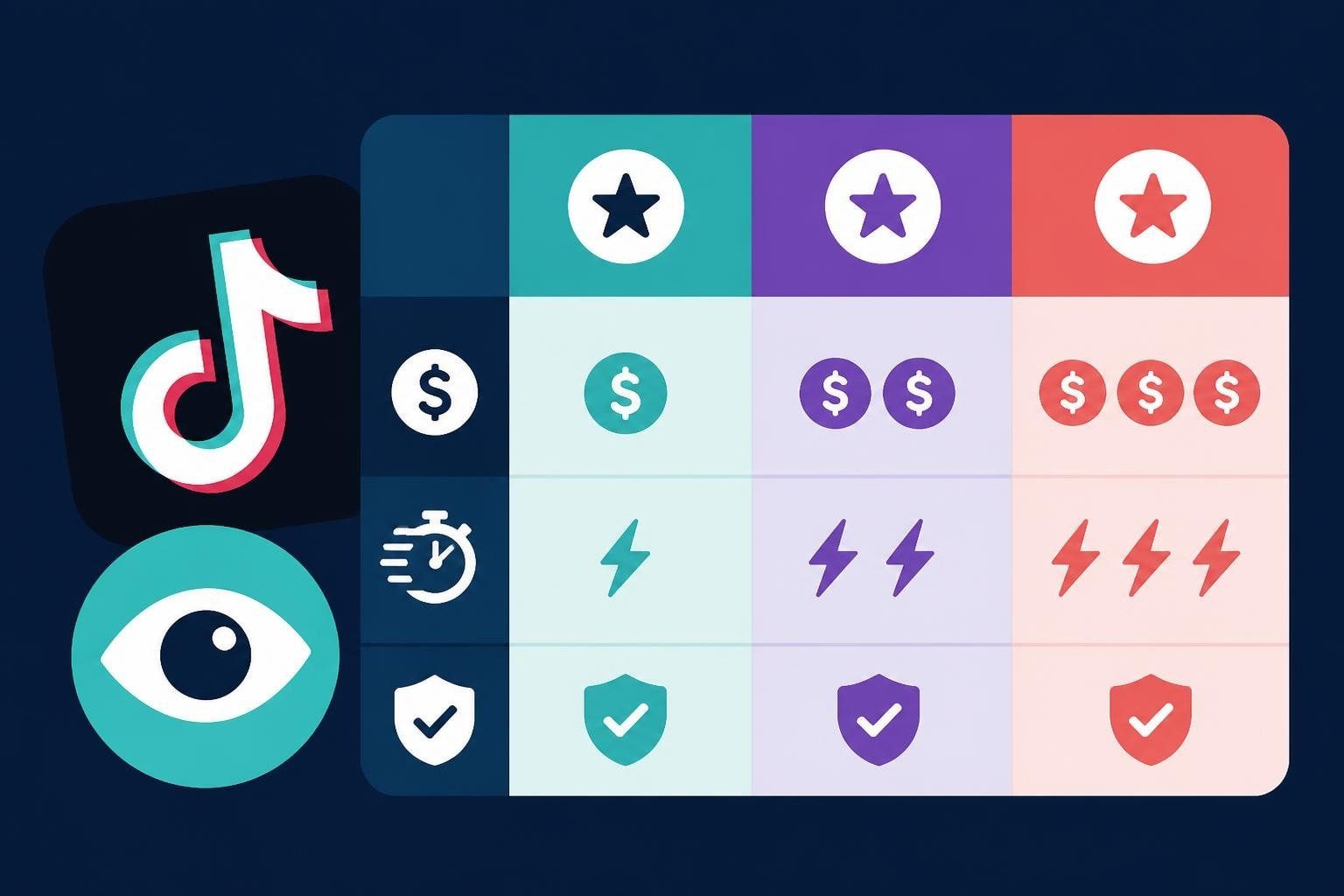
    Many creators and brands supplement organic growth with strategic services that deliver followers from real accounts. When evaluating these options, prioritize providers that offer:

    • Gradual delivery schedules that mimic organic growth patterns
    • Geographic and demographic targeting to match your ideal audience
    • Engagement guarantees ensuring followers actually view and interact with content
    • Retention commitments protecting against follower drop-off

    The right approach depends on your specific goals, timeline, and budget. Services that deliver followers too quickly often trigger platform scrutiny, while quality providers pace delivery to maintain account health. If you're evaluating options, use a live price calculator to compare providers on delivery speed, retention guarantees, and per-follower cost across different package sizes.

    Growth Tactic Time to Results Cost Investment Algorithm Risk Sustainability
    Pure organic content 6-12 months Time only None High
    Content + strategic promotion 2-4 months Moderate Low (if quality) High
    Low-quality bot followers Immediate Low High None
    High-quality targeted followers 2-6 weeks Higher Low Moderate-High

    Analytics and Measurement for Follower Views

    Understanding what happens after users view your followers count requires proper analytics tracking. TikTok's native analytics provide basic insights, but sophisticated creators layer additional measurement approaches.

    Native TikTok Analytics

    Access these metrics through your Pro Account dashboard:

    1. Profile views over time – Track daily, weekly, and monthly trends
    2. Follower growth rate – Measure net new followers against total count
    3. Traffic sources – Identify whether followers come from For You page, hashtags, or profile views
    4. Follower demographics – Age, gender, location, and active times
    5. Content performance by follower status – Compare how followers vs. non-followers engage with your videos

    The "Profile Views" metric specifically shows how many users landed on your profile page. Divide new followers by profile views to calculate your tiktok followers view conversion rate. If you gained 100 followers from 2,000 profile views, your conversion rate is 5 percent.

    Advanced Tracking Strategies

    Serious creators implement additional measurement:

    Attribution Windows
    Track follower sources by noting which videos preceded follower spikes. If a particular video goes viral, monitor profile views and follower growth in the 48-72 hours afterward. This helps identify which content types drive the most valuable traffic to your profile.

    Cohort Analysis
    Segment followers by acquisition date and track their engagement patterns over time. Followers acquired during different months often behave differently. Those gained from viral content may engage less consistently than followers attracted through niche-specific content.

    Engagement Rate by Follower Tier
    Calculate how engagement rates change as your follower count grows. Many accounts experience declining engagement percentages as they scale because the algorithm distributes content to broader, less targeted audiences. Understanding this pattern helps set realistic expectations.

    Platform-Specific Measurement Standards

    TikTok's view counting methodology differs from other platforms, affecting how you should interpret follower views and content performance. The IAB’s video advertising standards provide industry benchmarks for what constitutes a meaningful view, though TikTok applies its own criteria.

    What Counts as a View

    TikTok registers a view almost immediately when a video starts playing. Unlike YouTube's 30-second threshold or Instagram's three-second minimum, TikTok counts views liberally. This affects how you interpret performance:

    • A video with 10,000 views might have 8,000 viewers who watched less than one second
    • Completion rate matters more than total view count for algorithmic promotion
    • Profile visits from viewers who watched 50 percent or more of a video convert better than those from brief viewers

    Understanding TikTok’s campaign measurement approach helps contextualize organic metrics. The platform uses sophisticated attribution models for advertisers, tracking view-through conversions and assisted interactions. These same principles apply to organic content, though creators don't get the detailed reporting advertisers receive.

    Comparing View Quality Across Sources

    Not all profile views carry equal conversion potential. Analyze where your profile traffic originates:

    High-Intent Sources:

    • Direct search for your username
    • Profile link clicks from video comments
    • Duet or stitch interactions
    • Bio link traffic from other platforms

    Medium-Intent Sources:

    • For You page video clicks through to profile
    • Hashtag page profile visits
    • Sound page profile clicks

    Low-Intent Sources:

    • Random exploration during extended scrolling sessions
    • Accidental profile taps
    • Bot or spam account views

    Focus your optimization efforts on converting high and medium-intent traffic. These visitors arrive with greater interest and convert at higher rates than casual browsers.

    Building Sustainable Growth Systems

    Long-term success with tiktok followers view optimization requires systems that compound over time rather than one-off tactics. The most successful accounts build repeatable processes that consistently convert profile visitors into engaged followers.

    Content Series and Expectations

    Create content series that train viewers to expect specific value on a predictable schedule. Series like "Monday Marketing Tips" or "Friday Fails" give followers a reason to check your profile regularly. When new profile visitors see a consistent series structure, they understand what they'll get by following and can assess fit quickly.

    Community Engagement Loops

    Transform passive followers into active community members through intentional engagement design:

    • Respond to comments with questions that spark discussion
    • Create duets and stitches of follower content
    • Run polls and Q&A sessions that involve followers in content creation
    • Acknowledge milestones and thank followers for specific contributions

    These engagement loops increase follower retention while signaling to the algorithm that your account generates meaningful interactions beyond passive viewing.

    Cross-Platform Integration

    Your TikTok follower growth doesn't exist in isolation. Successful creators coordinate across platforms:

    Synergistic Approach:

    • Share TikTok content to Instagram Reels and YouTube Shorts
    • Use email lists to drive subscribers to TikTok during launches
    • Leverage Twitter or LinkedIn to promote key TikTok content to professional audiences
    • Create exclusive content for each platform while maintaining brand consistency

    This integration amplifies your tiktok followers view metrics by directing interested audiences from other platforms to your TikTok profile. Visitors who arrive via intentional cross-platform promotion convert at higher rates than cold traffic because they're pre-qualified through exposure to your content elsewhere.

    Experimentation Framework

    Establish a structured testing methodology:

    1. Hypothesis formation – What specific change might improve conversion?
    2. Controlled testing – Change one variable while holding others constant
    3. Measurement period – Allow sufficient time for meaningful data (minimum 7-14 days)
    4. Analysis and iteration – Document results and apply learnings to next test

    Test variables might include:

    • Profile bio language variations
    • Different pinned video selections
    • Posting time experiments
    • Content format changes (talking head vs. B-roll vs. text-on-screen)
    • Hook style variations

    Systematic testing removes guesswork and builds institutional knowledge about what drives follower conversion for your specific audience and niche.


    Understanding the tiktok followers view system helps you optimize every element of your profile for maximum conversion while building content that triggers algorithmic amplification. Whether you're growing organically or strategically accelerating your audience expansion, focus on delivering genuine value that turns casual viewers into committed followers. When you're ready to compare your options for sustainable growth, check out Best Social Media Growth Services 2026 for detailed provider comparisons, real pricing across package sizes, and delivery speed calculators that help you make informed decisions about your TikTok strategy.

  • Cheapest TikTok Views: 2026 Price Guide & What to Know

    Cheapest TikTok Views: 2026 Price Guide & What to Know

    Finding the cheapest TikTok views in 2026 requires more than spotting the lowest price tag. The market for purchased engagement has evolved dramatically, with pricing structures that reflect delivery speed, retention quality, targeting options, and compliance risk. While some providers advertise views for pennies per thousand, the actual cost calculation involves understanding what you're buying, how quickly views arrive, whether they'll stick, and what happens if they don't. This guide breaks down current pricing tiers, quality indicators that affect cost, regulatory considerations that impact long-term value, and how to compare providers on more than price alone.

    Understanding TikTok View Pricing in 2026

    The market for TikTok views operates on a cost-per-thousand (CPM) model, with prices ranging from under $0.50 to over $15.00 per 1,000 views depending on several factors. At the bottom end, you'll find bulk providers offering high volumes with minimal targeting, instant delivery, and no retention guarantees. Mid-tier services typically charge $2-$5 per thousand views with gradual delivery schedules and some geographic targeting. Premium providers command higher rates by promising engagement from accounts that match specific demographics, interests, or behaviors.

    Price alone tells you almost nothing about value. A service charging $0.40 per thousand views might deliver bot traffic that disappears within 48 hours, triggering TikTok's spam detection systems. Another at $4.00 per thousand could provide views from real accounts with authentic profiles, distributed over days to mimic organic discovery patterns. The comparison of social media growth providers includes live calculators that show exactly what each package costs at different quantities, making it easier to spot outliers and evaluate whether rock-bottom pricing signals quality concerns.

    What Drives Cost Differences

    Several technical and operational factors explain why some providers offer the cheapest TikTok views while others charge premium rates:

    • Source quality: Views from established accounts with complete profiles, post history, and genuine followers cost more than fresh bot accounts
    • Delivery speed: Instant delivery is cheaper to automate but riskier; gradual delivery over 3-7 days requires more sophisticated infrastructure
    • Geographic targeting: Global views from any location cost less than views restricted to specific countries or regions
    • Retention guarantees: Providers who replace dropped views within 30-90 days build refill costs into their pricing
    • Platform compliance: Services that avoid automated scraping and API violations invest more in maintaining delivery methods

    The cheapest options almost always sacrifice one or more of these dimensions. That trade-off may be acceptable for testing content concepts or creating initial social proof, but it carries risks that become more significant as your account grows.

    Cost factors in TikTok view services

    Evaluating Quality at Different Price Points

    Budget providers typically operate in the $0.30-$1.50 per thousand range, delivering views through automated systems that prioritize volume over authenticity. These services rarely verify account quality, may use traffic from click farms or view-exchange networks, and offer limited support if views drop or fail to arrive. While technically among the cheapest TikTok views available, they present the highest risk of detection and removal.

    Research from the Social Science Research Council examining the market for purchased followers reveals that bottom-tier providers rely on recycled account pools that service multiple platforms simultaneously. These accounts exhibit suspicious patterns: identical engagement timing across unrelated content, implausible follower-to-following ratios, and minimal profile information. TikTok's detection algorithms have become increasingly sophisticated at identifying these patterns, particularly after the platform's 2025 updates to its spam prevention systems.

    Mid-range providers ($2-$6 per thousand) typically source views from a mix of lower-quality real accounts and higher-quality automated accounts. They implement delivery pacing, basic geographic filtering, and some retention monitoring. Quality varies considerably within this tier, making provider reputation and refund policies particularly important evaluation criteria.

    Price Tier Cost Range (per 1K) Typical Delivery Retention Rate Detection Risk
    Budget $0.30-$1.50 Instant-24 hours 40-60% at 30 days High
    Mid-Range $2.00-$6.00 1-5 days 65-85% at 30 days Moderate
    Premium $8.00-$15.00+ 3-10 days 90%+ at 30 days Lower

    Premium services charging above $8 per thousand views invest in more sophisticated sourcing methods, including incentivized viewing from real users, partnerships with micro-influencer networks, and targeted promotion through secondary accounts. While still not organic growth, these methods produce engagement patterns that more closely resemble natural discovery.

    Platform Policies and Regulatory Considerations

    TikTok's Terms of Service explicitly prohibit "artificially inflating views or other metrics," though enforcement focuses primarily on bot networks and automated systems rather than individual purchases. The platform continuously updates its detection capabilities, and accounts relying heavily on purchased views may experience reduced organic reach, content suppression, or in severe cases, account restrictions.

    Beyond platform policies, the regulatory environment has shifted significantly. The Federal Trade Commission’s 2024 rule banning fake reviews and testimonials includes language addressing the "sale or purchase of fake social-media influence indicators." While primarily targeting deceptive commercial practices, the rule establishes that knowingly purchasing engagement metrics to mislead consumers about popularity or social proof may constitute an unfair or deceptive trade practice.

    The detailed regulations published in the Federal Register clarify that liability extends to both sellers and purchasers when fake indicators are used in commercial contexts. Businesses promoting products or services through accounts with purchased engagement face potential enforcement action if that engagement materially misrepresents their actual influence or popularity.

    Compliance Implications for Commercial Accounts

    If you're using TikTok for brand promotion, influencer marketing, or commercial purposes, the cheapest TikTok views may carry hidden compliance costs:

    1. Disclosure requirements: Purchased metrics that materially affect advertiser decisions or consumer perceptions may require disclosure
    2. Audit liability: Brands increasingly audit influencer accounts before partnerships; purchased views discovered during due diligence can terminate contracts
    3. Platform ad restrictions: TikTok may limit advertising capabilities for accounts with suspected inauthentic engagement
    4. Reputation risk: Public exposure of purchased views can damage brand credibility more than low view counts

    For personal accounts, hobbyist creators, or non-commercial content, these risks are substantially lower. The calculation changes entirely when purchased views serve commercial objectives or influence business decisions.

    Comparing Providers Beyond Price

    Finding genuinely cheap TikTok views requires comparing providers on multiple dimensions simultaneously. Price per thousand views is the starting point, but delivery terms, refund policies, minimum purchase requirements, and customer support responsiveness all affect total cost and risk.

    Minimum order sizes vary significantly. Some budget providers require minimum purchases of 10,000 or 25,000 views, making their per-unit cost attractive but total outlay substantial. Others offer packages starting at 100 or 500 views, allowing smaller tests but often at higher per-view rates. When comparing the cheapest options, calculate both the per-view cost and the minimum investment required.

    Delivery windows affect both price and effectiveness. Instant delivery costs less to automate but creates suspicious engagement spikes. Services offering 24-48 hour delivery typically charge 15-30% more than instant options but distribute views more naturally. Extended delivery over 5-7 days adds another 20-40% to the base cost while further reducing detection risk.

    Refill policies separate providers who stand behind their service from those operating on volume margins. The cheapest TikTok views often come with no retention guarantee whatsoever. Mid-tier providers typically offer 30-day refills for dropped views, while premium services may extend guarantees to 60 or 90 days. When views drop and aren't replaced, your effective cost-per-view increases dramatically.

    Provider comparison dimensions

    Alternative Approaches to Affordable Growth

    Before committing to purchased views, consider whether alternative strategies might deliver better long-term value at comparable or lower cost. TikTok’s own advertising platform allows precise targeting and campaign optimization with full transparency about costs and performance metrics.

    Running a small TikTok Ads campaign with a $20-50 budget can generate hundreds or thousands of views from users who genuinely match your target audience. While the per-view cost may be higher than the cheapest purchased views (typically $3-8 per thousand depending on targeting), these views come from real users who saw your content in their feed, may engage with future posts, and won't suddenly disappear or trigger spam flags.

    The platform's auction system rewards content quality with lower costs. According to Pew Research data on how users experience TikTok, the algorithm prioritizes engagement rate over follower count when distributing content. Well-targeted ads to small, relevant audiences can achieve watch times and engagement rates that signal quality to the algorithm, potentially triggering organic amplification that extends far beyond your paid reach.

    Organic Optimization Strategies

    Several no-cost approaches can boost view counts without purchasing engagement:

    • Posting timing: Publishing when your specific audience is most active increases initial engagement, which signals the algorithm to expand distribution
    • Hashtag strategy: Mixing niche-specific tags with broader trending tags helps content reach both targeted and exploratory audiences
    • Series content: Multi-part series encourage viewers to watch multiple videos, increasing average session duration and algorithmic favor
    • Duets and stitches: Engaging with trending content through TikTok's native features taps into existing audience bases
    • Cross-promotion: Sharing TikTok content on other platforms drives external traffic that TikTok's algorithm recognizes and rewards

    These methods require more time investment than purchasing views but build sustainable growth patterns that compound over time rather than requiring continuous spending to maintain appearance.

    Calculating Total Cost of Ownership

    The cheapest TikTok views measured by purchase price may carry higher total costs when accounting for replacement needs, platform risk, and opportunity cost. A comprehensive cost calculation includes:

    Direct costs: The purchase price plus any fees, minimum orders above what you need, or bundled services you won't use. Some providers advertise low per-view pricing but add processing fees, rush delivery surcharges, or require simultaneous purchase of likes or followers at inflated rates.

    Replacement costs: If 40% of views drop within 30 days and the provider offers no refills, your effective cost per sustained view is 67% higher than the advertised rate. Factor expected retention rates into your cost comparison, not just initial delivery price.

    Opportunity costs: Time and resources spent researching providers, placing orders, monitoring delivery, and disputing issues represent real costs. A provider charging 20% more but delivering reliably without issues may cost less in total when accounting for your time.

    Risk costs: Account restrictions, reach suppression, or credibility damage from detection create costs that are difficult to quantify but potentially catastrophic. A 5% risk of account limitation doesn't make the cheapest views 5% more expensive-it makes them potentially infinitely expensive if the limitation affects your ability to reach audiences or monetize content.

    Cost Component Budget Provider Mid-Range Provider Premium Provider
    Initial per-1K cost $0.50 $3.50 $10.00
    Expected 30-day retention 50% 75% 95%
    Effective cost (retained views) $1.00 $4.67 $10.53
    Refill policy None 30 days 90 days
    Support response time 48+ hours 12-24 hours 2-6 hours

    When viewed through this total cost framework, premium providers often deliver better value than budget options for creators who need sustained view counts and can't afford account risk.

    Package Structures and Bulk Discounts

    Most providers structure pricing in tiered packages, with per-view costs decreasing at higher volumes. A typical structure might offer 1,000 views for $5.00 ($5.00 per thousand), 5,000 views for $18.00 ($3.60 per thousand), and 25,000 views for $65.00 ($2.60 per thousand). The cheapest TikTok views on a per-unit basis always come in the largest packages, but these require significant upfront investment and amplify risk if the provider underdelivers or the views prove low-quality.

    Smaller creators often face a dilemma: accepting higher per-view costs for manageable packages, or committing large budgets to secure bulk discounts. Some providers split the difference with subscription models, offering monthly view allotments at bulk pricing without requiring single large purchases. These typically run $25-150 per month depending on total view allocation and delivery guarantees.

    Bulk purchasing considerations include:

    • Distribution across multiple videos versus concentrating on one post
    • Storage of unused views (some providers allow banking; others enforce use-by dates)
    • Provider stability (can they deliver a 100,000-view package reliably over time?)
    • Platform changes (will delivery methods remain viable throughout the service period?)

    Unless you're confident in both the provider's reliability and your ability to absorb the loss if something goes wrong, starting with smaller packages to test quality and support responsiveness makes financial sense even at higher per-unit costs.

    Package size versus pricing

    Geographic and Demographic Targeting

    Basic view packages deliver traffic from global sources without filtering by location, language, or user characteristics. These represent the cheapest TikTok views available but may include engagement from regions or demographics entirely irrelevant to your content. A creator producing English-language content about US sports receives little value from views originating in countries where neither English nor American sports are popular.

    Geographic targeting typically adds 30-100% to base pricing depending on specificity. Country-level targeting (e.g., "US only" or "UK only") usually costs 30-50% more than global views. State or city-level targeting, where available, can double or triple costs. For creators whose content has strong geographic relevance-local businesses, regional culture, location-specific humor-the additional cost delivers proportionally more value.

    Demographic targeting (age ranges, gender, interests) is rarer in view-purchasing services and commands significant premiums when available. Providers who offer genuine demographic filtering charge 2-4x standard rates because they must source from more selective account pools or use more sophisticated delivery methods.

    Analysis of epistemic uncertainty in fake account markets reveals that most low-cost providers cannot reliably deliver the targeting they advertise. Without independent verification systems, claims about geographic or demographic composition are difficult to validate. Paying for targeting from providers who don't offer detailed delivery reports or verifiable analytics often means paying premium prices for what amounts to untargeted traffic with spoofed location data.

    Red Flags and Warning Signs

    Certain pricing patterns and provider behaviors signal quality issues or outright scams. The cheapest TikTok views often come from providers exhibiting multiple warning signs:

    Prices far below market: When one provider offers views at $0.20 per thousand while competitors cluster around $2-4, the outlier is either using inferior sources, unlikely to deliver, or operating a scam. Legitimate cost advantages from efficient operations or better relationships with traffic sources might produce 20-30% savings, not 90% discounts.

    No contact information or support channels: Providers operating solely through social media DMs or messaging apps without websites, support tickets, or verifiable business information disappear easily when issues arise.

    Upfront payment with no refund policy: Legitimate services typically offer some recourse for non-delivery or severe under-delivery. Providers demanding payment via cryptocurrency, gift cards, or other irreversible methods with explicit "no refunds" policies are structurally set up to take money and deliver nothing.

    Unrealistic delivery promises: Claims of delivering 100,000 views within 1 hour, or guarantees that purchased views will lead to viral growth, indicate either technical impossibility or deliberate deception.

    Bundled requirements: Providers who won't sell views unless you also purchase followers, likes, and comments at inflated rates are padding revenue through forced bundling rather than competing on service quality.

    Strategic Use of Budget View Services

    Despite the risks and limitations, cheap TikTok views serve legitimate purposes in specific contexts. Testing content concepts before investing in promotion, creating baseline social proof for new accounts, or jumpstarting visibility for time-sensitive content can all benefit from affordable view packages when used strategically.

    Content testing represents perhaps the strongest case for budget views. If you're experimenting with a new content style or topic, purchasing 500-1,000 cheap views can help you evaluate whether the content resonates before committing to production of a full series. The views themselves may not be valuable long-term, but the data about watch time, engagement rate, and audience retention that TikTok's analytics provide can inform content decisions worth far more than the modest purchase price.

    New account activation is another targeted use case. TikTok's algorithm may give more distribution opportunities to accounts showing any engagement versus complete zero. A small initial purchase of 200-500 views distributed across your first few posts can help clear the "new account" threshold, after which organic performance becomes the primary growth driver.

    Time-sensitive content with inherent expiration dates-commentary on current events, seasonal material, limited-time offers-sometimes benefits from purchased views because the content's value window is too short to rely entirely on organic discovery. If you're producing content about a specific event happening this week, spending $10-20 to ensure it reaches audiences now rather than building organic momentum over weeks makes practical sense.

    In all these cases, the cheapest TikTok views work because you're optimizing for a specific short-term objective rather than building sustainable long-term growth. The calculation changes entirely when purchased views become an ongoing requirement for maintaining appearance rather than a targeted tactical tool.

    Monitoring and Measuring Results

    Regardless of which provider or price point you choose, systematic tracking reveals whether you're receiving value for money. TikTok's native analytics provide baseline metrics: total views, average watch time, traffic sources, and audience territories. Comparing these metrics before and after purchased views arrive helps identify quality issues.

    Suspicious patterns that indicate low-quality views include:

    • Average watch time dropping significantly as purchased views arrive (suggests views from accounts that open videos but don't watch)
    • Geographic distribution heavily weighted to countries you didn't target
    • Engagement rate (likes, comments, shares per view) dropping sharply compared to your baseline
    • Follower growth remaining flat despite increased view counts (suggests viewers aren't genuine accounts interested in your content)

    Quality providers deliver views that roughly match your organic traffic's behavioral patterns. If your organic viewers typically watch 60% of your videos and 3% like posts they view, purchased views should approximate those ratios. Dramatic deviations-purchased views showing 15% average watch time and 0.1% like rates-indicate you're paying for bot traffic regardless of the provider's quality claims.

    Set up comparison frameworks before purchasing. Document your typical metrics across 10-20 recent posts, calculate averages for watch time percentage, engagement rate, and follower conversion rate, then compare those baselines to posts receiving purchased views. Providers delivering genuine quality should produce metrics within 20-30% of your organic baseline, not 80% below it.


    The cheapest TikTok views aren't always the most affordable when you account for quality, retention, and risk. Understanding pricing structures, evaluating providers on multiple dimensions, and knowing when purchased views serve strategic purposes versus when they create more problems than they solve helps you make informed decisions that align with your goals and budget. Best Social Media Growth Services 2026 provides detailed, independent comparisons of the leading providers with real pricing data, delivery guarantees, and platform coverage-helping you find services that balance cost with quality rather than simply chasing the lowest number.

  • Cheapest Instagram Follower Services in 2026

    Cheapest Instagram Follower Services in 2026

    Finding the cheapest Instagram follower service sounds straightforward: locate the provider with the lowest price and place an order. In reality, the market for budget followers involves hidden costs, quality trade-offs, and legal risks that can damage your account and reputation more than the few dollars saved. This guide walks through what "cheapest" actually means in the Instagram growth industry, how pricing structures work, what differentiates rock-bottom providers from value-focused ones, and how to evaluate whether a low-cost follower service aligns with your goals. Whether you're a new creator testing the waters or a small business stretching a tight marketing budget, understanding these nuances helps you make informed decisions that balance cost and outcome.

    What Defines the Cheapest Instagram Follower Services

    Price alone rarely tells the full story. The cheapest Instagram follower packages typically start under one dollar per hundred followers, with some providers advertising rates as low as $0.50 per 100 followers or even less during promotional periods. These rock-bottom prices usually signal one or more of the following characteristics:

    • Bot-generated accounts with no profile pictures, zero posts, and random usernames
    • Inactive or abandoned accounts harvested from old databases
    • Drop rates exceeding 50% within the first month as Instagram removes fake profiles
    • Delivery through methods flagged by Instagram's detection systems

    The true cost extends beyond the sticker price. When followers disappear within days or weeks, you've paid for ephemeral numbers that provide no engagement, no social proof to real visitors, and potential red flags to Instagram's algorithm. Budget providers often skip the quality-control steps that separate disposable bot accounts from real-looking profiles that persist longer.

    How Instagram Follower Pricing Actually Works

    Understanding the cost structure helps explain why some services charge $1 while others charge $10 for ostensibly the same 100 followers. Providers source followers through different methods, each carrying distinct costs and risks:

    Source Method Typical Cost per 100 Retention Rate Detection Risk
    Bot networks $0.50–$1.50 20–40% after 30 days High
    Inactive real accounts $1.00–$3.00 40–60% after 30 days Medium-high
    Low-engagement real accounts $3.00–$7.00 60–80% after 30 days Medium
    Active real accounts $8.00–$20.00 80–95% after 30 days Low-medium

    The cheapest Instagram follower services cluster in the first two categories. Automated bot creation costs providers almost nothing in infrastructure, but these accounts survive only until Instagram's next cleanup sweep. According to research published in EPJ Data Science, coordinated fake-follower campaigns exhibit detectable patterns in follow timing, profile attributes, and network structure that platforms increasingly catch within weeks of deployment.

    Providers offering slightly higher prices often use real accounts with minimal activity rather than pure bots. These accounts belong to real users who stopped using Instagram years ago or were incentivized through third-party apps to follow large numbers of accounts. While they look more authentic than bots, they still contribute zero engagement and face periodic purges during Instagram's compliance sweeps.

    Instagram follower pricing tiers

    The Hidden Costs of Budget Follower Services

    Choosing the cheapest Instagram follower option introduces several non-monetary costs that affect your account's health and your brand's credibility. The Federal Trade Commission's 2024 rule banning fake reviews and testimonials explicitly prohibits "fake indicators of social media influence," including purchased followers. While enforcement primarily targets deceptive commercial practices, the regulatory landscape increasingly treats fake engagement as a compliance issue.

    Algorithm Penalties and Engagement Rate Collapse

    Instagram's algorithm evaluates your content's quality partly through engagement rate: the ratio of likes, comments, and shares to your total follower count. When you add thousands of inactive followers through the cheapest services, your engagement rate plummets even if your real audience stays consistent.

    For example, an account with 1,000 real followers averaging 100 likes per post has a 10% engagement rate. Add 5,000 cheap bot followers, and that same 100 likes now represents a 1.67% engagement rate. Instagram interprets this drop as a signal that your content quality has declined, reducing how often your posts appear in followers' feeds and in Explore recommendations.

    This creates a negative spiral. Lower visibility means your real followers see your content less often, leading to fewer genuine interactions, further depressing your engagement metrics, and compounding the algorithm penalty. The few dollars saved on followers can cost you thousands in lost organic reach over subsequent months.

    Brand Reputation Risks

    Audiences and potential partners increasingly scrutinize follower quality. Tools that analyze follower authenticity take seconds to run and reveal when an account's follower base consists primarily of bots or inactive profiles. Journalists investigating influencer fraud, brands vetting potential ambassadors, and even casual users curious about credibility all have access to these detection tools.

    Research from Social Network Analysis and Mining demonstrates that machine-learning models can identify fake profiles with over 90% accuracy by analyzing posting patterns, follower-following ratios, profile completeness, and interaction networks. When your account shows obvious signs of purchased followers, you risk being publicly called out, losing brand partnerships, and damaging trust with your genuine audience.

    The Harvard Business Review's analysis of why the influencer industry needs guardrails emphasizes that authenticity has become the currency of influence. As platforms and audiences get better at detecting inauthenticity, the reputational cost of being caught with fake followers outweighs any temporary vanity-metric boost.

    Evaluating Budget Providers: What to Look For

    Not all low-cost services are created equal. Some providers offer competitive pricing while maintaining quality standards; others race to the bottom with no regard for customer outcomes. When comparing options for the cheapest Instagram follower packages, evaluate these dimensions:

    1. Refill guarantees: Reputable providers replace followers that drop off within a specified period (typically 30–90 days)
    2. Delivery speed: Natural-looking growth delivers followers gradually over days, not all at once
    3. Minimum order sizes: Smaller minimums let you test quality before committing to larger purchases
    4. Customer support responsiveness: Quick responses to questions suggest operational legitimacy
    5. Transparency about follower sources: Vague descriptions ("real accounts," "high quality") often hide bot networks

    The cheapest Instagram follower services frequently fail on multiple criteria. They deliver followers instantly in obvious batches, offer no refill protection, set high minimum orders to maximize revenue before accounts get banned, and provide no customer support beyond automated order confirmation emails.

    Red Flags That Signal Trouble

    Certain warning signs indicate a provider prioritizes price over all else, with predictably poor outcomes:

    • Prices more than 50% below the market average
    • No information about the company's location or ownership
    • Payment only through cryptocurrency or irreversible methods
    • Testimonials that look AI-generated or use stock photos
    • Promises of "instant delivery" for thousands of followers
    • Claims that followers are "100% real" or "guaranteed permanent"

    Instagram's own announcements about taking action against fake engagement make clear that the platform actively removes inauthentic accounts and penalizes those who purchase them. Any provider claiming their followers bypass detection systems or guarantee permanence is either uninformed or dishonest.

    Warning signs of low-quality follower services

    Alternatives to Buying the Cheapest Followers

    Before committing to any follower purchase, consider whether alternative strategies better serve your goals. The fundamental question isn't "What's the cheapest Instagram follower service?" but rather "What's the most cost-effective way to build social proof and reach?"

    Organic Growth Tactics

    Building followers organically costs time rather than money, but delivers engaged users who actually interact with your content:

    • Consistent posting schedules train your audience when to expect content and signal to the algorithm that you're an active creator
    • Strategic hashtag use (5–10 relevant tags per post) helps discoverable content reach users interested in your niche
    • Engagement reciprocity: spending 15–20 minutes daily liking and commenting on posts in your niche often prompts reciprocal follows
    • Collaboration with accounts of similar size exposes your profile to aligned audiences through shoutouts or co-created content
    • Story features and Reels capitalize on Instagram's algorithm favoring these formats with higher distribution

    These tactics require patience. Organic growth typically yields 50–200 new followers per month for small accounts, compared to instant delivery of thousands through paid services. However, organic followers engage at rates 10–50 times higher than purchased ones, creating actual value rather than empty numbers.

    Hybrid Approaches: When Paid Growth Makes Sense

    Some scenarios justify paid follower acquisition, particularly when you're testing a new account, establishing baseline social proof, or competing in a saturated niche where zero followers signal low credibility. In these cases, focusing on value rather than the cheapest option produces better outcomes.

    Mid-tier services that charge $3–$7 per 100 followers typically deliver accounts that look real, have profile pictures and some post history, and persist longer than pure bot networks. While these followers still won't engage meaningfully, they avoid the most obvious red flags and provide time for organic growth strategies to build momentum.

    For a balanced view of current providers across price points, quality tiers, and platform coverage, independent comparisons like Best Social Media Growth Services 2026 offer detailed breakdowns of delivery speed, refund terms, and real pricing at different package sizes. These resources help you understand what each price point actually buys and which providers maintain acceptable quality standards within budget constraints.

    Legal and Compliance Considerations

    The regulatory environment around purchased social media engagement continues to tighten. The FTC's guidance on endorsements, influencers, and reviews now explicitly addresses fake followers as a form of deceptive marketing when used to inflate influence for commercial purposes. While individual users buying small quantities face minimal enforcement risk, businesses and influencers promoting products or services risk FTC action if purchased followers constitute a material misrepresentation of their influence.

    Platform Terms of Service

    Instagram's Community Guidelines prohibit inauthentic activity, including purchasing followers, likes, or comments. Violations can result in:

    1. Shadowbanning (reduced content distribution without explicit notification)
    2. Temporary feature restrictions (inability to follow, comment, or post for 24–72 hours)
    3. Permanent account suspension for repeat violations
    4. Removal of all purchased followers during periodic cleanup operations

    The cheapest Instagram follower services increase these risks because their methods trigger detection systems more readily than higher-quality providers. Bot accounts that follow hundreds of accounts per hour, use automated engagement patterns, or originate from suspicious IP ranges get flagged almost immediately.

    Business and Influencer-Specific Risks

    If you use Instagram for business purposes or influencer marketing, purchased followers create additional liability:

    • Brand partnership contracts often require certification that your audience metrics are authentic; false certification can trigger breach-of-contract claims
    • Securities regulations may classify inflated metrics as fraud if you're raising investment for a business based partly on social media reach
    • Consumer protection laws in various jurisdictions treat fake follower counts as false advertising when promoting paid products or services
    • Platform advertising policies may suspend ad accounts that show patterns of inauthentic activity

    The Better Business Bureau's scam alert on Instagram phishing and fake offers highlights how scammers exploit users seeking cheap followers, often stealing payment information or Instagram login credentials in the process. The intersection of cheap services and scam operations creates additional security risks beyond just wasted money.

    Smart Shopping: How to Compare Value, Not Just Price

    Shifting from "cheapest" to "best value" requires evaluating the full cost-benefit equation. A service charging $5 per 100 followers that delivers accounts with 80% 60-day retention provides better value than a $1 service where 90% of followers disappear within two weeks.

    Calculating Cost Per Retained Follower

    The meaningful metric is cost per follower that remains active after 30, 60, or 90 days. Calculate this by dividing the total cost by the retention rate:

    Cost per retained follower = (Price per 100 followers) ÷ (Retention rate × 100)

    For example:

    • Service A: $1 per 100 followers, 30% retention = $0.033 per retained follower
    • Service B: $5 per 100 followers, 75% retention = $0.067 per retained follower

    Service A appears cheaper initially, but Service B delivers more sustainable growth at only twice the per-retained-follower cost. Factor in the time spent re-ordering replacement followers from Service A, the algorithm penalties from higher churn rates, and the reputational risk of obvious bots, and Service B becomes the clear value winner.

    Cost calculation for Instagram followers

    Platform-Specific Pricing Differences

    Instagram follower costs vary by provider and package size, but also by geographic targeting and account type. Followers targeted to specific countries or regions typically cost 20–50% more than generic global followers because they require more sophisticated sourcing. Similarly, followers for business or creator accounts sometimes carry premium pricing due to higher detection risk.

    When evaluating the cheapest Instagram follower options, clarify whether quoted prices include these variables or represent base rates that increase once you specify targeting parameters. Many budget providers advertise rock-bottom prices for untargeted, bot-heavy followers, then reveal higher costs for any customization.

    Market Trends Shaping 2026 Pricing

    The social media growth industry has evolved significantly as platforms improve detection capabilities and regulators increase scrutiny. According to Statista’s analysis of bots and AI in influencer marketing, the rise of sophisticated bot detection has pushed providers toward more expensive real-account sourcing methods, gradually increasing average prices across the market.

    Several trends are reshaping what "cheapest" means:

    • AI-generated profile content makes bot accounts harder to detect, but also increases provider costs, narrowing the price gap between bot and real followers
    • Platform API restrictions limit bulk follow operations, forcing providers to use slower, more expensive methods to avoid detection
    • Increased regulatory enforcement raises legal risk premiums that providers pass to customers
    • Audience sophistication drives demand for higher-quality followers, shrinking the market for obvious bots and pushing prices upward

    As Wired’s investigation into influencers and fabricated realities reveals, the entire ecosystem is caught between escalating authenticity demands and persistent economic incentives to game metrics. This tension means the cheapest services get cheaper by cutting more corners while quality services raise prices to cover growing operational complexity.

    What's Coming Next

    Expect continued polarization between ultra-cheap, high-risk bot services and premium providers emphasizing compliance and sustainability. The middle market, where providers balanced reasonable prices with acceptable quality, increasingly faces pressure as detection systems get better and regulations tighten.

    For users seeking the cheapest Instagram follower services, this means more extreme trade-offs. Today's $0.50-per-100 services will likely drop to $0.25–$0.30 as providers automate further and abandon any pretense of quality, while anything approaching real accounts will likely start around $5–$7 per 100 by late 2026 or 2027.

    Making an Informed Decision

    The cheapest Instagram follower services deliver exactly what their price suggests: minimal value, high risk, and short-term results. For users willing to accept these limitations as part of a broader strategy, budget options can provide temporary social proof while organic growth strategies build sustainable audiences.

    For most users, however, the optimal approach combines modest investment in mid-tier paid growth with consistent organic tactics. This hybrid strategy establishes baseline credibility without the extreme risks of bottom-tier services while developing the engaged audience that actually drives business outcomes.

    Key decision criteria should include:

    • Your primary goal: vanity metrics versus actual business results
    • Risk tolerance: comfort with potential account penalties or reputation damage
    • Time horizon: need for instant results versus sustainable long-term growth
    • Budget constraints: absolute spending limits versus cost-per-result optimization
    • Platform knowledge: sophistication to evaluate provider claims and detect warning signs

    When ready to explore paid options, researching specific providers through independent comparisons helps identify which services align with your criteria. Resources that aggregate real pricing, delivery timelines, and refund policies across multiple providers save hours of individual research and help avoid obvious scams.

    Understanding what you're actually buying at each price point transforms the question from "Where can I find the cheapest Instagram follower?" to "What combination of paid and organic tactics will build the audience I actually need?" This shift in perspective leads to better outcomes regardless of budget size.


    The cheapest Instagram follower services fill a niche in the social media growth market, but deliver value only when users understand exactly what they're purchasing and accept the inherent limitations. Most accounts benefit more from investing slightly more in quality providers or dedicating resources to organic growth tactics that build engaged communities. To compare current providers on real pricing, delivery speed, retention rates, and refund terms across different package sizes, explore Best Social Media Growth Services 2026 for detailed breakdowns and a live calculator that shows what each service actually costs for your specific needs.

  • Social Media Advert: Complete Guide for 2026

    Social Media Advert: Complete Guide for 2026

    Creating a social media advert that drives real business results requires far more than posting a boosted update and hoping for the best. In 2026, advertisers face sophisticated platform algorithms, rising costs per click, privacy-driven targeting restrictions, and audiences who scroll past promotional content faster than ever. Understanding how to build campaigns that cut through noise, reach the right people, and deliver measurable outcomes is essential whether you're launching your first paid campaign or optimizing an existing strategy. If you're looking to amplify organic reach alongside paid efforts, you can compare social growth providers to find services that complement your advertising investment.

    Understanding the Social Media Advertising Landscape

    The social media advertising market reached $226 billion globally in 2025, and forecasts suggest continued double-digit growth through 2026. Platform competition remains fierce, with Meta (Facebook and Instagram), TikTok, LinkedIn, Snapchat, and Pinterest all competing for advertiser budgets.

    Each platform serves distinct audiences and use cases. According to recent survey data on platform usage, YouTube and Facebook maintain the broadest reach among U.S. adults, while TikTok dominates younger demographics and LinkedIn captures professional audiences. Your choice of platform fundamentally shapes who sees your social media advert and how they engage with it.

    Platform-Specific Strengths

    Different platforms excel at different objectives:

    • Meta platforms (Facebook/Instagram): Broad demographic reach, sophisticated targeting, proven direct-response performance
    • TikTok: Youth audiences, viral creative potential, high engagement rates
    • LinkedIn: B2B targeting, professional services, high-value decision-makers
    • Pinterest: Purchase intent signals, visual discovery, retail and lifestyle categories
    • Snapchat: Gen Z reach, augmented reality creative formats, mobile-first execution

    Platform selection should align with where your specific audience spends time and how they prefer to discover products or services. A social media advert optimized for LinkedIn's professional context will fail on TikTok, and vice versa.

    Platform selection matrix

    Building Your Social Media Advert Strategy

    Before creating a single asset or writing copy, successful campaigns begin with strategic foundation work. Skipping this phase leads to wasted spend and poor performance.

    Audience Definition and Targeting

    Modern social media advert targeting balances platform capabilities with privacy restrictions. iOS 14.5+ tracking limitations and privacy regulations have shifted emphasis from third-party data to first-party data and platform-native signals.

    Core targeting approaches in 2026:

    1. Demographic targeting: Age, location, gender, language (available on all platforms)
    2. Interest and behavior targeting: Based on page likes, content engagement, app usage (increasingly limited)
    3. Lookalike/similar audiences: Platform algorithms find users similar to your existing customers
    4. Custom audiences: Upload customer lists, website visitors, app users (requires proper consent)
    5. Contextual targeting: Placement alongside relevant content without personal data tracking

    The most effective campaigns layer multiple targeting methods. Start broad to gather performance data, then refine based on which segments convert best. Every social media advert should have a clearly defined audience hypothesis you can test and optimize.

    Creative Development Principles

    Creative quality determines whether your social media advert stops the scroll or gets ignored. In 2026, several creative principles consistently outperform:

    Visual hierarchy matters: The first 0.3 seconds determine engagement. Your hook (headline, opening frame, or visual) must immediately communicate value or trigger curiosity.

    Mobile-first design: Over 85% of social media consumption happens on mobile devices. Design for vertical formats, ensure text readability on small screens, and place key information in the safe zones (avoiding areas typically obscured by UI elements).

    Platform-native creative: Ads that look like organic content perform better than obvious advertisements. Study top-performing organic posts in your niche and match their visual language and pacing.

    Creative Element Best Practice Common Mistake
    Video length 6-15 seconds for feed, up to 60 seconds for stories Starting with brand logo or slow build-up
    Text overlay 20% or less of image area, large readable font Dense paragraphs, small text
    Sound Design for sound-off viewing, add captions Requiring audio to understand message
    Call-to-action Single clear action, specific language Multiple CTAs, vague "learn more"

    The basic principles of effective social media advertising creative emphasize testing multiple variants and letting performance data guide optimization.

    Campaign Structure and Budget Allocation

    How you organize campaigns, ad sets, and individual social media advert units directly impacts performance and optimization potential.

    Campaign Hierarchy Best Practices

    Most platforms use a three-tier structure:

    1. Campaign level: Objective (awareness, consideration, conversion) and overall budget
    2. Ad set level: Targeting, placement, schedule, and bid strategy
    3. Ad level: Creative assets, copy, and destination URL

    Resist the temptation to stuff everything into a single campaign. Separate campaigns by objective, product line, or funnel stage to maintain clear performance attribution.

    Within each campaign, limit ad sets to 3-5 distinct audience segments. Too many ad sets fragment your budget and prevent the algorithm from gathering sufficient data to optimize delivery.

    Budget Planning and Bidding

    Social media advert costs vary dramatically by platform, audience competitiveness, and campaign objective. Cost-per-click (CPC) ranges from $0.50 to $3.00+ depending on these factors, while cost-per-thousand-impressions (CPM) typically runs $5-$15.

    Budget allocation framework:

    • Start with $20-50 per day minimum per ad set to give algorithms sufficient data
    • Allocate 60-70% of budget to proven performers, 30-40% to testing
    • Plan for a 7-14 day learning phase before making major changes
    • Reserve 15-20% of total budget for creative production and testing

    According to industry ad revenue data, social media advertising represents approximately 33% of total digital ad spend, reflecting its proven ROI across industries.

    Budget allocation

    Measuring Performance and Optimizing Results

    A social media advert campaign is only as good as your ability to measure its impact and act on those insights.

    Key Performance Indicators by Objective

    Different campaign objectives require different success metrics:

    Awareness campaigns:

    • Impressions and reach (unique users who saw your ad)
    • Cost per thousand impressions (CPM)
    • Video view rate and average watch time
    • Brand lift studies (offered by major platforms)

    Consideration campaigns:

    • Click-through rate (CTR)
    • Cost per click (CPC)
    • Engagement rate (likes, shares, comments)
    • Landing page bounce rate and time on site

    Conversion campaigns:

    • Conversion rate
    • Cost per acquisition (CPA)
    • Return on ad spend (ROAS)
    • Customer lifetime value (LTV) to CAC ratio

    Track both platform-reported metrics and your own analytics. Platforms may count conversions differently than your CRM or analytics platform, creating discrepancies that need reconciliation.

    The Testing and Learning Framework

    High-performing advertisers treat every social media advert as a hypothesis to validate:

    1. Hypothesis formation: "Carousel ads showing product use cases will outperform single-image ads for our target audience"
    2. Test design: Create matched ad sets with identical targeting, differing only in the variable being tested
    3. Data collection: Run tests for statistical significance (typically 100+ conversions or 1,000+ clicks minimum)
    4. Analysis: Compare performance across segments, identify winning variants
    5. Implementation: Scale winners, kill losers, form new hypotheses

    The performance marketing best practices emphasize balancing short-term conversion optimization with long-term brand building for sustainable growth.

    Compliance and Ethical Considerations

    Running social media adverts comes with legal and ethical responsibilities that cannot be ignored in 2026.

    Required Disclosures and Regulations

    The FTC guidance on endorsements and advertising mandates clear disclosure of paid partnerships, sponsored content, and material connections. Every social media advert must be clearly identifiable as advertising.

    Key compliance requirements:

    • Use platform-native "Paid Partnership" or "Sponsored" labels
    • Include clear disclosures in influencer collaborations (#ad, #sponsored)
    • Ensure testimonials reflect typical results and include appropriate disclaimers
    • Respect platform-specific advertising policies (prohibited content, restricted industries)
    • Obtain necessary permissions for user-generated content or influencer likenesses

    International campaigns face additional complexity, as European GDPR, UK rules, and other regional regulations impose different requirements. The UK ASA guidance on recognizing ads provides helpful frameworks that often exceed minimum legal requirements.

    Data Privacy and Targeting Ethics

    Privacy-first advertising is no longer optional. Users increasingly opt out of tracking, and platforms have responded with privacy-preserving measurement and targeting.

    Build campaigns assuming limited tracking:

    • Focus on contextual targeting and first-party data
    • Implement server-side tracking and conversion APIs
    • Use aggregated measurement and modeling for attribution
    • Respect user privacy preferences and consent signals

    Advanced Tactics for 2026

    As the social media advert landscape matures, several advanced tactics separate exceptional campaigns from average ones.

    Dynamic Creative and Personalization

    Dynamic ads automatically generate personalized variations based on user behavior and preferences. A single campaign template can produce hundreds of customized social media advert variants showing different products, messaging, or offers to different audience segments.

    Dynamic creative applications:

    • E-commerce catalog ads showing products users browsed
    • Travel ads displaying destinations based on search history
    • B2B ads customizing messaging by job title or industry
    • Retargeting ads highlighting abandoned cart items

    Implementation requires proper product feeds, pixel/SDK integration, and template creative that works across variations.

    Omnichannel Integration

    The modern consumer decision journey spans streaming, scrolling, searching, and shopping across multiple devices and platforms. Your social media advert strategy should acknowledge this complexity.

    Integration touchpoints:

    1. Social media discovery drives initial awareness
    2. Search ads capture high-intent research behavior
    3. Retargeting brings users back across platforms
    4. Email nurturing provides detailed information
    5. Social proof and reviews influence final decisions

    Each channel plays a distinct role. Avoid attribution systems that over-credit last-click touchpoints and under-value early-funnel social media advert impressions that initiate consideration.

    Customer journey mapping

    AI and Automation in Campaign Management

    Platform automation has advanced significantly. In 2026, algorithmic campaign management handles much of the granular optimization that previously required manual intervention.

    Automation Feature What It Does When to Use It
    Automated bidding Adjusts bids in real-time to hit target CPA or ROAS When you have conversion tracking and sufficient data
    Automated placements Distributes ads across available placements When testing new platforms or expanding reach
    Dynamic creative Assembles optimal creative combinations per user When you have multiple assets and want personalization
    Automated rules Pauses poor performers, scales winners For hands-off campaign management at scale

    The tradeoff is control versus performance. Automation often outperforms manual management but reduces transparency into how decisions are made. Start with automated bidding while maintaining manual control over audiences and creative.

    Emerging Trends and Future Considerations

    Several trends will shape social media advert effectiveness through 2026 and beyond:

    Short-form video dominance: Platforms prioritize video content, particularly vertical short-form videos under 60 seconds. Advertisers who master TikTok-style creative formats gain efficiency advantages.

    Social commerce integration: In-app checkout and shopping features reduce friction between discovery and purchase. Social media adverts increasingly drive direct transactions rather than website clicks.

    Influencer and creator partnerships: Branded content through trusted creators outperforms traditional ads for many audiences. Hybrid approaches combining paid amplification of organic creator content show strong results.

    Privacy-first measurement: Attribution and tracking will continue evolving as third-party cookies disappear and privacy regulations expand. First-party data strategies and privacy-enhancing technologies become competitive advantages.

    For brands seeking to complement paid social media advert campaigns with organic growth strategies, comparing service providers on delivery speed, platform coverage, and pricing helps identify the best fit for specific goals and budgets.

    Building Your Social Media Advert Tech Stack

    Success at scale requires the right tools and integrations:

    Essential platform categories:

    • Ad platforms: Native interfaces (Meta Ads Manager, TikTok Ads Manager, LinkedIn Campaign Manager)
    • Third-party management: Unified dashboards for cross-platform campaigns and reporting
    • Analytics and attribution: Google Analytics, platform pixels, multi-touch attribution software
    • Creative tools: Video editors, graphic design platforms, user-generated content curation
    • Automation and optimization: Bid management, budget pacing, creative testing platforms

    Start with platform-native tools before investing in third-party solutions. Many advertisers over-invest in expensive management platforms before mastering platform basics.

    Integration and Data Flow

    Your social media advert data should flow into broader marketing and business intelligence systems:

    1. Platform pixels/SDKs track conversions and user behavior
    2. Conversion APIs send server-side events for privacy-compliant tracking
    3. UTM parameters enable granular traffic source attribution
    4. CRM integration connects ad performance to customer lifetime value
    5. Data warehouses aggregate cross-platform performance for unified reporting

    Proper integration infrastructure enables questions like "What's the true ROI of our TikTok campaigns compared to Meta when accounting for customer lifetime value?" rather than surface-level platform metrics.

    Testing Frameworks That Drive Results

    Structured testing separates high performers from those stuck with average results. Every social media advert represents an opportunity to learn.

    What to Test and How Often

    High-impact test variables:

    1. Audience targeting (test weekly): Different demographic segments, interest categories, lookalike audiences
    2. Creative format (test bi-weekly): Video vs. image, carousel vs. single, aspect ratios, video length
    3. Messaging and copy (test weekly): Headlines, value propositions, calls-to-action, tone
    4. Offers and incentives (test monthly): Discount amounts, free shipping, limited-time urgency
    5. Landing page experience (test monthly): Destination URL, page design, form length

    Maintain a testing calendar to ensure systematic learning rather than ad-hoc experimentation. Document results in a shared knowledge base so insights compound over time.

    Statistical Rigor in Testing

    A social media advert test is only valid if it reaches statistical significance. Running a test for two days with 50 clicks proves nothing.

    Testing best practices:

    • Calculate required sample size before launching tests (online calculators are freely available)
    • Run tests simultaneously, not sequentially, to control for external factors
    • Change only one variable per test to isolate cause and effect
    • Set a predetermined test duration (typically 7-14 days minimum)
    • Use confidence intervals and p-values to validate results

    When possible, implement holdout groups to measure incremental impact. What percentage of conversions would have happened anyway without the social media advert exposure?

    Scaling Campaigns Profitably

    Once you've identified winning formulas, scaling while maintaining efficiency requires discipline.

    The Scaling Framework

    Scaling Phase Budget Range Focus Area Risk Level
    Testing $500-2,000/month Finding product-market-channel fit High
    Validation $2,000-10,000/month Proving repeatability and economics Medium
    Scaling $10,000-50,000/month Expanding proven winners Medium-Low
    Optimization $50,000+/month Efficiency and incrementality Low

    Many advertisers attempt to scale too quickly, overwhelming their audience and degrading performance. Increase budgets by 20-30% per week maximum, monitoring for efficiency drops.

    Audience Saturation and Refresh Strategies

    Every targeting audience has a finite size. As your social media advert reaches more of that audience repeatedly, performance degrades due to ad fatigue.

    Saturation indicators:

    • Increasing frequency (average impressions per user)
    • Declining click-through rates
    • Rising cost per acquisition
    • Plateauing reach despite budget increases

    Combat saturation through:

    • Creative refresh (new assets every 2-4 weeks for active campaigns)
    • Audience expansion (new targeting segments, broader parameters)
    • Platform diversification (expand to additional social networks)
    • Frequency capping (limit how often users see your ads)

    According to social media ad spending research, advertisers increasingly allocate budgets across multiple platforms rather than concentrating spend, reducing platform-specific saturation risk.


    Creating effective social media adverts in 2026 requires balancing creative excellence, strategic targeting, rigorous testing, and platform expertise across an increasingly complex landscape. The most successful campaigns integrate paid advertising with organic growth strategies to maximize reach and efficiency. Best Social Media Growth Services 2026 provides independent comparisons of top providers across price, delivery speed, platform coverage, and refund terms, helping you identify the right partners to complement your advertising investment and achieve your growth goals.

  • Social Media Followers Guide: Quality, Growth & Strategy

    Social Media Followers Guide: Quality, Growth & Strategy

    Building a strong presence on social platforms requires understanding what social media followers actually represent and how to grow them effectively. In 2026, follower counts remain a visible metric, but the way brands and creators approach follower growth has evolved significantly. Platforms now prioritize engagement over vanity metrics, algorithms favor genuine interaction, and audiences have become savvier at detecting inauthentic activity. Whether you're launching a new brand account or scaling an established presence, knowing how to attract, evaluate, and retain quality followers determines your success. For businesses comparing different approaches to accelerated growth, compare social growth providers to see real pricing and delivery terms side by side.

    Understanding Follower Value in 2026

    Not all social media followers deliver the same value. A follower who never sees your content contributes nothing to reach, while an engaged follower amplifies your message through likes, comments, shares, and saves. Platform algorithms now weigh engagement signals heavily when determining content distribution, which means 1,000 active followers often outperform 10,000 dormant ones.

    The Engagement-to-Follower Ratio

    Measuring follower quality starts with engagement rate. Calculate this by dividing total engagements (likes, comments, shares, saves) by follower count, then multiply by 100 for a percentage. Industry benchmarks vary by platform:

    Platform Average Engagement Rate Strong Performance
    Instagram 0.9% – 1.5% 3% or higher
    TikTok 4% – 9% 12% or higher
    Facebook 0.1% – 0.5% 1% or higher
    LinkedIn 2% – 3% 5% or higher
    X (Twitter) 0.03% – 0.09% 0.2% or higher

    These numbers reflect organic reach in 2026, after years of declining organic distribution across most platforms. A smaller, engaged audience consistently outperforms a large, passive one when measured by conversions, brand awareness, and algorithmic favor.

    Real Reach Versus Follower Count

    Social media adoption patterns show that while billions use these platforms, individual post reach often caps at 5-15% of your follower count organically. This reality has reshaped how marketers think about growth. Instead of chasing follower milestones, successful accounts focus on community building, consistent posting schedules, and content that triggers saves and shares.

    Engagement metrics comparison

    Platform-Specific Follower Dynamics

    Each social platform has unique algorithms, user behaviors, and growth mechanics. What works on Instagram rarely translates directly to LinkedIn or TikTok.

    Instagram Follower Strategy

    Instagram remains the most follower-focused platform, where count still influences perceived credibility. The platform's 2026 algorithm prioritizes:

    • Consistent posting cadence (4-7 times weekly for optimal reach)
    • Reel engagement over static posts
    • Story interactions that signal close relationships
    • Save rate as a key ranking factor

    Growing Instagram followers requires content that stops the scroll. Tutorial content, behind-the-scenes footage, and relatable storytelling consistently outperform polished promotional posts. Hashtag strategy has evolved: 3-5 highly relevant hashtags now outperform the old 30-hashtag spray approach.

    TikTok's Discovery-Driven Growth

    TikTok's For You Page remains the primary discovery engine, making it possible to gain thousands of social media followers from a single viral video. The platform doesn't require an existing audience to distribute content, but it does demand:

    • Hook within 1-2 seconds to prevent swipes
    • Completion rate as the most important ranking signal
    • Re-watch value through layered content or satisfying loops
    • Trend participation within the first 48 hours of trend emergence

    Sound selection, text overlay pacing, and the first frame determine whether TikTok tests your content beyond your existing followers. Unlike Instagram, TikTok follower counts fluctuate more dramatically as users follow liberally and unfollow when content quality drops.

    LinkedIn Professional Network Building

    LinkedIn followers represent professional connections and industry peers. Growth tactics here emphasize thought leadership and consistency:

    1. Post original insights 2-3 times weekly
    2. Comment meaningfully on industry leader posts
    3. Share relevant articles with your perspective added
    4. Engage within the first hour of posting for maximum distribution

    LinkedIn's algorithm particularly favors posts that spark professional discussion. Questions, contrarian perspectives, and experience-based case studies generate the comment activity that expands reach beyond your immediate network.

    Quality Indicators and Red Flags

    Distinguishing authentic followers from inflated numbers has become critical as platforms crack down on artificial engagement. Research on detecting coordinated follower campaigns reveals patterns that identify inauthentic growth.

    Signs of Authentic Audience Growth

    Real social media followers exhibit predictable patterns. Look for:

    • Gradual growth curves rather than sudden spikes
    • Comments that reference specific post content instead of generic praise
    • Follower profiles with complete bios and regular activity
    • Geographic and demographic alignment with your target audience
    • Follower growth that correlates with content posting frequency

    Accounts with authentic audiences show engagement distributed across multiple posts, not concentrated on a few. Comment sections contain conversations and follow-up replies, not just single emojis or generic statements.

    Common Artificial Inflation Tactics

    Several methods artificially boost follower counts but damage long-term account health:

    Tactic How It Works Detection Signs
    Follow/unfollow bots Automated following hoping for follow-back Follower/following ratio near 1:1, sudden unfollows
    Engagement pods Groups artificially boost each other's posts Same accounts commenting repeatedly, mismatched engagement
    Purchased followers Bulk bot accounts added to inflate count Followers with no profile photos, zero posts, random usernames
    Follow-back schemes "I follow everyone who follows me" culture High mutual-follow percentage, low engagement rate

    Studies on bot behavior and detection show these accounts typically go dormant within weeks or get purged during platform audits, resulting in follower count drops and damaged credibility.

    Follower quality assessment

    Strategic Growth Approaches

    Building social media followers sustainably requires matching growth tactics to business goals and platform mechanics. Different strategies serve different objectives.

    Content-First Organic Growth

    The most sustainable approach centers on content quality and consistency. This method works best for:

    • Personal brands establishing thought leadership
    • Service businesses demonstrating expertise
    • Creative professionals showcasing portfolio work

    Success requires identifying content pillars-3-5 themes you'll consistently address-and establishing a publishing calendar. Track which content types drive follows by monitoring your follower graph against posting activity. Most accounts discover that educational content drives follows while entertaining content drives shares.

    Collaboration and Cross-Promotion

    Partnering with accounts in adjacent niches exposes you to aligned audiences. Methods include:

    • Guest appearances on podcasts or Instagram Lives
    • Collaborative posts that appear in both accounts' feeds
    • Takeover days where you post to another account
    • Challenge participation that tags and involves other creators

    Choose collaborators with similar follower counts and engagement rates to ensure mutual benefit. A creator with 50,000 engaged followers provides more value than one with 500,000 dormant accounts.

    Paid Advertising Integration

    Platform advertising accelerates follower acquisition when targeted correctly. Instagram and Facebook ads let you optimize specifically for follows, while TikTok Spark Ads amplify organic content to broader audiences. Budget allocation matters:

    • Test with $10-20 daily to identify winning creative
    • Target broad interests first, then narrow based on data
    • Run campaigns for 7-14 days minimum for algorithm optimization
    • Exclude existing followers to prevent budget waste

    Paid growth works best when combined with consistent organic content. New followers from ads unfollow quickly if your regular posts don't match ad promises.

    Accelerated Growth Services

    Some brands use professional growth services to establish initial credibility or jumpstart visibility. When evaluating these options for social media followers, focus on providers offering gradual delivery, real-looking accounts, and clear refund policies. The social media marketing comparison breaks down pricing, delivery speeds, and guarantees across reputable providers to help identify which approach fits different budgets and timelines.

    Platform Features That Boost Follower Discovery

    Each platform offers native features designed to increase visibility and follower growth when used strategically.

    Instagram Features for Growth

    • Reels with trending audio get algorithmic boosts in the first 24 hours
    • Carousel posts increase engagement through swipe-through behavior
    • Alt text optimization improves discoverability through search
    • Location tags expose content to local audiences and travelers

    Meta’s own guidance on follower metrics emphasizes that profile visits and follows often come from Explore page appearances, which are earned through high save and share rates rather than follower count.

    LinkedIn Publishing Advantages

    LinkedIn articles receive longer visibility windows than posts. Publishing long-form content (1,000+ words) positions you as a thought leader and appears in follower feeds multiple times as people engage. Articles also rank in Google searches, creating an additional discovery channel.

    TikTok Duet and Stitch Opportunities

    Creating response content to trending videos places your content alongside the original, exposing you to that creator's audience. The most effective approach:

    1. Monitor trending sounds in your niche
    2. Create duets/stitches within 48 hours of trend emergence
    3. Add unique value rather than simply reacting
    4. Include a hook explaining why viewers should watch both videos

    Follower Retention and Churn Management

    Gaining social media followers matters less than keeping them engaged. Average monthly churn (unfollow rate) sits between 2-5% on most platforms, meaning accounts must constantly replace lost followers just to maintain count.

    Why Followers Leave

    Common reasons people unfollow accounts:

    • Posting frequency changes (sudden increase or long gaps)
    • Content drift away from original niche
    • Excessive promotional content without value
    • Inconsistent quality or obvious engagement-bait tactics
    • Account behavior changes after purchase or management shift

    Monitoring your follower count alongside posting activity reveals which content triggers unfollows. A spike in unfollows after a particular post type signals audience misalignment.

    Retention Strategies

    Keep existing followers engaged through:

    • Consistent posting schedules so followers know when to expect content
    • Story features and polls that invite participation
    • Responding to comments within the first two hours
    • Exclusive content for followers (early access, behind-scenes footage)
    • Value delivery that makes accounts "must-follow" resources

    Accounts with strong retention rates build momentum where algorithmic reach and follower growth compound over time.

    Content calendar framework

    Legal and Ethical Considerations

    As follower counts increasingly influence purchasing decisions and partnership opportunities, FTC guidance on influencer endorsements now applies to anyone monetizing their audience. Key requirements include:

    • Disclosure of material connections when posting about brands that compensate you
    • Clear and conspicuous language (not buried in hashtags)
    • Honest representation of actual experience and opinions
    • Disclosure even for free products if there's an expectation of coverage

    These rules apply regardless of follower count. An account with 500 followers faces the same requirements as one with 500,000 when posting sponsored content.

    Authenticity and Transparency

    Research on brand-influencer relationships shows audiences increasingly value transparency about growth tactics and partnerships. Creators who openly discuss their strategies, including whether they've used growth services or advertising, often build stronger community trust than those who imply purely organic growth.

    Measuring Follower Impact on Business Goals

    Social media followers serve as a top-of-funnel metric, but business value comes from conversion to customers, clients, or community members. Track these connections:

    E-commerce Brands:

    • Follower-to-customer conversion rate
    • Average order value by traffic source
    • Cost per acquisition via social versus other channels

    Service Providers:

    • Consultation requests from social profiles
    • Email list growth from social audiences
    • Project inquiries attributed to social content

    Content Creators:

    • Newsletter signups per 1,000 followers
    • Product launch participation rates
    • Community engagement in paid offerings

    These metrics reveal whether follower growth translates to business outcomes or exists as vanity measurement. An account with 10,000 followers generating 50 monthly customers outperforms one with 100,000 followers and five customers.

    Cross-Platform Follower Strategy

    Most successful brands maintain presence across 2-4 platforms rather than trying to dominate all channels. Each platform serves different purposes in the follower journey:

    • TikTok/Instagram Reels for top-of-funnel discovery
    • Instagram feed/Stories for community nurturing
    • LinkedIn for professional credibility
    • Email (the owned channel) for conversion

    Repurpose core content across platforms while adapting format to each platform's norms. A YouTube tutorial becomes TikTok quick tips, Instagram carousel highlights, and LinkedIn text insights. This efficient approach maintains presence without requiring platform-specific content creation for everything.

    Guide followers from discovery platforms to owned channels (email lists, websites) where you control access and aren't subject to algorithm changes. The most resilient creator businesses use social media followers as a discovery tool, not the final destination.

    Budget Allocation for Follower Growth

    Whether investing time or money, resource allocation determines growth rate and sustainability. A balanced 2026 approach might allocate:

    • 40% content creation (shooting, editing, writing)
    • 30% engagement and community management (replies, DMs, comments on other accounts)
    • 20% strategy and analytics (reviewing data, adjusting approach)
    • 10% experimentation (testing new formats, platforms, or tactics)

    For paid budgets, split testing across multiple tactics provides data on what works for your specific audience and niche. Start with $200-500 monthly budgets testing ads, growth services, and content tools before scaling what proves effective.


    Growing social media followers in 2026 requires balancing quantity with quality, leveraging platform-specific features, and connecting audience growth to real business outcomes. Whether you're building organically through consistent content, using ads to accelerate discovery, or exploring growth services to establish initial credibility, the key is matching tactics to your goals and audience. Best Social Media Growth Services 2026 provides side-by-side comparisons of providers on pricing, delivery speed, platform coverage, and guarantees, with calculators that show exactly what each approach costs for your specific needs.

  • Media and Marketing: Strategy Guide for Growth in 2026

    Media and Marketing: Strategy Guide for Growth in 2026

    The convergence of media and marketing has fundamentally reshaped how businesses reach audiences in 2026. What once existed as separate disciplines-media buying and marketing strategy-now operate as an integrated ecosystem where platform choice, content creation, audience targeting, and performance measurement feed into a single growth engine. Understanding this relationship is essential for any business looking to maximize return on investment while building sustainable audience relationships across digital channels.

    The Evolution of Media and Marketing Integration

    Traditional boundaries between media planning and marketing execution have dissolved over the past decade. Media and marketing teams now share data pipelines, attribution models, and success metrics in ways that were impossible before programmatic advertising and unified analytics platforms became standard.

    The shift began when digital platforms offered both distribution and measurement in a single interface. Facebook didn't just sell ad space-it provided audience insights, creative testing, and conversion tracking. Google unified search intent data with display advertising. This integration forced marketing departments to rethink organizational structure.

    Key Changes in the Media Landscape

    Platform fragmentation has accelerated even as consolidation continues among the largest players. According to research on how Americans consume news, audiences now split attention across an average of 7.3 different platforms weekly, up from 4.1 in 2020.

    Major platform categories in 2026 include:

    • Short-form video (TikTok, Instagram Reels, YouTube Shorts)
    • Long-form streaming (YouTube, connected TV platforms)
    • Social communities (Reddit, Discord, niche forums)
    • Professional networks (LinkedIn, industry-specific platforms)
    • Search ecosystems (Google, Amazon, app stores)

    This fragmentation means media and marketing budgets must stretch across more touchpoints while maintaining consistent messaging and attribution across channels.

    Budget Allocation Across Media Channels

    Smart allocation requires understanding both where your audience spends time and where each dollar generates the highest return. Internet advertising revenue reached $243.2 billion in 2025, with video formats claiming 39% of total spend-the largest single category.

    Media budget allocation framework

    Calculating Channel Mix by Business Stage

    Early-stage businesses typically overweight awareness channels with lower cost-per-impression but higher volume. Mature brands shift budgets toward retention and lifetime value optimization.

    Business Stage Awareness Channels Consideration Conversion Retention
    Launch (0-6 mo) 50-60% 20-25% 15-20% 5-10%
    Growth (6-24 mo) 35-45% 25-30% 20-25% 10-15%
    Mature (24+ mo) 20-30% 20-25% 25-30% 20-30%

    The shift reflects changing economics: acquiring new customers costs 5-7x more than retaining existing ones, but new customer acquisition remains essential for growth.

    Platform Selection and Audience Targeting

    Choosing the right media mix requires mapping your ideal customer profile to platform demographics and usage patterns. A B2B software company targeting enterprise decision-makers will allocate differently than a consumer brand targeting Gen Z.

    Demographic and Behavioral Overlap

    Most brands need presence on multiple platforms because customer journeys rarely follow linear paths. A buyer might discover your brand on TikTok, research on Google, compare options on Reddit, and convert through a retargeting ad on Instagram.

    Critical platform selection factors:

    1. Audience concentration: Where your target demo indexes highest
    2. Purchase intent: Platform context (browsing vs. searching vs. researching)
    3. Content format fit: What your product/service demonstrates best in
    4. Competition density: Cost efficiency varies by platform saturation
    5. Attribution capability: How well you can measure contribution to revenue

    The rise of first-party data strategies has made audience targeting more precise but also more complex. Cookie deprecation and privacy regulations mean media and marketing teams must build owned audiences through email, SMS, and community platforms rather than relying solely on third-party targeting.

    When building initial awareness and social proof, many businesses compare social growth providers to accelerate early traction with followers, views, and engagement that prime algorithmic distribution and social credibility.

    Content Strategy Across Media Formats

    Media channel selection and content creation are inseparable decisions. Each platform rewards specific formats, lengths, and interaction patterns through its algorithm and user interface design.

    Video dominates most platforms in 2026, but "video" encompasses formats as different as 15-second TikToks and 45-minute YouTube tutorials. Research on video-first marketing strategies shows that brands maintaining consistent presence across multiple video lengths see 3.2x higher engagement than those focusing on a single format.

    Format-Platform Matching

    Format Type Optimal Length Best Platforms Primary Goal
    Short-form vertical 7-45 seconds TikTok, Reels, Shorts Awareness, virality
    Mid-form horizontal 2-8 minutes YouTube, Facebook Education, consideration
    Long-form deep-dive 15-60 minutes YouTube, podcasts Authority, conversion
    Live streaming 20-90 minutes Twitch, YouTube Live Community, retention

    Content repurposing has evolved from simple cross-posting to strategic reformatting. A single 30-minute interview can yield: a full YouTube episode, six 60-second highlight clips, twelve quote cards, one blog post, four LinkedIn posts, and three email newsletter segments.

    Content repurposing workflow

    Measurement and Attribution Models

    The most sophisticated media and marketing operations fail without proper measurement infrastructure. Attribution-determining which touchpoints deserve credit for conversions-remains one of the most challenging aspects of integrated campaigns.

    Multi-Touch Attribution Approaches

    Single-touch models (first-click or last-click) ignore the reality of modern customer journeys. Cross-media measurement insights reveal that B2C purchases average 9.7 touchpoints across 4.3 channels before conversion.

    Common attribution models:

    • Linear: Equal credit to all touchpoints (simple but often inaccurate)
    • Time-decay: More credit to recent interactions (good for short sales cycles)
    • U-shaped: Credits first and last touch most (highlights awareness and conversion)
    • W-shaped: Credits first touch, mid-funnel conversion, and final touch (better for complex journeys)
    • Algorithmic: Machine learning assigns credit based on historical patterns (most accurate but requires significant data)

    The challenge intensifies with cross-device tracking limitations and privacy regulations. Many marketers now employ marketing mix modeling (MMM) alongside digital attribution, using statistical analysis of historical spending and outcomes to estimate channel contribution when individual tracking fails.

    Organic vs. Paid Media Balance

    The optimal mix of paid advertising and organic content varies dramatically by industry, competition level, and business maturity. Media and marketing strategies must integrate both approaches because they serve complementary functions.

    Paid media provides immediate reach and precise targeting but stops delivering the moment spending ends. Organic content builds compounding value over time but requires months or years to generate significant traffic in competitive categories.

    Building Sustainable Growth Engines

    The most effective strategies use paid media to accelerate organic growth rather than replace it. Promoted content reaches new audiences who then follow your accounts, creating an organic base. Paid ads drive traffic to content that earns backlinks and search rankings.

    Organic channel strengths:

    • Compound growth through network effects and algorithms
    • Lower marginal cost as audience grows
    • Higher trust and engagement rates
    • Sustainable without ongoing ad spend
    • Builds owned audience assets

    Paid channel strengths:

    • Immediate reach and predictable volume
    • Precise targeting and segmentation
    • Rapid testing and optimization cycles
    • Scalable on demand
    • Access to competitive markets

    Businesses typically start with 70-80% paid media during launch to gain initial traction, then shift toward 40-60% paid as organic channels mature. The exact balance depends on content production capacity, competition levels, and customer acquisition cost economics.

    Platform Algorithm Navigation

    Every major platform uses algorithmic distribution, meaning media and marketing success depends partly on understanding and optimizing for ranking factors. These algorithms change frequently, but core principles remain consistent across platforms.

    Social algorithm optimization factors

    Universal Algorithm Principles

    Platforms prioritize content that keeps users engaged because engagement drives ad revenue. Your media strategy should align with this incentive by creating content that maximizes watch time, interaction, and return visits.

    1. Engagement velocity: How quickly content generates interactions after posting
    2. Completion rate: Percentage of viewers who watch/read to the end
    3. Relationship signals: Prior interactions between creator and viewer
    4. Content originality: Native creation vs. reposted content
    5. Recency: Fresh content receives temporary distribution boost

    Research on advertising to distracted consumers demonstrates that the first three seconds determine whether 73% of viewers continue engaging with video content, making hooks more critical than ever.

    Emerging Trends Reshaping Media and Marketing

    The landscape continues evolving rapidly as technology capabilities, platform policies, and user behaviors shift. Staying ahead requires monitoring trend signals and testing new approaches before they become saturated.

    Creator Economy Integration

    Brand partnerships with creators now represent a significant portion of media budgets. Micro-influencers (10k-100k followers) often deliver better ROI than macro-influencers because of higher engagement rates and more authentic audience relationships.

    The creator economy has professionalized dramatically, with most successful creators operating as media companies with production teams, agents, and multi-platform strategies. Brands increasingly work with creator networks rather than individual personalities to ensure consistent content flow.

    AI-Powered Personalization

    Generative AI now assists with content creation, ad copy testing, audience segmentation, and creative optimization. The technology hasn't replaced human creativity but has dramatically increased output capacity and testing velocity.

    Media and marketing teams using AI tools report 40-60% faster content production cycles and 2-3x more creative variations tested per campaign. The advantage compounds over time as machine learning improves based on performance data.

    Privacy-First Targeting Evolution

    Cookie deprecation and privacy regulations continue forcing platform and strategy adaptations. Predictions on media and advertising trends suggest that contextual targeting will regain prominence alongside first-party data strategies.

    Successful brands are building owned audience assets through email lists, SMS subscribers, app installations, and community memberships. These owned channels provide targeting capabilities independent of third-party cookies while offering higher engagement rates.

    Cross-Platform Campaign Orchestration

    Running coordinated campaigns across multiple channels requires careful message sequencing, budget pacing, and creative variation. The goal is consistent brand experience while optimizing for each platform's unique characteristics.

    Sequential Messaging Strategies

    Rather than broadcasting identical messages everywhere, sophisticated campaigns use platform sequences that guide audiences through awareness, consideration, and conversion stages across different media.

    Example campaign flow:

    1. Week 1: TikTok/Reels short-form video for mass awareness
    2. Week 2: YouTube mid-form content for interested viewers
    3. Week 3: Search ads capturing active researchers
    4. Week 4: Retargeting display ads for cart abandoners
    5. Ongoing: Email nurture for subscribers

    Each platform receives creative optimized for its context and user intent. TikTok viewers see entertaining brand introductions. YouTube viewers get detailed product explanations. Search ads answer specific questions. Retargeting reminds and incentivizes.

    Budget pacing adjusts based on performance, with higher-converting channels receiving increased allocation while awareness channels maintain baseline presence.

    Testing and Optimization Frameworks

    Continuous improvement requires systematic testing of variables across creative, targeting, placement, and timing. Media and marketing teams should dedicate 10-20% of budget to structured experiments that inform future allocation decisions.

    Test Design Best Practices

    Valid tests isolate single variables while holding others constant. Testing ad creative requires consistent targeting and placement. Testing audiences requires consistent creative and timing.

    Test Type Primary Variable Metrics to Track Minimum Sample
    Creative Visual/copy CTR, engagement rate, conversion rate 5,000 impressions per variant
    Audience Demographics/interests CPA, ROAS, LTV 50 conversions per segment
    Placement Platform/position CPM, viewability, completion rate 10,000 impressions per placement
    Timing Day/hour Engagement, conversion rate, cost 7 days minimum per window

    Statistical significance matters more than absolute performance differences. A 5% improvement that's statistically significant will compound more reliably than a 20% difference based on small sample noise.

    Resource Allocation and Team Structure

    Organizations structure media and marketing teams differently based on size, industry, and strategy. Some maintain separate departments; others integrate functions under unified leadership.

    The trend favors integration because attribution, content, and distribution decisions are interdependent. A team structure that separates creative development from media buying often produces campaigns optimized for production ease rather than platform performance.

    Integrated team roles:

    • Strategy lead: Overall direction, budget allocation, goal setting
    • Content creators: Platform-specific content production
    • Media buyers: Paid placement, bidding, optimization
    • Analysts: Attribution, reporting, test design
    • Community managers: Engagement, customer service, organic growth

    Smaller organizations often combine roles, with individuals wearing multiple hats. The critical requirement is ensuring strategy, creation, distribution, and measurement share data and align on objectives.

    Industry-Specific Considerations

    Media and marketing approaches vary significantly across industries based on regulatory constraints, purchase cycles, average order values, and customer behaviors.

    B2B vs. B2C Dynamics

    B2B campaigns typically emphasize thought leadership content, longer sales cycles, and account-based targeting. Decision-makers research extensively and involve multiple stakeholders, requiring content that addresses various roles and concerns.

    B2C campaigns can move faster with emotional appeals, social proof, and impulse triggers. Purchase decisions are often individual, shorter-cycle, and more influenced by peer behavior and trends.

    E-commerce businesses measure success in immediate revenue and ROAS. Service businesses focus on lead quality and sales cycle velocity. Digital media consumption trends show that fandom and community participation increasingly influence purchase decisions across categories, making community building a central media strategy component.


    Successful media and marketing integration requires understanding how platforms, content formats, and audience behaviors intersect to create growth opportunities. The landscape will continue evolving, but the fundamentals-knowing your audience, testing systematically, and optimizing based on data-remain constant. Whether you're building initial awareness or scaling proven channels, compare Best Social Media Growth Services 2026 to find providers that match your platform mix, budget, and growth timeline with transparent pricing and delivery guarantees.

  • TikTok Buying Followers: Risks, Reality & Smart Alternatives

    TikTok Buying Followers: Risks, Reality & Smart Alternatives

    The temptation to accelerate TikTok growth through purchased followers has never been stronger in 2026, as brands and creators compete for attention in an increasingly crowded marketplace. While the promise of instant credibility through inflated follower counts appeals to many, the practice of TikTok buying followers involves complex trade-offs that extend far beyond the initial transaction. Understanding how purchased followers impact your account, brand reputation, and long-term growth potential is essential before making any investment in your social media presence. For those exploring this strategy, comparing social growth providers with transparent pricing and delivery methods offers a safer starting point than rushing into a purchase.

    How TikTok's Algorithm Detects Purchased Followers

    TikTok's recommendation system has evolved significantly since the platform's early days, now incorporating sophisticated detection mechanisms that identify artificial engagement patterns.

    The algorithm analyzes dozens of behavioral signals to distinguish genuine users from fake accounts. These signals include watch time patterns, interaction velocity, device fingerprints, and network relationships between accounts. When a sudden influx of followers arrives within a short timeframe-particularly if those accounts show no prior interaction with your content-the platform's machine learning models flag the activity as suspicious.

    Key detection signals TikTok monitors:

    • Follower acquisition velocity and unusual spikes
    • Engagement rate discrepancies between followers and views
    • Geographic distribution patterns of new followers
    • Device and IP address clustering among follower groups
    • Historical engagement behavior of follower accounts

    Research published in EPJ Data Science demonstrates how unsupervised machine learning frameworks can detect coordinated fake-follower campaigns by identifying statistically improbable patterns in network growth and interaction timing.

    TikTok algorithm detection signals

    The Technical Side of Bot Detection

    Modern social platforms employ deep learning techniques to identify non-human accounts at scale. According to a systematic review in Neural Computing and Applications, detection methods now analyze linguistic patterns, posting cadence, and interaction sequences that distinguish automated accounts from real users.

    TikTok specifically examines whether new followers watch your videos, leave comments, or simply exist as inactive numbers. The platform's For You Page algorithm prioritizes content based on genuine engagement signals-likes, shares, completion rates, and re-watches-rather than raw follower counts. When purchased followers fail to engage with your content, your engagement rate plummets, signaling to the algorithm that your content lacks appeal even to your own audience.

    Consequences Under TikTok's Terms of Service

    Platform policies explicitly prohibit artificial engagement manipulation, creating legal grounds for enforcement action against accounts that purchase followers.

    TikTok’s Terms of Service categorize purchased followers as "fake engagement" and reserve the right to remove inauthentic followers, restrict account reach, or permanently ban accounts that violate these terms. The consequences escalate based on the severity and frequency of violations.

    Violation Level First Offense Repeat Offense Severe Cases
    Account Action Warning + follower removal Shadowban (14-30 days) Permanent suspension
    Reach Impact 30-50% reduction 70-90% reduction Total removal
    Restoration Automatic after cleanup Manual appeal required Not available

    The enforcement approach has tightened considerably in 2026, with TikTok deploying automated systems that continuously audit accounts showing suspicious growth patterns. Unlike earlier years when violations might go unnoticed for months, current detection typically occurs within 48-72 hours of a follower purchase.

    Shadowban Mechanics and Recovery

    A shadowban represents the most common penalty for TikTok buying followers. During a shadowban period, your content becomes invisible on the For You Page and hashtag searches, limiting distribution exclusively to your existing followers. Since purchased followers rarely engage with content, a shadowbanned account effectively loses all meaningful reach.

    Recovery from a shadowban requires both time and behavioral correction. Accounts must demonstrate consistent organic engagement patterns-regular posting schedules, authentic interactions, and content that resonates with real users-before the platform restores normal distribution.

    Regulatory and Legal Implications for Businesses

    Beyond platform-specific penalties, businesses face regulatory scrutiny when using purchased followers to inflate perceived influence.

    The Federal Trade Commission has clear guidance on deceptive marketing practices. FTC rules on endorsements and influencers require that material connections between brands and endorsers be disclosed, and that endorsements reflect honest opinions. Artificially inflated follower counts create a false impression of reach and influence, potentially misleading both consumers and business partners.

    Regulatory risks for businesses include:

    • FTC enforcement actions for deceptive advertising practices
    • False advertising claims from competitors
    • Breach of contract with brand partners who expect authentic reach
    • Securities implications for publicly traded companies misrepresenting social metrics

    The FTC’s Q&A on consumer reviews and testimonials clarifies that manipulated social signals fall under the same enforcement framework as fake testimonials. In 2026, the Commission has increased scrutiny of influencer marketing, with several high-profile enforcement actions resulting in substantial fines.

    Regulatory compliance framework

    International Regulatory Frameworks

    UK businesses face additional oversight from the Advertising Standards Authority. The ASA’s influencer marketing guidance emphasizes transparency and authentic representation in social media marketing. Purchased followers undermine these principles by creating misleading impressions of credibility and reach.

    For businesses in financial services, the stakes are even higher. The UK Financial Conduct Authority’s guidance on social media financial promotions specifically addresses how manipulated social metrics can constitute misleading advertising when promoting financial products or services.

    The Economics of Purchased Versus Organic Growth

    Analyzing the cost-effectiveness of TikTok buying followers requires examining both direct expenses and hidden opportunity costs.

    Purchased followers typically cost between $3-$15 per 1,000 followers, depending on promised quality and delivery speed. A mid-tier package of 10,000 followers might cost $50-$100, creating the illusion of established credibility. However, this calculation ignores the complete economic picture.

    True Cost Analysis

    Organic growth through content creation, strategic hashtag use, and community engagement costs significantly more in time and effort but delivers substantially higher lifetime value per follower.

    Metric Purchased Followers Organic Followers
    Acquisition Cost $0.003-$0.015 per follower $0.50-$2.00 per follower (time + ads)
    Engagement Rate 0.1-0.5% 5-15%
    Conversion Rate <0.01% 1-5%
    Lifetime Value ~$0 $10-$500
    Account Risk High (ban/shadowban) None

    The fundamental economic problem with TikTok buying followers lies in the complete absence of return on investment. Fake followers never purchase products, share content with real networks, or contribute to brand building. They exist solely as vanity metrics that actively harm your account's algorithmic performance.

    When considering growth investments, savvy marketers calculate customer acquisition cost (CAC) against customer lifetime value (LTV). Purchased followers generate zero LTV while incurring the hidden CAC of reduced organic reach-a double economic loss.

    Impact on Brand Perception and Partnerships

    The reputational consequences of discovered follower purchases extend beyond immediate platform penalties.

    Modern consumers and brand partners possess sophisticated tools to audit social media authenticity. Engagement rate calculators, follower quality analysis tools, and audience demographic reports make artificial inflation immediately visible to anyone conducting due diligence.

    Partnership Qualification Criteria

    Brands evaluating influencer partnerships in 2026 prioritize engagement quality over follower quantity. Standard partnership contracts now include authenticity warranties, with termination clauses triggered by evidence of purchased engagement.

    What brand partners scrutinize:

    • Engagement rate relative to follower count
    • Comment quality and authenticity signals
    • Audience demographic alignment with brand targets
    • Historical growth patterns and anomalous spikes
    • Cross-platform consistency in follower-to-engagement ratios

    A creator with 50,000 genuine followers and 8% engagement rate represents far more value to brands than an account with 500,000 followers but 0.5% engagement. The latter pattern immediately signals purchased followers to experienced marketing teams.

    Discovery of purchased followers doesn't just terminate individual partnerships-it damages long-term reputation within industry networks. Brand managers share information about problematic creators, creating informal blacklists that can effectively end influencer careers.

    Strategic Alternatives for Sustainable Growth

    Rather than resorting to TikTok buying followers, creators and businesses have numerous legitimate strategies for accelerating account growth.

    Content optimization represents the highest-leverage growth activity. TikTok's algorithm rewards videos that keep viewers watching through completion and prompt immediate re-watches. Analyzing your top-performing content reveals patterns you can replicate-specific hooks, editing rhythms, topic angles, or calls-to-action that resonate with your target audience.

    Proven Organic Growth Tactics

    High-impact strategies include:

    1. Hook optimization: The first 0.8 seconds determine whether viewers keep watching. Test multiple openings for each core concept.
    2. Strategic hashtag research: Combine 2-3 niche hashtags (10K-100K posts) with 1-2 broader tags (1M-10M posts) to balance discoverability with competition.
    3. Posting consistency: Daily uploads during your audience's peak activity hours train the algorithm to prioritize your content.
    4. Duet and stitch engagement: Participating in trending formats while adding unique value piggybacks on existing viral momentum.
    5. Cross-platform promotion: Sharing TikTok content on Instagram Reels, YouTube Shorts, and Pinterest drives external traffic that signals quality to TikTok's algorithm.

    For businesses willing to invest budget in growth, TikTok's native advertising platform offers precisely targeted reach without violating platform policies. Spark Ads, for example, boost organic content to specific demographics while maintaining authentic engagement metrics.

    Sustainable TikTok growth framework

    The Role of Legitimate Growth Services

    Some businesses choose to work with professional growth services that comply with platform policies while accelerating organic reach. When evaluating these options, comparing providers on delivery methods and refund terms helps identify services that deliver genuine engagement rather than empty follower counts.

    Legitimate services focus on content promotion, influencer collaboration coordination, and strategic engagement rather than selling bot-generated followers. They operate within TikTok's Terms of Service by driving real user discovery through paid promotion channels, targeted outreach, and content optimization consulting.

    Quality Indicators When Evaluating Growth Services

    If you're considering any form of growth assistance, understanding quality indicators prevents costly mistakes and account penalties.

    Red flags that signal low-quality, risky services:

    • Instant delivery promises (real follower growth takes time)
    • Unrealistic pricing ($5 for 10,000 followers)
    • No information about follower source or acquisition method
    • Generic testimonials without verifiable details
    • Lack of refund policy or customer support channels
    • Requests for your account password

    Green flags indicating reputable providers:

    • Gradual delivery timelines matching organic growth patterns
    • Transparent methodology explaining how followers are acquired
    • Platform-compliant techniques (promotion, not bots)
    • Money-back guarantees for delivered quality
    • Responsive customer support with real business information
    • Positive reviews on independent platforms

    The fundamental distinction lies in whether a service drives real user discovery or simply injects fake accounts into your follower list. Real growth services invest in promotion, content strategy, and community building-activities that attract genuine users who might organically follow your account anyway, just faster.

    Long-Term Account Health Considerations

    The decision about TikTok buying followers ultimately impacts your account's long-term viability and earning potential.

    TikTok creator monetization programs-the Creator Fund, TikTok LIVE gifts, and brand partnership opportunities-all require authentic engagement metrics. Accounts with purchased followers become ineligible for these revenue streams either through explicit platform policies or practical impossibility (meeting engagement thresholds with inactive followers).

    Building Authentic Community Value

    The most successful TikTok accounts in 2026 prioritize community quality over follower quantity. A highly engaged audience of 5,000 genuine followers generates more revenue, influence, and opportunities than a hollow audience of 100,000 purchased accounts.

    Metrics that actually matter for success:

    • Average watch time and completion rate
    • Comment frequency and quality
    • Share rate to external platforms
    • Profile visit rate from video views
    • Follower retention rate over time

    These engagement signals cannot be faked through follower purchases. They require authentic content that resonates with real people, strategic community management, and consistent value delivery.

    Account Recovery After Purchasing Followers

    For accounts that have already purchased followers, recovery is possible but requires deliberate action and patience.

    The first step involves stopping all artificial growth services immediately. Continuing to add purchased followers while attempting recovery simply prolongs platform penalties and delays algorithmic trust restoration.

    Recovery Action Plan

    1. Audit your current audience: Use TikTok Analytics to identify engagement patterns and demographic anomalies that suggest fake followers.
    2. Remove suspicious followers: While TikTok doesn't offer bulk follower removal, you can block obviously fake accounts over time.
    3. Reset content strategy: Return to basics with high-quality, audience-focused content that prioritizes engagement over vanity metrics.
    4. Engage authentically: Respond to every genuine comment, participate in relevant conversations, and build real relationships with active followers.
    5. Document improvement: Track engagement rate improvements over 30-60 day periods to confirm recovery trajectory.

    Platform penalties like shadowbans typically lift after 14-30 days of policy-compliant behavior, but full algorithmic trust restoration can take 3-6 months. During this period, focus entirely on serving your genuine audience rather than chasing growth metrics.

    Making an Informed Decision About TikTok Growth

    Whether to invest in any form of growth acceleration-organic, paid, or service-assisted-depends on your specific goals, resources, and risk tolerance.

    For personal creators building a hobby account, the risks of TikTok buying followers far outweigh any perceived benefits. Platform penalties can permanently damage accounts, while the reputational risks of discovery undermine authentic community building.

    For businesses and professional creators, the calculation involves additional factors: brand reputation stakes, partnership contracts, regulatory compliance obligations, and long-term monetization plans. In virtually all these scenarios, purchased followers create more problems than they solve.

    The sustainable path forward combines content excellence, strategic promotion, and patient community building. This approach requires more time and effort but delivers followers who actually watch videos, engage with content, and convert into customers or advocates.

    When growth assistance is genuinely needed, working with services that emphasize organic promotion methods and comply with platform policies provides acceleration without the risks associated with TikTok buying followers through bot networks or fake account farms.


    Building a genuine TikTok audience requires strategic effort, but the long-term value of authentic engagement far exceeds the temporary metrics gained through purchased followers. If you're ready to grow your account through legitimate methods that won't risk penalties or damage your brand reputation, Best Social Media Growth Services 2026 compares top providers on transparent pricing, delivery speed, and refund terms-helping you find services that accelerate real growth while keeping your account safe.

  • Successful Social Media Campaign: Plan, Execute, Measure

    Successful Social Media Campaign: Plan, Execute, Measure

    Building a successful social media campaign requires more than posting content and hoping for engagement. In 2026, brands face increasingly sophisticated algorithms, rising ad costs, and audiences that demand authenticity and value. Whether you're launching a product, building brand awareness, or driving conversions, a systematic approach to campaign planning, execution, and measurement separates memorable campaigns from forgettable ones. This guide walks you through the essential components of campaign success, from defining objectives to optimizing performance across platforms.

    Define Clear Campaign Objectives and Success Metrics

    Every successful social media campaign starts with specific, measurable objectives. Without clear goals, you cannot determine what tactics to deploy, which platforms to prioritize, or whether your efforts actually worked.

    Align Objectives with Business Goals

    Your campaign objectives should directly support broader business outcomes. Common social media campaign objectives include:

    • Brand awareness: Increase reach, impressions, and brand recall among target audiences
    • Engagement: Generate comments, shares, saves, and meaningful interactions
    • Lead generation: Capture email addresses, demo requests, or qualified prospect information
    • Conversions: Drive purchases, sign-ups, downloads, or other revenue-generating actions
    • Community building: Grow followers, subscribers, and active community members

    Select one primary objective per campaign. Multi-objective campaigns often dilute resources and make performance measurement difficult.

    Establish Quantifiable KPIs

    Once you've defined objectives, attach specific numbers and timeframes. Instead of "increase engagement," aim for "achieve 5,000 post interactions within 30 days" or "grow Instagram followers by 15% quarter-over-quarter."

    Objective Example KPI Measurement Method
    Brand Awareness 2M impressions, 500K reach Platform analytics, third-party tracking
    Engagement 25K interactions, 3.5% engagement rate Native insights, engagement calculators
    Lead Generation 1,200 email sign-ups, $8 cost per lead CRM integration, conversion tracking
    Conversions 400 purchases, 2.8% conversion rate Pixel tracking, attribution modeling
    Community Growth 10K new followers, 85% retention rate Follower analytics, growth tracking tools

    Platform-specific metrics and benchmarks vary significantly, so research industry standards for your vertical and chosen channels.

    Campaign objective alignment

    Select the Right Platforms for Your Audience

    Platform selection determines who sees your campaign and how they interact with it. In 2026, Americans’ social media usage patterns show distinct demographic and behavioral differences across channels.

    Match Platform Strengths to Campaign Goals

    Each platform serves different content formats, user behaviors, and campaign types:

    • Instagram: Visual storytelling, influencer partnerships, product discovery (especially for lifestyle, fashion, food)
    • TikTok: Short-form video, trending audio, younger demographics, rapid viral potential
    • Facebook: Broad reach, detailed targeting, community groups, event promotion
    • LinkedIn: B2B campaigns, thought leadership, professional services, recruitment
    • YouTube: Long-form video, tutorials, product reviews, educational content
    • X (Twitter): Real-time conversations, news, customer service, trending topics

    Rather than spreading resources across every platform, concentrate efforts where your target audience actively engages. A successful social media campaign for B2B software might prioritize LinkedIn and YouTube, while a fashion brand campaign would likely focus on Instagram and TikTok.

    Analyze Audience Demographics and Behavior

    Research where your specific audience spends time. Age, income, education, interests, and purchase behaviors all influence platform preference. For instance, if targeting Gen Z consumers interested in sustainable products, TikTok and Instagram would likely outperform Facebook.

    Consider not just where audiences are, but how they use each platform. Instagram users browse visually and quickly, while YouTube viewers invest time in longer content. LinkedIn users scroll during work hours seeking professional insights, while TikTok engagement peaks during evening entertainment hours.

    Develop Compelling Campaign Creative and Messaging

    Creative execution makes the difference between campaigns that audiences scroll past and those that stop thumbs mid-feed. In 2026, authenticity, entertainment value, and immediate relevance matter more than production polish.

    Craft Platform-Native Content

    Successful social media campaigns adapt creative to each platform's unique format and culture. Repurposing identical content across channels signals lazy marketing and underperforms.

    Platform-specific creative considerations:

    1. Instagram: High-quality visuals, carousel storytelling, Reels with trending audio, Stories with interactive elements
    2. TikTok: Native vertical video, participate in trends, personality-driven, entertainment-first approach
    3. Facebook: Mix of video and static images, longer captions accepted, community-building tone
    4. LinkedIn: Professional polish, data-driven insights, thought leadership positioning, document posts
    5. YouTube: Production quality matters, strong thumbnails, valuable long-form content, SEO-optimized titles

    According to research on what makes content go viral, the most successful campaigns balance emotional resonance with social currency, giving audiences something worth sharing that reflects positively on them.

    Build a Content Calendar with Strategic Variety

    Plan content types, posting frequency, and timing in advance. A strong campaign mixes:

    • Hero content: High-production flagship pieces (launch videos, major announcements)
    • Hub content: Regular valuable content that builds authority (tips, tutorials, insights)
    • Hygiene content: Day-to-day posts maintaining presence (user-generated content, behind-the-scenes, quick updates)

    Schedule posts when your specific audience is most active, which varies by platform and demographic. Test different times and analyze engagement patterns to optimize scheduling.

    Content calendar structure

    Leverage Paid Promotion and Organic Growth Strategies

    Most successful social media campaigns in 2026 combine paid advertising with organic tactics. Relying solely on organic reach limits campaign visibility, while paid-only approaches miss opportunities for authentic community building.

    Structure Effective Paid Campaigns

    When allocating budget to paid social, Meta’s advertising best practices emphasize proper campaign structure, creative quality, and measurement setup. Start with:

    • Clear campaign hierarchy: Campaign objective → ad sets (audience, placement, budget) → individual ads (creative variations)
    • Audience targeting: Layer demographics, interests, behaviors, and custom audiences (website visitors, customer lists, lookalikes)
    • Budget allocation: Test with small budgets initially, scale what works, use campaign budget optimization for automated distribution
    • Creative testing: Run multiple ad variations simultaneously, let algorithms identify winners, refresh creative regularly to combat fatigue

    Set up proper conversion tracking (pixels, server-side APIs) before launching campaigns. Without accurate measurement, you cannot optimize spending or prove ROI.

    Amplify Reach Through Organic Tactics

    Organic strategies extend campaign reach without additional ad spend. Effective approaches include:

    • Influencer partnerships: Collaborate with creators whose audiences match your target demographics
    • User-generated content: Encourage customers to create and share branded content through contests, hashtags, or features
    • Community engagement: Actively respond to comments, participate in relevant conversations, build genuine relationships
    • Cross-promotion: Leverage email lists, websites, other social channels, and employee networks to drive traffic

    For campaigns requiring rapid visibility boosts, comparing social media growth providers can help you evaluate options for supplementing organic growth with purchased engagement that looks authentic.

    Implement Proper Tracking and Measurement Systems

    You cannot improve what you do not measure. Comprehensive tracking reveals which campaign elements drive results and which waste resources.

    Set Up Multi-Touch Attribution

    Modern customer journeys rarely convert from a single touchpoint. Someone might discover your brand through a TikTok ad, research on Instagram, click through from an email, and finally purchase after seeing a retargeting ad on Facebook.

    Attribution models to consider:

    Attribution Model How It Works Best For
    Last-click Credits the final touchpoint before conversion Short sales cycles, direct response
    First-click Credits initial brand discovery Brand awareness campaigns
    Linear Distributes credit equally across all touchpoints Understanding full journey
    Time-decay Gives more credit to recent touchpoints Longer consideration periods
    Data-driven Uses machine learning to assign credit based on patterns Large data sets, complex journeys

    No single attribution model tells the complete story. Analyze multiple perspectives to understand campaign impact accurately. The IAB’s measurement standards provide frameworks for building trustworthy measurement systems.

    Monitor Real-Time Performance and Adjust

    Check campaign metrics daily during active periods. Look for:

    • Underperforming ads: Pause ads with high cost per result or low engagement rates
    • Budget pacing: Ensure spending aligns with campaign duration (not burning through budget too quickly or too slowly)
    • Audience saturation: Watch for declining performance indicating you've reached most available users
    • Creative fatigue: Refresh ads when engagement drops despite consistent reach

    Navigate Compliance and Disclosure Requirements

    Successful social media campaigns avoid legal pitfalls that can damage brand reputation and trigger regulatory penalties.

    Follow FTC Guidelines for Endorsements and Influencers

    If your campaign involves influencer partnerships, affiliate relationships, or any form of compensation for endorsements, FTC disclosure requirements mandate clear, conspicuous disclosures. Key rules:

    • Disclosures must be impossible to miss (not buried in "#ad" among many hashtags)
    • Platform-specific guidance applies (Stories need on-screen text, not just audio mentions)
    • Both brands and influencers face liability for inadequate disclosures
    • Material connections must be disclosed even for free products or other non-monetary compensation

    Use clear language like "Paid partnership with [Brand]" or platform-built disclosure tools. Ambiguous phrases like "Thanks to [Brand]" or "Partner" do not meet legal requirements.

    Respect User Privacy and Data Regulations

    Campaign tracking and targeting must comply with data privacy laws including GDPR, CCPA, and emerging state regulations. Obtain proper consent for data collection, honor opt-out requests promptly, and maintain transparent privacy policies.

    Optimize Performance Through Iterative Testing

    The most successful social media campaigns treat launch as the beginning of optimization, not the end of planning.

    Conduct Systematic A/B Testing

    Test one variable at a time to isolate what drives performance improvements:

    • Creative elements: Images vs. videos, color schemes, calls-to-action, headline variations
    • Audience segments: Age ranges, geographic locations, interest categories, custom vs. lookalike audiences
    • Ad formats: Stories vs. feed, carousel vs. single image, video length variations
    • Messaging angles: Benefits vs. features, emotional vs. rational, urgency vs. informational

    Run tests with sufficient sample sizes and duration to reach statistical significance. Making decisions based on small data sets leads to false conclusions and wasted optimization efforts.

    Scale What Works, Cut What Doesn't

    When testing reveals clear winners, shift budget toward high-performing combinations. However, maintain some budget for ongoing testing-audience preferences shift, creative fatigues, and platforms introduce new formats.

    Document learnings from every campaign. What worked (or failed) in one effort informs future strategy, building institutional knowledge over time.

    Campaign optimization cycle

    Build Community Beyond Individual Campaigns

    While individual campaigns have defined start and end dates, the most successful social media campaigns contribute to long-term community building.

    Convert Campaign Participants into Ongoing Followers

    Design campaigns that encourage ongoing relationship:

    • Email capture: Offer valuable content in exchange for email addresses to nurture relationships beyond social platforms
    • Exclusive communities: Create Facebook Groups, Discord servers, or other dedicated spaces for engaged audience members
    • Loyalty programs: Reward repeat engagement, purchases, or referrals to build habitual interaction
    • Content series: Launch campaigns as part of ongoing series rather than one-off events

    According to Deloitte’s research on social transformation, brands increasingly view social channels as owned media requiring community investment rather than temporary campaign vehicles.

    Maintain Consistent Brand Presence

    Campaign success builds on existing brand equity. Between major campaigns, maintain regular posting schedules, respond to audience comments, and participate authentically in platform conversations. Brands that appear only to promote products then disappear struggle to build the trust necessary for campaign success.

    Integrate Social Campaigns with Broader Marketing Efforts

    Successful social media campaigns rarely succeed in isolation. Integration with other marketing channels multiplies effectiveness.

    Coordinate Email and Social Strategies

    Email and social media complement each other effectively:

    • Use email to promote social campaigns to existing customers and subscribers
    • Feature user-generated content from social campaigns in email newsletters
    • Retarget email subscribers with social ads for reinforcement
    • Capture social followers' email addresses for direct communication

    Cross-channel coordination ensures consistent messaging while leveraging each platform's unique strengths.

    Align Paid Search, Display, and Social Efforts

    Users researching products often move between social platforms, search engines, and websites. Coordinate messaging, creative themes, and offers across channels for consistent experience. Remarketing campaigns work particularly well when coordinated across Google Ads and social platforms, recapturing interested users wherever they browse.

    Learn from Campaign Performance Data

    Every campaign generates valuable performance data. Successful marketers extract insights that inform future strategy.

    Conduct Post-Campaign Analysis

    After campaigns conclude, analyze comprehensive results:

    • Performance vs. objectives: Did you hit defined KPIs? Which exceeded expectations? Which fell short?
    • Platform comparison: Which channels delivered best ROI? Where should you increase or decrease investment?
    • Audience insights: Which segments responded most strongly? Any unexpected high-performers?
    • Creative analysis: Which messages, formats, and themes resonated? What fell flat?
    • Cost efficiency: Calculate cost per result across different approaches to guide budget allocation

    Post-campaign report template:

    Metric Target Actual Variance Analysis
    Impressions 2M 2.4M +20% Exceeded target through strong organic sharing
    Engagement Rate 3.0% 2.7% -10% Slightly below target; creative refresh needed
    Conversions 500 623 +25% Strong retargeting performance drove excess
    Cost Per Conversion $15 $12.50 +17% Efficiency gains from mid-campaign optimization

    Apply Learnings to Future Campaigns

    Document specific, actionable insights from each campaign. Create a knowledge base accessible to your team capturing what worked, what failed, and hypotheses for improvement. Institutional learning compounds over time, giving experienced teams significant advantages over competitors starting fresh with each effort.


    Planning and executing a successful social media campaign demands strategic thinking, creative excellence, rigorous measurement, and continuous optimization. The most effective campaigns align clear objectives with authentic messaging, meet audiences on their preferred platforms, and build lasting relationships beyond individual initiatives. When you're ready to amplify your campaign's reach and engagement, Best Social Media Growth Services 2026 provides independent comparisons of top providers, helping you evaluate options based on pricing, delivery speed, platform coverage, and refund terms with tools that calculate real costs for your specific needs.

  • Social Media Services Near Me: 2026 Local Search Guide

    Social Media Services Near Me: 2026 Local Search Guide

    When you search for "social media services near me," you're looking for more than just a vendor. You're seeking a partner who understands your local market, responds quickly to your needs, and delivers measurable growth across the platforms that matter most to your business. In 2026, the landscape of social media growth services has evolved dramatically, with providers offering everything from organic follower acquisition to comprehensive engagement campaigns. The challenge isn't finding options-it's identifying which local or online provider offers the best combination of speed, reliability, platform coverage, and value for your specific goals.

    What "Near Me" Really Means for Social Media Services

    The phrase "social media services near me" reflects a natural preference for local businesses, but it also reveals a broader search for proximity in responsiveness, cultural understanding, and accountability.

    Physical Proximity vs. Service Quality

    Traditional brick-and-mortar thinking suggests that local providers offer better communication and faster problem-resolution. However, social media growth services operate primarily online, meaning a provider across the country can deliver followers to your Instagram account just as quickly as one down the street. According to research on how consumers find and trust local businesses, proximity matters most when reviews and reputation are equally strong.

    What truly matters when evaluating any provider:

    • Response time to questions and issues
    • Understanding of your industry and target demographic
    • Track record with platforms you prioritize
    • Transparency about delivery methods and timelines
    • Verifiable reviews from businesses similar to yours

    When you compare social growth providers, you'll find that top-rated services often combine the accountability of local business practices with the scale and pricing efficiency of national operations.

    Evaluating social media service providers

    The Local Advantage in Social Media Marketing

    Some aspects of social media management do benefit from genuine local expertise. A provider in your city understands regional trends, local competitor strategies, and community-specific engagement patterns. They can attend in-person meetings, collaborate with your existing marketing team, and provide insights into local influencer networks.

    Service Type Local Advantage National Provider Advantage
    Follower/engagement growth Minimal (automated delivery) Better pricing, broader platform coverage
    Content strategy High (local market knowledge) Access to cross-market trend data
    Influencer partnerships High (personal networks) Larger database, multiple markets
    Paid advertising Medium (regional targeting) Advanced tools, bulk pricing

    How to Find Legitimate Social Media Services Near Me

    The search for "social media services near me" returns a mix of legitimate agencies, individual consultants, and automated service providers. Knowing how to distinguish quality from mediocrity saves both money and reputation risk.

    Vetting Local and Online Providers

    Start with concrete verification steps before committing to any social media growth service. Request specific examples of past client growth, not generic testimonials. Ask about their methods-reputable providers are transparent about whether they use organic promotion, targeted advertising, or network-based engagement strategies.

    Critical questions to ask every potential provider:

    1. Which specific platforms do you support, and what are your delivery speeds for each?
    2. What happens if engagement drops or followers prove inactive?
    3. Do you offer refund or replacement guarantees?
    4. Can you show me dated examples of similar campaigns with measurable results?
    5. What exactly is included in your quoted price?

    The FTC guidance on endorsements and influencer relationships outlines legal requirements that legitimate providers should already follow. If a service seems evasive about compliance or methods, that's a significant red flag.

    Platform Coverage and Specialization

    Not all social media services support every platform equally. Some excel at Instagram and TikTok growth but offer limited options for YouTube or LinkedIn. Others specialize in specific industries or content types.

    In 2026, platform priorities vary by business type and audience. Current data on Americans’ social media use shows continued dominance of Facebook and YouTube among older demographics, while TikTok and Instagram capture younger audiences. Your provider should match your platform priorities.

    When researching social media services near me, create a simple spreadsheet comparing:

    • Platforms covered (Instagram, TikTok, YouTube, Facebook, Twitter, LinkedIn)
    • Package sizes available (100 followers vs. 10,000 followers)
    • Delivery timeframes (instant, 24 hours, 7 days)
    • Pricing per 1,000 followers/views/likes across platforms
    • Refund and retention guarantees

    Pricing Models and What You Actually Get

    Understanding how social media growth services price their offerings prevents overpaying and sets realistic expectations for results.

    Comparing Cost Structures

    Most providers use tiered pricing based on quantity and platform. A thousand Instagram followers typically costs less than a thousand YouTube subscribers due to platform-specific delivery challenges and value perception. Pricing also varies based on delivery speed-instant delivery commands a premium over gradual, organic-looking growth.

    Typical 2026 price ranges (per 1,000 units):

    • Instagram followers: $8-$25
    • TikTok followers: $10-$30
    • YouTube subscribers: $15-$40
    • Facebook page likes: $7-$20
    • Instagram likes: $3-$12

    These ranges fluctuate based on provider, quality claims (real vs. bot accounts), and delivery guarantees. When searching for social media services near me, some businesses assume local providers charge more due to overhead. In practice, pricing often reflects service quality and guarantee strength more than geographic location.

    Reading Between the Service Lines

    A low price often signals either limited quality (inactive accounts, quick drop-off) or hidden limitations (slow delivery, no retention guarantee). Conversely, premium pricing should come with concrete benefits: faster delivery, higher retention rates, or real-account verification.

    Social media service pricing breakdown

    Package Feature Budget Provider Premium Provider
    Delivery speed 3-7 days 1-24 hours
    Account quality Mixed/unknown origin Targeted, active accounts
    Retention guarantee None or 30 days 60-180 days
    Refund policy Rare or complicated Clear, simple process
    Platform coverage 2-3 major platforms 5+ platforms
    Customer support Email only Live chat + email

    Evaluating Provider Reputation and Track Record

    Online reviews and reputation signals matter enormously when choosing social media services, whether local or national. The wrong provider can damage your account standing or waste your budget on inactive followers that disappear within weeks.

    Where to Research Provider Quality

    Beyond Google reviews, check industry-specific forums, Reddit discussions about social media marketing, and Trustpilot ratings. Look for patterns in complaints-occasional issues with delivery speed are normal, but frequent complaints about non-existent customer service or fraudulent charges are dealbreakers.

    HubSpot’s guidance on choosing social tools provides practical checklists for evaluating any social media service provider. Apply the same rigor to growth services that you would to scheduling platforms or analytics tools.

    Pay special attention to:

    • How providers respond to negative reviews
    • Consistency of feedback across multiple review platforms
    • Recency of reviews (avoid providers with no recent feedback)
    • Specificity of complaints and praise
    • Evidence of fake or purchased reviews (overly generic language, timing patterns)

    Testing Before Committing

    Most reputable providers offer small starter packages. Before placing a large order for 10,000 followers, test with 500 or 1,000. Monitor delivery speed, follower quality, and retention over 30 days. This trial approach works equally well whether you're testing social media services near me or national providers.

    Platform-Specific Considerations for 2026

    Each social platform has unique characteristics that affect service delivery and value. What works for Instagram doesn't necessarily translate to YouTube or LinkedIn.

    Instagram and TikTok Growth Strategies

    Instagram remains the most competitive platform for follower growth services. Providers deliver followers through various methods-some use targeted promotion to real users, others rely on account networks, and budget options may include inactive or bot accounts.

    TikTok's algorithm rewards engagement velocity, making gradual follower delivery sometimes more effective than instant spikes. When evaluating social media services near me for TikTok growth, ask specifically about delivery pacing and whether followers will engage with future content.

    Instagram growth package considerations:

    • Follower demographics (country, age range, interests)
    • Engagement rate expectations (likes and comments on new posts)
    • Delivery pacing (instant vs. gradual over days)
    • Drop-off protection (replacement guarantee duration)

    YouTube and Facebook Service Differences

    YouTube subscriber growth requires careful vetting because the platform actively purges fake or inactive accounts. Premium providers focus on attracting real viewers through targeted promotion, while budget services may deliver subscribers that YouTube removes during periodic audits.

    Facebook page growth in 2026 focuses more on genuine community building than raw follower counts. Smart providers combine likes with engagement strategies and content recommendations. This service often benefits from local provider knowledge if your business targets a specific geographic market.

    Integration with Broader Marketing Strategies

    Social media growth services deliver the best ROI when integrated with comprehensive digital marketing efforts, not used in isolation.

    Combining Paid Growth with Organic Strategy

    Purchasing followers or views jumpstarts social proof, but sustained growth requires quality content and consistent engagement. Think of growth services as the foundation layer-they establish credibility that makes organic discovery and conversion easier.

    A strategic approach for 2026:

    1. Establish baseline credibility with an initial follower package that makes your account appear established
    2. Launch consistent content that targets your ideal customer demographic
    3. Supplement with strategic boosts for high-value posts (product launches, promotions, viral-potential content)
    4. Monitor engagement metrics to identify which content types drive real interaction
    5. Adjust targeting and content based on performance data

    For businesses selling products or services, the ultimate goal extends beyond social metrics to actual conversions. If you're also building email lists from social traffic, tools compared in guides like AWeber vs GetResponse help you capture and nurture leads generated through social platforms.

    Local SEO and Social Media Synergy

    For businesses serving local markets, social media presence directly impacts local search visibility. Google considers social signals when ranking local business listings, and active social profiles often appear in "near me" search results.

    Understanding basic SEO principles helps you optimize social profiles for local discovery. Use consistent business information (name, address, phone) across all platforms, include location keywords in bios and posts, and encourage customer reviews that mention specific services and locations.

    Local business social media integration

    Legal and Ethical Considerations

    The social media growth industry operates in a gray area between legitimate marketing and platform policy violations. Understanding the risks protects your business reputation and account standing.

    Platform Terms of Service

    Every major social platform prohibits purchasing followers or engagement through unauthorized third parties. In practice, enforcement varies dramatically. Instagram periodically purges fake accounts, YouTube audits subscribers, and TikTok monitors unusual growth patterns.

    Reputable growth services structure their offerings to minimize detection risk-using gradual delivery, targeting real accounts for promotion, and avoiding obvious bot patterns. When researching social media services near me, explicitly ask how they ensure compliance with platform policies.

    Privacy and Data Protection

    Providing account access to growth services creates potential security and privacy risks. Never share full account passwords with any provider. Legitimate services work through promotion and targeting-they don't need account access to deliver followers or views.

    Privacy guidance for business social media policies highlights data protection considerations. If you're granting a service provider any level of account access, ensure they have clear data handling policies and security measures.

    Making Your Final Decision

    After researching options, comparing prices, and vetting reputations, the decision process should focus on alignment between your goals and provider capabilities.

    Creating Your Provider Scorecard

    Build a simple evaluation matrix with weighted criteria based on your priorities. A small local business might weight customer service and flexibility heavily, while a larger organization might prioritize pricing and scale.

    Sample evaluation criteria with suggested weights:

    Criterion Weight Provider A Score Provider B Score
    Platform coverage 20% 8/10 9/10
    Pricing competitiveness 25% 7/10 8/10
    Delivery speed options 15% 9/10 6/10
    Retention guarantee 20% 6/10 9/10
    Customer reviews 20% 8/10 7/10

    Multiply each score by its weight and sum for a total weighted score. This structured approach removes emotion from the decision and creates documentation for future vendor reviews.

    Trial Period and Performance Monitoring

    Start with a defined trial period and specific success metrics. For follower packages, track not just delivery completion but 30-day and 60-day retention. For engagement services, monitor whether likes and comments come from accounts that appear real and active.

    Set calendar reminders to review performance at 30, 60, and 90 days. If results meet expectations, consider increasing investment. If followers drop significantly or engagement proves hollow, switch providers before committing to larger packages.

    The search for effective social media services near me ultimately requires balancing local preference with objective performance criteria. Geographic proximity matters less than delivery reliability, pricing transparency, and measurable results. Whether you choose a provider in your city or a national service with excellent reviews, focus on concrete metrics-delivery speed, retention rates, platform coverage, and refund policies-rather than location alone.

    When evaluating options, independent comparisons that include detailed pricing calculators and service specifications help you make informed decisions based on your actual needs rather than marketing claims. The right provider combines competitive pricing with reliable delivery and responsive support, regardless of where they're physically located.


    Finding the right social media growth partner in 2026 requires moving beyond simple proximity to focus on measurable delivery, transparent pricing, and verified results. Whether you prioritize local relationships or national provider scale, the key is matching service capabilities to your specific platform needs and budget constraints. If you're ready to compare top providers side-by-side with real pricing across Instagram, TikTok, YouTube, and Facebook, explore our comprehensive Best Social Media Growth Services 2026 guide featuring live calculators and detailed service comparisons.