All guides

Author: MarketDeals Editorial

  • Social Media Growth Service: Full Guide for 2026

    Social Media Growth Service: Full Guide for 2026

    Building a meaningful presence on social media requires consistent effort, strategic planning, and often more time than most businesses and creators can spare. A social media growth service offers a solution by handling the technical and strategic work of expanding your audience across platforms. These providers deliver followers, likes, views, and subscribers through various methods, helping accounts reach visibility thresholds faster than organic-only approaches. Understanding how these services operate, what they deliver, and how to evaluate providers will help you make informed decisions about investing in your social presence.

    What Is a Social Media Growth Service

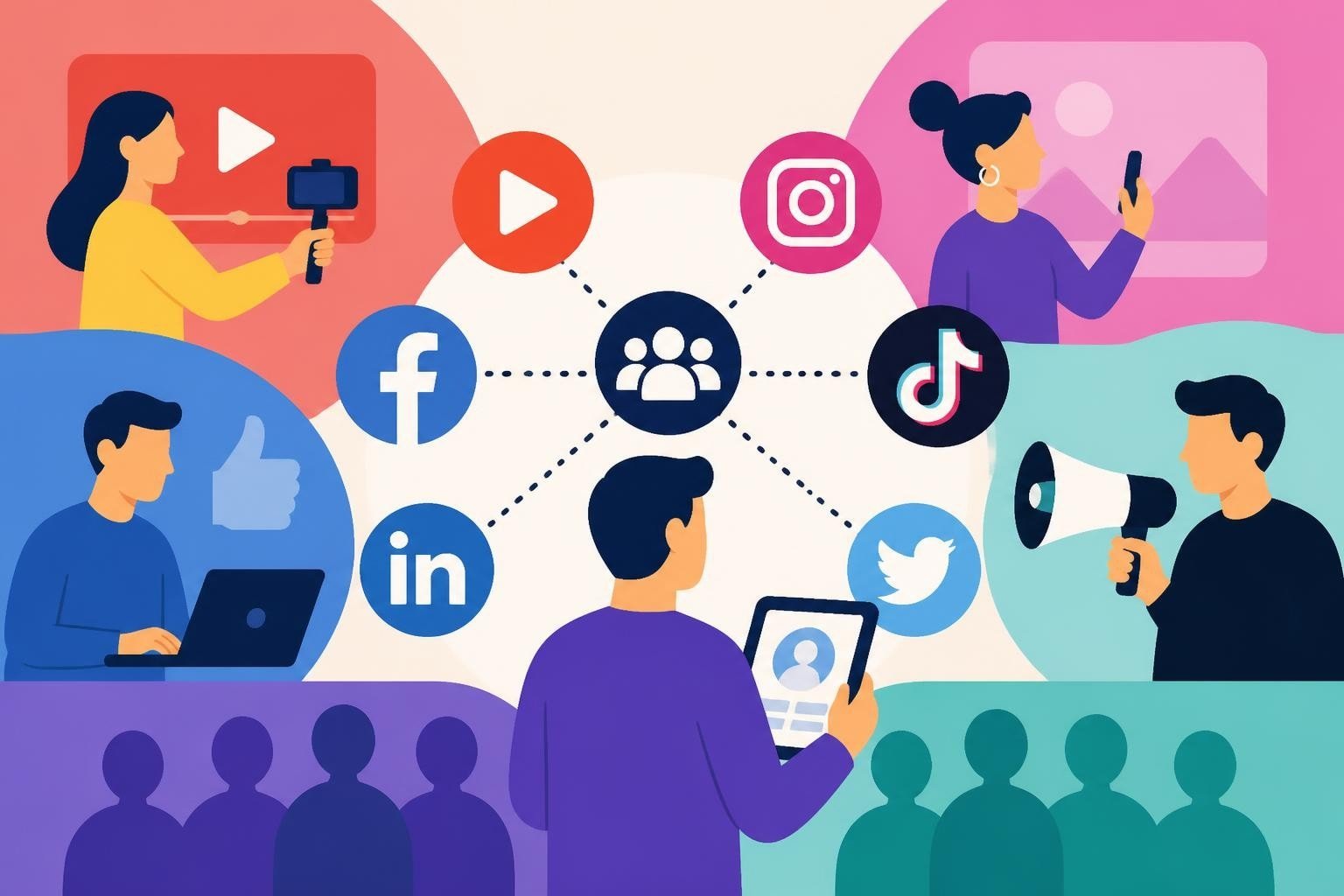
    A social media growth service is a specialized provider that increases measurable engagement metrics on social platforms. These companies deliver followers, post likes, video views, story views, comments, shares, and channel subscribers across networks including Instagram, TikTok, YouTube, Facebook, Twitter/X, LinkedIn, and emerging platforms.

    The core value proposition centers on speed and scale. While organic growth through content excellence and community engagement remains foundational, it typically progresses slowly in the early stages. Growth services compress timelines by delivering immediate metric increases that trigger algorithmic favorability and social proof effects.

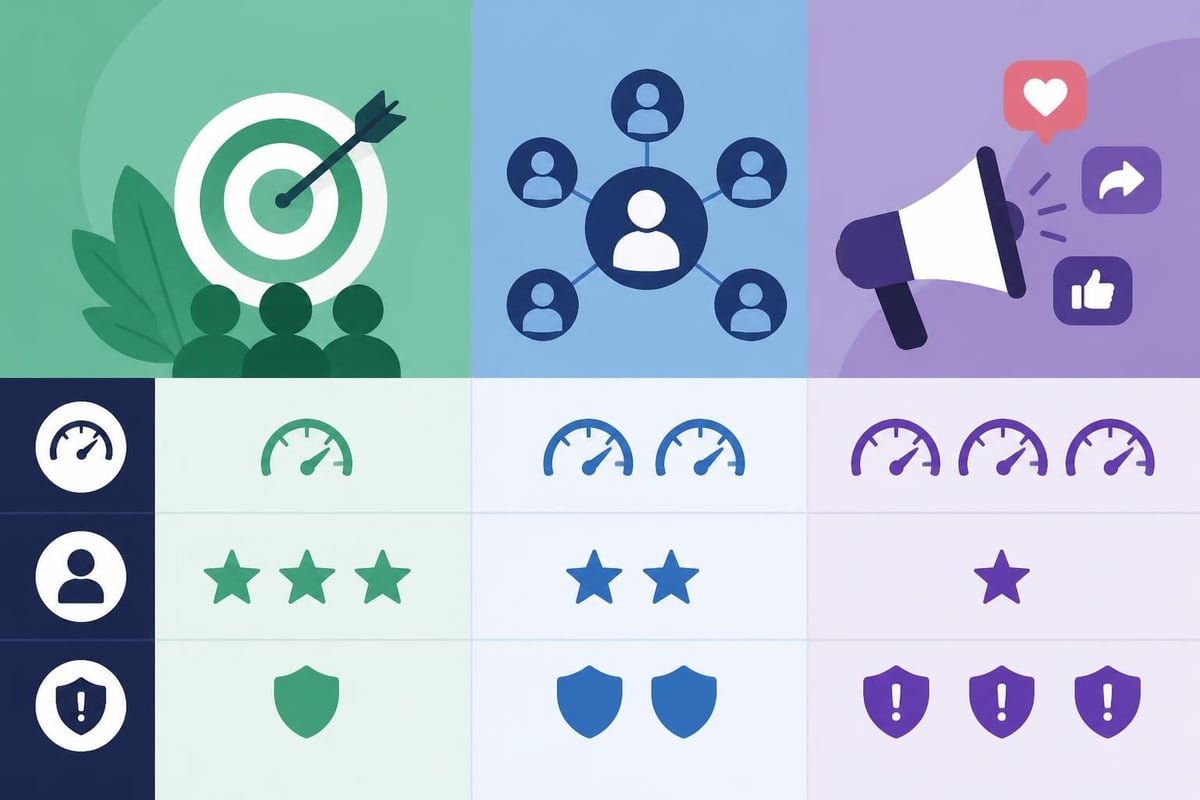
    Service Models and Delivery Methods

    Different providers use distinct approaches to deliver engagement. Understanding these models helps you assess quality, risk, and alignment with platform guidelines.

    Engagement exchange networks connect users who exchange follows, likes, or views. A member might follow ten accounts to earn credits, then spend those credits to receive follows on their own profile. These networks generate real human activity but from users motivated by reciprocity rather than genuine interest.

    Paid promotion redistribution involves providers running targeted ad campaigns, then redistributing the results to clients. The engagement comes from real users who saw paid content, making it platform-compliant but potentially expensive to scale.

    API-integrated automation uses official platform APIs where available to automate follows, unfollows, and engagement patterns. This method mimics human behavior programmatically and works only on platforms with open APIs and permissive terms.

    Manual engagement teams employ human workers who manually follow accounts, like posts, and engage with content. Labor-intensive but the safest method for platform compliance, though also the most expensive.

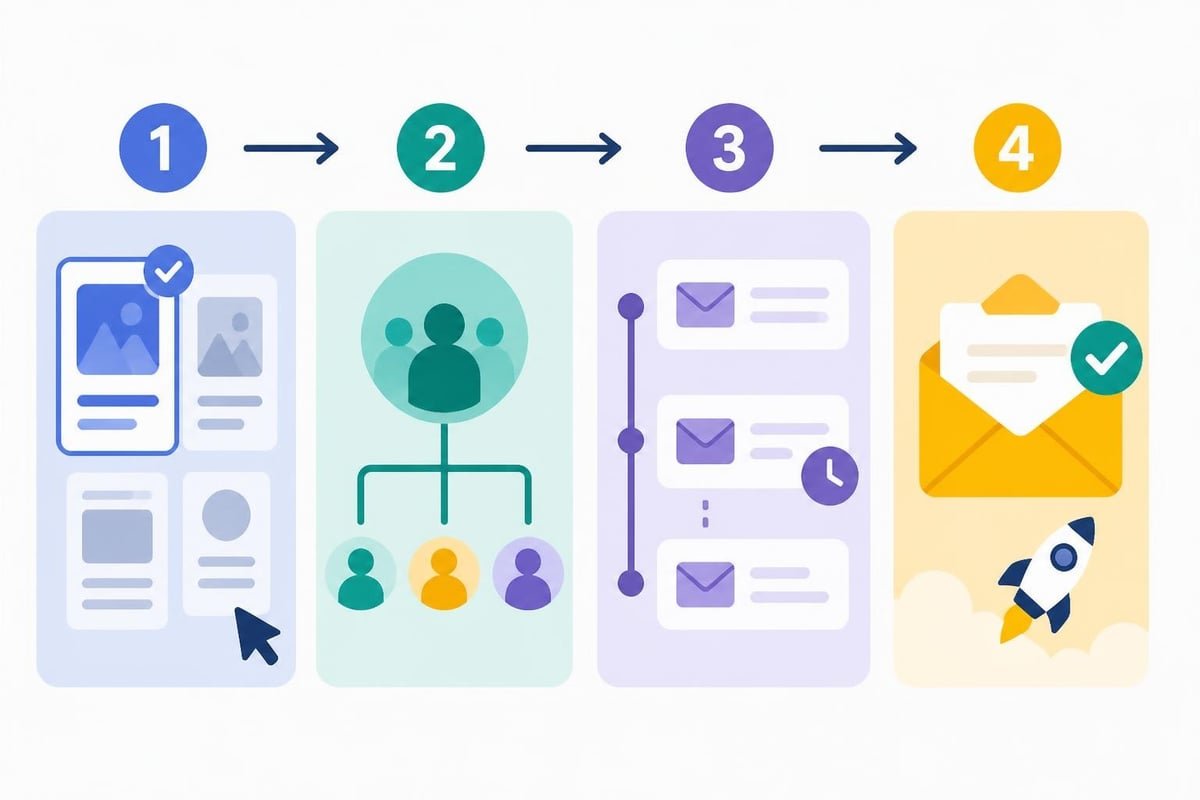
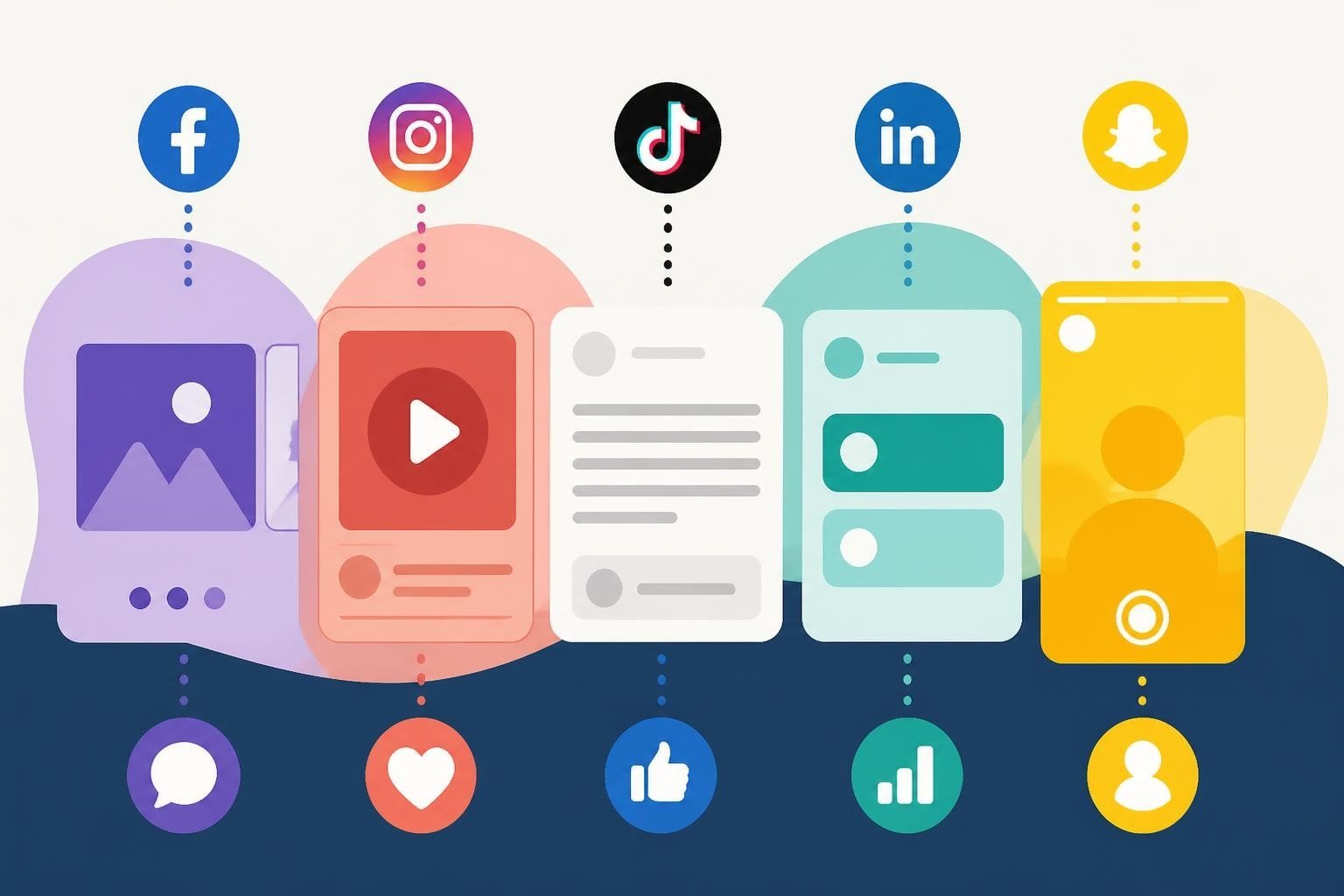
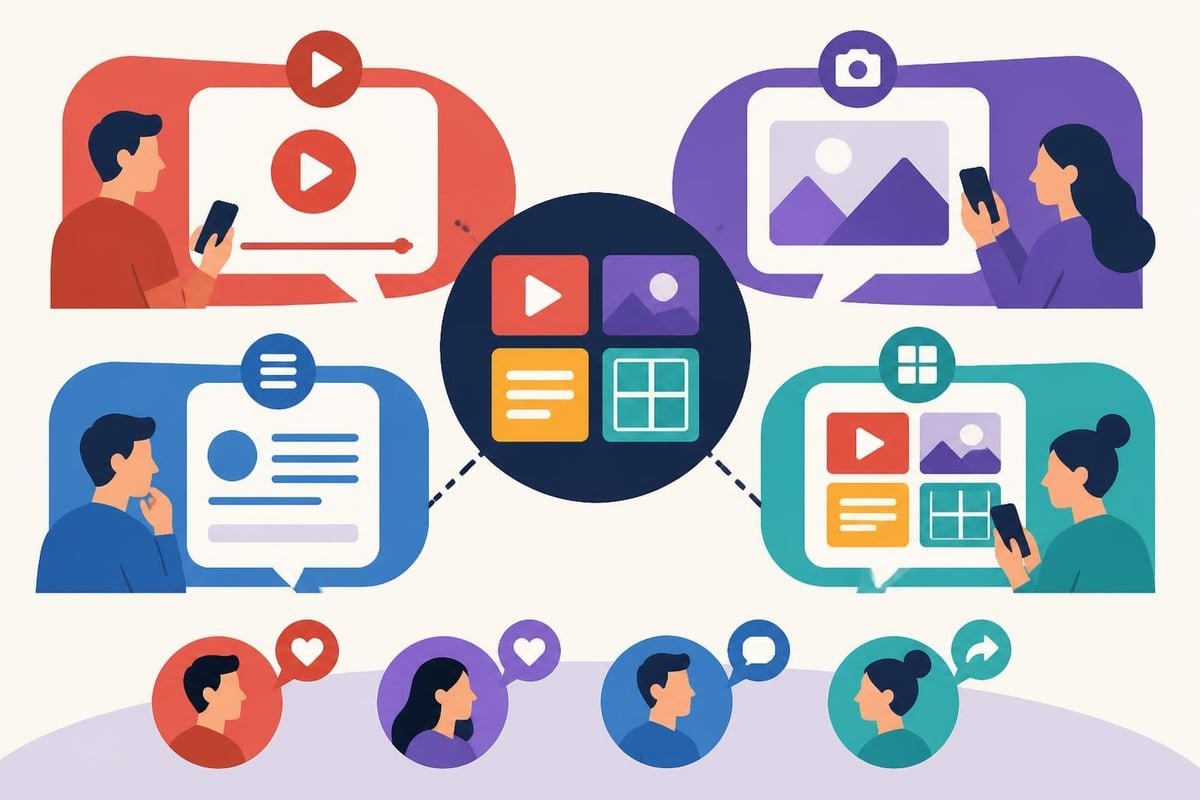
    Social media growth delivery methods

    Evaluating Platform Coverage and Specialization

    Not all growth services cover all platforms equally. Specialization matters because each network has unique technical requirements, user behaviors, and enforcement practices.

    Major Platform Categories

    Platform Type Key Metrics Provider Challenges Quality Indicators
    Instagram Followers, likes, story views, comments Aggressive bot detection, regular API changes Real profiles with posts, gradual delivery
    TikTok Followers, video views, likes, shares Rapid growth triggers review Geographic targeting, view retention rate
    YouTube Subscribers, video views, watch time, likes Watch time validation, comment authenticity High retention views, real channel subscribers
    Twitter/X Followers, retweets, likes, replies Purchase history tracking Account age, tweet frequency, bio completion
    Facebook Page likes, post engagement, group members Business page verification requirements Profile completeness, friend network depth
    LinkedIn Connections, post impressions, company follows Professional network validation Industry-relevant profiles, company affiliations

    Instagram and TikTok receive the highest demand, according to recent social media usage patterns, with younger demographics driving video-first platform growth. Services specializing in these platforms typically invest more in staying current with detection systems and algorithm changes.

    YouTube presents unique technical challenges because the platform validates watch time alongside view counts. A social media growth service offering YouTube views must deliver not just clicks but sustained viewing sessions, making it resource-intensive compared to simpler follow transactions.

    Pricing Models and Cost Structures

    Growth service pricing varies dramatically based on platform, engagement type, volume, and quality tier. Understanding cost structures helps you budget appropriately and identify suspiciously cheap offers that may indicate low quality or platform-violating methods.

    Common Pricing Patterns

    Per-unit pricing charges a fixed rate per follower, like, or view. Typical ranges in 2026:

    • Instagram followers: $2-$15 per 100 (depending on quality tier)
    • TikTok views: $1-$8 per 1,000 views
    • YouTube subscribers: $15-$50 per 100
    • LinkedIn connections: $20-$60 per 100

    Package bundles offer preset quantities at discounted rates. A provider might charge $50 for 1,000 Instagram followers individually but $180 for 5,000 in a package, creating per-unit savings at scale.

    Subscription models provide ongoing delivery for recurring monthly fees. You might pay $150/month for 500 new followers weekly plus daily story views, suitable for accounts wanting sustained growth momentum.

    Custom campaign pricing applies to managed services where providers develop complete growth strategies. Costs range from $500 to $5,000+ monthly depending on platform count, content involvement, and target metrics.

    For the most current pricing across providers, platforms, and package sizes, you can compare social growth providers using live calculators that show real costs based on your specific needs.

    Hidden Costs and Fee Structures

    Beyond headline pricing, watch for additional charges that affect total investment. Expedited delivery fees typically add 20-40% to standard rates. Platform-specific fees apply when you want cross-network campaigns. Replacement guarantees, where providers replace dropped followers, may carry monthly maintenance fees. Geographic targeting premiums charge 30-50% more for followers from specific countries or regions.
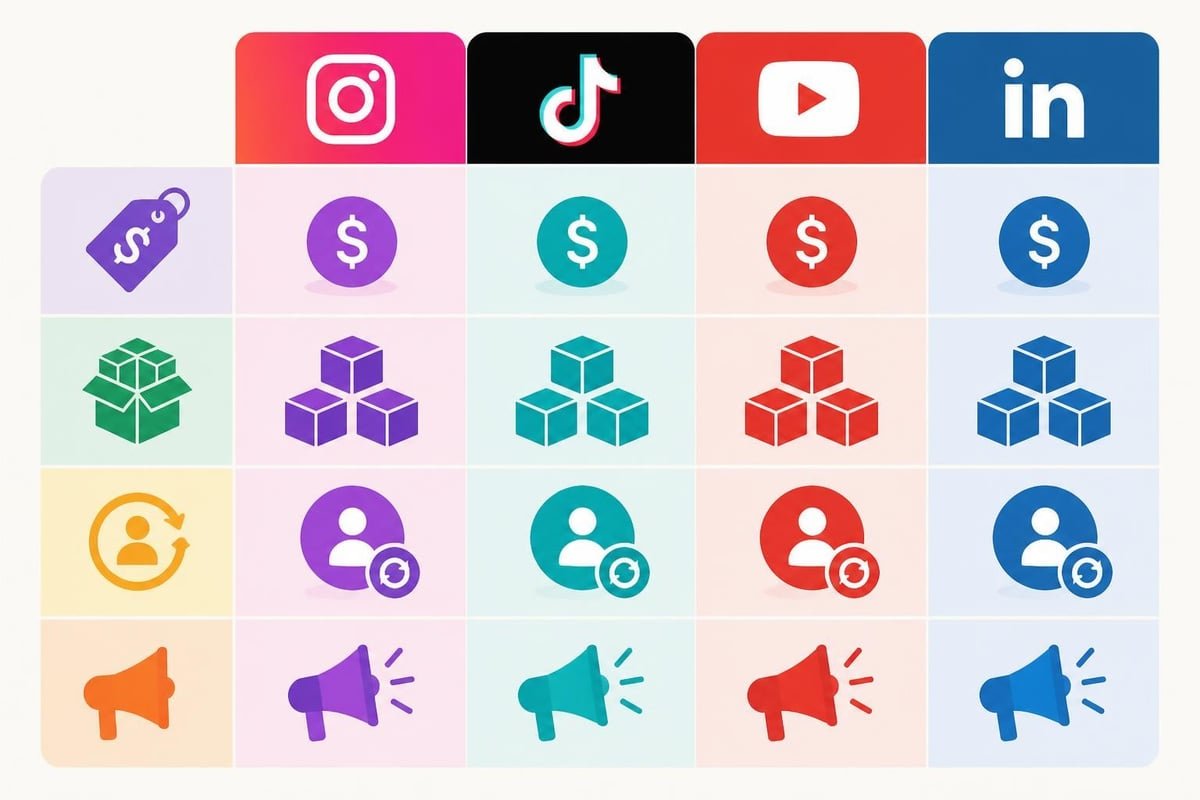
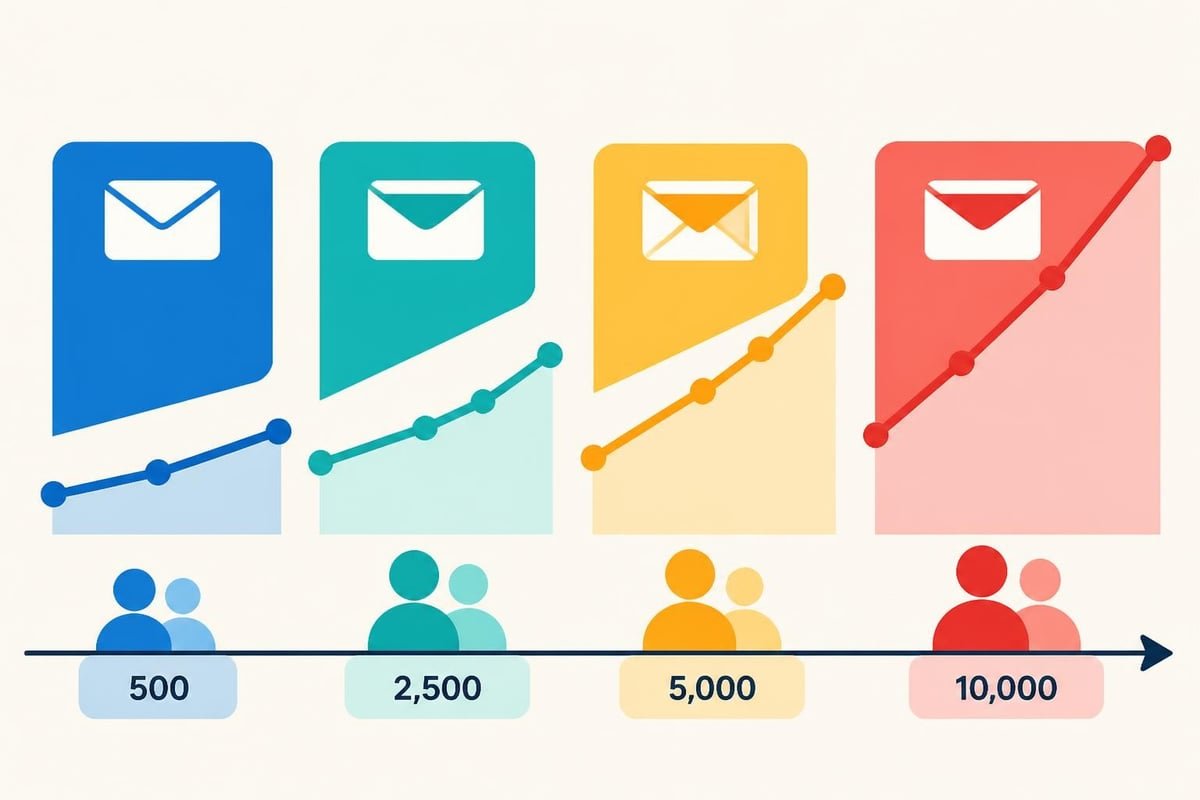
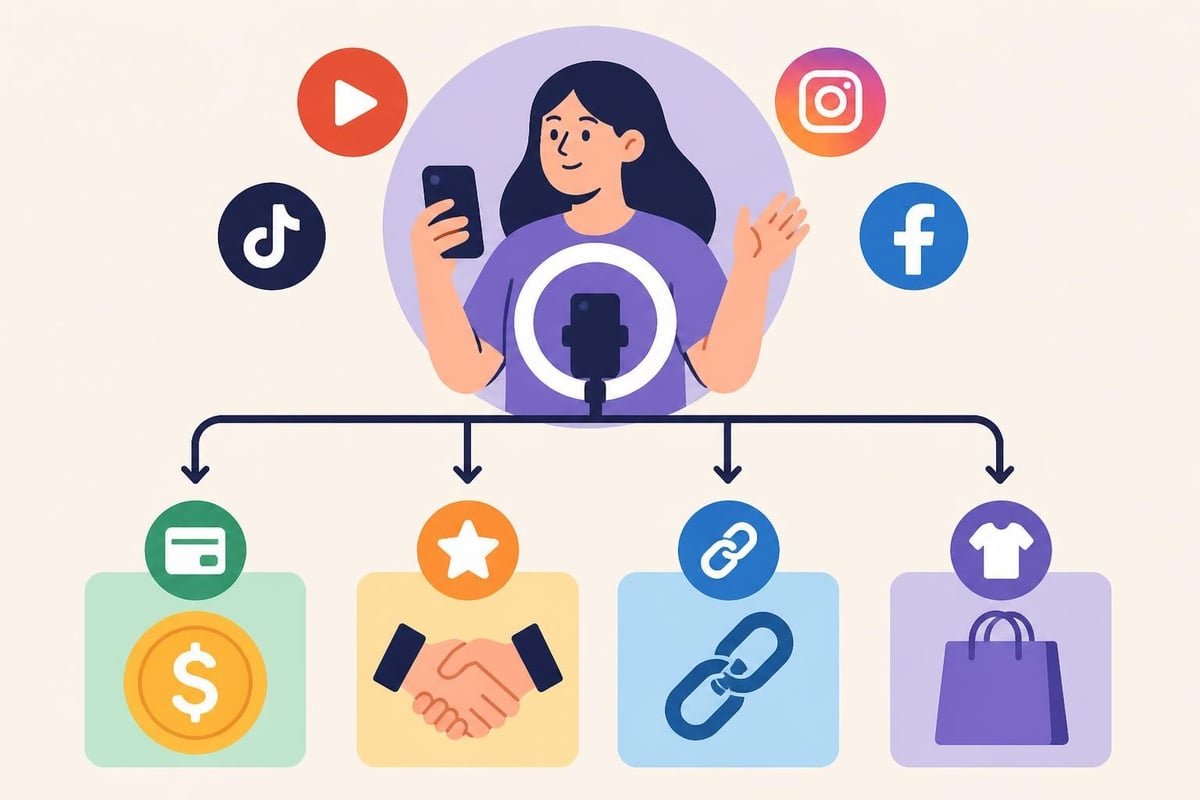
    Social media growth service pricing

    Delivery Speed and Growth Velocity

    How quickly a social media growth service delivers results significantly impacts both effectiveness and safety. Delivery speed involves technical considerations around platform detection systems and strategic considerations around audience perception.

    Delivery Timeframes

    Instant delivery (minutes to hours) carries the highest risk of platform flags. Social networks monitor for sudden follower spikes that deviate from organic patterns. Some providers offer instant delivery for views and likes on individual posts, which raises fewer flags than profile-level metrics.

    Gradual delivery (days to weeks) spreads engagement over time to mimic organic growth patterns. A 5,000-follower order might deliver 200-300 followers daily over three weeks. This approach significantly reduces detection risk.

    Drip campaigns (weeks to months) establish sustainable growth velocity aligned with content output and engagement rates. These longer-term approaches integrate purchased growth with organic efforts for the most natural-appearing trajectory.

    The optimal delivery speed depends on your current account size and recent growth history. An account with 500 followers gaining 2,000 new followers overnight appears suspicious. That same account adding 50 followers daily over six weeks aligns with successful viral content patterns.

    Quality Assessment and Authenticity Markers

    Quality varies enormously across providers, making assessment skills essential. Low-quality services deliver obvious bot accounts or inactive profiles that provide no real value and may trigger platform penalties. High-quality services deliver profiles that appear and behave like genuine users.

    Profile Quality Indicators

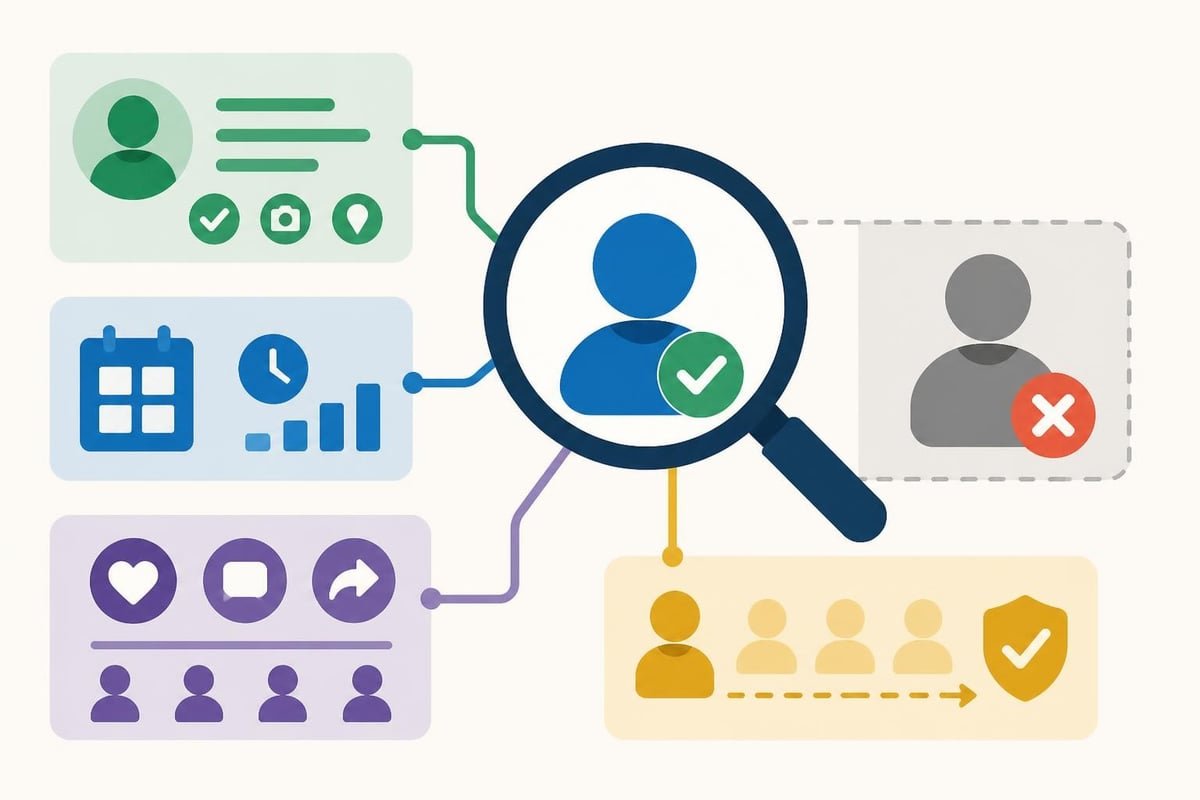
    Examine sample profiles the provider shows or delivers in trial packages. High-quality profiles include:

    • Complete bio information with profile pictures
    • Regular posting history spanning months or years
    • Follower-to-following ratios under 2:1
    • Engagement on their own content (likes and comments from others)
    • Profile pictures showing real people rather than stock images or logos
    • Content aligned with stated interests and location

    Low-quality indicators include empty bios, no profile pictures, joining dates all within the same week, identical follower-following ratios across multiple accounts, and zero content posted. Recent research on coordinated fake-follower campaigns demonstrates how platforms now detect synchronized behavior patterns, making authentic-appearing profiles increasingly important.

    Engagement Rate Sustainability

    A social media growth service should improve, not harm, your engagement rate (the percentage of followers who interact with content). Adding 10,000 ghost followers while maintaining 200 likes per post drops your engagement rate from 2% (200/10,000) to 0.5% (200/40,000), signaling to algorithms that your content quality has declined.

    Quality providers either deliver engaged followers who actually interact or recommend engagement packages proportional to follower growth to maintain healthy ratios.

    Platform Compliance and Account Safety

    Understanding platform policies and enforcement practices protects your account investment. Every major social network prohibits artificial inflation of metrics through purchased engagement, though enforcement varies significantly.

    Risk Tiers by Platform

    Highest enforcement: Instagram and TikTok actively monitor for sudden growth spikes, use machine learning to identify bot networks, and regularly purge fake accounts. Both platforms can shadow-ban accounts (limiting content visibility) or permanently disable accounts for repeat violations.

    Moderate enforcement: YouTube, Facebook, and Twitter/X remove obvious fake accounts during periodic purges but less aggressively police gradual growth. YouTube focuses enforcement on watch-time manipulation and subscriber removals primarily during verification reviews.

    Lower enforcement: LinkedIn and emerging platforms focus enforcement on spam and harassment rather than follower purchasing. LinkedIn occasionally removes connections it identifies as fake but rarely penalizes the purchasing account.

    For organizations subject to regulatory requirements, security and privacy controls around social media account access and integrity may restrict use of third-party growth services entirely.

    Refund Policies and Performance Guarantees

    Provider reliability shows most clearly in refund terms and replacement guarantees. These policies protect your investment when services underdeliver or when platforms remove purchased engagement.

    Standard Guarantee Types

    Guarantee Type Coverage Typical Duration Best For
    Delivery guarantee Full refund if order not completed 14-30 days One-time packages
    Retention guarantee Replace dropped followers/engagement 30-90 days Quality validation
    Engagement guarantee Minimum interaction rate on delivered followers 60 days Active audience building
    Money-back satisfaction Full refund if unsatisfied (with conditions) 7-14 days First-time users

    Read guarantee terms carefully. Some providers offer "lifetime" replacement but define it as 12 months. Others guarantee retention only if you don't purchase from competing services simultaneously. Refund windows may require claims within 72 hours of delivery completion.

    The strongest guarantees combine delivery assurance with retention protection and transparent claim processes. Request written confirmation of guarantee terms before purchase.

    Integration with Organic Growth Strategy

    A social media growth service works most effectively as one component of a comprehensive strategy, not as a replacement for content quality and community engagement. The relationship between paid growth and organic performance determines long-term success.

    Strategic Integration Approaches

    Kickstart model: Use purchased engagement to overcome initial visibility barriers, then shift to organic growth once you reach algorithmic thresholds. Many accounts purchase followers to reach 1,000 (Instagram verification threshold) or 10,000 (swipe-up link threshold), then rely on organic growth.

    Sustained acceleration: Combine ongoing purchased growth with organic efforts to maintain upward momentum. Add 20-30% purchased engagement monthly while producing content that generates 70-80% organic growth.

    Campaign amplification: Purchase engagement specifically around campaign launches, product releases, or seasonal promotions to maximize visibility during critical windows. Return to organic-only during maintenance periods.

    Cross-channel leverage: Use purchased growth on one platform to drive organic growth on others. Build a YouTube subscriber base through purchased subscribers, then leverage that credibility to grow Instagram and TikTok organically through cross-promotion.

    Implementing cross-channel measurement helps track how purchased growth on one platform influences organic performance across your entire social ecosystem.
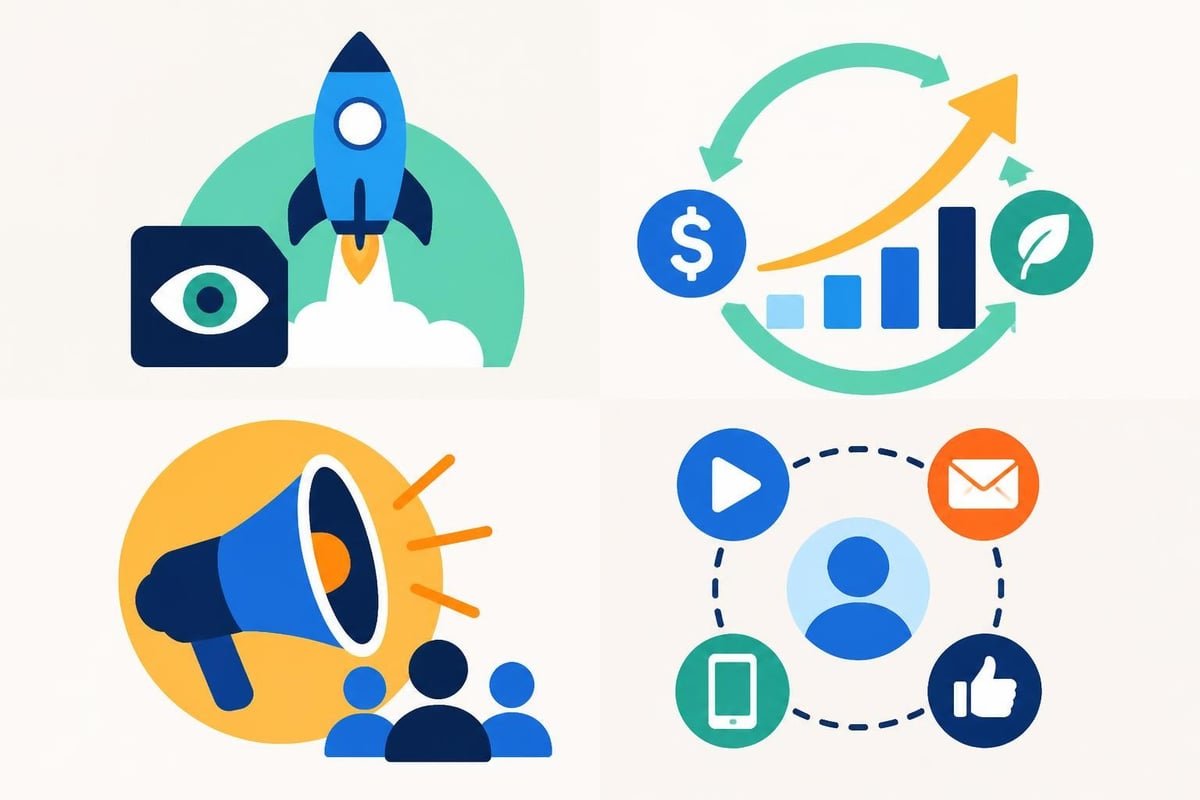
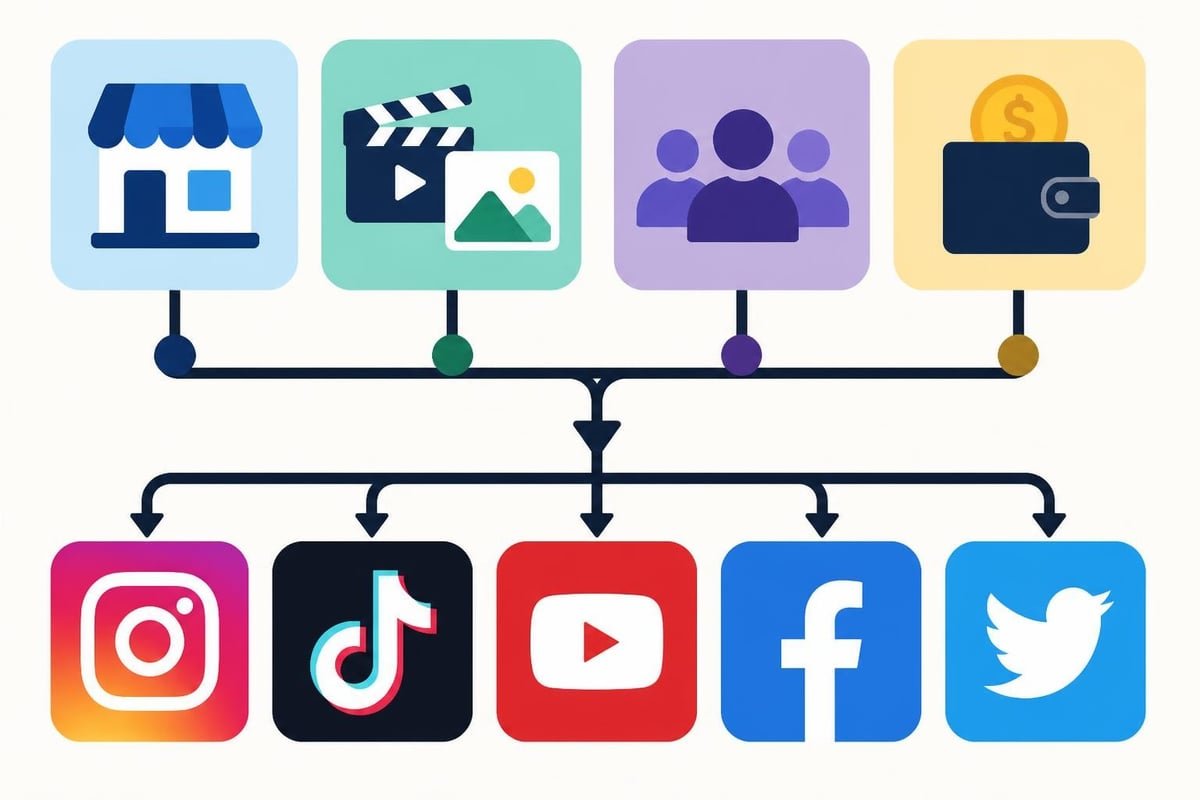
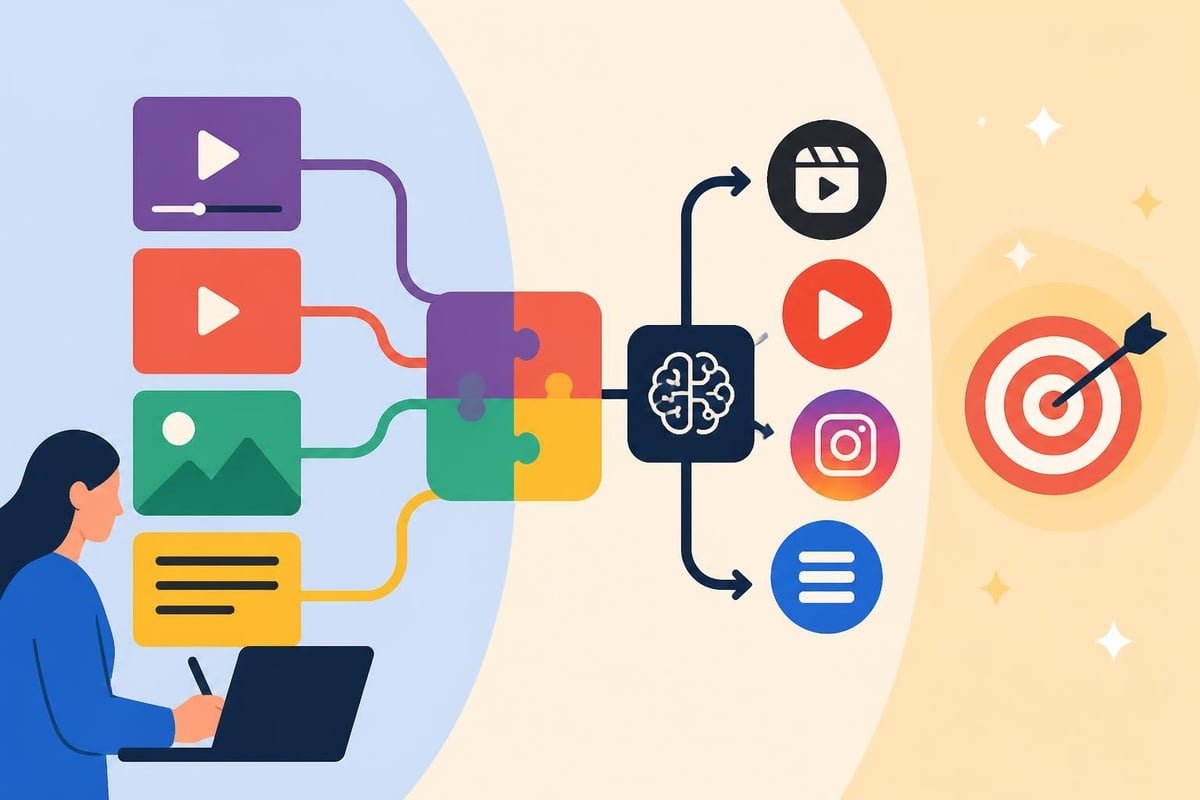
    Integrated social media growth strategy

    Provider Selection Criteria and Due Diligence

    Choosing the right social media growth service requires systematic evaluation across multiple dimensions. Provider capabilities, reliability, and alignment with your specific needs vary significantly.

    Essential Evaluation Factors

    Company transparency includes verified business registration, clear ownership information, and responsive customer support. Providers operating anonymously carry higher abandonment risk.

    Payment security involves PCI-compliant payment processing, HTTPS encryption on order pages, and recognizable payment processors (Stripe, PayPal, major credit cards). Avoid providers requesting wire transfers or cryptocurrency for standard orders.

    Portfolio demonstration shows actual results from previous clients (with permission) rather than generic stock screenshots. Request case studies relevant to your platform and account size.

    Incremental testing means starting with small trial orders before committing to large packages. Reputable providers welcome trial orders because they demonstrate quality. Providers requiring minimum purchases of thousands of dollars may lack confidence in retention.

    Contract terms should include clear service descriptions, delivery timelines, guarantee conditions, and cancellation policies. Review terms before payment, not after.

    Red Flags and Warning Signs

    Immediate red flags include guarantees of viral growth or specific revenue increases (impossible to guarantee), prices dramatically below market rates (typically indicating bot delivery), no refund policy or impossibly generous guarantees (100% money-back for any reason, forever), pressure tactics or limited-time pricing on ongoing services, and requests for your account password (legitimate services never need passwords).

    Platform-Specific Considerations

    Each social network presents unique opportunities and constraints that affect social media growth service effectiveness. Tailoring your approach to platform-specific characteristics improves results.

    Instagram Growth Dynamics

    Instagram's algorithm prioritizes consistent posting, story engagement, and reel performance in 2026. Purchased followers provide social proof but won't improve algorithmic distribution unless accompanied by engagement (likes, comments, saves, shares). For best results, pair follower packages with post engagement packages at proportional rates. Maintain engagement rates above 1% for accounts under 100K followers and above 0.5% for larger accounts.

    TikTok Growth Mechanics

    TikTok's "For You" page algorithm makes initial video performance crucial. TikTok’s Creative Center provides insights into trending content formats and sounds. Purchased views on new videos can trigger algorithmic testing, where TikTok shows content to progressively larger audiences based on engagement rates. Focus on high-retention views (viewers watching at least 50% of video length) rather than simple view counts.

    YouTube Channel Building

    YouTube's monetization requirements (1,000 subscribers and 4,000 watch hours) make it tempting to purchase both metrics. However, YouTube's review process for monetization approval examines channel history and may detect artificial inflation. Prioritize watch-time delivery over subscriber counts, and ensure purchased views come from videos relevant to your content niche to maintain topic authority.

    LinkedIn Professional Networking

    LinkedIn connections carry more weight than followers on other platforms because they grant access to your network and updates. Quality matters significantly more than quantity. Purchased connections should come from profiles in relevant industries and geographic regions. Generic global connections from unrelated fields damage credibility with your actual professional network.

    Combining Growth Services with Content Excellence

    The most successful accounts treat a social media growth service as an amplifier for already-strong content rather than a substitute for quality. The relationship between content value and purchased growth determines sustainable success.

    Content-First Principles

    Create content worth discovering before investing heavily in discovery mechanisms. Purchased followers who arrive to find low-quality or infrequent content will immediately disengage, wasting your investment. Build a content library of at least 15-20 strong posts before pursuing significant follower growth.

    Posting consistency matters more than volume. Three high-quality posts weekly outperforms daily low-effort content. Establish a sustainable rhythm before amplifying reach.

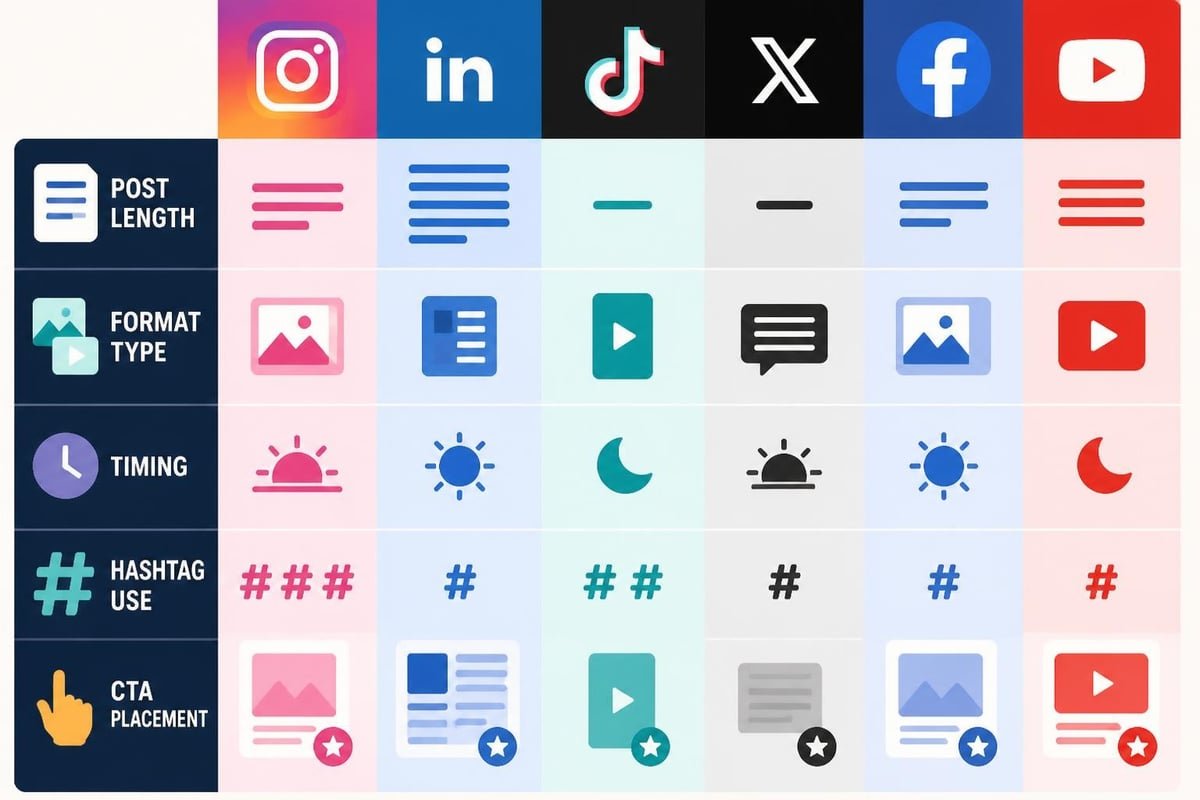
    Format optimization aligns content types with platform preferences. Instagram favors reels over static posts in 2026. TikTok prioritizes vertical video under 60 seconds. LinkedIn rewards text-based thought leadership posts and professional insights.

    Audience resonance means creating for your target audience's interests, not your own preferences. Research competitor content, monitor comments for questions and interests, and adapt topics to audience demand.

    Content and Growth Service Synchronization

    Time growth service purchases to coincide with content quality improvements. Launch follower campaigns when you've refined your content strategy and established consistent quality. The new followers arrive to an optimized experience that encourages organic engagement.

    Schedule engagement purchases around your best content. Identify your top-performing posts organically, then amplify them with purchased likes, comments, and shares to extend their algorithmic reach. This approach leverages platform algorithms rather than fighting them.

    Measuring Return on Investment

    Quantifying the value of a social media growth service requires tracking both direct metrics and downstream business outcomes. Measurement frameworks separate correlation from causation and identify which investments actually drive results.

    Tiered Metrics Framework

    Tier 1 metrics directly measure service delivery: follower counts delivered versus promised, delivery timeframe actual versus estimated, retention rates at 30, 60, and 90 days, and engagement rates on delivered followers.

    Tier 2 metrics track algorithmic and visibility impact: reach and impressions per post before and after growth, content discovery through hashtags and explore pages, follower growth rate excluding purchased followers, and engagement rate sustainability over time.

    Tier 3 metrics connect social growth to business outcomes: website traffic from social referrals, conversion rates on social-driven traffic, customer acquisition cost per social channel, and lifetime value of customers acquired through social.

    Attribution Challenges

    Separating the impact of purchased growth from organic growth, content improvements, and broader marketing efforts requires controlled measurement. Establish baselines before starting growth services. Track organic metrics separately from total metrics. Test growth services on one platform while maintaining organic-only approaches on others for comparison.

    Most businesses find that purchased growth delivers measurable improvements in Tier 1 and Tier 2 metrics but requires strong content and conversion optimization to impact Tier 3 business outcomes.

    Emerging Trends and Future Outlook

    The social media growth service industry continues evolving as platforms update detection systems, audience preferences shift, and new networks emerge. Staying current with trends helps you adapt strategies proactively.

    2026 Market Developments

    AI-generated engagement using language models to create authentic-seeming comments and responses has increased in sophistication. Detection systems are also improving, creating an arms race between providers and platforms.

    Micro-influencer networks connecting brands with small creators for authentic promotion have emerged as an alternative to pure metric purchasing. These services deliver real engagement from genuine audiences, though at higher costs.

    Platform diversification has accelerated as creators reduce dependency on any single network. Growth services now emphasize multi-platform packages rather than single-network specialization.

    Authenticity premiums mean audiences increasingly value small, engaged communities over large, passive followings. Quality providers have shifted toward lower-volume, higher-engagement delivery rather than maximum follower counts.

    Regulatory scrutiny around disclosure requirements for purchased engagement and influencer marketing authenticity continues increasing. Some jurisdictions now require disclosure when metrics include purchased elements, particularly for commercial accounts.

    Alternative and Complementary Approaches

    A social media growth service represents one option within a broader toolkit of audience-building strategies. Understanding alternatives helps you select the optimal approach for your specific situation.

    Organic Growth Acceleration

    Content excellence remains the foundation of sustainable growth. Invest in understanding platform algorithms, creating share-worthy content, and engaging authentically with your community. Tools like content calendars, analytics platforms, and design software support organic efforts.

    Influencer Partnerships

    Collaborating with established creators provides access to their audiences through sponsored content, takeovers, or co-creation. These partnerships deliver engaged audiences genuinely interested in your niche, though at premium costs compared to direct follower purchasing.

    Paid Advertising

    Platform advertising (Instagram ads, TikTok ads, YouTube ads) delivers guaranteed reach with sophisticated targeting options. While more expensive per follower than growth services, ads provide complete transparency and platform compliance.

    Community Building

    Facebook groups, Discord servers, and specialized forums create owned community spaces less dependent on algorithmic visibility. These approaches require more time investment but generate stronger member loyalty and engagement.

    Email List Growth

    Building an email list provides owned audience access independent of social platform changes. For businesses seeking long-term audience relationships, email often delivers better ROI than social followers. Those evaluating complementary marketing channels can explore independent comparisons of email platforms covering features and costs.

    Seasonal and Cyclical Considerations

    Social media growth effectiveness varies by timing, influenced by platform algorithm updates, cultural moments, and business cycles. Strategic timing maximizes return on investment.

    Optimal Purchase Timing

    Post-algorithm updates: Major platform algorithm changes create windows where detection systems temporarily relax as engineers refine new parameters. Following major updates by 2-4 weeks often provides temporarily reduced risk.

    Cultural moments: Holidays, major events, and trending topics increase overall platform activity and content consumption. Purchased engagement during high-activity periods appears more organic within elevated baseline activity.

    Content launch coordination: Time growth service delivery to coincide with your strongest content releases. Launch a viral-candidate video on TikTok, then amplify it with purchased views within the first 6 hours to trigger algorithmic promotion.

    Competitive analysis: Monitor competitor growth patterns and coordinate your pushes during their quiet periods to capture audience attention when alternative options are less active.

    Periods to Avoid

    Platform purge cycles, typically quarterly, remove obvious fake accounts. Purchasing immediately before known purge windows wastes investment on soon-to-be-deleted accounts. Major platform updates during rollout phases (2-3 week periods) carry elevated detection risk as systems recalibrate. Holiday periods when your target audience is less active (Christmas week for B2B, summer for students) reduce engagement rates on delivered followers.


    Selecting the right social media growth service requires balancing speed, cost, quality, and platform compliance while aligning purchased growth with organic content excellence. The most effective approach combines strategic metric purchasing with strong creative, consistent posting, and authentic community engagement.

    Best Social Media Growth Services 2026 provides independent comparisons of top providers on price, delivery speed, platform coverage, and refund terms, with a live calculator showing real costs for your specific platform and package needs. Compare options and find the service that matches your growth goals and budget.

  • TikTok Growth Service: What Works in 2026

    TikTok Growth Service: What Works in 2026

    Growing a TikTok account in 2026 requires more than just posting videos and hoping for virality. Creators, brands, and businesses are increasingly turning to specialized services to accelerate their reach and build credibility on the platform. A tiktok growth service promises to deliver followers, views, likes, and engagement at scale, but the market is crowded with providers offering vastly different quality, methods, and results. Understanding how these services operate, what separates legitimate growth from artificial inflation, and how to evaluate providers on price, speed, and safety can make the difference between building a sustainable audience and wasting resources on hollow metrics. If you're researching options, compare social growth providers with real pricing data and delivery timelines to make an informed decision.

    How TikTok Growth Services Actually Work

    At their core, growth services use a combination of automation, targeted outreach, and network effects to boost your account's visibility and engagement. The methods vary significantly between providers.

    Organic engagement services focus on identifying and interacting with users who are likely to be genuinely interested in your content. These services analyze your niche, hashtags, and competitors, then follow, like, and comment on behalf of your account to attract reciprocal engagement. This approach mimics natural user behavior and tends to deliver followers who actually watch your videos and interact over time.

    Managed follower delivery takes a different route. Providers maintain networks of active accounts or partner with creators who agree to follow new profiles in exchange for compensation or reciprocal follows. Quality varies widely here. Premium services deliver followers from real, active accounts with complete profiles and posting history. Budget options may rely on inactive accounts or profiles with suspicious activity patterns.

    Content amplification packages focus on views and engagement rather than followers. When you purchase views, the service pushes your video to real users through a combination of methods: embedding it in discovery feeds, promoting it within their network, or leveraging TikTok's algorithm by generating initial engagement that signals quality to the platform.

    The distinction between these methods matters because TikTok's algorithm in 2026 is sophisticated at detecting inauthentic behavior. According to Oxford Internet Institute research on social media manipulation, platforms have developed increasingly effective tools for identifying bot networks, coordinated inauthentic behavior, and artificial amplification.

    TikTok growth service delivery methods

    What Premium Services Include

    Top-tier providers package their offerings with features designed to protect your account and maximize ROI:

    • Gradual delivery schedules that spread followers or views over days or weeks to avoid sudden spikes that trigger platform reviews
    • Geographic and demographic targeting to ensure followers match your content niche and language
    • Retention guarantees that replace followers who unfollow within a specified period (typically 30-90 days)
    • Engagement ratio balancing to maintain natural-looking ratios between followers, likes, views, and comments
    • Account safety protocols including IP rotation, session management, and activity throttling

    When evaluating a tiktok growth service, examine not just what they deliver but how they deliver it. A provider offering 10,000 followers for $20 with instant delivery is almost certainly using methods that put your account at risk.

    Evaluating Quality and Avoiding Low-Value Providers

    The growth service market is flooded with providers making identical promises, but delivery quality varies dramatically. Here's what separates sustainable growth from empty metrics.

    Account quality indicators are the first filter. High-quality followers have:

    • Complete profile information (bio, profile picture, content)
    • Regular posting activity within the past 30 days
    • Follower-to-following ratios that suggest real users (typically between 0.3:1 and 3:1)
    • Engagement on their own posts
    • Content that aligns with genuine interests rather than spam or recycled material
    Quality Tier Profile Completion Avg. Posting Frequency Retention Rate (30 days) Price Range (per 1000 followers)
    Premium 95-100% 3-5 posts/week 85-95% $45-$120
    Standard 80-95% 1-2 posts/week 60-80% $25-$50
    Budget 40-80% Irregular/none 20-50% $5-$25

    Retention rate is the single most important metric for evaluating a provider. If 70% of purchased followers disappear within a month, you've paid for temporary inflation rather than actual growth. Legitimate providers track and publish retention data, offer replacement guarantees, and structure their delivery to maximize long-term retention.

    Delivery speed also signals quality. Platforms like TikTok monitor for suspicious activity patterns. An account gaining 5,000 followers overnight after months of slow growth triggers algorithmic scrutiny. Premium services deliver followers gradually, often at rates that mirror organic viral growth: accelerating over several days, peaking, then tapering off.

    Platform compliance is non-negotiable. TikTok's terms of service explicitly prohibit purchasing engagement from services that use bots or fake accounts. However, the platform distinguishes between prohibited artificial manipulation and legitimate promotional services. The TikTok Creator Suitability Report provides guidance on authentic audience building, though it focuses on branded content partnerships rather than growth services.

    TikTok follower quality assessment

    Red Flags That Signal Problems

    Certain provider characteristics reliably predict poor results:

    1. Instant delivery promises – Real accounts can't be delivered instantly at scale
    2. No geographic or demographic targeting options – Suggests indiscriminate or bot-driven delivery
    3. Prices significantly below market rates – Quality costs; deep discounts mean compromised quality
    4. No retention guarantee or vague refund terms – Provider expects high drop-off rates
    5. Limited or no customer support – You'll have no recourse when problems arise
    6. Requires your password – Legitimate services work through TikTok's API or don't need account access

    Pay particular attention to how providers describe their methods. Vague claims like "proprietary network" or "exclusive partnerships" without specifics often mask low-quality sources.

    Strategic Use Cases for Growth Services

    A tiktok growth service delivers maximum value when deployed strategically rather than as a substitute for content quality. Understanding when and how to use these services determines ROI.

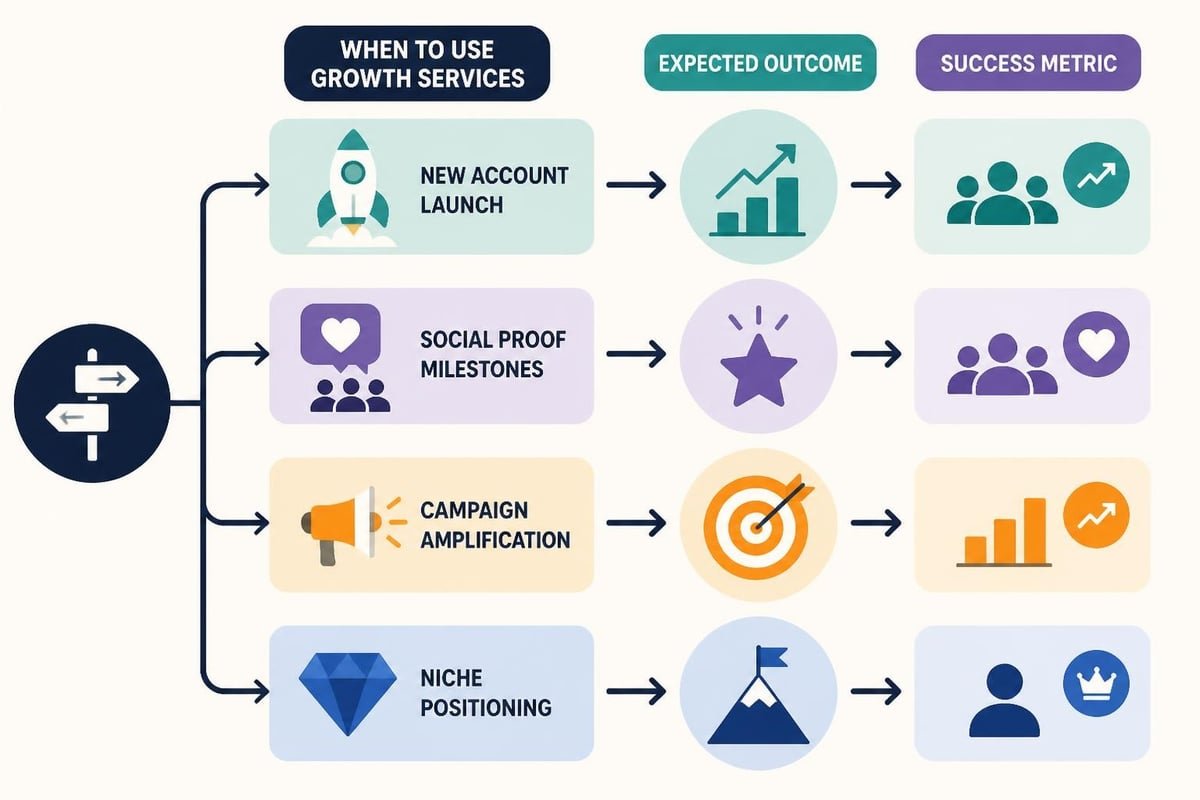
    New account launch acceleration is one of the most effective applications. TikTok's algorithm gives new accounts a brief window to demonstrate value. Videos from accounts with zero followers receive limited distribution while the platform assesses quality. Starting with 500-1,000 engaged followers can help your early content reach the "For You" pages of similar users, creating a flywheel effect where quality content gets amplification and poor content still fails.

    However, this only works if your content merits the amplification. Purchasing followers won't compensate for videos that don't hook viewers in the first three seconds, lack clear value propositions, or ignore current trends and audio.

    Social proof building addresses a specific psychological barrier. According to Pew Research Center data on teen social media usage, users-particularly younger demographics-evaluate credibility partly through follower counts and engagement metrics. An account with 15,000 followers and 500 average likes receives more initial trust than one with 150 followers and 12 likes, even if content quality is identical.

    This matters most for:

    • Business accounts converting browsers into customers
    • Creators pitching brands for sponsored content opportunities
    • Service providers demonstrating expertise and market position
    • Product launches establishing credibility before the audience has experience to judge quality

    Campaign amplification uses targeted view and engagement packages to boost specific high-value content. If you've created a comprehensive tutorial, launched a product, or published cornerstone content, purchasing 10,000-50,000 views with geographic and interest targeting can push that video into TikTok's recommendation algorithm at scale.

    When implementing growth services alongside digital marketing tactics for content creation and distribution, you create compounding effects. Quality content plus strategic amplification outperforms either element alone.

    What Growth Services Can't Replace

    Even premium services have clear limitations. They don't:

    • Create content strategy or improve video quality
    • Ensure purchased followers watch your future videos
    • Guarantee algorithmic distribution for new content
    • Build genuine community or audience relationships
    • Develop your unique voice, style, or creative approach

    Think of a tiktok growth service as scaffolding during construction, not the building's foundation. The scaffolding helps you build faster and reach higher, but it's temporary infrastructure around work you still must do yourself.

    TikTok growth service strategic framework

    Pricing Models and What You Actually Get

    Understanding pricing structures helps you evaluate whether you're paying for value or being overcharged for low-quality delivery. The social media marketing service comparison breaks down current market pricing across providers, but here's how to interpret those numbers.

    Tiered pricing based on volume is standard across the industry. Most providers offer package sizes from small tests (100-500 followers/views) to bulk orders (50,000+). Per-unit costs decrease as volume increases, but the discount structure reveals provider margins and quality.

    Package Size Budget Provider Mid-Tier Provider Premium Provider
    500 followers $8 ($0.016 each) $22 ($0.044 each) $45 ($0.090 each)
    2,500 followers $28 ($0.011 each) $85 ($0.034 each) $185 ($0.074 each)
    10,000 followers $85 ($0.009 each) $280 ($0.028 each) $650 ($0.065 each)

    The premium tier costs 7-10× more than budget options, but retention rates tell the real story. If premium followers retain at 90% versus 30% for budget providers, the effective cost per retained follower is actually competitive.

    Delivery speed pricing adds another dimension. Most services offer:

    • Standard delivery (5-15 days): base price
    • Fast delivery (2-4 days): 20-40% premium
    • Express delivery (24-72 hours): 50-100% premium

    Faster delivery increases provider costs (requiring more resources, taking priority over other orders) and algorithmic risk (harder to make rapid growth look natural). For most use cases, standard delivery offers better value and lower risk.

    Targeted delivery premiums vary by specificity. Geographic targeting to major markets (US, UK, Canada) typically adds 15-30% versus global delivery. Niche interest targeting (fitness, gaming, beauty) adds another 10-25%. Gender and age targeting adds 10-20% if available. These premiums reflect the additional effort required to source appropriate accounts and the smaller available pool.

    Calculating Real Cost Per Acquisition

    To compare providers accurately, calculate cost per retained follower at 30 and 90 days:

    Cost per retained follower (30 days) = (Package price) ÷ (Delivered followers × Retention rate)

    Example: A $85 package delivering 2,500 followers with 70% retention = $85 ÷ (2,500 × 0.70) = $0.049 per retained follower

    Compare this to a $28 budget package with 35% retention = $28 ÷ (2,500 × 0.35) = $0.032 per retained follower

    In this scenario, the budget option actually delivers better per-follower value despite lower absolute quality, assuming both groups are equally likely to engage. However, engagement rate matters too. If premium followers watch 40% of your videos versus 8% for budget followers, the premium service delivers 5× the actual value.

    Compliance, Privacy, and Platform Risk

    Using a tiktok growth service involves accepting certain risks. Understanding and mitigating those risks protects your account and reputation.

    TikTok's enforcement approach has evolved significantly. The platform now uses machine learning to identify purchased engagement patterns, unusual follower velocity, and engagement ratio anomalies. Accounts flagged for suspicious activity may face:

    • Shadowbanning (content distribution throttled without notification)
    • Temporary restrictions on following, commenting, or posting
    • Permanent account suspension for severe or repeat violations
    • Content removal or suppression in recommendation algorithms

    The Brookings analysis of TikTok’s data and privacy challenges highlights ongoing platform scrutiny and regulatory pressure, which tends to make TikTok more aggressive about enforcing terms of service to demonstrate legitimacy.

    Password-based access is the highest-risk integration method. Services requesting your account password can:

    • Post content on your behalf
    • Access private messages and data
    • Change account settings
    • Lock you out by changing credentials

    Legitimate providers typically work through TikTok's business APIs or require only your username for manual delivery. Never share passwords unless you're using a dedicated "buffer" account specifically for growth services, not your primary brand account.

    Data retention and privacy concerns extend beyond platform rules. Growth service providers collect data about your account, audience, content performance, and business goals. Verify:

    • Where and how long they store your information
    • Whether they sell or share data with third parties
    • Their breach notification policies
    • Geographic jurisdiction governing data protection (GDPR, CCPA compliance)

    Risk Mitigation Strategies

    Smart creators and businesses implement safeguards:

    1. Start with small test orders (100-500 followers) to evaluate delivery quality, retention, and any platform response before committing to large packages
    2. Use gradual delivery schedules across multiple weeks rather than requesting fast or instant delivery
    3. Maintain strong organic growth alongside purchased growth so the mix appears natural and your account doesn't become dependent on purchased engagement
    4. Monitor retention and engagement rates weekly to catch quality problems early
    5. Diversify across multiple growth strategies including SEO, cross-platform promotion, collaborations, and paid advertising rather than relying exclusively on growth services

    Remember that TikTok's algorithm prioritizes content quality and engagement over raw follower counts. An account with 2,000 highly engaged followers who regularly watch, like, and share your content will outperform one with 50,000 purchased followers who never interact.

    Platform-Specific Considerations for TikTok

    TikTok's unique algorithm and culture create specific considerations that don't apply to Instagram, YouTube, or other platforms where growth services are common.

    The "For You" page algorithm is TikTok's defining feature and primary growth engine. Unlike Instagram, where follower counts directly determine reach, TikTok shows content to users who don't follow you based on engagement signals: completion rate, likes, comments, shares, and watch time relative to video length.

    This means purchased followers contribute less to TikTok success than on other platforms. A video that 80% of viewers watch completely will reach millions regardless of your follower count. Conversely, videos with poor engagement won't reach even your purchased followers.

    Growth services deliver maximum value on TikTok when focused on:

    • View packages that trigger algorithmic amplification for high-quality videos
    • Engagement packages (likes, comments) that signal value to the algorithm
    • Follower packages used for credibility rather than distribution

    Content lifecycle is compressed on TikTok. Videos gain 80-90% of their total views within 24-72 hours of posting. This creates opportunities for strategic view purchasing: delivering 5,000-10,000 views within the first few hours can push a quality video into algorithmic amplification, but timing matters critically.

    Niche communities on TikTok are highly specific and algorithmically reinforced. Users who engage with fitness content see more fitness videos; those who watch gaming clips get more gaming recommendations. This makes targeted follower delivery particularly valuable. Followers genuinely interested in your niche are exponentially more likely to watch future content and engage, creating the sustained signals TikTok's algorithm rewards.

    Audio and Trend Dynamics

    TikTok's trend-driven culture creates unique dynamics. Videos using trending audio receive algorithmic preference, but trends move quickly. Growth services can't compensate for missing trends, using outdated audio, or ignoring format shifts.

    However, they can help you capitalize on trends by:

    • Amplifying your trend-riding content before the trend peaks
    • Building baseline credibility that makes users more likely to engage when they discover your trend videos
    • Creating the initial engagement burst that signals to TikTok that your take on a trend is worth amplifying

    The most successful TikTok growth strategies combine purchased amplification with excellent trend execution, not one or the other.

    Measuring ROI and Performance Metrics

    Determining whether a tiktok growth service delivered value requires tracking the right metrics before and after campaigns.

    Baseline measurement is essential. Record these metrics for the 30 days before starting with a growth service:

    • Total followers and daily follower growth rate
    • Average views per video
    • Average likes, comments, and shares per video
    • Follower-to-view ratio (total views ÷ follower count)
    • Profile visit rate
    • Link clicks (if applicable)

    Post-campaign tracking should extend at least 60-90 days to capture retention and secondary effects:

    • Net follower change (accounting for both adds and losses)
    • Follower retention rate at 30, 60, and 90 days
    • Change in views per video (both percentage and absolute numbers)
    • Engagement rate change (likes + comments ÷ views)
    • Profile visit and link click trends

    The goal isn't just to see follower counts increase, but to identify whether purchased growth created sustainable momentum.

    What Good Results Look Like

    Successful campaigns typically show:

    • 70-85% follower retention at 30 days for premium services
    • 15-30% increase in average views per video within 60 days (if the follower increase was significant relative to your starting base)
    • Maintained or improved engagement rates (likes and comments per view should not decrease)
    • Increased profile visits as social proof attracts organic curiosity
    • Sustained organic growth acceleration with daily follower adds increasing even after purchased delivery stops

    Poor results show:

    • Retention below 50% at 30 days
    • Decreasing average views per video (purchased followers may lower your engagement rate)
    • Declining organic growth rate compared to pre-campaign baseline
    • Profile visits that spike during delivery but return to baseline immediately after
    Metric Pre-Campaign Post-Campaign (30 days) Post-Campaign (90 days) Interpretation
    Followers 1,200 3,800 3,400 2,600 purchased, 89% retained, good
    Avg. views/video 850 1,100 1,250 Positive momentum, growth working
    Engagement rate 6.2% 5.8% 6.1% Slight dip then recovery, acceptable
    Profile visits/day 45 180 95 Spike during delivery, 2× baseline sustained

    This example shows a successful campaign. Retention is high, views increased sustainably, engagement rate recovered after initial dilution, and profile visits doubled baseline even after the delivery spike faded.


    Choosing the right TikTok growth service requires understanding delivery methods, evaluating quality signals, and measuring real retention rather than just initial delivery. The services that deliver sustainable value focus on gradual, targeted delivery from real accounts while maintaining platform compliance and natural engagement patterns. If you're ready to compare providers on current pricing, delivery speed, and platform coverage, Best Social Media Growth Services 2026 offers independent comparisons with live calculators showing real costs across package sizes and providers. That resource helps you identify the option that matches your budget, timeline, and quality requirements without having to research dozens of providers individually.

  • Social Media Questions: What to Ask Before You Grow

    Social Media Questions: What to Ask Before You Grow

    Before you invest a single dollar in social media growth, you need to ask the right social media questions. Whether you're evaluating services, planning campaigns, or measuring results, the questions you ask determine whether you waste money or build sustainable engagement. This guide walks through the essential questions every business should answer before choosing growth providers, launching content strategies, or scaling their social presence in 2026.

    Questions About Your Social Media Goals

    Starting with clarity about what you actually want to achieve saves time and budget. Too many businesses jump into buying followers or views without defining success first.

    What Does Growth Mean for Your Business?

    Not all growth is equal. A local restaurant needs different metrics than a SaaS company or a fashion influencer. Before comparing providers, define whether you're optimizing for:

    • Brand awareness measured by reach and impressions
    • Engagement rates through comments, shares, and saves
    • Traffic generation driving clicks to your website or store
    • Lead capture building email lists or contact forms
    • Direct sales converting social visitors to customers

    Each goal requires different platform strategies and growth tactics. Knowing your primary objective helps you ask vendors the right follow-up questions about targeting, delivery speed, and measurement.

    Which Platforms Matter Most?

    Recent survey data shows platform preference varies dramatically by age, income, and geography. Your target audience determines where to invest.

    Platform Best For Typical Engagement Window
    Instagram Visual brands, lifestyle, e-commerce 24-48 hours
    TikTok Short-form video, trending content 4-6 hours
    YouTube Long-form education, tutorials 7-14 days
    Facebook Community building, local business 6-12 hours
    Twitter/X News, real-time commentary 15-30 minutes

    Ask yourself which two or three platforms your ideal customers actually use daily. Spreading thin across six networks dilutes results and makes it harder to track what's working.

    Platform selection framework

    Questions to Ask Social Media Growth Providers

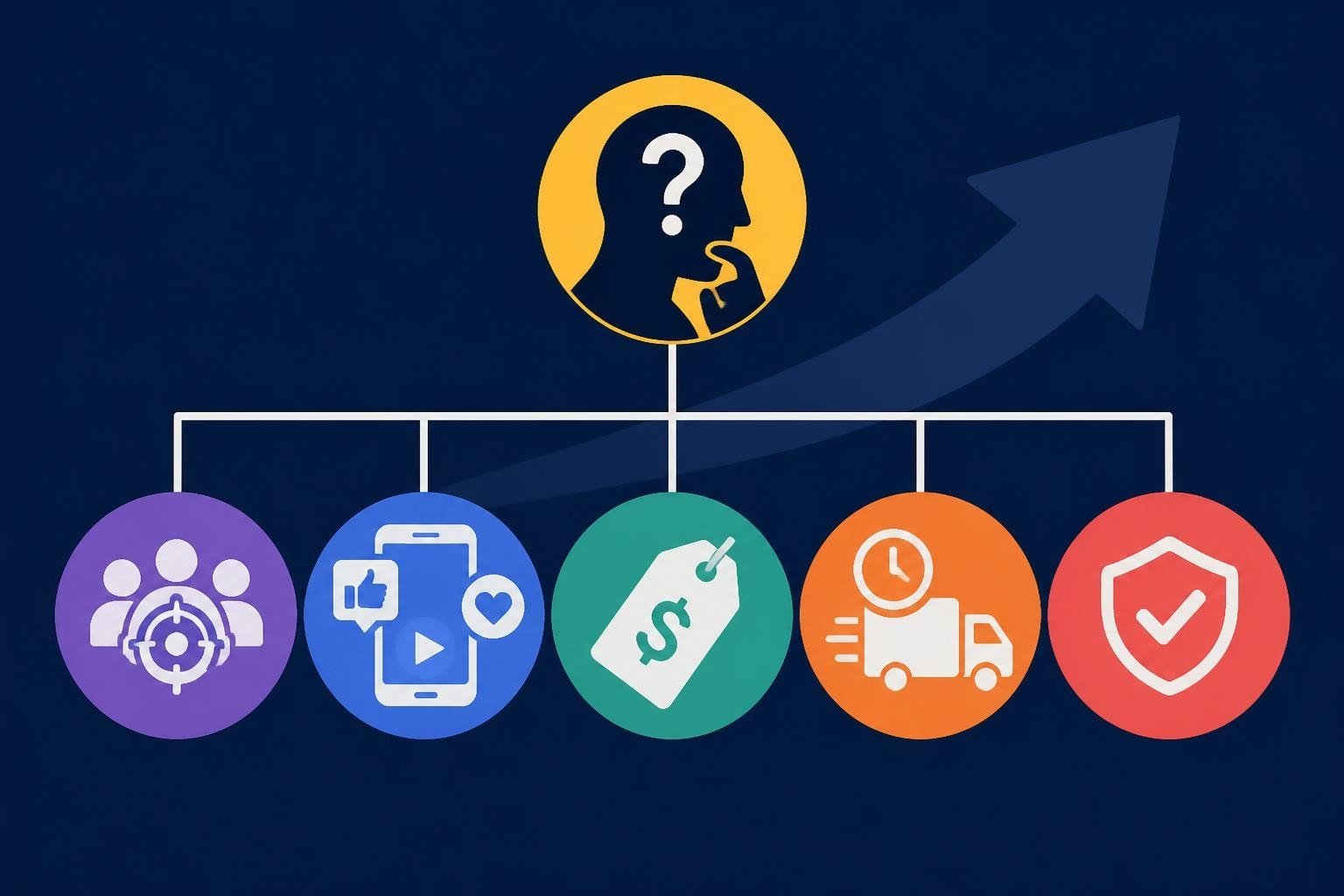
    Once you know your goals and platforms, you can compare social growth providers with specific, tactical social media questions that reveal quality and value.

    Pricing and Package Structure

    The first financial questions expose hidden costs and help you budget accurately:

    • What's the price per 1,000 followers, views, or likes for my specific platform?
    • Do you charge more for targeted audiences versus general delivery?
    • Are there setup fees, monthly minimums, or cancellation penalties?
    • What volume discounts apply, and at which thresholds?

    Transparent providers publish pricing grids. Vague answers like "it depends" or "contact us for a quote" often signal inflated costs or bait-and-switch tactics. A live calculator comparing real prices across providers eliminates guesswork and lets you spot the best value instantly.

    Delivery Speed and Timing

    Speed matters differently depending on your use case. Product launches need fast initial momentum, while steady organic growth looks more natural for brand building.

    Questions that reveal delivery capabilities:

    1. How quickly do followers or views start appearing after purchase?
    2. What's the total delivery window for a 10,000-follower package?
    3. Can I schedule delivery to coincide with content launches?
    4. Do you offer drip-feed options to simulate organic growth patterns?

    Instant delivery sounds appealing but often triggers platform spam filters. The best providers balance speed with authenticity, delivering engagement that doesn't raise red flags with algorithms.

    Platform Coverage and Specialization

    Some providers excel on Instagram but barely support TikTok. Others cover fifteen platforms superficially rather than five deeply. Social media questions about coverage should dig past the provider's homepage checklist:

    • Which platforms do you actually fulfill orders for weekly?
    • What's your typical completion rate by platform?
    • Do you have minimum order sizes that vary by network?
    • Which platforms have you added or dropped in the past year?

    Platform algorithms change constantly. Providers actively fulfilling orders adapt faster than those treating certain networks as afterthoughts.

    Questions About Service Quality and Safety

    Growth that damages your account or reputation costs far more than it saves. These social media questions protect your investment.

    Source and Authenticity

    Where engagement originates determines whether it helps or hurts your account health:

    • Are followers real accounts or bots?
    • What percentage of purchased views come from your target geography?
    • Do likes and comments come from active accounts with profile pictures and posts?
    • How do you verify account authenticity before delivery?

    The difference between organic and fake engagement affects both algorithm performance and brand trust. Even if fake followers don't get you banned, they inflate vanity metrics while tanking actual engagement rates.

    Refund Terms and Guarantees

    No provider delivers perfectly every time. Refund policies reveal how they handle problems:

    Refund Policy Type What It Signals Watch For
    30-day money-back guarantee Confidence in service quality Hoops to qualify
    Partial refunds for under-delivery Reasonable risk-sharing "Processing fees"
    Refill guarantee for drops Commitment to lasting results Time limits
    No refunds, "all sales final" Run away Everything

    Ask specifically: "If I order 5,000 followers and receive 3,800, what happens?" The answer tells you whether you're protected or gambling.

    Compliance and Terms of Service

    Platform policies evolve, and what worked in 2024 may violate 2026 guidelines. Ethical research guidance highlights consent and compliance issues that apply equally to commercial growth services.

    Essential compliance questions:

    • How do your methods align with Instagram's/TikTok's current Terms of Service?
    • Have any of your delivery methods triggered account warnings in the past six months?
    • What happens to my account if the platform detects purchased engagement?
    • Do you require my password, or do you work through public APIs only?

    Any service asking for your password is a security risk. Legitimate providers work through official APIs or manual methods that don't require account access.

    Risk assessment checklist

    Questions for Your Social Media Strategy

    Beyond vendor selection, you need to ask yourself strategic social media questions that shape how you use growth services effectively.

    Content and Timing Alignment

    Buying 10,000 followers means nothing if your content can't convert them into engaged community members. Before investing:

    1. Do I have enough high-quality content ready to post? A dormant account with purchased followers looks suspicious and wastes money.
    2. Is my bio optimized with clear value propositions and calls-to-action? New visitors decide to follow within seconds.
    3. What's my posting frequency for the next 30 days? Consistency matters more than volume for retaining purchased followers.

    The best ROI comes from coordinating growth services with content campaigns. Launch a new series, drop a product, or announce an event, then amplify it with strategic engagement boosts.

    Budget Allocation Across Tactics

    Social media questions about budget help you balance paid growth with organic tactics:

    • What percentage of my marketing budget should go to purchasing engagement versus ads?
    • Should I invest more in followers, likes, or views based on my goals?
    • How often should I purchase engagement boosts: one-time, monthly, or campaign-specific?
    • What's the minimum viable spend to see meaningful impact on my platform?

    Industry research on social strategy suggests successful brands integrate organic content, paid advertising, and strategic growth services rather than relying on any single tactic.

    Measurement and Attribution

    You can't improve what you don't measure. Social media questions about tracking should clarify:

    • Which metrics changed after purchasing engagement? Look beyond vanity numbers to engagement rate, reach, and profile visits.
    • Did purchased followers convert to email subscribers or customers? Track the full funnel, not just social metrics.
    • What's my cost per acquired follower compared to paid ads? Calculate true CPF (cost per follower) across channels.
    • How long do results last? Monitor follower retention weekly for the first month after purchase.

    Set up UTM parameters, track promo codes, and use platform analytics to separate organic growth from purchased engagement. This data informs smarter buying decisions over time.

    Questions About Emerging Platforms and Trends

    Social media evolves rapidly. Harvard’s discussion of social media questions for 2025 highlights transparency and research access as policy priorities that affect how platforms work.

    Platform Viability and Longevity

    Before investing heavily in a new platform, ask:

    • What's the monthly active user trend: growing, stable, or declining?
    • Which demographics dominate, and are they shifting?
    • How stable is the platform's ownership and business model?
    • What's the typical content lifespan: hours, days, or weeks?

    Investing in a dying platform wastes money. Conversely, early adoption of rising platforms can deliver outsized returns before competition saturates the space.

    AI and Automation Concerns

    As privacy-preserving pipelines for social data become more sophisticated, platforms crack down harder on obvious automation. Social media questions about detection risk include:

    • How do growth providers avoid AI content-detection flags?
    • Are purchased accounts distinguishable from organic ones through behavioral analysis?
    • What happens when platforms update their bot-detection algorithms?
    • Should I disclose purchased engagement, or does silence comply with Terms of Service?

    The technical arms race between growth services and platform algorithms never stops. Providers who stay current with detection methods deliver safer, longer-lasting results.

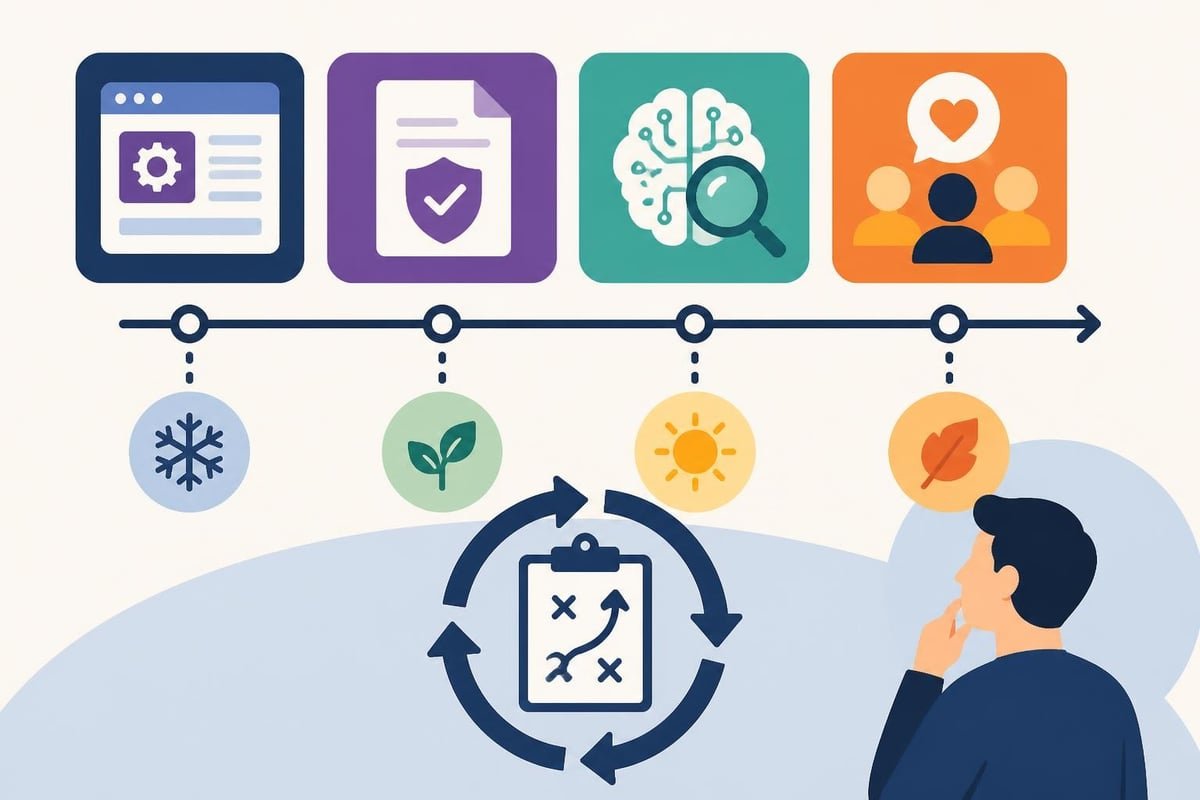
    Future-proofing strategy

    Questions Before Launching Campaigns

    Finally, pre-launch social media questions ensure your investment drives real business results rather than empty metrics.

    Campaign Integration Checklist

    Before purchasing any engagement, verify you've answered:

    • Does this growth support a specific business goal with measurable KPIs? Avoid buying followers "just because."
    • Have I tested my content with organic reach first? Don't amplify content that hasn't proven it resonates.
    • Is my website or landing page ready to convert new traffic? Social growth creates opportunities; your site closes sales.
    • What's my follow-up plan for engaging new followers? One-time purchases need ongoing content to maintain momentum.

    Writing effective survey questions applies equally to understanding your audience's needs through polls, comments, and direct messages after boosting your follower count.

    Competitor Research Questions

    Understanding what works for others in your niche speeds up your learning curve:

    1. Which competitors have noticeably grown in the past 90 days?
    2. What engagement rates do they maintain relative to follower count?
    3. Which content formats generate their highest interactions?
    4. Do their follower demographics match mine, or do they target different segments?

    Competitive intelligence helps you set realistic benchmarks and avoid overpaying for results competitors achieve more efficiently.

    Vendor Comparison Process

    When you're ready to choose a provider, systematic comparison prevents buyer's remorse. Create a spreadsheet comparing your top three options across:

    • Price per 1,000 units (followers, views, likes) for your primary platform
    • Delivery speed and whether they offer gradual drip-feed
    • Refund terms and satisfaction guarantees
    • Platform coverage breadth and depth
    • Customer support responsiveness and hours

    Rather than juggling provider websites and sales calls, a centralized comparison with a live calculator shows exactly what each service costs at your desired volume, letting you make data-driven decisions confidently.


    Asking thorough social media questions before investing in growth transforms guesswork into strategy. From defining goals and selecting platforms to evaluating providers and measuring results, the right questions protect your budget and maximize ROI. When you're ready to compare top providers on real pricing, delivery speed, and platform coverage, explore Best Social Media Growth Services 2026 for transparent comparisons and a free calculator that shows exactly what growth costs for your specific needs.

  • Social Marketing Campaigns: 2026 Strategy Guide

    Social Marketing Campaigns: 2026 Strategy Guide

    Social marketing campaigns have evolved dramatically over the past few years, transforming from simple promotional posts into sophisticated, multi-platform strategies that demand careful planning, creative execution, and data-driven optimization. In 2026, businesses face both unprecedented opportunities and complex challenges as they navigate algorithm changes, audience fragmentation, and rising expectations for authentic engagement. Whether you're launching your first campaign or refining an established approach, understanding the fundamental building blocks and current best practices will determine whether your efforts generate meaningful results or simply add to the noise.

    Understanding Social Marketing Campaign Fundamentals

    Social marketing campaigns represent coordinated efforts to achieve specific business objectives through social media platforms. Unlike ongoing social media management, campaigns have defined start and end dates, clear goals, dedicated budgets, and measurable outcomes.

    The distinction matters because campaigns require different planning, resource allocation, and measurement approaches than day-to-day posting. A successful campaign aligns messaging across multiple touchpoints, coordinates timing to maximize impact, and concentrates resources during strategic windows.

    Core Components Every Campaign Needs

    Building effective social marketing campaigns requires several essential elements working in harmony:

    • Clear objectives tied to business outcomes (awareness, leads, sales, retention)
    • Defined target audience with demographic, psychographic, and behavioral characteristics
    • Campaign messaging that resonates with audience motivations and pain points
    • Content assets optimized for each platform and stage of the customer journey
    • Distribution strategy specifying organic, paid, and earned tactics
    • Measurement framework connecting activities to outcomes

    Most campaigns fail not from poor execution but from unclear objectives. Before creating a single asset, define what success looks like in concrete terms. "Increase brand awareness" remains too vague; "generate 50,000 impressions among women 25-34 interested in sustainable fashion" provides actionable direction.

    Campaign planning components

    Audience Research and Platform Selection

    The foundation of successful social marketing campaigns starts with understanding exactly who you're trying to reach and where they spend their time. Demographic data from Pew Research Center reveals significant variations in platform usage across age groups, income levels, and geographic locations, making audience research critical for platform selection.

    Mapping Audience Characteristics to Platforms

    Different platforms attract distinct user demographics and support different content formats. Your audience research should identify:

    1. Primary platforms where your target audience actively engages (not just browses)
    2. Content preferences including video length, image style, and text density
    3. Peak activity times when your audience is most likely to see and engage with content
    4. Influencers and communities your audience already follows and trusts
    5. Pain points and aspirations that motivate engagement and sharing
    Platform Dominant Age Group Content Strength Campaign Use Case
    Instagram 18-34 Visual storytelling, Reels Product launches, lifestyle brands
    TikTok 16-24 Short video, trends Viral awareness, Gen Z engagement
    LinkedIn 25-54 Professional content, articles B2B campaigns, thought leadership
    Facebook 35-65 Community, events, video Local business, broad demographics
    YouTube All ages Long-form video, tutorials Education, product demos

    Many businesses spread resources too thin by attempting to maintain presence everywhere. Successful campaigns concentrate effort where audience attention and platform capabilities align with campaign objectives.

    When planning campaigns that require rapid visibility and engagement metrics, some businesses compare social growth providers to supplement organic reach during critical launch phases, though this should complement rather than replace authentic community building.

    Competitive and Trend Analysis

    Beyond understanding your audience, analyze what competitors and industry leaders are doing. Identify content gaps, oversaturated approaches, and emerging trends that present opportunities for differentiation. Think with Google offers consumer behavior insights and platform trends that inform strategic positioning.

    Campaign Content Strategy and Creation

    Content remains the vehicle through which social marketing campaigns deliver messages, build relationships, and drive actions. The most successful campaigns in 2026 balance platform-specific optimization with consistent brand messaging across touchpoints.

    Developing Campaign-Specific Content Themes

    Rather than creating random content, develop 3-5 core themes that support campaign objectives. Each theme should:

    • Connect to audience interests and needs
    • Highlight different product benefits or use cases
    • Support the customer journey from awareness to conversion
    • Adapt naturally to multiple content formats
    • Provide opportunities for user-generated content

    For example, a fitness brand launching new workout equipment might develop themes around "Transform Your Home Gym," "15-Minute Workouts," "Real Results Stories," "Expert Training Tips," and "Community Challenges." Each theme generates multiple content pieces across formats while maintaining coherent campaign messaging.

    Content Format Mix and Platform Optimization

    Diversifying content formats increases reach and accommodates different consumption preferences. The Content Marketing Institute emphasizes that effective social distribution requires tailoring content to platform algorithms and user behaviors rather than cross-posting identical content.

    High-performing format mix for 2026 campaigns:

    • Short-form video (15-60 seconds): Platform algorithms currently favor video, especially vertical formats
    • Carousel posts: Higher engagement than single images, excellent for storytelling and education
    • User-generated content: Builds trust and provides social proof more effectively than branded content
    • Live video: Creates urgency and fosters real-time community interaction
    • Stories/Reels: Captures attention in high-frequency, lower-commitment consumption moments
    • Long-form content: Establishes authority and serves high-intent audiences researching solutions

    Maintain a content calendar that sequences these formats strategically throughout the campaign timeline. Front-load awareness-building content, transition to educational middle-funnel content, and conclude with conversion-focused assets and retargeting.

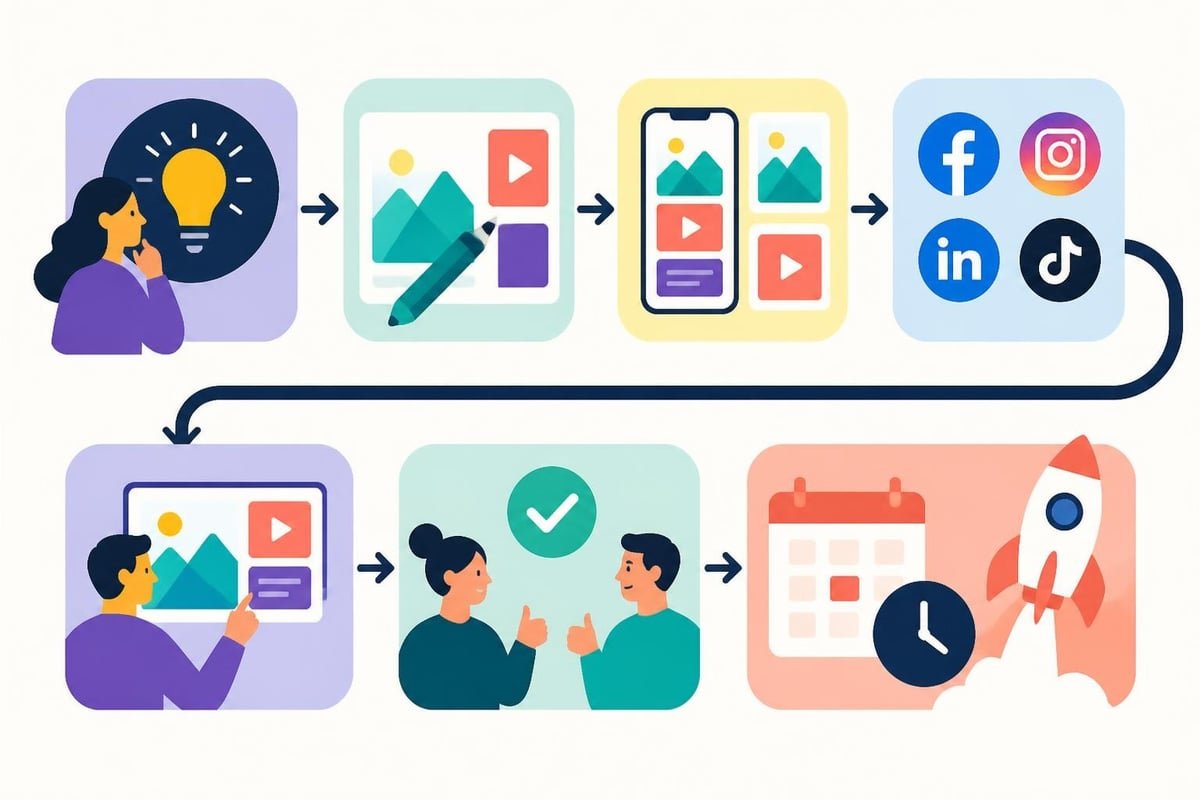
    Content production workflow

    Paid Promotion and Budget Allocation

    While organic reach remains valuable, algorithm changes mean most social marketing campaigns require paid promotion to achieve meaningful visibility. Strategic budget allocation across platforms, objectives, and campaign phases determines return on investment.

    Platform-Specific Advertising Approaches

    Each platform offers distinct advertising capabilities, audience targeting options, and cost structures:

    Instagram and Facebook Ads provide sophisticated audience targeting based on interests, behaviors, and demographics. Best for mid-funnel engagement and retargeting. Average costs vary by industry but typically range from $0.50-$3.00 per click in competitive markets.

    TikTok Ads excel at awareness campaigns targeting younger demographics. The platform's algorithm can rapidly scale winning creative. Costs generally run lower than Instagram but require highly engaging video content to perform.

    LinkedIn Ads command premium pricing but deliver quality leads in B2B contexts. Cost per click often exceeds $5.00, making this platform most suitable for high-value products and services.

    YouTube Ads support both skippable and non-skippable formats at various price points. Particularly effective for educational content and product demonstrations reaching audiences already searching for solutions.

    Testing and Optimization Framework

    Effective campaigns treat initial creative and targeting as hypotheses requiring validation through testing. Research on experimentation methodologies demonstrates that rigorous A/B testing significantly improves campaign outcomes compared to intuition-based decisions.

    Structure tests to isolate variables:

    1. Audience tests: Compare performance across demographic segments, interests, and lookalike audiences
    2. Creative tests: Evaluate headlines, images, video hooks, and calls-to-action
    3. Placement tests: Assess feed versus stories, mobile versus desktop, in-stream versus discovery
    4. Timing tests: Identify optimal days, times, and campaign duration
    5. Offer tests: Compare different value propositions, promotions, and risk reducers

    Allocate 20-30% of initial budget to testing, then concentrate remaining resources on proven winners. The IAB’s measurement guidelines provide industry standards for evaluating ad performance and attribution across platforms.

    Measurement, Analytics and Performance Tracking

    Social marketing campaigns generate vast amounts of data, but metrics only provide value when connected to business objectives. Building measurement frameworks before campaign launch ensures you track what matters rather than vanity metrics that don't drive decisions.

    Connecting Metrics to Campaign Objectives

    Different objectives require different primary metrics:

    Campaign Objective Primary Metrics Secondary Metrics
    Brand Awareness Reach, Impressions, Share of Voice Brand recall, Search volume
    Engagement Likes, Comments, Shares, Saves Engagement rate, Video completion
    Lead Generation Form submissions, Sign-ups Cost per lead, Lead quality score
    Sales/Conversions Revenue, ROAS, Conversion rate Average order value, Customer acquisition cost
    Community Growth Follower growth, Message volume Follower quality, Community engagement rate

    Track platform-native analytics for campaign-level performance, but integrate data into broader business intelligence systems to understand cross-platform attribution and customer lifetime value. Many businesses discover that platforms receiving attribution credit differ from those that actually influence purchase decisions.

    Real-Time Monitoring and Agile Adjustments

    Unlike traditional marketing campaigns, social marketing campaigns allow real-time performance monitoring and mid-campaign adjustments. Establish daily check-ins during active campaigns to:

    • Identify underperforming content for pause or adjustment
    • Scale budget to high-performing audiences and placements
    • Respond to audience questions and feedback
    • Capture unexpected opportunities or trending topics
    • Monitor competitor activities and market shifts

    Set performance thresholds that trigger automatic alerts. If cost per acquisition exceeds targets by 25%, pause spending until you diagnose the issue. If engagement rates exceed benchmarks by 50%, increase budget to capitalize on momentum.

    Legal Compliance and Risk Management

    As social marketing campaigns have grown more sophisticated, regulatory scrutiny has intensified. The FTC’s Consumer Reviews and Testimonials Rule, updated in October 2024, imposes strict requirements on how businesses use reviews, testimonials, and influencer content in marketing.

    Disclosure and Transparency Requirements

    All material connections between advertisers and endorsers must be clearly disclosed. This includes:

    • Paid influencer partnerships: Require #ad or #sponsored hashtags in prominent, unambiguous locations
    • Employee advocacy: Identify when employees share company content
    • Incentivized reviews: Disclose when customers receive compensation for testimonials
    • Affiliate relationships: Clearly mark affiliate links and commission arrangements

    Violations carry significant penalties and damage brand reputation. Build disclosure requirements into creator contracts, content approval workflows, and campaign guidelines from the start.

    Crisis Preparedness and Response Planning

    Social marketing campaigns occasionally trigger unexpected negative reactions or coincide with external events that require rapid response. The PRSA’s crisis management resources emphasize that preparation prevents panic.

    Develop response playbooks addressing:

    1. Monitoring protocols: Systems for detecting emerging issues before they escalate
    2. Decision authority: Clear escalation paths and approval processes for different scenarios
    3. Response templates: Pre-approved holding statements and response frameworks
    4. Channel strategies: When to respond publicly versus privately, and which platforms to prioritize
    5. Documentation requirements: Recording decisions and actions for post-crisis analysis

    Most "crises" are actually opportunities to demonstrate brand values and customer commitment when handled with transparency, speed, and appropriate tone. Delayed or defensive responses typically amplify rather than contain issues.

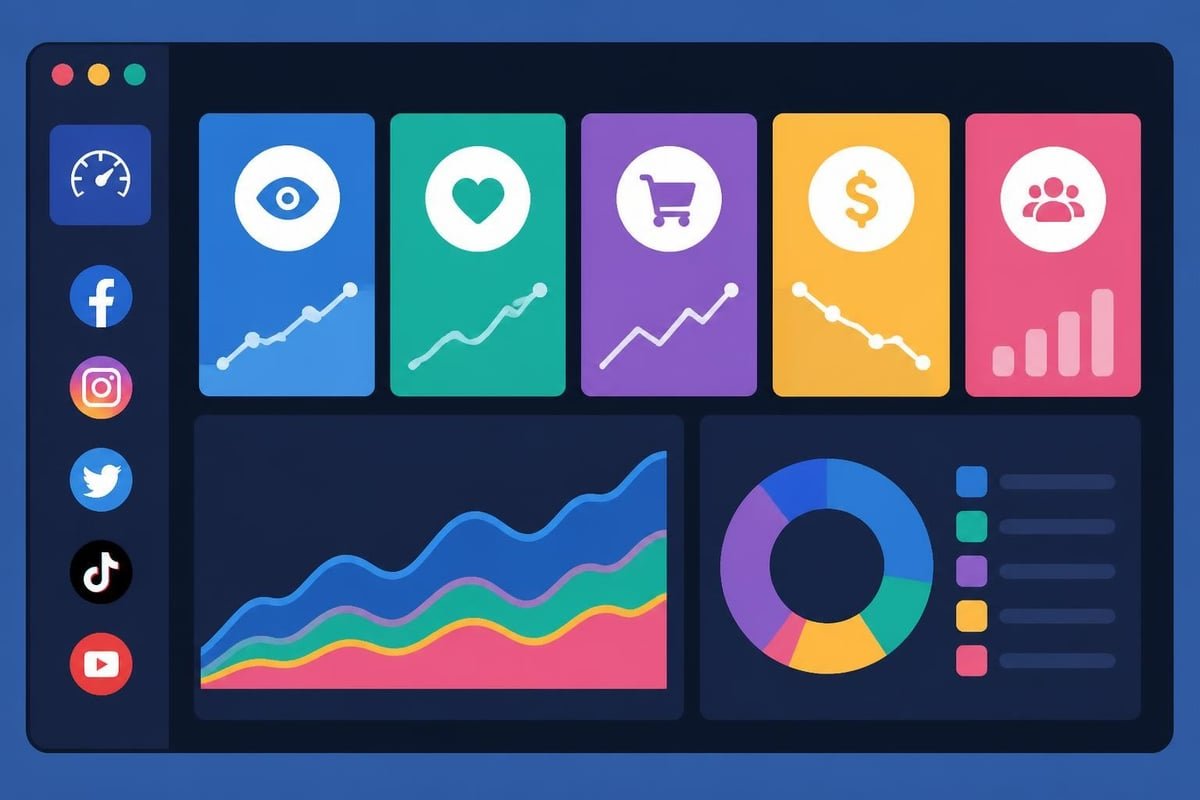
    Campaign performance dashboard

    Integration with Broader Marketing Initiatives

    Social marketing campaigns deliver maximum impact when integrated with email marketing, content marketing, paid search, and offline channels. Isolated social efforts miss opportunities for reinforcement and attribution across the customer journey.

    Cross-Channel Campaign Coordination

    Coordinate messaging, timing, and offers across channels while respecting platform-specific best practices:

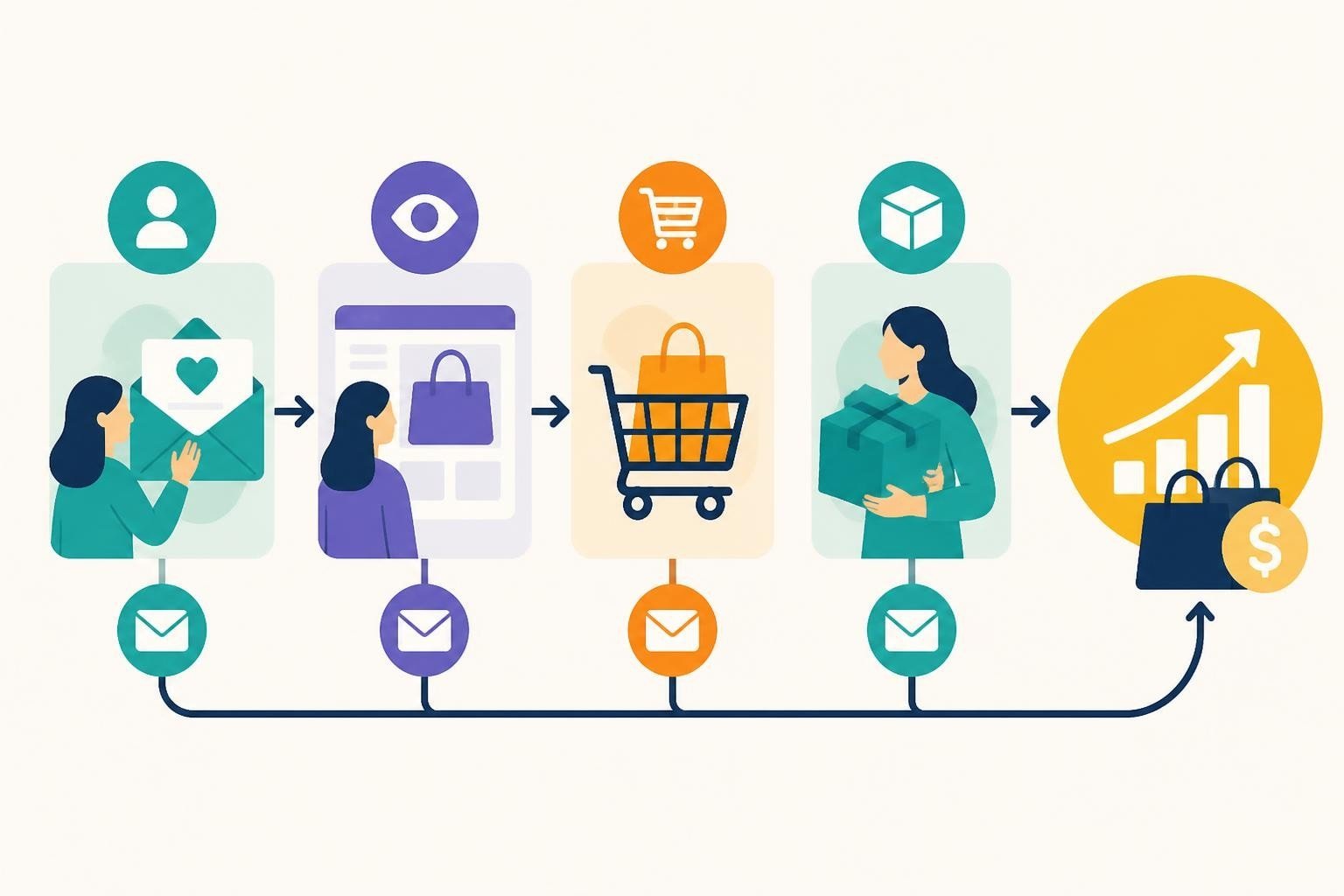
    Email amplification: Send campaign content to existing subscribers, encouraging social sharing and engagement. Segment lists based on social platform preferences to personalize calls-to-action.

    Content hub creation: Build landing pages that aggregate campaign content, extend social messages with depth unavailable in social feeds, and capture leads from social traffic.

    Retargeting sequences: Build custom audiences from social engagement (video viewers, post interactions, profile visitors) for email follow-up or ad retargeting with progression messaging.

    Search coordination: Align paid search keywords and SEO content with social campaign themes to dominate multiple discovery pathways simultaneously.

    Businesses running campaigns across social and email channels should evaluate their email platform capabilities as campaign complexity increases. The right tools enable sophisticated segmentation, behavioral triggers, and performance tracking that amplify social campaign results.

    Influencer and Partnership Leverage

    Strategic partnerships multiply campaign reach and credibility beyond owned audiences. Identify influencers, complementary brands, and industry voices whose audiences overlap with your targets.

    Structure partnership arrangements with clear expectations:

    • Content requirements: Number of posts, formats, platform distribution
    • Messaging guidelines: Key points to communicate versus prescriptive scripts
    • Timeline coordination: Publishing schedules aligned with broader campaign phases
    • Performance tracking: Unique links, discount codes, or UTM parameters for attribution
    • Rights and usage: Permissions to repurpose partner content across channels

    Micro-influencers (10,000-100,000 followers) often deliver stronger engagement rates and authenticity than celebrity partnerships at dramatically lower costs. Prioritize audience alignment and engagement quality over follower counts.

    Advanced Tactics and Emerging Opportunities

    As platforms evolve and audience behaviors shift, social marketing campaigns must adapt to maintain effectiveness. Several emerging tactics show particular promise in 2026.

    Community-Led Campaign Development

    Rather than broadcasting messages to passive audiences, leading brands involve communities in campaign creation. User-generated content campaigns, co-creation contests, and community voting on product features transform audiences from recipients to participants.

    This approach:

    • Generates authentic content at scale
    • Builds emotional investment in campaign outcomes
    • Provides market research and product feedback
    • Creates network effects as participants share their contributions
    • Reduces production costs while increasing relevance

    Structure community campaigns with clear participation instructions, attractive incentives, rights management for submitted content, and plans for showcasing top contributions.

    AI-Powered Personalization and Automation

    Artificial intelligence tools now enable personalization previously available only to enterprises with dedicated data science teams. Applications relevant to social marketing campaigns include:

    • Dynamic creative optimization: Automatically testing ad variations and serving best-performing versions to different audience segments
    • Predictive audience modeling: Identifying high-value prospects based on behavior patterns of existing customers
    • Content generation: Creating variations of headlines, captions, and descriptions for testing
    • Chatbot engagement: Responding to campaign-driven inquiries instantly and routing qualified leads to sales
    • Sentiment analysis: Monitoring campaign reception and identifying concerns before they escalate

    While AI augments capabilities, human creativity, strategic thinking, and empathy remain essential. Use AI to handle repetitive tasks and surface insights, freeing human team members for high-judgment decisions and authentic relationship building.

    Platform-Specific Feature Adoption

    Platforms prioritize content using their newest features in algorithm ranking. Early adoption of new capabilities often yields disproportionate reach:

    Instagram: Collaborative posts, link stickers in Reels, product tags in organic content
    TikTok: Series playlists, photo mode, shopping features, creator search insights
    LinkedIn: Newsletters, document posts, native video, polls in articles
    YouTube: Shorts, channel memberships, Super Thanks, live commerce features

    Monitor platform announcements and beta programs for early access to capabilities that competitors haven't yet adopted. First-mover advantages typically last 3-6 months before saturation reduces effectiveness.

    Budget Planning and Resource Allocation

    Successful social marketing campaigns balance ambition with realistic resource constraints. Whether working with $5,000 or $500,000 budgets, strategic allocation across production, promotion, and performance monitoring determines outcomes.

    Budget Distribution Framework

    A balanced budget typically allocates resources across these categories:

    • Content production (30-40%): Creator fees, photography, videography, design, copywriting
    • Paid promotion (40-50%): Platform advertising, influencer partnerships, boosted posts
    • Tools and technology (5-10%): Scheduling software, analytics platforms, creative tools
    • Testing and optimization (10-15%): Dedicated budget for experiments and learnings
    • Contingency reserve (5-10%): Buffer for opportunities and unexpected adjustments

    New campaigns should allocate higher percentages to testing, while established approaches can shift more budget toward proven tactics. Never commit 100% of budget before gathering performance data.

    ROI Expectations and Timeline

    Social marketing campaigns typically require 30-90 days to deliver measurable results, with timelines varying by objective:

    Awareness campaigns show reach and impression metrics within days but brand lift measurement requires 4-8 weeks of sustained exposure.

    Engagement campaigns generate immediate metrics but building communities that drive business value takes months of consistent presence.

    Conversion campaigns can produce sales within hours for high-intent audiences but typically require retargeting sequences spanning weeks for complex purchases.

    Community growth compounds over time, with follower quality mattering more than raw numbers. Rapid growth through social media marketing services can jumpstart visibility but sustainable growth requires ongoing value delivery.

    Set realistic expectations aligned with industry benchmarks while establishing systems to improve performance through continuous testing and optimization.


    Social marketing campaigns in 2026 demand strategic planning, creative execution, and rigorous measurement to cut through noise and deliver business results. Success requires understanding your audience deeply, selecting platforms strategically, creating compelling content, and optimizing based on performance data rather than assumptions. When you're ready to amplify your campaign reach and accelerate social growth, Best Social Media Growth Services 2026 provides independent comparisons of top providers with real pricing, delivery speeds, and package options to find the solution that matches your campaign objectives and budget.
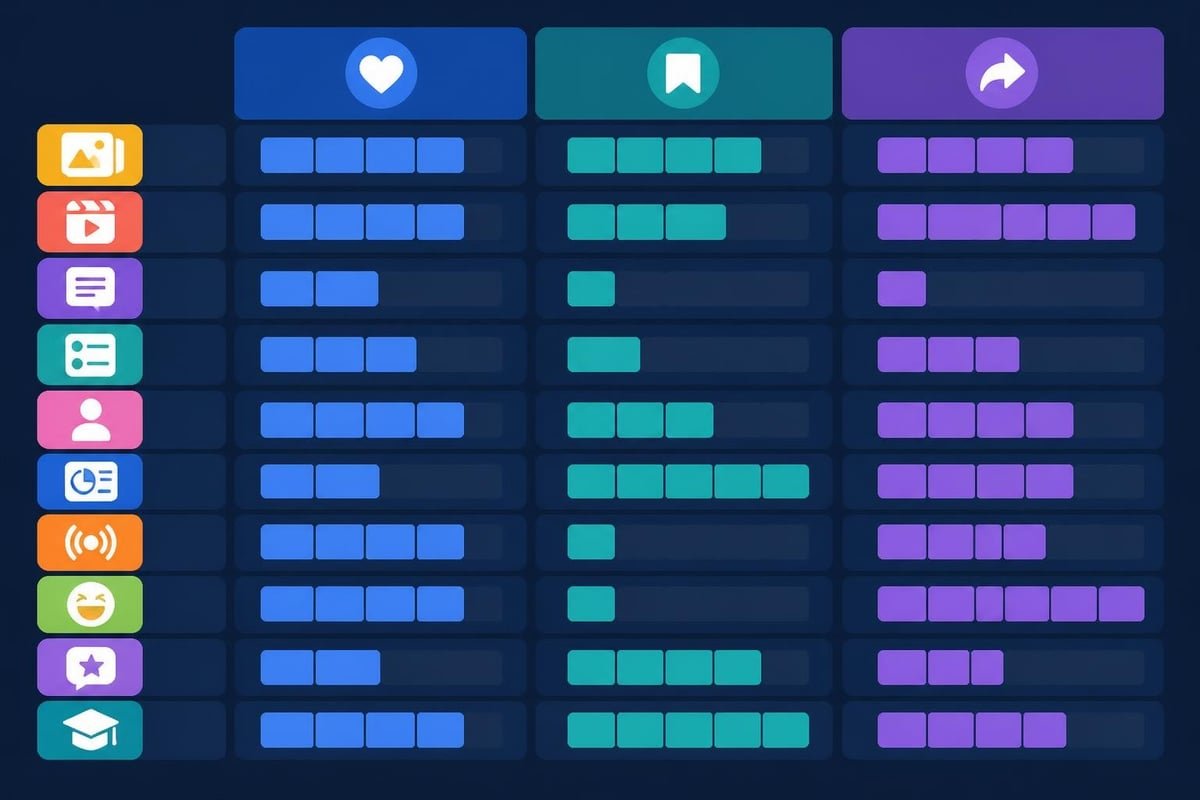
  • Email Marketing for Ecommerce: 2026 Complete Guide

    Email Marketing for Ecommerce: 2026 Complete Guide

    Email remains the highest-ROI channel for online stores, delivering an average return of $36 for every dollar spent. While social media drives discovery and engagement, email marketing for ecommerce transforms browsers into buyers and one-time customers into loyal advocates. The difference between struggling stores and thriving brands often comes down to how systematically they nurture their email list. This guide walks through the strategic framework, technical essentials, and advanced tactics that power profitable email programs in 2026.

    Why Email Marketing Drives Ecommerce Revenue

    Email owns your audience in ways that rented platforms never will. You control delivery, timing, and messaging without algorithm changes wiping out your reach overnight.

    Owned channel benefits:

    • Direct line to customers who opted in
    • No platform fees per message sent
    • Full control over creative and timing
    • Rich behavioral and purchase data

    The economics make sense too. Acquiring a customer costs five to twenty-five times more than retaining one, and email excels at both acquisition nurture and retention campaigns. According to Omnisend’s 2025 email marketing benchmarks, ecommerce brands see average open rates of 29% and click rates of 3.4%, with top performers doubling those numbers through segmentation and personalization.

    The Revenue Multiplier Effect

    Smart email programs don't just send promotional blasts. They create systematic touchpoints that guide customers through predictable profit pathways.

    Campaign Type Average Revenue Impact Typical Send Frequency
    Welcome Series 3-5x higher LTV Triggered
    Cart Recovery 10-15% abandoned cart revenue Triggered
    Browse Abandonment 2-8% conversion rate Triggered
    Post-Purchase 20-40% repeat purchase lift Triggered
    Promotional Variable (0.1-2% conversion) 2-4/week
    Win-back 5-10% reactivation Monthly

    Revenue concentration happens in automation, not broadcast. Triggered emails based on behavior generate 624% higher conversion than batch-and-blast campaigns.

    Email campaign types and revenue impact

    Building Your Foundation: List Growth and Compliance

    No list, no revenue. Growing a permission-based email database requires strategic placement of opt-in opportunities across every customer touchpoint.

    High-converting capture points:

    • Exit-intent popups with discount incentives (typically 2-5% conversion)
    • Post-purchase receipt signup (40-60% opt-in rate)
    • Content upgrades and buying guides
    • SMS-to-email cross-promotion
    • Social bio links and pinned posts

    The offer matters more than the form. Generic "Join our newsletter" converts at 0.5-2%, while specific value propositions ("Get 15% off your first order plus early access to new releases") hit 5-12% depending on traffic quality.

    Compliance and Deliverability Hygiene

    Building a compliant list protects both your sender reputation and legal standing. CAN-SPAM, GDPR, and CASL establish baseline requirements, but ISPs add their own invisible scoring.

    Non-negotiable compliance elements:

    1. Clear opt-in disclosure before collection
    2. Confirmation process (single or double opt-in)
    3. Visible unsubscribe link in every message
    4. Physical mailing address in footer
    5. Honor unsubscribe requests within 10 days

    Authentication protocols (SPF, DKIM, DMARC) separate legitimate senders from spammers. Validity’s 2025 Email Deliverability Benchmark Report shows that properly authenticated domains see 15-20% higher inbox placement than unauthenticated ones.

    Choosing the right platform matters more than most businesses realize. When evaluating email tools, look beyond headline features to real-world costs at your list size, API limits, automation depth, and support responsiveness. An email marketing platform comparison that shows actual pricing tiers, sending quotas, and workflow capabilities helps you match your needs to platform strengths without overpaying for unused features.

    Segmentation: Moving Beyond Batch and Blast

    Generic emails to your entire list waste opportunity and erode engagement. Strategic segmentation divides your audience into groups that receive contextually relevant messages.

    Behavioral Segmentation Models

    Purchase behavior reveals intent better than demographics ever could. Segment on actions, not assumptions.

    • Purchase frequency: One-time buyers vs. repeat customers vs. VIP multi-purchasers
    • Category affinity: Which product lines does each subscriber browse and buy?
    • Engagement level: Active openers vs. dormant subscribers vs. at-risk churners
    • Lifecycle stage: New subscribers vs. first-purchase vs. established customers vs. lapsed

    Advanced segmentation combines multiple criteria. "Customers who purchased skincare in the last 60 days AND opened at least 2 emails in the last 30 days AND have not purchased in the last 21 days" creates a precise retargeting group for a limited-time serum promotion.

    RFM (Recency, Frequency, Monetary) analysis automatically scores customers based on how recently they purchased, how often, and how much they spend. This creates natural segments:

    RFM Segment Characteristics Email Strategy
    Champions Bought recently, often, high value Exclusive previews, loyalty rewards
    Loyal Customers Buy regularly, moderate spend Cross-sell, category expansion
    At Risk Haven't purchased recently, were active Win-back offers, feedback requests
    Lost Long dormant, low engagement Sunset sequences, re-permission

    The email marketing for ecommerce strategy that wins treats different customers differently. Your best customers deserve VIP treatment and first access. Your at-risk segment needs reactivation incentives.

    Automation That Scales Personal Touch

    Triggered workflows deliver the right message at exactly the right moment without manual intervention. These sequences run 24/7, nurturing thousands of customers simultaneously.

    Automated email sequences

    Essential Ecommerce Automations

    Shopify’s guide to automated email campaigns breaks down the sequences every store should deploy. Here's the execution framework:

    1. Welcome Series (Triggered: New subscriber)

    • Email 1: Immediate delivery, introduce brand story + discount code
    • Email 2: Day 2, bestsellers and social proof
    • Email 3: Day 5, educational content or buying guide
    • Email 4: Day 7, final discount reminder if no purchase

    2. Browse Abandonment (Triggered: Product page visit, no add-to-cart)

    • Email 1: 2-4 hours after exit, showcase viewed product with related items
    • Email 2: 24 hours later, urgency element (low stock, limited time)

    3. Cart Recovery (Triggered: Abandoned checkout)

    • Email 1: 1 hour after abandonment, simple reminder
    • Email 2: 24 hours later, add social proof or reviews
    • Email 3: 48-72 hours later, incentive if needed (10% off, free shipping)

    4. Post-Purchase Nurture (Triggered: Order confirmation)

    • Email 1: Shipment notification with tracking
    • Email 2: Delivery confirmation + care instructions
    • Email 3: 7-14 days post-delivery, review request
    • Email 4: 30-45 days post-purchase, replenishment or complementary products

    Timing optimization matters. Cart abandonment emails sent within the first hour convert 6-8% higher than those sent 24 hours later. Product recommendation emails perform best 3-7 days after delivery when the customer has experienced their purchase.

    Dynamic Content and Personalization

    Move beyond "Hi [First Name]" to content that adapts based on what each subscriber has done.

    • Product recommendations: Show items based on browsing and purchase history
    • Inventory alerts: "The item in your cart is now back in stock"
    • Geo-targeting: Show different shipping promotions or store locations by region
    • Weather triggers: Promote seasonal items based on local forecast
    • Countdown timers: Create urgency with real-time sale end times

    Machine learning recommendation engines analyze collective behavior to predict what individual customers want next, often surfacing products they hadn't considered.

    Content Strategy: What to Send and When

    Promotional fatigue kills engagement faster than poor design. Balance revenue-driving campaigns with value-building content.

    The Email Content Mix

    Content Type Purpose Frequency Conversion Goal
    Educational Build authority, solve problems 2-3/month Long-term trust
    Promotional Drive immediate sales 2-4/week Short-term revenue
    Curated Share useful third-party resources 1-2/month Engagement
    User-generated Social proof, community 1-2/month Trust + conversion

    The 80/20 rule applies: 80% value, education, and entertainment; 20% direct promotion. But "value" can include new arrival announcements for engaged customers who want to see fresh inventory.

    Subject Line Science

    Your subject line determines whether anyone sees your carefully crafted content. Litmus’s ecommerce email marketing guide emphasizes mobile-first thinking since 46% of email opens happen on smartphones.

    Proven subject line frameworks:

    • Urgency: "24 hours left: Extra 25% off sale items"
    • Curiosity: "The one ingredient dermatologists avoid"
    • Personalization: "Sarah, your cart misses you"
    • Social proof: "Why 10,000+ customers choose this serum"
    • Benefit-focused: "Get better sleep tonight (naturally)"

    Subject lines under 50 characters avoid mobile truncation. Testing different approaches reveals what resonates with your specific audience. A/B test one variable at a time: emoji vs. no emoji, question vs. statement, urgency vs. benefit.

    Design and Technical Execution

    Beautiful emails that don't render properly or load slowly destroy conversion. Technical excellence matters as much as creative brilliance.

    Mobile-First Design Principles

    With nearly half of all opens on mobile devices, desktop optimization alone fails.

    • Single-column layouts ensure readability on small screens
    • Minimum 14px font size for body text
    • Touch-friendly CTA buttons (44x44px minimum)
    • Compressed images that load under 3 seconds on 4G
    • Dark mode optimization (test on iOS and Android)

    Responsive design adapts layout based on screen size. Use media queries to stack elements vertically on mobile while maintaining multi-column layouts on desktop.

    Testing and Quality Assurance

    Send yourself a test. Then send tests to Gmail, Outlook, Apple Mail, and Yahoo. Rendering engines interpret HTML differently, creating inconsistent displays.

    Pre-send checklist:

    1. Test all links (especially personalization tokens)
    2. Preview in 6+ email clients
    3. Check alt text on images
    4. Verify unsubscribe link functions
    5. Review spam score (aim below 5.0)
    6. Confirm from-name and reply-to address
    7. Mobile preview on actual devices

    Litmus and Email on Acid provide cross-client testing that catches rendering issues before your customers see them. Broken templates in Outlook or garbled text in Gmail costs sales.

    Email design best practices

    Metrics That Matter: Measuring What Moves Business

    Vanity metrics feel good but don't pay bills. Track measurements that connect to revenue.

    Core KPIs for Email Marketing for Ecommerce

    Deliverability metrics:

    • Delivery rate (target: >95%)
    • Bounce rate (hard bounces <2%, total <5%)
    • Spam complaint rate (<0.1%)

    Engagement metrics:

    • Open rate (ecommerce average: 29%, target: 35%+)
    • Click-through rate (average: 3.4%, target: 5%+)
    • Click-to-open rate (average: 12%, target: 15%+)

    Revenue metrics:

    • Conversion rate (average: 1.5-3%, top performers: 5%+)
    • Revenue per email (RPE)
    • Revenue per subscriber (monthly)
    • Email attribution (% of total revenue)

    List growth rate, unsubscribe rate, and engagement decay help predict future performance. If unsubscribes exceed 0.5% per campaign, you're mailing too frequently or sending irrelevant content.

    Attribution and Revenue Tracking

    Email rarely gets full credit in multi-touch customer journeys. Someone might discover your brand on social media, research on Google, receive cart abandonment emails, then purchase weeks later through a retargeting ad.

    First-click attribution credits the initial touchpoint. Last-click credits the final touchpoint. Multi-touch models distribute credit across the journey. Most ecommerce platforms default to last-click, undervaluing email's influence.

    UTM parameters on all email links enable accurate tracking in Google Analytics. Structure them consistently:

    • utm_source=email
    • utm_medium=email
    • utm_campaign=[campaign_name]

    Compare assisted conversions (email was in the path) vs. last-click conversions (email was the final touch) to understand email's full contribution.

    Advanced Tactics for Mature Programs

    Once core automations run smoothly, these advanced strategies extract additional margin.

    Predictive Sending and AI Optimization

    Send-time optimization algorithms analyze individual open patterns to deliver each email when that specific subscriber is most likely to engage. Someone who consistently opens at 7 AM receives morning sends; evening openers get evening delivery.

    Predictive analytics identify:

    • Churn probability (who's likely to stop buying)
    • Next-purchase timing (when they'll buy again)
    • Product affinity (what they'll buy next)
    • Lifetime value projections

    These predictions enable preemptive intervention. Reach at-risk customers before they churn with targeted win-back offers.

    Omnichannel Coordination

    Email doesn't exist in isolation. Coordinate messaging across channels for consistent customer experience.

    Email + SMS: Recover abandoned carts via email, follow with SMS 4-6 hours later if no action
    Email + Retargeting: Suppress ads to customers who already converted via email
    Email + Social: Include user-generated content from Instagram in email, drive email subscribers to exclusive social group

    Many businesses building email lists simultaneously grow their social presence. Just as email platforms require evaluation on pricing and features, comparing social media growth services helps identify which providers deliver authentic engagement across Instagram, TikTok, YouTube, and other platforms at transparent prices.

    Progressive Profiling and Zero-Party Data

    Every form field reduces conversion. Instead of asking for everything upfront, collect information progressively over time.

    • Initial signup: Email only
    • Welcome email: "Which products interest you?" preference center
    • Post-purchase: "How did you hear about us?"
    • Follow-up email: Birthday for special offers

    Zero-party data (information customers intentionally share) powers personalization more effectively than inferred behavior. Preference centers let subscribers choose email frequency, content topics, and product categories.

    Platform Selection and Technical Stack

    The right tools amplify effort; wrong tools create friction and wasted budget.
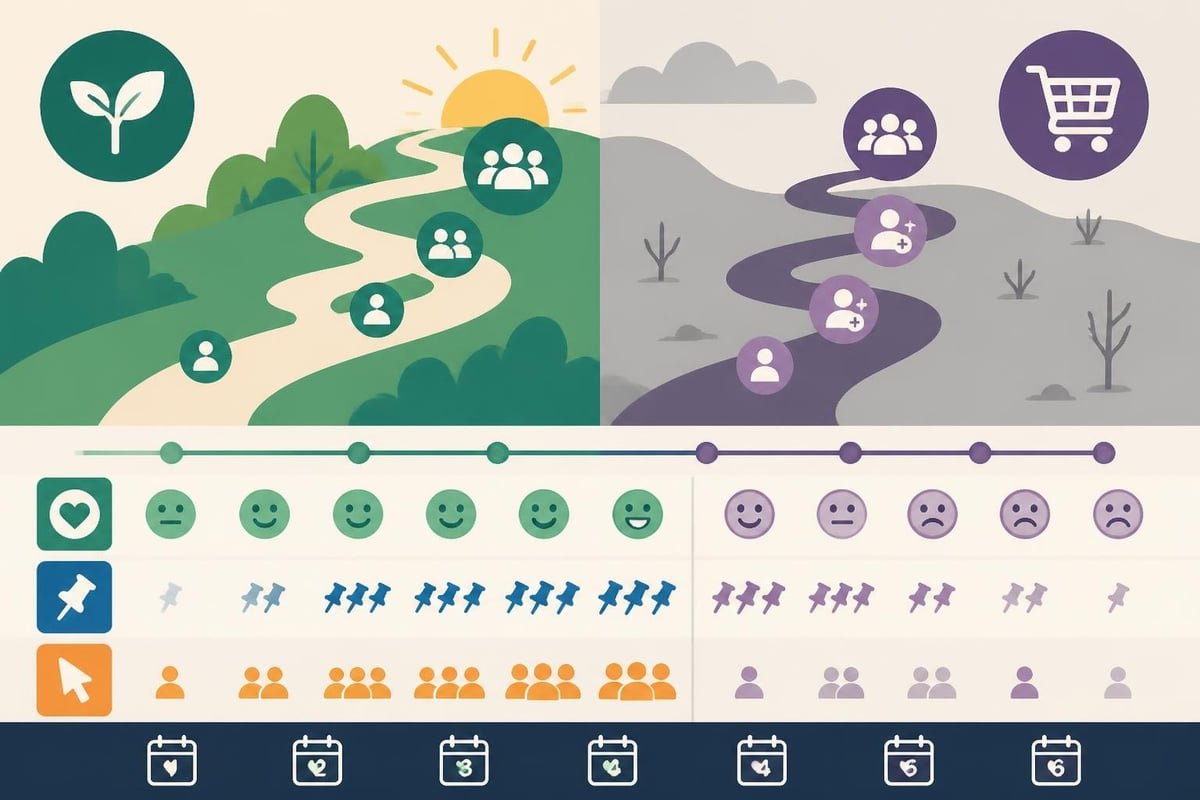
    Essential Platform Capabilities

    Must-have features:

    • Robust automation builder (if/then logic, delays, splits)
    • Segmentation based on behavior and custom fields
    • A/B testing (subject lines, content, send times)
    • E-commerce integrations (Shopify, WooCommerce, BigCommerce)
    • Reporting on revenue and conversion

    Nice-to-have features:

    • Predictive sending optimization
    • Dynamic content blocks
    • Advanced personalization
    • SMS integration
    • Dedicated IP (for high-volume senders)

    Pricing models vary wildly. Some charge by subscribers, others by emails sent, some by features unlocked. A platform that's cheap at 1,000 subscribers might become expensive at 50,000. HubSpot’s ecommerce email marketing tools overview breaks down how major platforms stack up on automation depth, deliverability, and price-to-value ratio.

    Evaluate total cost of ownership including:

    • Base subscription fee
    • Overage charges (exceeding subscriber or send limits)
    • Implementation and migration costs
    • Staff training time
    • Integration or API limitations

    Deliverability: Getting Past the Gatekeepers

    Perfect emails trapped in spam folders generate zero revenue. ISPs (Gmail, Outlook, Yahoo) deploy sophisticated filters to protect users from unwanted mail.

    Sender Reputation Factors

    Your sender reputation score (0-100) determines inbox placement. ISPs calculate it based on:
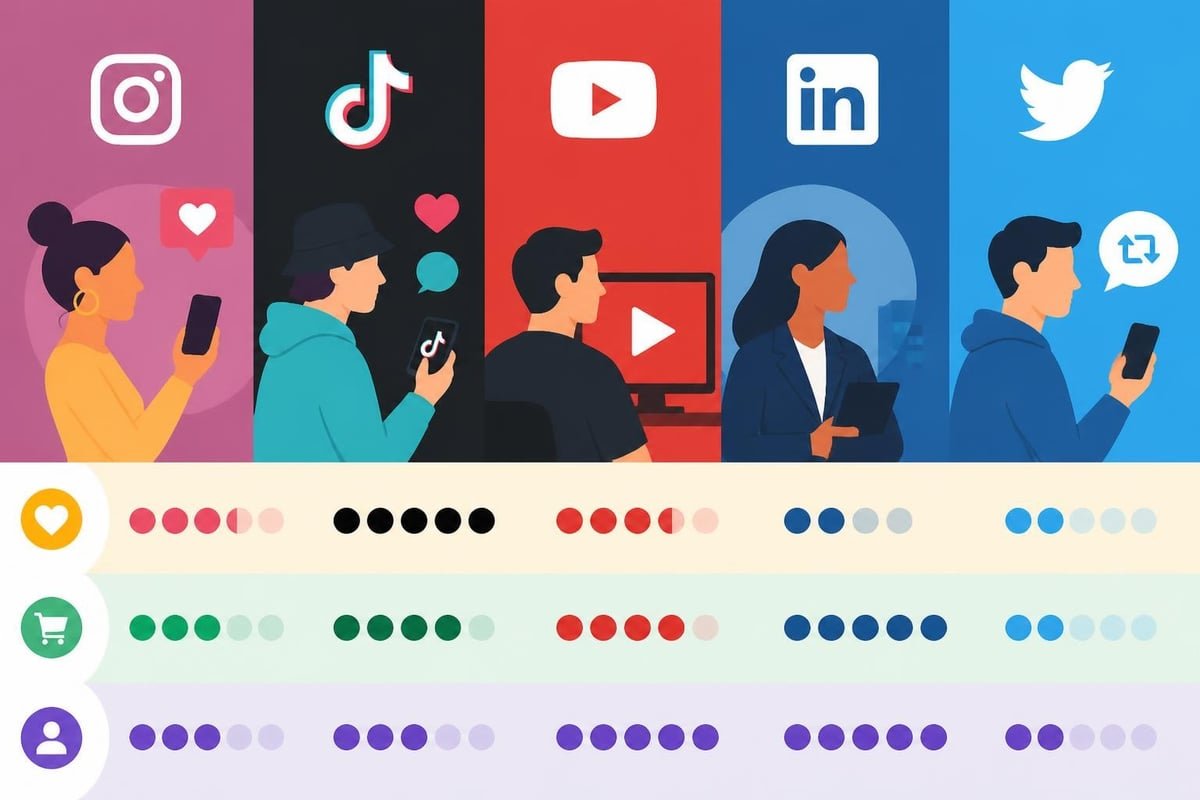
    Engagement signals (positive):

    • Opens and clicks
    • Replies to emails
    • Moving email from spam to inbox
    • Adding sender to contacts

    Spam signals (negative):

    • High bounce rates
    • Spam complaints
    • Low engagement over time
    • Sudden volume spikes
    • Spam trap hits

    Warming up a new domain or IP requires gradually increasing send volume over 4-8 weeks. Start with most engaged subscribers, then expand to broader list segments.
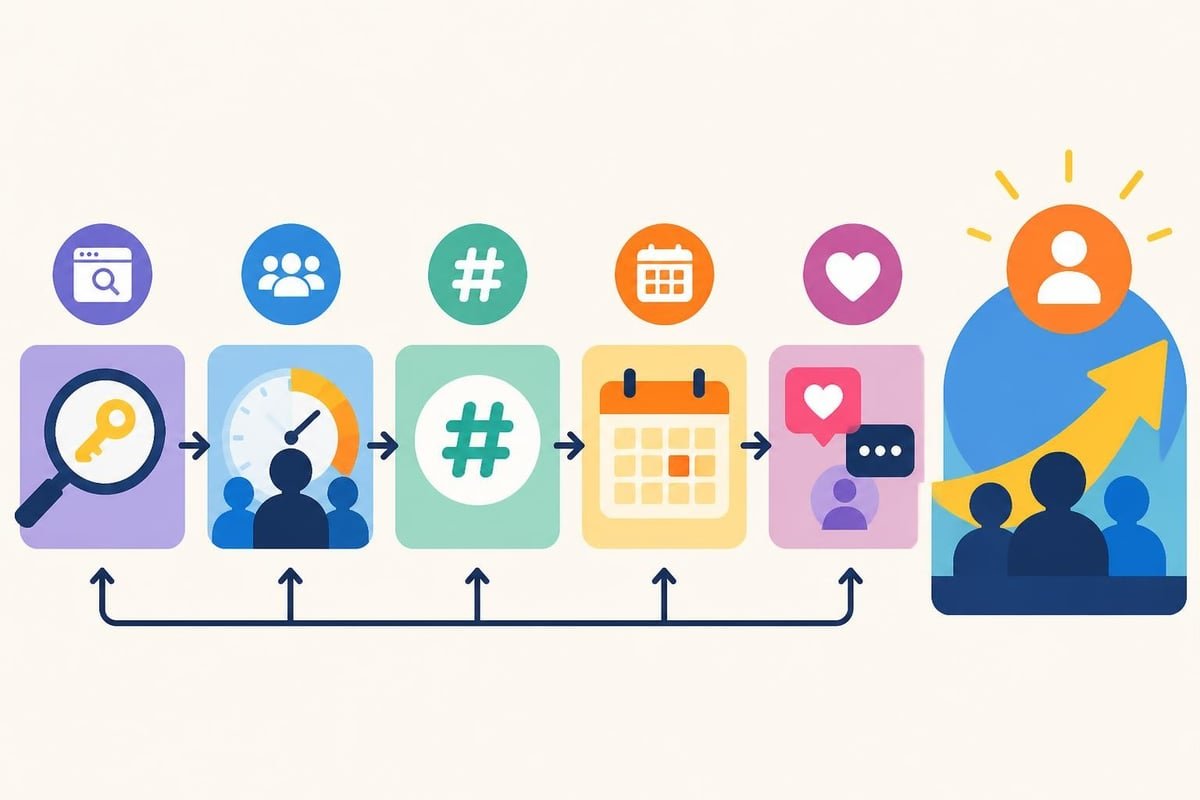
    List Hygiene and Maintenance

    Dead addresses and inactive subscribers drag down deliverability. Regular cleaning keeps lists healthy.

    Quarterly maintenance tasks:

    1. Remove hard bounces immediately (invalid addresses)
    2. Suppress chronic non-openers after 6-12 months
    3. Run re-engagement campaigns before sunset
    4. Verify new signups (double opt-in)
    5. Monitor for spam traps and honeypots

    Purchased lists, scraped emails, and rented databases destroy sender reputation and violate platform terms of service. Organic growth takes longer but builds an asset, not a liability.

    Seasonal Campaigns and Promotional Calendar

    Ecommerce email marketing for ecommerce revenue clusters around key shopping periods. Strategic planning maximizes these peaks.

    Annual Campaign Calendar

    Period Campaign Focus Typical Volume Strategy Notes
    January New year/resolutions Normal Fresh start themes, wellness
    February Valentine's Day +40% Gift guides, last-minute shipping
    March-April Spring/Easter +20% Seasonal transitions, renewal
    May Mother's Day +50% Gift focus, expedited shipping
    June Father's Day, summer +30% Outdoor, travel, gifts
    July Mid-year sales Normal Inventory clearance
    September Back to school +35% Organization, fresh starts
    Oct-Nov Halloween, BFCM +200% Biggest revenue period
    December Holiday, year-end +150% Gifts, shipping deadlines

    Black Friday/Cyber Monday planning starts in September. Segment strategies by customer tier: VIP early access, general subscribers day-of discounts, non-purchasers deeper discounts.

    Campaign Fatigue Management

    More emails during peak periods risk list burnout. Combat fatigue by:

    • Increasing value per email (better offers, more exclusive content)
    • Clear preference options ("Receive daily deals" vs. "Weekly digest only")
    • Suppression rules (don't send promotional if they just purchased)
    • Sunset non-engaged subscribers before peak season

    Email marketing for ecommerce transforms casual browsers into loyal customers through strategic automation, behavioral targeting, and consistent value delivery. The tactics covered-from foundational list building through advanced predictive optimization-create systematic revenue growth when implemented thoughtfully.

    While email builds direct relationships with customers, many ecommerce businesses also leverage social media to drive initial discovery and brand awareness. If you're evaluating providers for authentic followers, engagement, or views across Instagram, TikTok, YouTube, and other platforms, check out our comprehensive Best Social Media Growth Services 2026 comparison. It features live pricing calculators, delivery speed benchmarks, and platform coverage comparisons to help you choose the right service for your growth goals.

  • Email Marketing Cost: 2026 Pricing & Budget Guide

    Email Marketing Cost: 2026 Pricing & Budget Guide

    Email marketing remains one of the highest-ROI digital channels available to businesses in 2026, but understanding the true email marketing cost requires looking beyond the monthly platform subscription. From design and development resources to list management and deliverability infrastructure, the total investment varies dramatically based on your subscriber count, sending frequency, and feature requirements. Whether you're launching your first campaign or evaluating your current provider, knowing exactly where your budget goes helps you maximize returns and avoid expensive surprises.

    Breaking Down Email Marketing Cost Components

    The total email marketing cost encompasses multiple layers of investment, each contributing to your campaign's success and efficiency. Understanding these components helps you budget accurately and identify areas where you can optimize spending.

    Platform subscription fees form the foundation of your email marketing cost. Most providers use tiered pricing based on subscriber count, with additional charges for premium features like advanced automation, A/B testing, or dedicated IP addresses. According to WebFX’s comprehensive pricing analysis, basic plans typically start between $10 and $20 monthly for lists under 500 subscribers, while enterprise-level accounts with hundreds of thousands of contacts can exceed $1,500 monthly.

    Monthly Platform Pricing Breakdown

    Different email service providers structure their pricing models in distinct ways. Here's how the major cost factors stack up:

    Subscriber Range Basic Tier Mid-Tier Enterprise
    0-1,000 $10-$20/mo $30-$50/mo Custom
    1,000-5,000 $25-$45/mo $60-$90/mo Custom
    5,000-10,000 $50-$80/mo $100-$150/mo Custom
    10,000-50,000 $100-$200/mo $200-$400/mo $500+
    50,000+ $250+ $500+ $1,500+

    Beyond the base subscription, creative and design costs add significantly to your email marketing cost. Professional email templates range from $20 for simple designs to $500+ for custom-coded responsive templates with advanced functionality. If you maintain in-house designers, factor in their hourly rates multiplied by production time, or budget for freelance designers at $50-$150 per hour.

    Email marketing cost breakdown

    Copywriting and content creation represent another crucial expense category. Whether you hire freelance copywriters at $100-$500 per email, employ full-time content specialists, or dedicate internal team hours, content production directly impacts your email marketing cost structure. HubSpot’s email marketing guide suggests allocating 20-30% of your total email budget to content development for optimal results.

    Platform Selection and Its Impact on Cost

    Choosing the right email marketing platform dramatically affects both your immediate expenses and long-term email marketing cost trajectory. The three primary options-dedicated email service providers, all-in-one marketing platforms, and transactional email services-each carry distinct pricing implications.

    Dedicated email service providers like AWeber, GetResponse, and Moosend typically offer the most transparent pricing for businesses focused primarily on newsletter and promotional email campaigns. These platforms price based on subscriber count and feature tier, making budgeting straightforward. For businesses evaluating options, an independent comparison of AWeber, GetResponse and Moosend provides real pricing data, sending limits, and automation capabilities with calculators that show exact costs at your specific list size.

    Feature Sets and Cost Implications

    • Basic automation: Included in most mid-tier plans ($30-$80/month)
    • Advanced segmentation: Often requires premium tiers (adds $20-$100/month)
    • A/B testing: Sometimes limited on basic plans (full access adds $15-$50/month)
    • Dedicated IP address: Typically $30-$50/month additional
    • Custom domain authentication: Usually included, sometimes $10-$20/month
    • Priority support: Premium feature adding $50-$200/month

    All-in-one marketing platforms bundle email with CRM, landing pages, and other tools. While this seems efficient, your email marketing cost within these suites often exceeds standalone providers when you calculate the email-specific portion. A $300/month all-in-one platform might allocate $100-$150 to email functionality you could purchase separately for $60-$80.

    Transactional email services like SendGrid or Mailgun charge primarily by send volume rather than subscriber count. For businesses sending high volumes to smaller lists, Mailgun’s email ROI analysis demonstrates how this pricing model can reduce email marketing cost by 40-60% compared to traditional subscriber-based pricing.

    Hidden Costs That Inflate Your Email Budget

    Beyond obvious line items, several hidden expenses significantly increase total email marketing cost when overlooked during initial budgeting. Identifying these early prevents budget overruns and financial surprises.

    List management and hygiene require ongoing investment. Email verification services charge $0.004-$0.01 per email address verified, meaning a 50,000-contact list verification costs $200-$500 quarterly. However, Validity’s 2025 deliverability benchmarks show that poor list hygiene reduces inbox placement by 12-18%, effectively wasting that portion of your email marketing cost on messages that never reach recipients.

    Labor and Personnel Costs

    The human capital required to execute email marketing campaigns often represents the largest component of total email marketing cost, yet businesses frequently underestimate this investment.

    Role Time Investment Hourly Rate Monthly Cost
    Email Strategist 10-20 hrs/mo $75-$150/hr $750-$3,000
    Designer/Developer 8-15 hrs/mo $60-$120/hr $480-$1,800
    Copywriter 10-16 hrs/mo $50-$125/hr $500-$2,000
    Data Analyst 4-10 hrs/mo $70-$140/hr $280-$1,400

    For a typical mid-sized business sending 8-12 campaigns monthly, total labor costs range from $2,000 to $8,200 per month, dwarfing the $100-$400 platform subscription fee.

    Integration and development costs emerge when connecting your email platform to CRMs, e-commerce systems, or custom applications. Simple integrations through native connectors cost nothing beyond platform fees, but custom API development runs $2,000-$15,000 depending on complexity. Ongoing maintenance and updates add 15-20% of initial development costs annually.

    Hidden email marketing expenses

    Deliverability Infrastructure and Its Cost Implications

    Email deliverability directly affects the effective email marketing cost per successful delivery. Investing in proper authentication, sender reputation, and monitoring reduces waste and improves ROI substantially.

    Domain authentication setup (SPF, DKIM, DMARC) costs little in direct fees but requires technical expertise. Many businesses spend $200-$500 on initial setup through consultants or IT contractors. The Twilio blog’s breakdown of email marketing costs emphasizes that this one-time investment prevents deliverability issues that could cost thousands in lost revenue.

    Dedicated IP addresses add $30-$50 monthly to email marketing cost but provide essential reputation control for high-volume senders. Shared IPs come free with most platforms, but one bad neighbor can tank your deliverability across all campaigns. Businesses sending 100,000+ emails monthly typically see dedicated IPs reduce spam folder placement by 8-15%.

    Monitoring and Testing Tools

    • Inbox placement testing: $50-$200/month for tools like Litmus or Email on Acid
    • Deliverability monitoring: $100-$300/month for advanced platforms
    • Spam filter testing: Often included in platforms, standalone tools $30-$80/month
    • Email preview testing: $30-$100/month depending on device coverage
    • Analytics enhancement: $50-$500/month for advanced attribution

    According to Litmus’ 2026 State of Email report, companies using comprehensive testing and monitoring tools achieve 23% higher email ROI despite the additional email marketing cost these tools represent.

    Scaling Considerations and Cost Efficiency

    As your subscriber list grows, email marketing cost doesn't scale linearly. Understanding these dynamics helps you budget for growth and identify efficiency opportunities.

    Most email platforms increase pricing in tiers, creating cost jumps at specific thresholds. A list growing from 9,800 to 10,200 subscribers might jump from the $80/month tier to the $140/month tier-a 75% increase for just 4% more subscribers. Strategic list management around these thresholds can save hundreds monthly.

    Volume discounts and annual commitments significantly reduce email marketing cost for established programs. Platforms typically offer 15-25% discounts for annual prepayment versus month-to-month billing. For a business paying $200 monthly, annual commitment saves $360-$600 yearly-money better spent on creative development or advanced features.

    Cost Per Email Sent vs. Cost Per Subscriber

    Different pricing models favor different sending patterns:

    Sending Pattern Subscriber Model Volume Model Cost Advantage
    Daily to 10K list $100/mo $80/mo Volume 20% cheaper
    Weekly to 50K list $250/mo $180/mo Volume 28% cheaper
    2x/month to 100K $600/mo $850/mo Subscriber 29% cheaper
    Daily to 5K active $60/mo $120/mo Subscriber 50% cheaper

    Businesses with high sending frequency to smaller engaged segments often find volume-based pricing reduces email marketing cost substantially, while those maintaining large lists but sending infrequently benefit from subscriber-based models.

    Agency vs. In-House Cost Comparison

    Deciding between managing email marketing internally or outsourcing to agencies fundamentally reshapes your email marketing cost structure and resource allocation.

    Agency pricing models typically fall into three categories: monthly retainers ($1,500-$10,000+), per-campaign fees ($500-$3,000 per email), or performance-based arrangements. Omnisend’s comprehensive cost guide notes that full-service agency relationships for mid-market companies average $3,000-$7,000 monthly including platform costs, creative, strategy, and execution.

    In-house teams provide more control and brand intimacy but require higher fixed costs. A single dedicated email marketing manager costs $50,000-$85,000 annually in salary alone, plus benefits, platform costs, and tools-bringing total email marketing cost to $65,000-$110,000 yearly before any additional creative or development support.

    Break-Even Analysis

    For many businesses, the decision point falls around list size and campaign volume:

    • Under 5,000 subscribers, 2-4 campaigns monthly: Self-service with freelance support ($300-$800/month total) offers best value
    • 5,000-25,000 subscribers, 8-12 campaigns monthly: Dedicated in-house coordinator ($5,000-$7,000/month fully loaded) becomes cost-effective
    • 25,000-100,000 subscribers, daily sends: Specialized agency ($4,000-$8,000/month) or small in-house team (2-3 people, $12,000-$18,000/month)
    • 100,000+ subscribers, complex automation: In-house team with agency support for specialized projects provides optimal flexibility

    Email marketing team structure

    Calculating True ROI Against Your Email Marketing Cost

    Understanding whether your email marketing cost delivers appropriate returns requires tracking metrics beyond basic open and click rates. Comprehensive ROI calculation factors in all cost components against revenue attribution.

    Total cost calculation should include platform fees, labor (internal and external), creative production, list acquisition and management, tools and integrations, and allocated overhead. For a typical mid-sized e-commerce business, monthly email marketing cost breaks down roughly as: 35% labor, 25% platform and tools, 20% creative production, 15% list acquisition, 5% miscellaneous.

    Revenue attribution varies by business model. E-commerce companies track direct email-driven purchases, while B2B organizations measure influenced pipeline and assisted conversions. Forrester’s email marketing vendor research found that companies with mature attribution models reported 40% higher perceived email ROI than those using last-click attribution alone.

    Key Metrics for Cost Justification

    • Cost per email sent: Total monthly cost / emails delivered
    • Cost per engagement: Total monthly cost / (opens + clicks)
    • Cost per conversion: Total monthly cost / conversions attributed to email
    • Customer acquisition cost (email channel): Total annual email cost / new customers from email
    • Lifetime value multiplier: Average LTV of email subscribers vs. non-subscribers

    Healthy benchmarks for 2026 suggest email marketing cost per conversion should remain 60-80% below your average across all digital channels. Email-acquired customers typically show 15-25% higher lifetime value than other channels, justifying premium investment in list building and engagement.

    Platform-Specific Cost Considerations

    Different email marketing platforms structure costs uniquely, making direct comparison challenging without understanding each provider's pricing philosophy and hidden charges.

    Feature paywalls vary dramatically between providers. Some platforms include automation, segmentation, and A/B testing in base plans, while others gate these behind premium tiers that double or triple your email marketing cost. When evaluating platforms, list every feature you'll actually use and verify its availability at each pricing tier.

    Overage charges create budget uncertainty with subscriber-based pricing. Most platforms charge premium rates when you exceed your plan's subscriber limit-sometimes 2-3x the normal per-subscriber rate. A business fluctuating between 9,500 and 10,500 subscribers might face $30-$60 in overage fees monthly on top of base costs.

    Pricing Model Comparison

    Provider Type Base Model Growth Penalty Feature Access Best For
    Subscriber-based Per contact High at tiers Graduated Consistent lists
    Email-based Per send Moderate Full access Variable frequency
    Contact + Send Hybrid Low Tiered Growing businesses
    Flat rate Unlimited None Full access High volume

    Businesses experiencing rapid list growth should prioritize platforms with gentler tier transitions or contact-plus-send models that spread email marketing cost increases across both dimensions rather than hitting thresholds that double fees overnight.

    Budgeting for Email Marketing in 2026

    Creating a realistic email marketing budget for 2026 requires projecting growth, anticipating feature needs, and building flexibility for testing and optimization initiatives.

    Annual budget planning should allocate 12-18% of total marketing spend to email for businesses where it represents a primary customer communication channel. Consumer brands typically invest 15-20%, while B2B companies with longer sales cycles allocate 10-14%. Your email marketing cost as a percentage of revenue typically ranges from 0.5-2% depending on industry and maturity.

    Start-up costs for new email programs run higher than ongoing operations. Expect to invest $2,000-$8,000 in initial setup including platform selection and configuration, template development, initial automation workflows, list acquisition, and team training. These one-time costs amortize over 12-18 months in realistic budgeting.

    Monthly Budget Template

    A growing e-commerce business with 15,000 subscribers might budget:

    • Platform subscription: $140/month
    • Email designer (freelance, 12 hrs): $840/month
    • Copywriter (freelance, 14 hrs): $1,120/month
    • List verification (quarterly average): $67/month
    • Testing and monitoring tools: $80/month
    • Integration maintenance: $100/month
    • Total email marketing cost: $2,347/month or $28,164/year

    This business should track target metrics of 8-12 campaigns monthly, 22-28% open rate, 3-4% click rate, and $8-12 revenue per email sent to justify this investment level.

    Cost Optimization Strategies

    Reducing email marketing cost without sacrificing results requires strategic choices about platforms, processes, and resource allocation.

    Platform optimization starts with honest feature assessment. Many businesses pay for advanced automation they never implement or enterprise support they rarely use. Downgrading from a $200/month premium plan to a $120/month mid-tier plan while maintaining actual feature usage saves $960 annually with zero impact on performance.

    Consolidating tools reduces both direct costs and integration complexity. Businesses using separate providers for email marketing, SMS, and landing pages might pay $300+ monthly across platforms, while unified solutions cost $180-$220 for equivalent functionality, cutting email marketing cost by 30-40% while simplifying workflows.

    Efficiency Tactics

    • Template libraries: Build reusable components reducing design time by 60-70%
    • Automation workflows: Replace manual campaign sends with triggered sequences
    • List segmentation: Send smaller, targeted campaigns instead of mass blasts
    • Content repurposing: Adapt existing blog and social content for email
    • Batch production: Create multiple emails in focused sessions reducing setup overhead
    • Performance culling: Remove inactive subscribers reducing platform costs while improving deliverability

    Regular audits of your email marketing cost allocation identify waste and optimization opportunities. Quarterly reviews should examine platform feature usage, labor efficiency, creative production costs, and ROI by campaign type, shifting resources toward highest-performing initiatives.

    International and Compliance Costs

    Operating email marketing programs across multiple regions introduces additional email marketing cost through compliance requirements, localization needs, and regulatory complexity.

    GDPR, CAN-SPAM, and CASL compliance require legal review, consent management systems, and documentation processes. Initial compliance setup costs $1,500-$5,000 for SMBs working with specialized attorneys, while ongoing compliance monitoring and updates add $200-$500 monthly for multi-region operations.

    Consent management platforms that integrate with email systems cost $50-$300 monthly depending on contact volume and feature requirements. These specialized tools track opt-in sources, manage preference centers, and document consent proof-essential for defending against regulatory challenges that could cost $10,000-$50,000+ in fines and legal fees.

    Regional Cost Factors

    • Translation and localization: $0.08-$0.15 per word for professional translation
    • Regional email infrastructure: Dedicated IPs in multiple regions ($30-$50 each)
    • Local domain authentication: Additional DNS configuration ($100-$300 setup)
    • Regional deliverability monitoring: Extended tool coverage ($50-$150/month)
    • Compliance consulting: Ongoing legal review ($500-$2,000/quarter)

    Businesses operating in the EU, Canada, Australia, and other regulated markets should budget an additional 20-35% in email marketing cost over US-only operations to cover these requirements properly.


    Understanding your complete email marketing cost enables smarter platform selection, realistic budgeting, and strategic resource allocation that maximizes return on investment. As you evaluate different channels for your marketing budget, remember that email consistently delivers some of the highest ROI across digital tactics when executed with proper tools and strategy. Just as email marketing requires comparing platforms to find the right pricing and features for your needs, choosing social media growth services demands careful comparison of providers on price, delivery speed, and platform coverage. MarketDeals offers independent comparisons with live calculators to help you make informed decisions across both email marketing platforms and social growth services, ensuring every marketing dollar delivers maximum value for your business.

  • Moosend vs Mailchimp: Email Platform Comparison 2026

    Moosend vs Mailchimp: Email Platform Comparison 2026

    Choosing the right email marketing platform shapes how effectively you connect with your audience, whether you're building a subscriber list for product launches, nurturing leads, or keeping customers engaged with regular content updates. The moosend vs mailchimp debate centers on two platforms with fundamentally different approaches: Mailchimp's extensive ecosystem and household-name recognition versus Moosend's affordability and automation-first design. Both serve businesses at different growth stages, but their pricing models, feature depth, and learning curves diverge sharply enough that the wrong choice can cost you time and money. For those managing social media growth strategies alongside email campaigns, understanding which platform integrates best with your existing workflow matters as much as raw feature counts. You can explore the Email Marketing Platform Comparison to see how these options stack up against alternatives with calculators showing real costs at your specific list size.

    Pricing Structure and Value Analysis

    Mailchimp operates on a tiered freemium model that attracts beginners with a free plan supporting up to 500 contacts and 1,000 monthly sends. The limitations become restrictive quickly: no phone support, basic templates only, and Mailchimp branding on every email. Paid plans start at $13 per month for the Essentials tier (500 contacts), jumping to $20 for Standard features, and climbing to $350 monthly for Premium capabilities at the same contact volume.

    Moosend takes a different approach entirely. Their pricing begins at $9 per month for unlimited emails to 500 subscribers, with every tier including automation workflows, transactional emails, and landing pages from day one. The free plan supports unlimited sends to a list capped at 1,000 contacts, making it genuinely usable for testing and small projects.

    Cost Comparison at Common List Sizes

    List Size Mailchimp Essentials Mailchimp Standard Moosend Pro Annual Savings (Moosend)
    500 $13/mo $20/mo $9/mo $48-$132/year
    1,500 $32/mo $45/mo $16/mo $192-$348/year
    5,000 $93/mo $115/mo $45/mo $576-$840/year
    10,000 $160/mo $200/mo $65/mo $1,140-$1,620/year

    The moosend vs mailchimp pricing gap widens dramatically as your list grows. Mailchimp's per-contact costs increase exponentially, while Moosend maintains more predictable scaling. Businesses experiencing rapid subscriber growth find this difference material to their operating budgets.

    Email platform pricing tiers

    Automation Capabilities and Workflow Design

    Mailchimp restricts automation to Standard plans and above, meaning you'll pay at least $20 monthly before building your first automated sequence. Their Customer Journey Builder uses a visual canvas where you drag triggers, conditions, and actions into flowcharts. The interface feels polished but limits complexity on lower tiers, with advanced segmentation and multivariate paths reserved for Premium subscribers.

    Moosend includes automation in every paid plan and even their free tier. Their workflow editor provides:

    • Pre-built recipes for welcome series, abandoned cart recovery, and re-engagement campaigns
    • Conditional splits based on opens, clicks, purchase behavior, and custom field data
    • Time delays, A/B test branches, and goal-based exits
    • Website activity tracking to trigger emails based on page visits or form submissions

    The Moosend features page details their full automation toolkit, including AI-powered product recommendations and predictive sending times that adapt to individual subscriber behavior patterns.

    Practical Automation Differences

    When comparing moosend vs mailchimp for workflow complexity, consider your actual needs. An e-commerce brand running sophisticated cart abandonment sequences with product recommendations benefits from Moosend's no-limits approach at lower price points. A newsletter publisher sending weekly digests might find Mailchimp's simpler automation sufficient, though you're paying premium prices for features you won't fully utilize.

    Moosend's transactional email capability (order confirmations, password resets, shipping updates) integrates directly into automation workflows without requiring separate services or API complexity. Mailchimp technically supports transactional emails through their Mandrill add-on, which ceased standalone sales in 2016 and now exists only as a Mailchimp add-on with separate pricing.

    User Interface and Learning Curve

    Mailchimp's interface has evolved considerably since its 2001 launch, adding layers of functionality that create both power and complexity. New users face a dashboard showcasing campaigns, automations, audiences, analytics, and increasingly, integrations with Mailchimp's expanding suite of marketing tools. The design prioritizes visual appeal and guided experiences, with tooltips and onboarding flows walking beginners through their first campaigns.

    Moosend presents a cleaner, more focused interface that reflects its younger architecture (founded 2011). The dashboard emphasizes speed to execution: creating a campaign requires fewer clicks, and the drag-and-drop email editor loads faster with less template bloat. Users familiar with modern SaaS applications adapt quickly.

    Email Editor Comparison

    Both platforms offer drag-and-drop editors, but the experience differs:

    Mailchimp's Editor:

    • Extensive template library (100+ free designs, premium options available)
    • Content Studio for asset management across campaigns
    • Image editing tools built directly into the interface
    • Creative Assistant suggesting design improvements based on brand assets

    Moosend's Editor:

    • Streamlined template selection (40+ responsive designs)
    • Faster rendering and preview generation
    • Simpler content blocks with fewer customization layers
    • Direct HTML access without tier restrictions

    Neither platform requires coding knowledge for standard campaigns, but Moosend provides immediate HTML/CSS control to all users, while Mailchimp gates code editing behind higher-tier subscriptions for some template types.

    Email campaign creation workflow

    Deliverability Performance and Sender Reputation

    Email deliverability determines whether your carefully crafted messages reach inboxes or vanish into spam folders. The moosend vs mailchimp comparison on delivery rates shows nuanced differences based on infrastructure and sender practices rather than dramatic performance gaps.

    Mailchimp's size (12+ million users) creates both advantages and challenges. Their established IP reputation and relationships with major inbox providers (Gmail, Outlook, Yahoo) help authenticated senders. However, sharing IP pools with millions of other senders means your deliverability can suffer from neighbors' poor practices unless you upgrade to a dedicated IP (Premium tier only, $350+/month minimum).

    Independent testing from EmailToolTester’s deliverability study shows industry-wide delivery rates hovering between 82-89% across major platforms, with specific results varying more by sender reputation, list hygiene, and authentication setup than by platform choice alone.

    Deliverability Features Compared

    • Authentication Support: Both platforms support SPF, DKIM, and DMARC records, though Moosend's setup documentation provides clearer step-by-step guidance for non-technical users
    • List Cleaning: Mailchimp automatically removes hard bounces; Moosend offers similar automatic cleaning plus manual suppression list management
    • Spam Testing: Mailchimp's Inbox Preview (Standard tier+) shows rendering across clients; Moosend includes spam score checking in all paid plans
    • Dedicated IPs: Mailchimp requires Premium tier; Moosend offers dedicated IPs as add-ons at lower tiers for high-volume senders

    The EmailToolTester Moosend review notes that smaller platforms like Moosend sometimes provide more responsive deliverability support because individual users represent larger percentages of their customer base. Mailchimp's support quality varies significantly by tier, with free and Essentials users limited to email support with slower response times.

    Segmentation and Contact Management

    Effective email marketing depends on sending relevant messages to specific audience segments. Both platforms approach contact organization differently, affecting how granularly you can target messages.

    Mailchimp organizes contacts into Audiences (formerly Lists), with each Audience functioning as a separate entity. Creating segments within Audiences requires upgrading to Standard tier minimum. Tags provide unlimited categorization, but combining tags with behavioral data (purchase history, engagement levels, website activity) requires Premium subscriptions for advanced segment conditions.

    Moosend uses a unified list structure where segments and custom fields create virtual divisions without data duplication. All paid tiers include:

    • Unlimited custom fields for storing subscriber data
    • Segment creation based on demographics, behavior, and custom field combinations
    • Real-time segment updates as subscriber data changes
    • Predictive segments using machine learning to identify likely converters or churners

    Segmentation Use Cases

    Business Need Mailchimp Approach Moosend Approach Tier Required
    Basic demographic splits Simple segment builder Custom field filtering Standard / Pro
    Purchase history targeting E-commerce integration + conditions Custom field + automation Standard / Pro
    Engagement-based groups Pre-built activity segments Behavioral automation triggers Standard / Pro
    Predictive analytics Customer Lifetime Value (Premium only) AI-driven likelihood scoring Premium / Pro

    When evaluating moosend vs mailchimp for contact management, consider how you'll actually use subscriber data. If your strategy involves simple newsletter sends to broad audiences, basic segmentation suffices on either platform. Social media growth professionals running coordinated campaigns across email and social channels need more sophisticated targeting available in Moosend's entry tiers or Mailchimp's expensive Premium plans.

    Integration Ecosystem and API Access

    Mailchimp's marketplace lists 300+ direct integrations spanning e-commerce (Shopify, WooCommerce, BigCommerce), CRM systems (Salesforce, HubSpot), social platforms, analytics tools, and countless niche applications. This ecosystem represents Mailchimp's greatest structural advantage: whatever tool you're using likely has a pre-built Mailchimp connector.

    Moosend offers approximately 100 native integrations focusing on high-value connections: major e-commerce platforms, popular landing page builders, webinar software, and CRM systems. Their API documentation provides extensive endpoints for custom integrations when pre-built options don't exist.

    Key Integration Differences:

    • E-commerce depth: Both connect to Shopify and WooCommerce; Mailchimp adds BigCommerce, Magento, and PrestaShop native integrations
    • CRM connectivity: Moosend integrates Salesforce, Zoho, and Microsoft Dynamics; Mailchimp adds HubSpot and hundreds of smaller CRM tools
    • Social media: Mailchimp directly connects Facebook, Instagram, and Google Ads for audience syncing; Moosend requires Zapier middleware for most social platforms
    • API rate limits: Moosend imposes no tier-based API restrictions; Mailchimp limits API calls on lower tiers

    The Campaign Monitor analysis highlights that integration quantity matters less than integration quality for specific use cases. A business running primarily on Shopify finds adequate connectors in both platforms, while an enterprise using proprietary systems values API flexibility and support responsiveness more than marketplace breadth.

    Email platform integration architecture

    Reporting and Analytics Depth

    Mailchimp provides standard email metrics (open rates, click rates, bounces, unsubscribes) across all plans, with progressively deeper analytics at higher tiers. Standard plans add comparative reporting showing how current campaigns perform against your historical averages. Premium unlocks advanced analytics including multivariate testing results, revenue attribution, and customer lifetime value calculations.

    Moosend includes comprehensive analytics in all paid tiers:

    • Real-time campaign performance dashboards
    • Geographic and device-based opens and clicks
    • Hour-by-hour engagement heatmaps showing optimal send times
    • Link click maps highlighting which content drives action
    • Revenue tracking tied to specific campaigns and automation workflows

    Analytics Features by Tier

    Included in Moosend Pro ($9/mo starting):

    • Click heatmaps and engagement timing
    • Revenue per campaign and subscriber value
    • Automated performance reports
    • Custom date range comparisons
    • Exportable raw data

    Requires Mailchimp Standard ($20/mo minimum):

    • Comparative reporting
    • Advanced segmentation data
    • A/B testing for send time and subject lines

    Requires Mailchimp Premium ($350/mo minimum):

    • Multivariate testing
    • Purchase likelihood predictions
    • Customer lifetime value tracking
    • Advanced journey analytics

    The moosend vs mailchimp analytics comparison shows Moosend delivering enterprise-grade reporting at entry-level prices, while Mailchimp gates meaningful business intelligence behind substantial monthly commitments.

    Compliance and Data Protection

    Both platforms maintain GDPR compliance and provide tools for managing subscriber consent and data rights. Mailchimp's Data Processing Addendum outlines their obligations as data processors, with detailed information available through their legal hub covering privacy policies, security practices, and regional compliance frameworks.

    Moosend maintains similar GDPR compliance documentation and provides:

    • Double opt-in confirmation workflows
    • Automated unsubscribe processing
    • Data export tools for subscriber information requests
    • Data deletion capabilities meeting right-to-erasure requirements
    • EU-based server options for data residency requirements

    Neither platform offers significant compliance advantages over the other for typical business use. Enterprises with specific data residency requirements or industry compliance needs (HIPAA, financial services regulations) should verify specific certifications directly with each provider, as these often require custom agreements beyond standard service terms.

    Support Channels and Resources

    Mailchimp structures support access by subscription tier, creating frustration for users on lower plans:

    • Free/Essentials: Email support only, 24-hour average response time
    • Standard: Email and chat support during business hours
    • Premium: Priority phone support, dedicated account manager, onboarding assistance

    The knowledge base remains extensive across tiers, with detailed documentation, video tutorials, and community forums accessible to all users. However, when you encounter platform-specific issues requiring direct assistance, tier restrictions delay resolution.

    Moosend provides email and live chat support to all paid subscribers regardless of plan level. Phone support operates through callback scheduling rather than direct dial-in. Response times average under 4 hours for chat inquiries during European and American business hours.

    Documentation Quality

    Both platforms maintain comprehensive help centers. Mailchimp's documentation benefits from years of iteration and user feedback, covering edge cases and integration troubleshooting extensively. Moosend's docs focus on core functionality with clear step-by-step guides that newer users often find more approachable than Mailchimp's sometimes overwhelming detail.

    Third-party resources matter when evaluating platforms. TechRadar’s email marketing roundup and similar independent reviews provide troubleshooting insights and use-case guidance beyond official documentation.

    Platform Stability and Future Outlook

    Mailchimp's 2021 acquisition by Intuit for $12 billion brought enterprise resources and strategic integration with QuickBooks, TurboTax, and Mint. This corporate backing ensures platform longevity and continued development, though some users report feature bloat and interface changes that prioritize Intuit's ecosystem over standalone email marketing efficiency.

    Moosend operates independently with backing from Sендinblue's parent company (acquired 2022), providing stability while maintaining focus on core email marketing functionality without pressure to become an all-in-one marketing suite. Development velocity remains high, with monthly feature releases addressing user requests.

    Neither platform faces near-term viability concerns, but their trajectories differ. Mailchimp increasingly positions as an all-in-one marketing platform competing with HubSpot and Salesforce Marketing Cloud. Moosend maintains laser focus on email marketing excellence at accessible prices, resisting feature creep that dilutes user experience.

    Migration Considerations and Switching Costs

    Moving between email platforms involves technical effort and temporary disruption. Both platforms provide import tools accepting CSV files and direct migrations from major competitors.

    Migration Checklist:

    1. List Export: Download complete subscriber data including custom fields, tags, and subscription dates
    2. Template Recreation: Neither platform provides automated template conversion; rebuild or simplify designs
    3. Automation Reconstruction: Document existing workflows and rebuild in new platform (no automated transfer exists)
    4. Integration Reconnection: Reauthorize e-commerce, CRM, and third-party tool connections
    5. Domain Authentication: Update SPF, DKIM records to maintain deliverability during transition
    6. Historical Data: Plan for analytics history loss (most platforms don't migrate historical metrics)

    The moosend vs mailchimp switching decision often hinges on whether migration effort justifies potential savings. A business spending $200 monthly on Mailchimp Standard could reduce costs 60-70% by moving to Moosend, recouping migration effort investment within 2-3 months through savings alone.

    For organizations running sophisticated automation workflows or relying heavily on Mailchimp-specific integrations, switching costs multiply. Map dependencies completely before committing to platform changes, and consider running parallel campaigns during transition periods to minimize risk.

    Choosing Based on Business Stage and Goals

    Your ideal platform depends less on feature checklists and more on how you actually use email marketing within your broader growth strategy:

    Choose Mailchimp if you:

    • Need extensive integrations with niche tools beyond standard e-commerce and CRM platforms
    • Value brand recognition and established infrastructure over cost efficiency
    • Already use Intuit products (QuickBooks, TurboTax) and want unified business management
    • Require phone support and dedicated account management (prepared to pay Premium pricing)
    • Send primarily simple newsletters without complex automation needs

    Choose Moosend if you:

    • Prioritize cost efficiency and transparent pricing that scales predictably
    • Need full automation and analytics capabilities without tier restrictions
    • Want faster implementation with simpler interface and focused feature set
    • Value responsive support across all subscription levels
    • Plan to grow subscriber lists rapidly without exponential cost increases

    The moosend vs mailchimp decision rarely produces a universal winner. Content creators building initial audiences often start with free tiers, then migrate to whichever paid platform aligns better with their actual usage patterns after 3-6 months of data collection. E-commerce businesses frequently prioritize automation sophistication and revenue attribution, making Moosend's included features at lower price points particularly attractive. Established brands sometimes maintain Mailchimp despite higher costs because switching risks temporarily disrupting working systems.


    Both Mailchimp and Moosend deliver reliable email marketing capabilities, with the right choice depending on your specific budget, technical needs, and growth trajectory. Just as email marketing builds audience relationships over time, growing your social media presence requires choosing providers that match your platform goals and quality standards. Compare social media growth services to find the right balance of pricing, delivery speed, and platform coverage for building authentic engagement across Instagram, YouTube, TikTok, and other channels where your audience connects.

  • Best Social Posts: 10 Formats That Drive Engagement

    Best Social Posts: 10 Formats That Drive Engagement

    Creating the best social posts requires understanding what resonates with your audience, which formats work on each platform, and how to structure content that stops the scroll. In 2026, social media algorithms prioritize engagement signals like saves, shares, and meaningful comments, making post quality more important than ever. Whether you're building brand awareness or growing an active community, the anatomy of your posts directly impacts reach and conversion. This guide breaks down the top-performing post types, structural elements, and platform-specific best practices to help you craft content that drives real results.

    Why Post Format Matters More Than Ever

    Platform algorithms have evolved to detect and reward genuine engagement. The best social posts in 2026 aren't just visually appealing but strategically designed to prompt interaction and hold attention.

    Algorithm Shifts Favor Engagement Over Reach

    Most major platforms now prioritize content that generates saves, shares, and extended watch time. A post with high reach but low engagement will underperform compared to one that sparks conversation among a smaller audience. This shift means format choices like carousel posts, which encourage swipes and longer dwell time, or video content that holds viewers beyond three seconds, directly affect visibility.

    Key metrics platforms prioritize:

    • Time spent viewing content
    • Completion rate for video
    • Saves and shares (stronger than likes)
    • Meaningful comments (multiple words, not just emojis)

    Understanding how Americans use social platforms helps you align format choices with where your audience spends time and what behaviors they exhibit on each network.

    Engagement metrics evolution

    Top 10 Best Social Post Formats for 2026

    Different post structures serve different goals. Some formats educate, others entertain, and a few excel at driving conversions. Mixing these types throughout your content calendar keeps your feed dynamic and your audience engaged.

    1. Carousel Posts (Educational and List-Based)

    Carousels remain one of the best social posts for teaching concepts, sharing tips, or breaking down complex information. Each slide advances the narrative, encouraging users to swipe through to the end.

    Why they work:

    • High engagement per impression
    • Excellent for step-by-step guides
    • Easily saveable for future reference
    • Algorithm rewards time spent swiping

    Ideal structure: Start with a bold, benefit-driven cover slide, deliver value across 5-8 slides, and end with a clear call to action. Use consistent branding and design templates so your carousels are instantly recognizable.

    2. Short-Form Video (Under 60 Seconds)

    TikTok, Instagram Reels, and YouTube Shorts have cemented short-form video as essential. These posts capture attention quickly and deliver entertainment or education in digestible chunks.

    According to TikTok’s creative guidance, the first three seconds determine whether viewers keep watching. Hook viewers immediately with a question, bold statement, or visual surprise.

    Effective short video structures:

    • Problem-solution in 15 seconds
    • Quick tutorial or how-to
    • Behind-the-scenes glimpse
    • Trend participation with your unique angle

    Avoid heavy editing. Authenticity and relatability often outperform polished production in 2026.

    3. Text-Only Posts (Storytelling and Insights)

    Platforms like LinkedIn and X reward well-crafted text posts that spark conversation. The best social posts in this category share personal stories, counterintuitive insights, or ask thought-provoking questions.

    Format these for readability: short paragraphs, line breaks between ideas, and strategic use of bold or formatting when allowed. Open with a hook that makes someone pause mid-scroll.

    Platform Optimal Length Best For
    LinkedIn 150-300 words Professional insights, industry commentary
    X (Twitter) 100-280 characters Quick takes, questions, breaking news
    Facebook 40-80 words Community prompts, relatable stories

    4. User-Generated Content (UGC) Reposts

    Sharing content created by your customers or followers builds trust and community. UGC posts perform well because they provide social proof and feel more authentic than branded content.

    Always credit the original creator, ask permission before reposting, and add context explaining why you're sharing. Encourage more submissions by creating branded hashtags or running UGC campaigns with clear guidelines.

    5. Polls and Interactive Questions

    Interactive posts drive engagement directly through the platform's native features. Polls on Instagram Stories, LinkedIn, or X invite participation with minimal effort from your audience.

    Effective poll topics:

    • Product preference or feature requests
    • Industry opinions or predictions
    • "This or that" scenarios
    • Vote on what content to create next

    Follow up poll results with a post analyzing the outcome or explaining the reasoning behind choices. This creates a content loop that keeps audiences returning.

    6. Before-and-After Transformations

    Transformation posts work across industries: fitness progress, design revisions, business growth metrics, or skill development. They tell a compelling story visually and inspire action.

    Structure these with context about the timeframe, what changed, and the process involved. Be honest about challenges and setbacks to maintain credibility.

    7. Infographics and Data Visualizations

    When you need to communicate statistics, processes, or comparisons, infographic-style posts simplify complex information. They're highly shareable and position you as a knowledgeable resource.

    Keep designs clean with plenty of white space, limit color palettes to 2-3 colors, and ensure text is readable on mobile devices. According to Hootsuite’s content creation guides, vertical formats perform better on mobile-first platforms like Instagram and Pinterest.

    Content format performance

    8. Live Video and Real-Time Content

    Live broadcasts create urgency and FOMO (fear of missing out). The best social posts in this format include Q&A sessions, product launches, behind-the-scenes tours, or event coverage.

    Promote live sessions in advance, go live consistently on the same day/time to build habit, and repurpose recordings into shorter clips afterward. Engagement during live video signals strong audience interest to algorithms.

    9. Memes and Relatable Humor

    When done well, memes humanize your brand and tap into cultural moments. They're low-effort to create but require deep understanding of your audience's sense of humor and current trends.

    Avoid forced or outdated references. The best brand memes either participate in existing viral formats or create original jokes that align with your brand voice. Test these on smaller audiences first if you're unsure about tone.

    10. Customer Testimonials and Case Studies

    Social proof drives conversions. Testimonial posts combine quotes, photos, and results to showcase real customer experiences. Case study posts dive deeper into specific success stories with metrics and timelines.

    Elements of effective testimonial posts:

    • Real photo of the customer (with permission)
    • Specific outcome or benefit achieved
    • Brief background or context
    • Your brand's role in the transformation

    For social media growth specifically, testimonials highlighting delivery speed, authenticity of engagement, or customer support responsiveness resonate strongly. If you're exploring ways to accelerate your own growth, compare social growth providers to find services offering organic views, subscriptions, and likes with transparent pricing and delivery terms.

    Platform-Specific Best Practices

    Each social network has unique audience expectations and algorithmic preferences. The best social posts are tailored to the platform's native culture and features.

    Instagram: Visual Storytelling and Aesthetic Consistency

    Instagram users expect high-quality visuals and cohesive feeds. Carousel posts and Reels perform exceptionally well, while static single images see declining engagement compared to 2024-2025.

    Use all available features: tag products, add location, write keyword-rich captions, and include alt text for accessibility. Stories with stickers (polls, questions, quizzes) drive interaction and keep you visible in followers' Story trays.

    LinkedIn: Professional Value and Thought Leadership

    LinkedIn's algorithm rewards posts that spark professional discussion. The best social posts here educate, share industry insights, or tell career-related stories.

    Write conversationally but professionally. Ask questions at the end of posts to encourage comments. Document-style carousel posts teaching frameworks or processes perform exceptionally well and generate high save rates.

    LinkedIn’s marketing resources offer detailed guidance on content formats that resonate with professional audiences and drive business outcomes.

    TikTok: Trend Participation and Authentic Content

    TikTok's For You Page surfaces content based on watch completion and engagement, not follower count. Jump on trending sounds and formats quickly, but add your unique perspective or niche application.

    The best social posts on TikTok feel native to the platform: vertical video, captions or text overlays, minimal editing, and relatable hooks. Educational content performs surprisingly well when packaged as entertainment.

    X (Twitter): Timely Commentary and Conversation

    X rewards timeliness and conversation. The best social posts here respond to news, share hot takes, or start threads that unpack complex topics.

    High-performing X post structures:

    • Opening with a counterintuitive statement
    • Numbered threads (1/7, 2/7, etc.)
    • Quote tweets adding perspective
    • Polls on trending topics

    Facebook: Community Building and Longer-Form Content

    Facebook Groups and Pages serve different purposes. Group posts should foster discussion and community connection. Page posts can include longer captions, links to articles, and event promotion.

    Video content, especially live streams and longer videos (3+ minutes), receives priority in feeds. HubSpot’s research on posting times and formats shows Facebook engagement peaks mid-week during lunch hours and early evenings.

    YouTube: Search-Optimized Video Content

    While not always considered traditional "social media," YouTube functions as both search engine and social platform. The best social posts here are videos optimized for search with keyword-rich titles, detailed descriptions, and custom thumbnails.

    Shorts (under 60 seconds) compete with TikTok and Reels but serve a different discovery algorithm. Longer content (8-15 minutes) performs well for tutorials and in-depth explanations. Google’s video creative resources provide data-backed guidance on what makes video effective across different lengths and contexts.

    Platform-specific optimization

    Structural Elements That Make Posts Perform

    Beyond format, specific structural decisions impact whether posts resonate. The best social posts share common elements that increase engagement and reach.

    Hook and Opening Line Strategy

    The first sentence determines if someone keeps reading. Lead with the benefit, a surprising fact, a relatable problem, or a bold statement. Avoid generic openings like "I wanted to share" or "Happy Monday."

    Strong hooks by post type:

    Post Type Hook Example
    Educational "Most people get [topic] completely wrong. Here's why:"
    Story "Three months ago I was [situation]. Today I'm [result]."
    Question "What would you do if [scenario]?"
    Controversial "Unpopular opinion: [statement]"

    Call-to-Action Placement and Clarity

    Every post should guide the reader toward a next step: comment, share, save, click, or visit. Place CTAs naturally within the content or at the end, and make them specific.

    Weak CTA: "Let me know what you think!"
    Strong CTA: "Which of these strategies have you tried? Drop the number in the comments."

    Hashtag Strategy and Discoverability

    Hashtag effectiveness varies by platform. Instagram allows up to 30 but performs best with 3-5 relevant tags. LinkedIn posts with 3-5 hashtags see higher engagement than those with more. TikTok relies heavily on hashtags for categorization.

    Research hashtags by size: mix high-volume tags (500K+ posts) with niche tags (10K-50K posts) to balance reach and relevance. Create a branded hashtag for user-generated content campaigns.

    Visual Accessibility and Alt Text

    Making posts accessible expands your audience and improves engagement. Add descriptive alt text to images explaining what's shown and why it matters. Following W3C accessibility guidelines and WebAIM’s quick reference ensures your content reaches people using screen readers.

    For video, add captions or subtitles. Most users watch social video with sound off, so text overlays or captions make content comprehensible without audio.

    Content Planning and Consistency

    Sporadic posting confuses algorithms and audiences. The best social posts are part of a larger strategy with content pillars, themes, and consistent publishing cadence.

    Establishing Content Pillars

    Content pillars are 3-5 recurring themes that define what you post about. They provide structure while allowing creative freedom within each category.

    Example pillar framework for a social media business:

    • Education (platform updates, growth strategies, algorithm changes)
    • Behind-the-scenes (company culture, process transparency)
    • Customer success (testimonials, case studies, results)
    • Industry commentary (trends, predictions, hot takes)
    • Community (polls, questions, user-generated content)

    Rotate through pillars to maintain variety while staying on-brand. Content Marketing Institute’s planning guidance offers frameworks for building content calendars around strategic themes.

    Posting Frequency and Timing

    Quality beats quantity, but consistency matters for algorithmic visibility. Most platforms reward accounts that post regularly over those that batch post sporadically.

    Recommended posting frequency by platform:

    • Instagram: 4-7 Reels per week, 3-5 Feed posts per week, daily Stories
    • LinkedIn: 3-5 posts per week
    • TikTok: 1-3 videos daily
    • X: 3-10 posts daily
    • Facebook: 3-5 posts per week
    • YouTube: 1-2 long videos weekly, 3-5 Shorts weekly

    Test posting times based on when your specific audience is active. Analytics tools show when your followers are online, allowing you to schedule posts for maximum initial engagement.

    Batching and Workflow Efficiency

    Creating the best social posts requires time and focus. Batch similar tasks together: write all captions one day, film all videos another, design all graphics in one session.

    Use templates for recurring post types to speed production without sacrificing quality. Tools like Canva, Adobe Express, or Figma allow you to save branded templates for carousels, quotes, and announcements.

    Measuring What Makes Posts "Best"

    Defining the best social posts for your goals requires tracking the right metrics. Vanity metrics like follower count matter less than engagement rate, save rate, and conversion metrics.

    Key Performance Indicators by Goal

    Goal Primary Metrics Secondary Metrics
    Brand Awareness Reach, Impressions Share Rate, Profile Visits
    Engagement Likes, Comments, Saves Engagement Rate, Reply Rate
    Community Growth Follower Growth Rate Unfollows, DM Volume
    Conversions Click-Through Rate, Conversions Link Clicks, Landing Page Views
    Retention Repeat Engagement, Story Views Direct Messages, Mentions

    A/B Testing Post Variables

    Never assume you know what works. Test variables systematically: try different hook styles, CTA placements, caption lengths, or posting times while keeping other elements constant.

    Document results in a simple spreadsheet noting post type, format, topic, and key metrics. Patterns emerge showing what resonates with your specific audience, which may differ from general best practices.

    Qualitative Feedback and Sentiment

    Numbers don't tell the whole story. Read comments, analyze sentiment, and note which topics generate meaningful conversations versus surface-level reactions.

    Pay attention to saves and shares, which indicate higher-value content people want to reference later or show others. Posts with high save rates often perform well long-term as they continue getting discovered through search and explore features.

    Adapting to Platform Changes and Trends

    Social media evolves constantly. Features get added, algorithms shift priorities, and user behaviors change. The best social posts in 2026 leverage current opportunities while staying grounded in timeless principles.

    Staying Current Without Chasing Every Trend

    Not every trend deserves participation. Evaluate trends based on relevance to your brand, whether they align with your content pillars, and if your audience actually cares.

    Jump on trends early if they fit naturally. Late adoption often looks forced and generates less engagement than original content aligned with your expertise.

    Platform Feature Adoption

    When platforms launch new features (Threads, Broadcast Channels, Collaborative Posts), early adopters often receive algorithmic boosts as the platform incentivizes usage.

    Test new features quickly but don't abandon proven formats. Balance experimentation with your core content strategy to maintain consistency while staying innovative.


    Crafting the best social posts means understanding your audience, choosing formats that match your goals, and consistently delivering value through strategic, well-structured content. Whether you're focusing on educational carousels, authentic short-form video, or community-building interactive posts, success comes from testing, measuring, and refining your approach. If you're looking to accelerate your social media growth with organic engagement, explore Best Social Media Growth Services 2026 to compare top providers on pricing, delivery speed, platform coverage, and refund terms with live calculators tailored to your specific needs.

  • Pinterest Followers: Grow Your Audience in 2026

    Pinterest Followers: Grow Your Audience in 2026

    Growing your pinterest followers remains one of the most misunderstood metrics in social media marketing. Unlike other platforms where followers directly dictate your content's reach, Pinterest operates as a visual search engine where distribution depends on relevance, engagement quality, and Pin performance. Yet follower count still matters, particularly for brand credibility, merchandising potential, and establishing authority in your niche. Understanding how followers function on Pinterest, when they genuinely impact your goals, and which growth strategies actually work in 2026 will help you build an audience that converts rather than just inflates vanity metrics.

    How Pinterest Followers Actually Work

    Pinterest’s follower system differs fundamentally from Instagram or Twitter. When someone follows your profile, they opt to see your new Pins in their home feed, but Pinterest's algorithm doesn't guarantee that visibility. The platform prioritizes content based on relevance to each user's search behavior and engagement history, not chronological follower feeds.

    This creates an important distinction: your pinterest followers represent potential reach, not guaranteed impressions. A profile with 10,000 followers might reach only 500 people per Pin if the content doesn't match what those followers actively search for or engage with. Conversely, a well-optimized Pin from an account with 1,000 followers can reach hundreds of thousands through search and recommendation algorithms.

    The Three Types of Pinterest Followers

    Understanding follower types helps you target growth efforts more strategically:

    • Profile followers see your new Pins across all boards in their feed
    • Board followers subscribe to specific topic boards without following your entire profile
    • Engaged followers actively save, click, and share your Pins, signaling quality to the algorithm

    The third category drives the most value. Ten engaged followers who regularly interact with your content contribute more to long-term reach than 1,000 passive followers who never click. According to Pinterest’s distribution guidance, engagement metrics weigh far more heavily than follower count in determining which Pins get distributed broadly.

    Pinterest follower types and engagement

    Organic Growth Strategies That Work in 2026

    Building pinterest followers organically requires treating Pinterest as a search platform first and social network second. Your profile optimization, content strategy, and consistency all determine whether the right audience discovers and follows you.

    Profile Optimization Fundamentals

    Your Pinterest profile serves as both storefront and search result. Complete these elements to maximize discoverability:

    Element Purpose Best Practice
    Username Searchability + branding Include primary keyword (e.g., "ModernHomeDecor")
    Profile photo Recognition + trust High-quality logo or professional headshot
    Description SEO + value proposition 165 characters with keywords and clear benefit
    Website verification Credibility + analytics Claim your domain for attribution
    Board organization Navigation + topical authority 10-15 focused boards with keyword-rich titles

    HubSpot’s Pinterest growth guide emphasizes that claimed websites see 10x more engagement than unclaimed profiles. Verification takes five minutes and immediately boosts credibility with potential followers browsing your profile.

    Content Strategy for Follower Growth

    Quality Pins attract followers who actually engage. Focus on these content characteristics:

    Visual excellence matters more than follower count. Pinterest users save and follow accounts that consistently deliver high-quality, vertical images (2:3 ratio, minimum 1000×1500 pixels). Blurry, horizontal, or text-heavy images get ignored regardless of your existing audience size.

    Keyword-rich descriptions improve discovery. Every Pin description should include 2-3 relevant search terms naturally woven into helpful context. The first 50 characters appear in feed previews, so front-load value and keywords there.

    Fresh content signals active authority. Posting 5-10 new Pins daily (mixing original and curated content) tells both followers and the algorithm that your profile remains a current resource. Gaps longer than a week hurt distribution even after you resume posting.

    Pin at least one original image per day and supplement with 4-9 curated Pins from other creators in your niche. This balance shows you contribute original value while staying connected to broader trends your target audience follows.

    When Purchased Followers Make Sense

    Some marketers consider purchasing pinterest followers to accelerate social proof or jumpstart a new profile. The decision requires understanding both the legitimate use cases and the significant risks involved.

    Strategic Scenarios for Purchased Followers

    Purchased followers serve narrow purposes in specific situations:

    1. New brand launches need baseline credibility when entering competitive niches where established competitors already have 50,000+ followers
    2. Profile resets following major rebrands or pivots may warrant a follower boost to match the new positioning
    3. A/B testing can compare organic performance between profiles with different follower counts to isolate the credibility effect

    Even in these scenarios, purchased followers only work when combined with strong organic content. If you're considering this route, compare social growth providers that specify Pinterest coverage, delivery speed, and retention rates. The best services deliver followers gradually over days or weeks rather than dumping thousands instantly, which triggers platform flags.

    Risks and Platform Policies

    Pinterest's terms of service prohibit artificially inflating engagement metrics. Violations can result in:

    • Reduced Pin distribution across your entire profile
    • Removal of artificial followers by platform audits
    • Account suspension for repeat violations
    • Loss of claimed website status and verification

    More importantly, purchased followers rarely engage. They don't save Pins, click through to your website, or contribute to the engagement signals that drive algorithmic distribution. A profile with 20,000 purchased followers and 0.1% engagement rate performs worse than a profile with 2,000 organic followers and 5% engagement.

    Pinterest growth strategy comparison

    Measuring What Actually Matters

    Tracking pinterest followers as a single metric provides incomplete insight. Your analytics strategy should connect follower growth to business outcomes like traffic, conversions, and revenue.

    Key Metrics Beyond Follower Count

    Pinterest Analytics reveals which numbers actually predict success:

    Metric What It Measures Why It Matters
    Engaged audience Monthly users who save or click your Pins Shows genuine interest beyond passive following
    Outbound clicks Traffic to your website from Pins Directly ties to conversion potential
    Pin saves How often users bookmark your content Indicates long-term value and re-distribution
    Impressions growth Reach trend over time Shows whether new followers expand visibility
    Top Pins Highest-performing content by engagement Reveals what resonates for replication

    Engaged audience matters most. A growing engaged audience with steady follower counts indicates your content resonates increasingly well. Declining engaged audience despite rising followers suggests low-quality or inactive follower growth that won't support business goals.

    Connecting Followers to Revenue

    For businesses using Pinterest commercially, follower growth should correlate with downstream metrics. Track these connections monthly:

    Traffic attribution: Use Google Analytics UTM parameters to see which Pins drive website visits. If follower growth doesn't increase attributed traffic after 30 days, your new followers aren't your target audience.

    Conversion tracking: Pinterest Tag implementation shows which Pins lead to email signups, product purchases, or other conversions. Rising follower counts with static conversion numbers indicate audience quality issues.

    Affiliate performance: Merchants using Pinterest for affiliate marketing should monitor how follower composition affects click-through and commission rates. Shopify’s Pinterest affiliate guide explains how engaged, niche-specific followers convert 3-5x better than broad, generic audiences.

    Calculate your follower value by dividing monthly Pinterest-attributed revenue by total follower count. This reveals whether you're building an audience that actually supports business goals or just accumulating vanity metrics.

    Platform Demographics and Audience Targeting

    Understanding Pinterest's user base helps you determine whether growing pinterest followers aligns with your target market and how to position content for maximum relevance.

    Current Pinterest Demographics

    Recent data from Pew Research shows Pinterest's 2026 user composition remains distinct from other platforms:

    • 76% of users identify as female, though male user growth accelerated 40% year-over-year
    • Strongest adoption among 30-49 age group (42% penetration)
    • Higher household income correlation than most social platforms
    • Primary use cases: home improvement, recipes, fashion inspiration, event planning

    This demographic concentration creates both opportunities and limitations. Brands serving Pinterest's core audience can build highly qualified follower bases. Companies targeting demographics outside this core must work harder to find and attract their specific niche within the platform.

    Niche Targeting for Follower Quality

    Generic follower growth wastes effort. Define your ideal follower profile before pursuing any growth tactic:

    Create follower personas that specify interests, problems, search behavior, and content preferences. A home organization brand might target "suburban homeowners aged 32-45 who search for closet systems and garage storage solutions quarterly."

    Use Pinterest Trends to identify rising search terms in your niche, then create content and boards around those specific topics. Followers who discover you through trending, specific searches engage more than those who stumble across generic content.

    Join and contribute to group boards in your niche where your target audience already congregates. Active participation builds visibility with pre-qualified potential followers rather than broadcasting to random users.

    The goal isn't maximizing follower count but rather building an audience that matches your customer profile. Ten thousand followers in your exact niche drive more business value than 100,000 general interest followers.

    Content Consistency and Posting Strategy

    Algorithm favorability and follower retention both depend on consistent, strategic posting. Your pinterest followers need regular, quality content to stay engaged and to signal the platform that your profile deserves ongoing distribution.

    Optimal Posting Frequency

    Pinterest rewards consistency over volume. Research across social media statistics suggests these benchmarks:

    1. Daily posting minimum: At least 5 new Pins per day maintains algorithm favorability
    2. Spread throughout the day: Schedule Pins across multiple time zones rather than batch posting
    3. Mix content types: Combine product Pins, infographics, blog images, and curated content
    4. Refresh old Pins: Re-Pin your best-performing content to new boards quarterly

    Scheduling tools help maintain consistency when you can't manually post daily. Buffer, Tailwind, and Later all support Pinterest scheduling with varying features for content calendar management and performance analytics.

    Seasonal Strategy and Trend Timing

    Pinterest users plan ahead more than any other platform. They search for Halloween ideas in August, Christmas content in September, and summer recipes in March. This forward-looking behavior creates specific follower growth opportunities:

    Publish seasonal content 45-60 days early. Users searching ahead of trends discover your profile when actively planning and saving content. A follower gained during their planning phase engages more deeply than one acquired during the event itself.

    Create evergreen boards for year-round growth. While seasonal content drives spikes, evergreen topics like "quick weeknight dinners" or "small bathroom ideas" attract steady new followers across all months.

    Analyze yearly Pin performance cycles. Pinterest Analytics shows when specific topics peak in your account. Use this historical data to time similar content creation and board launches for maximum follower growth.

    Pinterest seasonal content calendar

    Cross-Platform Promotion and Integration

    Your pinterest followers don't exist in isolation. Integrating Pinterest into broader marketing channels accelerates growth and maximizes the value of every follower you gain.

    Email List Integration

    Your email subscribers represent your warmest audience for follower conversion. Include Pinterest CTAs in:

    • Welcome email series introducing your boards and pinning strategy
    • Weekly newsletters featuring your latest Pins with direct links
    • Product launch announcements with "Pin It" buttons for easy saving
    • Seasonal content roundups that direct subscribers to Pinterest boards

    Email subscribers convert to engaged Pinterest followers at 15-25% rates when you provide clear value propositions and easy follow buttons. They already trust your brand, making the follow decision simple.

    Website Integration Strategies

    Every website visit represents a follower growth opportunity:

    Pin buttons on images let visitors save your content to their boards while exposing your profile to their followers. Install the official Pinterest Save button plugin for automatic image hover functionality.

    Follow buttons in headers and footers provide one-click subscription for interested visitors. Place these prominently on blog sidebars, about pages, and resource libraries.

    Pinterest feed widgets showcase your latest Pins directly on your website, demonstrating active content creation and giving visitors a preview before they follow.

    Claimed websites also enable Pinterest's automatic profile attribution. When users save images from your domain, those Pins automatically link to your Pinterest profile even if the original saver doesn't tag you.

    SEO Integration and Discovery

    Pinterest's search engine nature means SEO tactics directly influence follower growth. Optimizing for Pinterest search helps your ideal audience discover your profile through the keywords they actively use.

    Keyword Research for Pinterest

    Unlike Google SEO, Pinterest keyword research focuses on visual intent and planning behavior. Use these sources:

    Pinterest search bar autocomplete reveals actual queries users type. Start typing your core topic and note all suggested completions, which represent high-volume searches.

    Pinterest Trends tool shows rising and declining search terms in your niche, helping you create timely content that captures surging interest.

    Related Pins and searches at the bottom of search results show what Pinterest connects to your topic, revealing semantic relationships and audience interests you might have missed.

    Document 20-30 core keywords across three categories: broad industry terms (high volume, high competition), mid-tail phrases (moderate volume and competition), and long-tail specific queries (lower volume but highly targeted).

    On-Pin and Profile SEO

    Apply keywords strategically across all Pinterest elements:

    • Pin titles: Front-load primary keyword in first 40 characters
    • Pin descriptions: Include 2-3 related keywords naturally in helpful context
    • Board titles: Use exact-match keywords users search (check autocomplete)
    • Board descriptions: Expand on title with semantic keywords and value proposition
    • Profile description: Feature top 3 keywords within your brand story

    Avoid keyword stuffing, which reduces both human readability and algorithmic performance. Pinterest's algorithm recognizes natural language patterns and penalizes obvious manipulation.

    The relationship between Pinterest SEO and follower growth runs both directions. Better search rankings expose your profile to more potential followers. Growing follower counts with high engagement signal quality to Pinterest, improving your search rankings for competitive keywords.

    Analyzing Follower Growth Patterns

    Successful Pinterest marketers track follower acquisition sources, growth rates, and correlation with engagement metrics to continuously refine their strategy.

    Growth Attribution and Sources

    Pinterest Analytics doesn't directly show follower sources, but you can infer drivers by correlating follower spikes with specific activities:

    Content attribution: Note follower growth in the 7 days after publishing specific Pin types. If infographic Pins consistently correlate with 50+ new followers while product photos average 10, shift content mix accordingly.

    Campaign tracking: When running group board collaborations, guest Pin exchanges, or paid promotions, track follower growth during and after campaign periods to measure effectiveness.

    Seasonal patterns: Compare year-over-year follower growth by month to identify when your niche naturally attracts new audiences. Double down on content creation during these peak acquisition windows.

    Create a simple tracking spreadsheet logging weekly follower counts, top-performing Pins, and major marketing activities. Patterns emerge over 8-12 weeks that reveal your most effective growth levers.

    Quality Indicators for New Followers

    Not all follower growth indicates healthy progress. Monitor these quality signals:

    Indicator Healthy Growth Warning Sign
    Engagement rate Stable or increasing Declining as followers grow
    Traffic trend Proportional to followers Flat despite follower gains
    Follower activity Profiles save and interact Empty profiles, no boards
    Growth pace Steady, consistent gains Sudden spikes without cause

    Sudden follower spikes without corresponding content wins or campaigns often indicate bot follows or low-quality accounts. These don't contribute to reach and may eventually be removed by Pinterest audits, creating follower count drops that look negative to future profile visitors.

    Long-Term Follower Retention

    Acquiring pinterest followers represents only half the equation. Retention determines whether your follower count compounds over time or churns at rates that neutralize new growth.

    Content Variety and Value Maintenance

    Followers unfollow when accounts become repetitive or stop delivering value. Combat retention issues by:

    Evolving content themes seasonally to match changing follower interests throughout the year. A fitness account might shift from weight loss in January to outdoor activities in summer, maintaining relevance across subscriber interests.

    Introducing new Pin formats like Idea Pins (Pinterest's native story format) alongside standard Pins to keep feeds visually fresh and engaging.

    Curating high-quality third-party content alongside your original Pins. Followers appreciate accounts that serve as trusted content filters, not just self-promotion channels.

    Audit your content mix quarterly. If more than 70% of Pins promote your own products or content, you're likely positioning as broadcaster rather than value provider, which increases unfollow rates.

    Community Engagement and Response

    Pinterest allows limited direct interaction compared to Instagram or Twitter, but engagement opportunities still exist:

    • Respond to comments on your Pins within 24 hours
    • Follow back engaged users who regularly save your content
    • Contribute valuable Pins to group boards where your followers participate
    • Share follower success stories when they tag you in projects using your ideas

    These small interactions build personal connection that increases retention. Followers who feel recognized as individuals rather than numbers stay subscribed longer and engage more consistently.


    Growing your pinterest followers effectively in 2026 requires balancing search optimization, consistent quality content, and authentic engagement rather than chasing vanity metrics. Whether you pursue organic growth, explore strategic purchased followers, or combine approaches, always connect follower counts to actual business outcomes like traffic, engagement rates, and conversions. If you're evaluating whether purchased followers make sense for your strategy, Best Social Media Growth Services 2026 offers an independent comparison of providers with detailed pricing, delivery speeds, and platform coverage to help you make an informed decision that aligns with your goals.

  • Best Social Sites for Growth in 2026

    Best Social Sites for Growth in 2026

    Choosing the right social platform can transform your digital presence and accelerate audience growth. In 2026, the landscape continues to evolve with established giants maintaining dominance while emerging platforms carve out specialized niches. Understanding which of the best social sites align with your content type, target demographic, and growth objectives is essential for maximizing reach and engagement. Whether you're a content creator, business owner, or marketer, navigating platform-specific algorithms, audience behaviors, and feature sets requires strategic insight and careful planning. For those ready to accelerate growth on their chosen platforms, comparing social growth providers can reveal cost-effective solutions tailored to specific networks and engagement metrics.

    Understanding the Current Social Media Landscape

    The social media ecosystem in 2026 reflects both consolidation and fragmentation. According to DataReportal’s Digital 2026 global overview, over 5.17 billion people actively use social media worldwide, representing 63.7% of the global population. This massive adoption creates opportunities across numerous platforms, each serving distinct content formats and audience expectations.

    Platform maturity varies significantly. Facebook and YouTube maintain the largest user bases with over 3 billion and 2.5 billion monthly active users respectively, while newer entrants focus on specific content types or demographics. Pew Research Center data reveals substantial demographic segmentation, with younger users favoring visual and short-form video platforms while older demographics remain concentrated on traditional networks.

    Key Platform Categories

    The best social sites typically fall into recognizable categories based on content format and user behavior:

    Video-First Platforms

    • YouTube dominates long-form content
    • TikTok leads short-form vertical video
    • Instagram Reels competes in the short-form space

    Image and Visual Networks

    • Instagram focuses on curated visual storytelling
    • Pinterest serves discovery and inspiration
    • Snapchat emphasizes ephemeral, authentic content

    Text and Conversation

    • X (formerly Twitter) centers on real-time discussion
    • Threads offers a newer alternative for conversations
    • LinkedIn dominates professional networking

    Multi-Format Giants

    • Facebook supports diverse content types
    • WeChat provides comprehensive ecosystem in Asia
    • Telegram blends messaging with channels and communities

    Social platform categories

    Understanding these categories helps identify which of the best social sites match your content strengths and audience preferences. A beauty brand might prioritize Instagram and TikTok, while a B2B software company would focus on LinkedIn and YouTube.

    Evaluating Platforms by Audience Demographics

    Demographic alignment fundamentally determines platform effectiveness. The best social sites for your purposes depend entirely on where your target audience actively engages.

    Age Distribution Patterns

    Different platforms attract distinct age groups. TikTok skews heavily toward users under 30, with 67% of its U.S. user base in the 18-29 demographic according to recent data. Instagram maintains strong presence across 18-49 age ranges, while Facebook's user base increasingly concentrates in the 30+ demographics.

    LinkedIn uniquely serves professionals across all adult age groups, with particular strength among college-educated users aged 30-64. YouTube demonstrates the broadest age appeal, reaching significant portions of every adult demographic from 18 to 65+.

    Platform Primary Age Group Secondary Age Group Gender Split
    TikTok 18-29 (67%) 30-39 (29%) 57% Female
    Instagram 18-29 (62%) 30-49 (31%) 51% Female
    Facebook 30-49 (35%) 50-64 (28%) 56% Female
    LinkedIn 30-49 (42%) 25-34 (28%) 57% Male
    YouTube 18-49 (81%) All ages 54% Male
    X/Twitter 18-29 (42%) 30-49 (35%) 63% Male

    Geographic and Cultural Considerations

    Regional platform dominance varies dramatically. While Facebook, Instagram, and YouTube maintain global reach, certain markets have local champions. China's social ecosystem operates independently with WeChat, Douyin (domestic TikTok), and Weibo dominating. India shows strong adoption of WhatsApp for social interaction alongside global platforms.

    European users increasingly value privacy-focused platforms and transparency in data handling, influenced by regulatory frameworks like the Digital Services Act. This regulatory environment shapes how platforms operate and compete for European audiences, affecting content moderation, advertising practices, and data portability.

    Content Format and Algorithm Alignment

    The best social sites for your strategy depend heavily on the content formats you can consistently produce. Platform algorithms reward native content that drives engagement within their ecosystem.

    Short-Form Video Dominance

    Short-form video continues its explosive growth trajectory in 2026. TikTok pioneered the format but Instagram Reels, YouTube Shorts, and even LinkedIn video have adopted similar approaches. These algorithms prioritize watch time, completion rates, and share velocity.

    Creating successful short-form content requires:

    1. Hook viewers in the first 3 seconds with compelling visuals or questions
    2. Maintain pacing through quick cuts and dynamic editing
    3. Optimize for sound-off viewing with captions and visual storytelling
    4. Include clear calls to action that drive follows, saves, or shares
    5. Post consistently to train the algorithm on your content patterns

    TikTok's For You Page algorithm excels at surfacing content to non-followers, making it particularly valuable for discovery and rapid audience building. Instagram Reels offers similar discovery potential while leveraging existing follower relationships.

    Long-Form and Educational Content

    YouTube remains unmatched for long-form video content, particularly educational material, tutorials, and in-depth analysis. Its algorithm rewards session time, meaning content that keeps viewers on the platform watching multiple videos performs best.

    LinkedIn has emerged as a surprising contender for long-form text content and professional education. Posts exceeding 1,500 words receive substantial engagement when they provide genuine professional value, contrasting with the brief updates that dominated the platform historically.

    Content format matching

    Static Images and Carousel Posts

    Instagram and Pinterest continue to reward high-quality static images, though both platforms increasingly push video content. Carousel posts (multi-image swipes) generate higher engagement rates on Instagram than single images, encouraging storytelling across multiple frames.

    Pinterest operates as a visual search engine more than a traditional social network, making it valuable for driving traffic to external websites. Content with clear utility, strong keywords, and vertical orientation (2:3 aspect ratio) performs best.

    Growth Strategies for Each Platform

    Accelerating growth on the best social sites requires platform-specific tactics that align with each network's unique culture and algorithm.

    Instagram Growth Tactics

    Instagram's 2026 algorithm prioritizes Reels over static posts, but success requires a balanced content mix. Effective strategies include:

    • Reels 4-5 times weekly for maximum reach and discovery
    • Carousel posts 2-3 times weekly for deeper engagement from existing followers
    • Stories daily to maintain top-of-mind awareness
    • Strategic hashtag use with 8-12 relevant, mid-volume tags per post
    • Engagement pods or reciprocal engagement in your first hour after posting

    Instagram's recommendation system shows your content to a small percentage of followers first, then expands reach based on early engagement signals. This makes the first 60 minutes critical for algorithm momentum.

    TikTok Audience Building

    TikTok's algorithm offers the most accessible discovery mechanism among major platforms, frequently delivering viral reach to accounts with zero followers. Key tactics include:

    1. Study trending sounds and formats in your niche
    2. Add your unique perspective rather than copying exactly
    3. Post 1-3 times daily during peak audience hours
    4. Respond to comments with video replies to boost engagement metrics
    5. Use 3-5 highly relevant hashtags plus one broad tag

    The platform's "For You" page prioritizes content relevance over follower counts, making it ideal for new accounts seeking rapid growth. Consistency matters more than perfection, as the algorithm rewards accounts that post regularly.

    LinkedIn Professional Growth

    LinkedIn's professional focus demands a different approach than entertainment-focused platforms. Successful growth strategies include:

    Content Pillars:

    • Industry insights and trend analysis
    • Personal experience and career lessons
    • Actionable professional advice
    • Company news and thought leadership

    Engagement Techniques:

    • Commenting thoughtfully on others' posts before publishing your own
    • Posting during business hours (Tuesday-Thursday, 8 AM – 2 PM performs best)
    • Using document carousels for educational content
    • Writing authentic first-person narratives rather than corporate speak

    LinkedIn's algorithm particularly rewards posts that generate conversations in comments. Asking questions and sharing controversial-but-professional opinions drives higher engagement than purely informational content.

    YouTube Channel Development

    YouTube growth in 2026 requires patience and strategic planning. The platform rewards channels that increase session time across YouTube broadly, not just on their own videos.

    • Optimize for search with keyword-rich titles, descriptions, and tags
    • Create compelling thumbnails with clear text and expressive faces
    • Structure videos with strong hooks in the first 30 seconds
    • Include end screens and cards directing viewers to more content
    • Publish consistently on a schedule your audience can anticipate
    • Analyze retention graphs to identify where viewers drop off

    YouTube Shorts offers an additional growth vector, potentially driving viewers to your long-form content. However, Shorts viewers and long-form viewers often represent different audiences with different consumption patterns.

    Platform-Specific Monetization Opportunities

    The best social sites offer various revenue streams, though accessibility and earning potential vary significantly.

    Direct Platform Payments

    Several platforms now pay creators directly based on performance metrics:

    YouTube Partner Program requires 1,000 subscribers and 4,000 watch hours, then shares ad revenue based on views and watch time. Top creators in competitive niches earn $2-7 per 1,000 views after YouTube's cut.

    TikTok Creator Fund pays based on views, though rates are lower than YouTube at approximately $0.02-0.04 per 1,000 views. The fund has faced criticism for low payouts despite platform growth.

    X Premium Revenue Sharing (formerly Twitter Blue) distributes a portion of ad revenue to verified creators whose posts generate impressions. Eligibility requires 5 million impressions within three months and 500 followers.

    Facebook Reels Play Bonus invites eligible creators to earn based on Reels performance, with payouts varying by region and performance tier.

    Platform Minimum Requirements Revenue Model Estimated Earnings
    YouTube 1,000 subs, 4,000 watch hours Ad revenue share $2-7 per 1K views
    TikTok 10,000 followers, 100K views/month Creator Fund $0.02-0.04 per 1K views
    Instagram Invitation only Bonuses, badges Variable by program
    Facebook Varies by program Ad revenue, Stars $0.01-0.05 per 1K views
    X/Twitter 500 followers, 5M impressions Ad revenue share Variable

    Indirect Monetization

    Most creators generate more income through indirect methods than platform payments:

    • Brand partnerships and sponsored content ($100-10,000+ per post depending on niche and following)
    • Affiliate marketing (commission on products promoted to audience)
    • Digital products (courses, ebooks, templates sold to community)
    • Consulting and services (leveraging authority to attract clients)
    • Subscription communities (Patreon, exclusive Discord groups, membership tiers)

    The Interactive Advertising Bureau’s 2024 report shows social media advertising reached $89.4 billion, representing continued investment from brands seeking creator partnerships and sponsored content opportunities.

    Social monetization pathways

    Trust, Transparency, and Platform Accountability

    Platform reliability and ethical practices increasingly influence which of the best social sites deserve creator and business investment.

    Content Moderation and Community Guidelines

    Each platform approaches content moderation differently, balancing free expression with community safety. Meta's platforms (Facebook and Instagram) employ a combination of AI detection and human review, supplemented by the Oversight Board for appeals on significant decisions.

    TikTok faces ongoing scrutiny over content moderation practices and data privacy, particularly regarding its Chinese ownership and data flows. The platform has invested heavily in transparency reports and local data storage to address regulatory concerns.

    X/Twitter has undergone significant moderation policy changes, reducing enforcement in some areas while maintaining prohibitions on illegal content. This shift has created uncertainty for advertisers and brands concerned about appearing alongside controversial content.

    Misinformation and News Reliability

    Research from the Reuters Institute Digital News Report reveals declining trust in social media as a news source, with only 30% of users trusting news found on social platforms. This represents a significant decrease from previous years, driven by concerns about misinformation, algorithmic amplification of extreme content, and lack of editorial oversight.

    The Oxford Internet Institute’s social media research examines platform effects on information ecosystems, finding that algorithmic curation often creates filter bubbles that reinforce existing beliefs rather than exposing users to diverse perspectives.

    For businesses and creators, these trust issues require careful consideration:

    • Verify information before sharing to maintain credibility
    • Link to authoritative sources when making factual claims
    • Acknowledge uncertainty rather than presenting speculation as fact
    • Build community guidelines that discourage misinformation
    • Consider platform reputation when choosing where to invest resources

    Platform Selection Framework for Businesses

    Selecting among the best social sites requires systematic evaluation aligned with business objectives and resource constraints.

    Audience-First Selection

    Start with your target customer profile. Where do they already spend time? According to Nielsen’s 2024 marketing report, the most effective social strategies focus on 2-3 platforms with genuine audience overlap rather than maintaining token presence across numerous networks.

    If your ideal customers are professionals aged 35-55 in B2B sectors, LinkedIn deserves primary focus. For consumer brands targeting parents of young children, Facebook groups and Instagram provide better reach. E-commerce businesses selling visually appealing products should prioritize Instagram and Pinterest for their direct shopping integrations.

    Resource Capacity Assessment

    Different platforms demand varying content production capabilities:

    High Production Demand:

    • YouTube (scripting, filming, editing long-form video)
    • TikTok (daily content creation, trend monitoring)
    • Instagram (photography, video editing, Stories, Reels, feed posts)

    Moderate Production Demand:

    • LinkedIn (writing, occasional video, image creation)
    • Facebook (repurposed content, community management)
    • Pinterest (graphic design, keyword optimization)

    Lower Production Demand:

    • X/Twitter (text-based updates, link sharing)
    • Threads (conversational text posts)

    Businesses with limited teams should focus on platforms matching their production capabilities. A founder comfortable writing should prioritize LinkedIn and X over video-heavy platforms requiring production skills they lack.

    Growth Velocity Expectations

    Some platforms offer faster initial growth while others require longer-term investment:

    Fastest Potential Growth:

    • TikTok (viral discovery mechanism)
    • Twitter/X (retweet amplification)
    • LinkedIn (professional content sharing)

    Moderate Growth Timeline:

    • Instagram (algorithmic reach possible but competitive)
    • Facebook (organic reach limited, paid promotion often necessary)
    • YouTube Shorts (discovery-focused but competitive)

    Longest Growth Timeline:

    • YouTube long-form (search-driven, compounding over time)
    • Pinterest (evergreen content builds slowly)

    When evaluating growth strategies on your chosen platforms, social media marketing services can accelerate initial momentum through targeted follower growth, engagement boosts, and view increases that signal credibility to both algorithms and organic audiences.

    Emerging Platforms and Future Trends

    Beyond established giants, several emerging platforms warrant attention in 2026.

    Threads and X Alternatives

    Meta's Threads reached 200 million monthly users by mid-2026, positioning itself as a conversation-focused alternative to X. Its integration with Instagram allows seamless cross-posting and follower migration, giving it structural advantages for growth.

    Mastodon and Bluesky represent decentralized alternatives that appeal to privacy-conscious users seeking platform alternatives without corporate control. While smaller in absolute user numbers, these platforms cultivate highly engaged, tech-savvy communities.

    Specialized Community Platforms

    Discord has evolved beyond gaming into a primary community hub for creators, brands, and interest groups. Its server-based structure allows deeper community building than traditional social feeds.

    Substack Notes combines newsletter publishing with social features, creating a text-focused platform for writers and thought leaders. Its integration with paid subscriptions offers direct monetization unavailable on most social platforms.

    Artificial Intelligence Integration

    AI features increasingly differentiate platform experiences:

    • Content creation tools (AI image generation, caption suggestions, video editing)
    • Personalized recommendations (more sophisticated content matching)
    • Automated moderation (faster response to policy violations)
    • Creator analytics (AI-powered insights into performance patterns)

    These AI integrations lower content creation barriers while raising questions about authenticity and originality. Platforms that balance AI assistance with authentic human connection will likely capture the most valuable creator communities.

    Multi-Platform Strategy Development

    The best social sites work synergistically when approached strategically rather than maintained in isolation.

    Content Repurposing Frameworks

    Efficient multi-platform presence starts with pillar content repurposed across networks:

    1. Create cornerstone content (YouTube video, long LinkedIn article, blog post)
    2. Extract short clips for TikTok, Reels, Shorts
    3. Pull quotes and insights for X and LinkedIn text posts
    4. Design graphics highlighting key points for Instagram and Pinterest
    5. Share behind-the-scenes in Stories and temporary content

    This approach maximizes value from each content creation effort while respecting platform-native formats. A single 10-minute YouTube video can generate 30+ pieces of derivative content across platforms.

    Cross-Platform Traffic Driving

    Use each platform's strengths to drive traffic to others:

    • TikTok bio link directing to Instagram for deeper community
    • Instagram Stories promoting new YouTube uploads
    • LinkedIn posts driving newsletter signups
    • Pinterest pins linking to blog content and product pages
    • YouTube video descriptions including all social handles

    The goal is creating a cohesive digital ecosystem where audience members can choose their preferred platform while remaining connected to your content and offers.

    Analytics and Performance Tracking

    Monitor platform-specific metrics while tracking business-level outcomes:

    Platform Metrics:

    • Follower growth rate
    • Engagement rate (likes, comments, shares per post)
    • Reach and impressions
    • Click-through rates on links
    • Conversion from profile visits to follows

    Business Metrics:

    • Website traffic from each platform
    • Email list growth attributed to social
    • Product sales or lead generation
    • Customer acquisition cost by platform
    • Lifetime value of customers from each channel

    This dual-level tracking reveals which of the best social sites truly drive business results versus vanity metrics. A platform generating high engagement but low conversions may deserve less resource investment than one with moderate engagement but strong business impact.


    Selecting the best social sites for your growth strategy depends on aligning platform strengths with your content capabilities, target audience, and business objectives. Success requires focused effort on 2-3 platforms where your ideal audience actively engages rather than spreading resources across every available network. Whether you're building brand awareness, driving website traffic, or generating direct sales, the right platform mix combined with consistent execution determines results. To accelerate your growth on chosen platforms, compare leading providers at Best Social Media Growth Services 2026 to find the most cost-effective solutions for followers, engagement, and visibility that match your specific platform and budget requirements.

  • Followers Social Media: Growth Strategy Guide 2026

    Followers Social Media: Growth Strategy Guide 2026

    Building a meaningful audience on social platforms has become one of the most critical business challenges of 2026. Followers social media metrics now serve as the foundation for brand credibility, customer acquisition, and revenue generation across nearly every industry. Whether you're launching a personal brand, growing an e-commerce store, or establishing thought leadership, understanding how follower counts translate into business outcomes determines your competitive position in an increasingly crowded digital marketplace.

    The relationship between follower numbers and business success has grown more sophisticated over the past few years. Raw follower counts no longer tell the complete story, yet they remain the entry point for most audience-building strategies. For businesses evaluating their options, comparing social growth providers offers a practical starting point to understand current market rates, delivery timelines, and service quality across major platforms.

    Understanding Followers Social Media Metrics in 2026

    Follower counts represent the most visible social proof metric, but their meaning varies dramatically by platform, industry, and audience composition. On Instagram, a fashion influencer with 50,000 followers might command significant brand partnerships, while a B2B consultant with the same count could struggle to convert followers into consulting contracts.

    Platform-specific follower values differ substantially:

    • Instagram: Visual appeal and lifestyle content drive follower growth; engagement rates typically range from 1-3% for accounts over 10,000 followers
    • TikTok: Viral content potential means new accounts can gain thousands of followers overnight, but retention remains challenging
    • YouTube: Subscriber counts grow more slowly but represent higher commitment levels and better conversion potential
    • LinkedIn: Professional context means even 5,000 engaged followers can generate substantial business opportunities
    • Twitter/X: Real-time conversation format creates highly engaged smaller communities with strong influence potential

    According to Pew Research Center’s latest social media demographics, platform usage patterns have shifted considerably, with younger audiences fragmenting across multiple platforms while older demographics concentrate on Facebook and LinkedIn. This fragmentation means follower strategies must now be platform-specific rather than one-size-fits-all.

    Platform comparison chart

    The Quality Versus Quantity Debate

    The followers social media industry has matured beyond simple number chasing. Sophisticated marketers now evaluate follower quality through multiple lenses that reveal actual business impact rather than vanity metrics.

    Key quality indicators include:

    1. Engagement rate: Comments, shares, and saves relative to follower count
    2. Follower growth velocity: Sustainable increases versus suspicious spikes
    3. Audience demographics: Age, location, interests aligned with business goals
    4. Active versus dormant accounts: Recent activity patterns of followers
    5. Bot detection scores: Percentage of authentic human accounts

    Research published in EPJ Data Science on coordinated fake-follower campaigns demonstrates that platforms now employ sophisticated detection methods to identify inauthentic growth patterns. Accounts that acquire thousands of followers overnight through questionable methods face algorithmic penalties that reduce organic reach, effectively neutralizing any short-term gains.

    The most successful strategies balance growth pace with engagement quality. A slow, steady increase of 100-200 engaged followers monthly often outperforms rapid acquisition of 10,000 low-quality accounts because platform algorithms reward authentic engagement patterns with increased visibility.

    Building Authentic Follower Growth Strategies

    Organic growth remains the gold standard for followers social media development, even as it requires more patience and consistent effort than paid alternatives. The most effective approaches combine content excellence, strategic timing, and community engagement.

    Content Framework for Follower Acquisition

    Creating content that converts viewers into followers requires understanding the specific decision point where casual browsers choose to follow an account. This moment typically occurs when potential followers recognize consistent value delivery that aligns with their interests or needs.

    High-performing content types across platforms:

    Content Type Best Platform Follower Conversion Rate Effort Level
    Educational tutorials YouTube, TikTok 8-12% High
    Behind-the-scenes Instagram Stories 5-8% Medium
    Industry insights LinkedIn 6-10% High
    Entertaining skits TikTok 10-15% Medium
    Curated tips Twitter threads 4-7% Low
    Product demonstrations Instagram Reels 7-11% Medium

    The conversion rates above represent the percentage of content viewers who become followers after a single exposure, based on Hootsuite’s 2026 social media benchmarks. Multiple exposures typically increase conversion likelihood by 40-60%.

    Consistency matters more than perfection. Accounts that publish three times weekly with moderate-quality content typically grow faster than those posting exceptional content monthly. Platform algorithms favor accounts that maintain regular publishing schedules because they keep users returning to the platform.

    Technical Growth Optimization

    Beyond content quality, technical optimization significantly impacts follower acquisition rates. These mechanical elements often separate accounts that plateau at a few thousand followers from those that break through to larger audiences.

    Optimization checklist:

    • Profile completeness: Bio, profile image, contact information, website links
    • Hashtag strategy: Mix of high-volume (100k+ posts), medium (10k-100k), and niche (under 10k) tags
    • Posting timing: Aligned with when target audience is most active on platform
    • Cross-promotion: Leveraging existing audiences on other platforms or email lists
    • Collaboration: Partnering with complementary accounts for mutual exposure
    • Call-to-action: Explicit follow requests in captions and video outros

    The Twitter Followers API documentation provides technical insights into how platforms structure follower relationships and track growth metrics. Understanding these technical foundations helps marketers identify which metrics platforms prioritize when distributing content.

    Growth optimization workflow

    Paid Growth Services and Market Options

    The followers social media services market has evolved into a sophisticated industry with providers offering everything from small follower packages to comprehensive growth management. Understanding this landscape helps businesses make informed decisions about whether and how to supplement organic growth efforts.

    When evaluating paid services, businesses face decisions around delivery speed, follower quality, platform coverage, and pricing structures. Services typically fall into three categories: instant delivery of followers (often lower quality), gradual delivery of targeted followers (medium quality), and managed growth services that combine followers with engagement (highest quality but most expensive).

    For businesses considering this route, evaluating providers based on transparent pricing, delivery speed, and refund terms helps identify services that align with specific growth goals and budget constraints. The comparison becomes especially important because pricing can vary by 300-400% for similar service quality.

    Service Quality Indicators

    Not all follower services deliver equivalent value. The industry includes both legitimate growth accelerators and providers whose services may trigger platform penalties or deliver worthless bot accounts.

    Red flags when evaluating services:

    1. Guaranteed follower counts without qualification questions about your niche or content
    2. Prices significantly below market average (typically under $2 per 100 followers)
    3. No refund policy or customer support contact information
    4. Promises of instant delivery for large quantities (5,000+ followers in hours)
    5. Generic testimonials without verifiable customer names or account examples

    Conversely, quality providers typically ask detailed questions about your target audience, offer gradual delivery timelines (spreading followers over days or weeks), provide retention guarantees, and maintain transparent refund policies. Recent literature on social media bot detection methods shows that platforms have become increasingly sophisticated at identifying inauthentic accounts, making high-quality services essential for avoiding penalties.

    Platform-Specific Considerations

    Different platforms apply varying levels of scrutiny to follower growth patterns. Instagram and TikTok employ particularly aggressive bot detection, while YouTube's verification focuses more on watch time than subscriber authenticity.

    Platform enforcement comparison:

    Platform Bot Detection Strictness Growth Rate Threshold Penalty Severity
    Instagram Very High 500+/day suspicious Shadow ban, account restriction
    TikTok High 1,000+/day flagged Reduced reach, FYP suppression
    YouTube Medium Varies by watch time Subscriber purges, monetization impact
    Twitter/X Medium 1,000+/day reviewed Follower removal, no major penalties
    LinkedIn Low 500+/week monitored Connection request limits only

    These thresholds represent approximate points where platform algorithms begin examining growth patterns more closely. Staying below these levels while maintaining engagement rates above 2-3% generally keeps accounts in good standing.

    Measuring Follower Impact on Business Outcomes

    The ultimate test of any followers social media strategy lies in its contribution to measurable business results. Converting follower counts into revenue, leads, or brand awareness requires tracking specific conversion pathways and attribution models.

    Conversion Tracking Framework

    Sophisticated businesses track follower value through multi-touch attribution that recognizes social media often plays an assist role rather than direct conversion role.

    Key performance indicators:

    • Cost per follower acquired: Total investment divided by net new followers
    • Follower lifetime value: Revenue attributable to customers acquired through social media divided by total followers
    • Engagement-to-conversion rate: Percentage of engaged followers who take desired actions (email signup, purchase, inquiry)
    • Audience growth rate: Monthly follower increase as percentage of existing base
    • Reach amplification: How follower sharing extends content beyond direct followers

    For e-commerce businesses, a common benchmark shows that each 1,000 engaged Instagram followers generates approximately $50-150 in monthly revenue through a combination of direct sales and influenced purchases. B2B companies see different patterns, with LinkedIn followers typically generating higher per-follower value ($200-500 per 1,000 followers annually) but requiring more sophisticated nurturing.

    Follower conversion funnel

    Attribution Challenges and Solutions

    Social media followers rarely convert on first exposure, creating attribution complexity that many businesses struggle to resolve accurately. Most customer journeys involve 7-12 touchpoints across multiple channels before conversion.

    Attribution approaches:

    1. First-touch: Credits the initial follower acquisition channel (overvalues top-of-funnel)
    2. Last-touch: Credits the final conversion channel (undervalues social media's role)
    3. Linear: Distributes credit equally across all touchpoints (oversimplifies customer journey)
    4. Time-decay: Gives more credit to recent touchpoints (balances awareness and conversion)
    5. U-shaped: Credits first and last touches heavily (recognizes both discovery and conversion)

    Most businesses find U-shaped or time-decay models provide the most accurate picture of how followers social media growth contributes to revenue. These models acknowledge that social platforms excel at initial awareness and relationship building while often requiring other channels (email, retargeting ads, direct sales) to close transactions.

    Platform-Specific Follower Strategies

    Each major platform requires tailored approaches because audience expectations, content formats, and algorithm behaviors differ substantially. Generic cross-posting strategies typically underperform platform-native content by 40-60% in both reach and follower conversion.

    Instagram Follower Development

    Instagram's visual-first platform rewards aesthetic consistency and niche specialization. Accounts that maintain recognizable visual styles (color palettes, editing approaches, composition patterns) grow 2-3x faster than visually inconsistent accounts.

    The platform's 2026 algorithm heavily weights Reels performance, with short-form video content receiving 3-5x more reach than static posts. However, carousel posts (multiple images in one post) generate the highest engagement rates and follower conversion because they encourage longer dwell time.

    Instagram growth tactics ranked by effectiveness:

    1. Reels with trending audio and educational value (highest reach)
    2. Carousel posts with detailed captions teaching specific skills
    3. Stories with polls, questions, and interactive elements
    4. Collaborative posts with complementary accounts
    5. Static feed posts with exceptional photography
    6. IGTV for long-form content (lowest priority in 2026)

    Hashtag strategy remains important but has evolved. Using 3-5 highly specific hashtags outperforms the old practice of maxing out all 30 allowed hashtags. Instagram's algorithm now interprets excessive hashtag use as potential spam behavior.

    TikTok Rapid Growth Methods

    TikTok offers the highest potential for explosive follower growth but also the most unpredictable results. The platform's "For You Page" (FYP) algorithm gives even brand-new accounts potential viral reach, but sustaining that momentum requires understanding current trend cycles.

    TikTok success factors:

    • Hook strength: First 2-3 seconds determine 70% of viewer retention
    • Trend participation: Using trending sounds within 48-72 hours of emergence
    • Watch completion rate: Videos watched to the end receive dramatically more distribution
    • Comment engagement: Responding to all comments within first hour boosts visibility
    • Posting frequency: Daily posting increases FYP appearance probability by 40%

    The platform rewards accounts that post multiple times daily, making it the most content-intensive platform for serious growth. However, a single viral video can generate 50,000-500,000 new followers overnight, creating opportunity for accounts willing to experiment with high volume.

    LinkedIn Professional Network Building

    LinkedIn follower growth follows different patterns than entertainment-focused platforms. The professional context means followers expect industry insights, career development content, and business perspectives rather than personal entertainment.

    LinkedIn content hierarchy:

    Content Type Avg. Engagement Rate Follower Conversion Ideal Frequency
    Personal stories with business lessons 4.2% High Weekly
    Industry analysis and trends 3.8% Medium 2-3x/week
    How-to tutorials 3.5% Medium Weekly
    Company news and updates 1.9% Low As needed
    Curated content shares 1.2% Very low Sparingly

    LinkedIn's algorithm particularly favors posts that generate conversation in comments. Content that asks questions or presents debatable perspectives typically generates 2-3x more engagement than purely informational posts. Unlike other platforms, LinkedIn rewards longer-form text content, with posts of 1,200-2,000 characters often outperforming shorter updates.

    YouTube Subscriber Growth Fundamentals

    YouTube subscribers represent the highest-commitment followers social media metric because subscribing creates an ongoing notification relationship. However, this means conversion rates from viewers to subscribers run significantly lower (1-3%) than follower conversion on other platforms.

    Subscriber optimization elements:

    • Verbal call-to-action in first 30 seconds and outro
    • Custom thumbnail design with consistent branding
    • Title optimization balancing search keywords and curiosity
    • Video length matching audience retention patterns (8-15 minutes performs best for most niches)
    • End screen elements promoting subscription and additional videos
    • Playlist organization encouraging binge-watching behavior

    The platform's search functionality means YouTube content has longer lifespan than other platforms. Videos can continue attracting new subscribers for months or years after publication, making YouTube the best platform for compound growth over time. A strong video library creates ongoing subscriber acquisition with minimal additional effort.

    Avoiding Follower Growth Pitfalls

    The followers social media landscape contains numerous traps that can waste budgets, damage reputations, or trigger platform penalties. Understanding these risks helps businesses navigate growth strategies more safely.

    Bot and Fake Follower Risks

    Fake followers represent the most common pitfall, with an estimated 15-20% of all social media accounts being bots or inactive according to platform-reported data. These accounts provide no business value while potentially triggering algorithmic penalties.

    Platforms have become increasingly sophisticated at detecting fake follower patterns. Sudden spikes of thousands of followers from accounts with no profile pictures, generic usernames (common patterns like name + number strings), and zero posting activity trigger automatic reviews. Accounts found purchasing fake followers may experience shadow banning, where content distribution drops dramatically without explicit notification.

    Signs you've acquired fake followers:

    • Engagement rate drops as follower count increases
    • New followers have no profile content or pictures
    • Follower locations cluster in unexpected countries unrelated to your content
    • Followers unfollow within days or weeks of following
    • Comment spam increases from new followers

    The solution involves both prevention (choosing quality growth services) and cleanup (periodically removing suspicious followers). Most platforms now offer tools to block or remove followers, and using these tools to maintain audience quality actually improves algorithmic performance.

    Engagement Pod Risks

    Engagement pods, groups of users who agree to like and comment on each other's content, seem attractive for boosting early engagement signals. However, platforms have become adept at detecting these coordinated behavior patterns.

    Instagram and LinkedIn particularly target engagement pod activity, with machine learning models identifying accounts that consistently engage with the same group of users within minutes of posting. Accounts identified as pod participants often see their organic reach reduced by 30-50%, offsetting any short-term engagement benefits.

    Growth Rate Sustainability

    Attempting to grow too quickly often backfires. Accounts that add thousands of followers weekly without proportional increases in content quality or posting frequency typically see engagement rates plummet and follower retention collapse.

    Sustainable growth guidelines:

    • Under 10,000 followers: 5-10% monthly growth sustainable with organic methods
    • 10,000-50,000 followers: 3-7% monthly growth maintainable with quality content
    • 50,000-100,000 followers: 2-5% monthly growth typical for established accounts
    • Over 100,000 followers: 1-3% monthly growth represents strong performance

    These benchmarks assume consistent content quality and engagement. Accounts that exceed these rates should verify their growth comes from genuine audience interest rather than artificial inflation that will ultimately undermine long-term success.

    Integrating Followers with Broader Marketing

    Followers social media metrics deliver maximum value when integrated with comprehensive marketing strategies rather than treated as isolated vanity metrics. The most successful businesses use follower growth as one component of multi-channel customer acquisition.

    Email List Building from Followers

    Converting social media followers into email subscribers creates a owned audience asset that platforms cannot take away through algorithm changes. Email typically drives 3-5x higher ROI than social media for most businesses because of greater control and higher engagement rates.

    Conversion tactics:

    1. Lead magnets offered exclusively through bio links (downloadable guides, templates, checklists)
    2. Webinar registrations promoted through social content
    3. Early access or exclusive deals for email subscribers
    4. Content upgrades referenced in posts but delivered via email
    5. Newsletter teasers that demonstrate email content quality

    Businesses should expect 2-5% of engaged followers to convert to email subscribers through sustained promotion. This creates compound value where follower growth feeds email list expansion, which then drives higher-margin conversions.

    Cross-Platform Follower Development

    Few businesses should focus exclusively on a single platform. Cross-platform presence creates multiple touchpoints and reduces dependency on any single algorithm or platform policy.

    Platform combination strategies:

    • YouTube + Instagram: Long-form video content repurposed into Reels and Stories
    • LinkedIn + Twitter: Professional insights distributed in platform-appropriate formats
    • TikTok + YouTube Shorts: Short-form content cross-posted for maximum reach
    • Instagram + Pinterest: Visual content leveraged for search-driven traffic
    • Twitter + LinkedIn: Commentary and analysis shared across professional networks

    The key involves adapting content to platform norms rather than direct cross-posting. A YouTube video script can inform an Instagram carousel, which can inspire a LinkedIn text post, but each should be formatted for its specific platform's consumption patterns.

    Follower Data for Product Development

    Engaged followers provide valuable market research that can inform product development, content strategy, and business positioning. Their comments, questions, and engagement patterns reveal unmet needs and content gaps.

    Data collection methods:

    • Instagram Story polls and question stickers
    • Twitter polls on feature preferences or pain points
    • YouTube comment analysis for recurring questions
    • LinkedIn post engagement patterns showing topic resonance
    • TikTok duet/stitch analysis revealing audience creativity

    Businesses that systematically analyze follower feedback often discover product opportunities, content angles, or positioning refinements that wouldn't emerge from traditional market research. This follower intelligence becomes increasingly valuable as audience size grows and provides statistically meaningful data.


    Building a meaningful followers social media presence requires balancing growth pace, audience quality, and business outcomes while navigating platform algorithms and market options. The strategies that succeed in 2026 prioritize authentic engagement over vanity metrics, platform-specific optimization over generic approaches, and integrated marketing over isolated social media efforts. When you're ready to accelerate your growth with proven services, Best Social Media Growth Services 2026 offers independent comparisons of top providers with real pricing data, delivery timelines, and quality indicators to help you make informed decisions that align with your specific business goals.

  • Best Social Media Marketing Strategies for 2026

    Best Social Media Marketing Strategies for 2026

    Social media has transformed from a novelty into the backbone of digital marketing. In 2026, brands compete for attention across platforms where billions of users spend hours daily. The best social media marketing strategies combine authentic engagement, data-driven decisions, and platform-specific content that resonates with target audiences. Understanding which tactics work, how to measure success, and where to invest resources separates thriving accounts from those struggling to gain traction.

    Understanding Today's Social Media Landscape

    The social media ecosystem continues to evolve rapidly. Recent data on U.S. social platform usage reveals that platform preferences vary significantly by age, income, and geography. YouTube and Facebook maintain broad reach across demographics, while TikTok dominates younger audiences and Instagram holds strong with millennials and Gen Z.

    Platform selection forms the foundation of effective social media marketing. Rather than spreading resources thin across every network, successful marketers concentrate efforts where their audience actually spends time.

    Choosing the Right Platforms for Your Brand

    Not every platform deserves equal attention. Business-to-business companies often find LinkedIn delivers better engagement than TikTok, while consumer brands targeting Gen Z might prioritize Instagram Reels and TikTok over Facebook.

    Consider these factors when selecting platforms:

    • Audience demographics: Where do your ideal customers spend their time?
    • Content format strengths: Does your brand excel at short video, long-form content, or visual storytelling?
    • Resource capacity: Can you maintain consistent, quality posting on multiple platforms?
    • Competition analysis: Where are competitors succeeding or leaving gaps?
    • Platform growth trends: Which networks are gaining momentum in your industry?

    Platform selection framework

    Starting with 2-3 platforms allows you to build genuine expertise and community rather than maintaining a weak presence everywhere. When you're ready to expand your reach quickly, you can compare social growth providers that offer packages across multiple platforms with transparent pricing and delivery timelines.

    Content Strategy That Drives Engagement

    The best social media marketing campaigns start with content that provides value. Entertainment, education, inspiration, and community connection consistently outperform promotional posts in organic reach and engagement.

    Creating Platform-Specific Content

    Each platform has unique content expectations and algorithm preferences. What works on LinkedIn rarely succeeds on TikTok. Successful marketers adapt their core message to fit platform norms.

    Platform Content Guidelines:

    Platform Optimal Format Posting Frequency Best Content Types
    Instagram Reels, Stories, Carousels 4-7 times/week Behind-scenes, tutorials, UGC
    TikTok Short video (15-60 sec) 1-3 times/day Trends, entertainment, education
    LinkedIn Articles, carousels, video 2-5 times/week Industry insights, thought leadership
    Facebook Mixed media, live video 3-5 times/week Community content, events, longer video
    Twitter/X Text, images, threads 3-10 times/day News, commentary, quick tips
    YouTube Long-form video (8-15 min) 1-4 times/week Tutorials, vlogs, deep dives

    The best social media marketing balances educational content with entertainment. Developing a comprehensive content strategy ensures your social efforts align with broader business objectives and audience needs.

    The Content Calendar Approach

    Consistency beats perfection in social media marketing. A well-planned content calendar prevents last-minute scrambles and ensures balanced messaging across themes.

    Your calendar should include:

    1. Tent-pole content: Major campaigns, product launches, seasonal initiatives
    2. Evergreen posts: Timeless tips, tutorials, and educational content
    3. Trending opportunities: Flexibility to jump on relevant cultural moments
    4. User-generated content: Customer stories, testimonials, and community highlights
    5. Behind-the-scenes: Humanizing content that builds connection

    Planning 30-60 days ahead provides structure while leaving room for spontaneity. Batch-creating content during dedicated sessions improves quality and reduces daily stress.

    Leveraging Analytics and Performance Data

    Effective social media marketing requires constant measurement and optimization. Vanity metrics like follower counts matter less than engagement rates, click-throughs, and conversions that impact business outcomes.

    Key Metrics Worth Tracking

    Focus on metrics that connect to business goals. E-commerce brands track product clicks and purchases, while B2B companies monitor lead generation and website traffic.

    Essential Social Media Metrics:

    • Engagement rate: (Likes + comments + shares) / followers × 100
    • Reach vs. impressions: Unique viewers vs. total views
    • Click-through rate: Link clicks / impressions × 100
    • Conversion rate: Desired actions / total clicks × 100
    • Share of voice: Your brand mentions vs. competitor mentions
    • Follower growth rate: New followers / total followers × 100

    Industry benchmarks and content performance insights help contextualize your results. What counts as "good" engagement varies dramatically by industry and platform.

    Analytics dashboard framework

    Testing and Optimization Cycles

    The best social media marketing involves continuous experimentation. Test posting times, content formats, caption lengths, and call-to-action phrases to discover what resonates.

    Run focused tests by changing one variable at a time:

    • Post the same content at different times to find optimal scheduling
    • Test carousel vs. single image posts with identical messaging
    • Compare question-based vs. statement captions
    • Experiment with emoji usage, hashtag counts, and caption lengths

    Document results and double down on winning approaches. Small improvements compound over months into significant performance gains.

    Paid Social Advertising Fundamentals

    Organic reach continues declining across platforms as algorithms prioritize paid content and user connections. The best social media marketing strategies combine organic community building with strategic paid amplification.

    When to Invest in Paid Social

    Paid advertising accelerates results that organic posting builds slowly. New accounts benefit from awareness campaigns, while established brands use ads to promote specific offers or reach new demographics.

    Smart paid social investments focus on:

    • Launching new products or services to expand beyond existing followers
    • Retargeting website visitors who didn't complete desired actions
    • Testing content performance before committing to larger campaigns
    • Reaching specific demographics difficult to attract organically
    • Promoting time-sensitive offers requiring rapid awareness

    According to IAB and PwC Internet Ad Revenue reports, social advertising spending continues growing as brands recognize platform targeting capabilities and measurable ROI.

    Targeting and Audience Segmentation

    Platform advertising tools offer sophisticated targeting beyond basic demographics. Layering interest, behavior, and custom audience data creates highly relevant ad experiences.

    Effective Audience Building Approaches:

    1. Custom audiences: Upload customer lists, website visitors, or app users
    2. Lookalike audiences: Find new users similar to existing customers
    3. Interest targeting: Reach users based on hobbies, purchases, page likes
    4. Behavioral targeting: Target based on device usage, travel, purchase patterns
    5. Demographic layers: Add age, location, income, education filters

    Start narrow with proven audiences, then expand systematically. Broad targeting wastes budget on irrelevant impressions, while hyper-narrow audiences limit scale.

    Influencer Partnerships and Collaborations

    Influencer marketing has matured from celebrity endorsements to authentic partnerships with micro and nano-influencers. The best social media marketing often includes strategic collaborations that introduce brands to engaged communities.

    Finding the Right Influencer Fit

    Follower count matters less than engagement quality and audience alignment. A creator with 10,000 highly engaged followers often delivers better results than one with 100,000 passive followers.

    Evaluate potential partners on:

    • Audience overlap: Do their followers match your target customer?
    • Engagement authenticity: Are comments genuine conversations or bot activity?
    • Content quality: Does their production value and messaging align with your brand?
    • Past partnerships: How did previous sponsored content perform?
    • Values alignment: Do they represent perspectives consistent with your brand?

    Influencer evaluation criteria

    Micro-influencers (10,000-100,000 followers) often provide the best ROI through higher engagement rates and more affordable partnerships. Nano-influencers (under 10,000) excel at hyper-local or niche community marketing.

    Compliance and Disclosure Requirements

    FTC endorsement guidelines require clear disclosure of material connections between brands and influencers. Violations risk legal penalties and audience trust damage.

    Ensure all partnerships include:

    • Clear, conspicuous disclosure language (#ad, #sponsored, #partner)
    • Disclosure placement before "show more" buttons
    • Written agreements outlining posting requirements and disclosure obligations
    • Content approval processes that maintain influencer authenticity
    • Performance tracking tied to specific campaign goals

    Transparency builds trust. Audiences accept sponsored content when creators maintain genuine enthusiasm and clear labeling.

    Video Content Dominance Across Platforms

    Video consumption continues accelerating across all demographics and platforms. Short-form video, live streaming, and long-form YouTube content each serve distinct marketing purposes.

    Short-Form Video Strategy

    TikTok, Instagram Reels, and YouTube Shorts reward entertaining, fast-paced content that captures attention in the first three seconds. The best social media marketing embraces video production even with minimal resources.

    Successful short-form video tactics include:

    • Hook viewers immediately: Start with surprising visuals or compelling questions
    • Educate or entertain: Provide clear value within 15-60 seconds
    • Use trending audio: Platform algorithms favor videos using popular sounds
    • Include captions: Most users watch with sound off initially
    • Clear call-to-action: Tell viewers exactly what to do next

    Smartphone cameras and free editing apps make professional-looking video accessible. Authenticity often outperforms polished production in building community connection.

    Live Video and Real-Time Engagement

    Live streaming creates urgency and genuine interaction. Q&A sessions, behind-the-scenes tours, product demonstrations, and event coverage all benefit from live formats.

    Live video drives engagement through:

    1. Platform algorithm boosts: Most networks prioritize live content in feeds
    2. Real-time interaction: Viewers comment and ask questions during broadcasts
    3. FOMO psychology: Live-only content encourages immediate viewing
    4. Authenticity signals: Unedited footage builds trust and transparency
    5. Notification triggers: Platforms alert followers when you go live

    Promote live sessions 24-48 hours in advance while maintaining room for spontaneous streams. Repurpose recordings as on-demand content to extend value beyond the live moment.

    Emerging Trends Shaping 2026 Strategy

    Social media platforms continuously introduce features, algorithm changes, and format preferences. Staying current with 2026 social trends ensures your strategy remains competitive.

    AI and Automation Tools

    Artificial intelligence now powers content creation, customer service, and performance optimization across social platforms. The best social media marketing balances AI efficiency with human creativity and oversight.

    Productive AI Applications:

    Use Case Application Benefit
    Caption writing AI-assisted copywriting tools Faster drafting, A/B test variations
    Image generation Text-to-image creation for concepts Rapid visual ideation, cost savings
    Response automation Chatbots for common questions 24/7 customer service, faster response
    Trend analysis AI pattern recognition in data Earlier trend identification
    Content scheduling Predictive posting optimization Better timing based on engagement history

    Use AI to handle repetitive tasks while reserving human judgment for strategy, creativity, and community management requiring emotional intelligence.

    Social Commerce Integration

    Shopping directly within social apps eliminates friction between discovery and purchase. Instagram Shopping, TikTok Shop, Facebook Marketplace, and Pinterest shopping features transform social platforms into complete sales channels.

    Optimize for social commerce by:

    • Tagging products in organic posts and stories
    • Creating shoppable video content demonstrating products
    • Using platform-native checkout to reduce abandoned carts
    • Showcasing user-generated content featuring your products
    • Running targeted ads to users who viewed products but didn't purchase

    Social commerce works best for visually appealing products with clear value propositions and moderate price points that allow impulse purchases.

    Community Management and Customer Service

    Social media functions as a primary customer service channel for many brands. Response speed, tone, and problem resolution directly impact brand perception and customer loyalty.

    Building Genuine Community Connections

    The best social media marketing prioritizes relationships over transactions. Regular engagement with followers, thoughtful responses, and community recognition create advocates who amplify your message.

    Effective community management includes:

    • Responding to comments within 24 hours: Acknowledge engagement promptly
    • Addressing complaints publicly and constructively: Show transparency and accountability
    • Celebrating community members: Share user content and success stories
    • Creating conversation spaces: Use polls, questions, and discussion prompts
    • Maintaining consistent voice: Train all team members on brand communication standards

    Track sentiment alongside engagement metrics. Growing followers while increasing negative comments signals brand perception problems requiring strategic adjustment.

    Crisis Management Protocols

    Social media amplifies both positive and negative sentiment. Prepare crisis response procedures before problems emerge.

    Your crisis plan should include:

    1. Monitoring triggers: Set alerts for brand mentions, sentiment shifts, and unusual activity
    2. Response hierarchy: Define who approves statements at different severity levels
    3. Holding statements: Prepare templates acknowledging issues while gathering information
    4. Communication channels: Determine when to respond publicly vs. privately
    5. Post-crisis analysis: Review what happened and update protocols

    Speed matters in crisis response, but accuracy matters more. Acknowledge issues quickly while taking time to gather facts before committing to explanations or solutions.

    Integration With Broader Marketing Efforts

    Social media works best when integrated with email marketing, content marketing, SEO, and paid advertising. Siloed channel management creates inconsistent messaging and missed opportunities.

    Cross-Channel Content Repurposing

    Maximize content investment by adapting core assets across platforms. A single pillar piece generates dozens of social posts, email content, and advertising creative.

    Transform content efficiently:

    • Blog posts → Multiple social posts highlighting key points, infographic summaries, video explainers
    • Webinars → Short video clips, quote graphics, carousel slides, podcast episodes
    • Customer interviews → Testimonial posts, case study summaries, video snippets
    • Industry reports → Data visualizations, key statistics graphics, expert reaction videos
    • Product launches → Teaser campaigns, feature spotlights, tutorial content, user reactions

    Maintain platform-appropriate formats while ensuring consistent core messaging. Reference comprehensive social media marketing guidance for integration strategies connecting paid, owned, and earned media.

    Email and Social Synergy

    Email and social media complement each other's strengths. Email provides owned channels with higher conversion rates, while social expands reach and awareness.

    Connect these channels by:

    • Promoting email signup through social posts and bio links
    • Sharing social content previews in email newsletters
    • Retargeting email subscribers with social ads
    • Cross-promoting platform-specific offers
    • Using consistent design and messaging across both channels

    This integrated approach ensures you're building audiences you own (email) while leveraging platforms for discovery and engagement (social).

    Budget Allocation and Resource Planning

    Effective social media marketing requires strategic resource allocation across content creation, paid advertising, tools, and personnel. Budget constraints force prioritization decisions impacting overall strategy.

    Determining Platform Investment Priorities

    Not all platforms deserve equal budget allocation. Concentrate resources where you see the strongest engagement, clearest audience fit, and most direct connection to business goals.

    Budget Allocation Framework:

    • 40-50%: Top-performing platform with clearest ROI
    • 30-35%: Secondary platform showing growth potential
    • 15-20%: Experimental platforms or emerging opportunities
    • 5-10%: Tools, analytics, and infrastructure

    Review allocation quarterly based on performance data. Shift budget toward platforms delivering measurable business impact while maintaining presence where your audience expects to find you.

    Build vs. Buy Decisions for Growth

    Growing social presence organically requires significant time investment in content creation and community engagement. Some brands supplement organic growth with strategic social media marketing services that provide initial momentum through authentic engagement packages.

    Consider acceleration services when:

    • Launching new accounts that need credibility signals
    • Breaking into competitive markets where visibility requires minimum follower thresholds
    • Amplifying specific campaigns or content during critical launch windows
    • Testing new platforms before committing full resources

    Authentic growth services that deliver real, engaged users complement organic strategies rather than replacing them. Evaluate providers on platform coverage, delivery speed, refund terms, and transparency around sourcing methods.


    Successful social media marketing in 2026 demands platform expertise, authentic engagement, data-driven optimization, and strategic resource allocation. The tactics that work continue evolving as algorithms change, new features launch, and audience preferences shift. Whether you're building an organic following, investing in paid advertising, or exploring influencer partnerships, focus on providing genuine value that resonates with your target audience. When you're ready to accelerate your social growth strategy, Best Social Media Growth Services 2026 offers an independent comparison of top providers with transparent pricing, delivery timelines, and platform coverage to help you make informed decisions backed by real data.