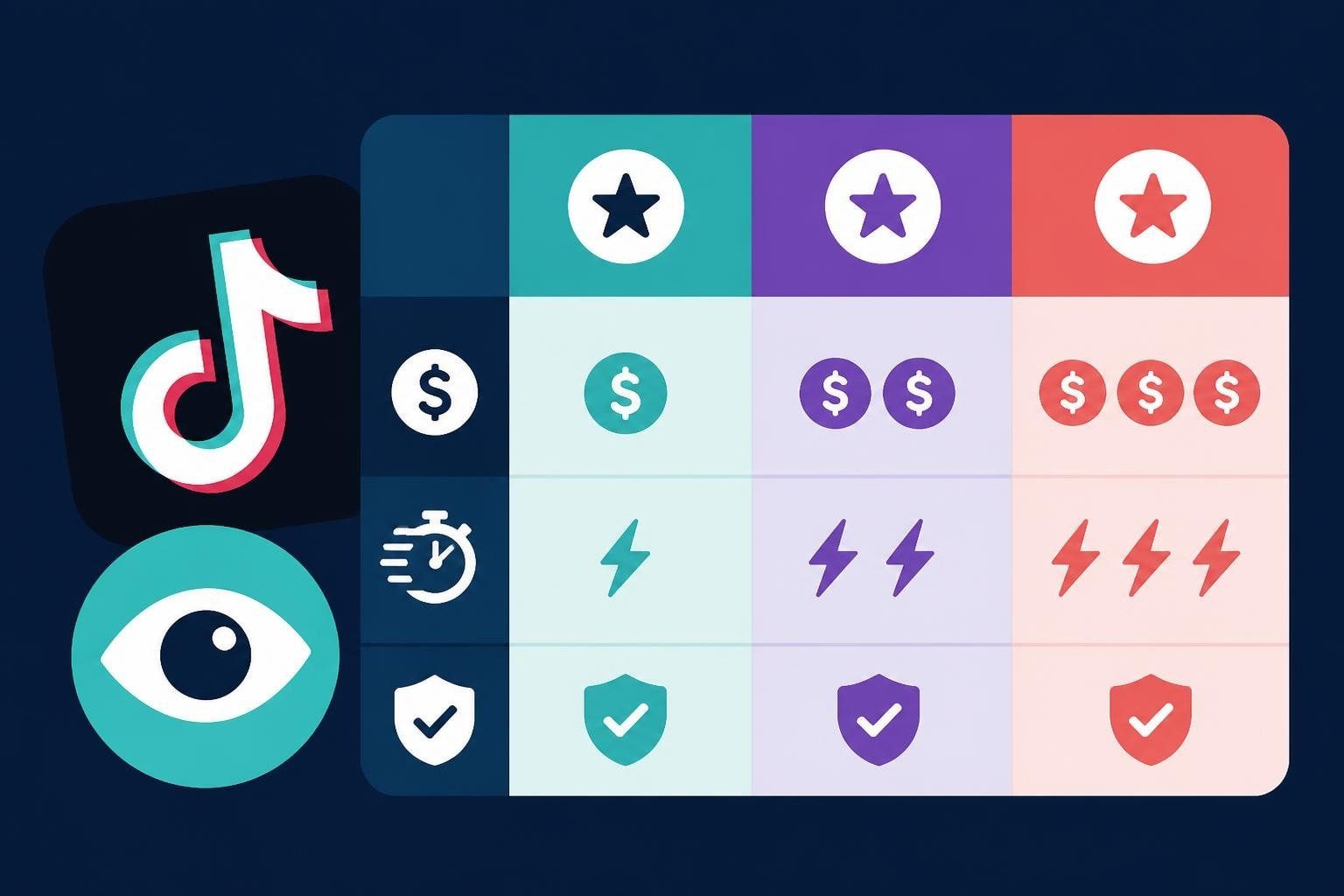
Finding the cheapest TikTok views in 2026 requires more than spotting the lowest price tag. The market for purchased engagement has evolved dramatically, with pricing structures that reflect delivery speed, retention quality, targeting options, and compliance risk. While some providers advertise views for pennies per thousand, the actual cost calculation involves understanding what you're buying, how quickly views arrive, whether they'll stick, and what happens if they don't. This guide breaks down current pricing tiers, quality indicators that affect cost, regulatory considerations that impact long-term value, and how to compare providers on more than price alone.
Understanding TikTok View Pricing in 2026
The market for TikTok views operates on a cost-per-thousand (CPM) model, with prices ranging from under $0.50 to over $15.00 per 1,000 views depending on several factors. At the bottom end, you'll find bulk providers offering high volumes with minimal targeting, instant delivery, and no retention guarantees. Mid-tier services typically charge $2-$5 per thousand views with gradual delivery schedules and some geographic targeting. Premium providers command higher rates by promising engagement from accounts that match specific demographics, interests, or behaviors.
Price alone tells you almost nothing about value. A service charging $0.40 per thousand views might deliver bot traffic that disappears within 48 hours, triggering TikTok's spam detection systems. Another at $4.00 per thousand could provide views from real accounts with authentic profiles, distributed over days to mimic organic discovery patterns. The comparison of social media growth providers includes live calculators that show exactly what each package costs at different quantities, making it easier to spot outliers and evaluate whether rock-bottom pricing signals quality concerns.
What Drives Cost Differences
Several technical and operational factors explain why some providers offer the cheapest TikTok views while others charge premium rates:
- Source quality: Views from established accounts with complete profiles, post history, and genuine followers cost more than fresh bot accounts
- Delivery speed: Instant delivery is cheaper to automate but riskier; gradual delivery over 3-7 days requires more sophisticated infrastructure
- Geographic targeting: Global views from any location cost less than views restricted to specific countries or regions
- Retention guarantees: Providers who replace dropped views within 30-90 days build refill costs into their pricing
- Platform compliance: Services that avoid automated scraping and API violations invest more in maintaining delivery methods
The cheapest options almost always sacrifice one or more of these dimensions. That trade-off may be acceptable for testing content concepts or creating initial social proof, but it carries risks that become more significant as your account grows.
Evaluating Quality at Different Price Points
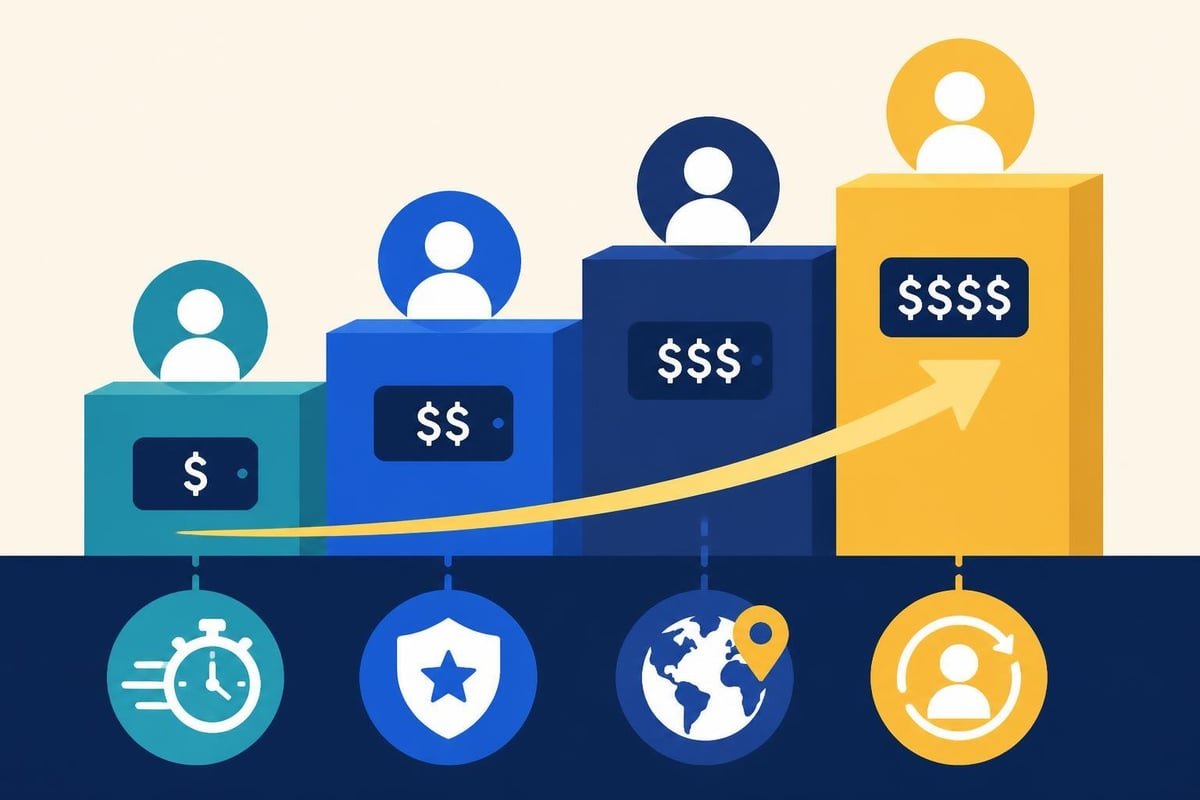
Budget providers typically operate in the $0.30-$1.50 per thousand range, delivering views through automated systems that prioritize volume over authenticity. These services rarely verify account quality, may use traffic from click farms or view-exchange networks, and offer limited support if views drop or fail to arrive. While technically among the cheapest TikTok views available, they present the highest risk of detection and removal.
Research from the Social Science Research Council examining the market for purchased followers reveals that bottom-tier providers rely on recycled account pools that service multiple platforms simultaneously. These accounts exhibit suspicious patterns: identical engagement timing across unrelated content, implausible follower-to-following ratios, and minimal profile information. TikTok's detection algorithms have become increasingly sophisticated at identifying these patterns, particularly after the platform's 2025 updates to its spam prevention systems.
Mid-range providers ($2-$6 per thousand) typically source views from a mix of lower-quality real accounts and higher-quality automated accounts. They implement delivery pacing, basic geographic filtering, and some retention monitoring. Quality varies considerably within this tier, making provider reputation and refund policies particularly important evaluation criteria.
| Price Tier | Cost Range (per 1K) | Typical Delivery | Retention Rate | Detection Risk |
|---|---|---|---|---|
| Budget | $0.30-$1.50 | Instant-24 hours | 40-60% at 30 days | High |
| Mid-Range | $2.00-$6.00 | 1-5 days | 65-85% at 30 days | Moderate |
| Premium | $8.00-$15.00+ | 3-10 days | 90%+ at 30 days | Lower |
Premium services charging above $8 per thousand views invest in more sophisticated sourcing methods, including incentivized viewing from real users, partnerships with micro-influencer networks, and targeted promotion through secondary accounts. While still not organic growth, these methods produce engagement patterns that more closely resemble natural discovery.
Platform Policies and Regulatory Considerations
TikTok's Terms of Service explicitly prohibit "artificially inflating views or other metrics," though enforcement focuses primarily on bot networks and automated systems rather than individual purchases. The platform continuously updates its detection capabilities, and accounts relying heavily on purchased views may experience reduced organic reach, content suppression, or in severe cases, account restrictions.
Beyond platform policies, the regulatory environment has shifted significantly. The Federal Trade Commission’s 2024 rule banning fake reviews and testimonials includes language addressing the "sale or purchase of fake social-media influence indicators." While primarily targeting deceptive commercial practices, the rule establishes that knowingly purchasing engagement metrics to mislead consumers about popularity or social proof may constitute an unfair or deceptive trade practice.
The detailed regulations published in the Federal Register clarify that liability extends to both sellers and purchasers when fake indicators are used in commercial contexts. Businesses promoting products or services through accounts with purchased engagement face potential enforcement action if that engagement materially misrepresents their actual influence or popularity.
Compliance Implications for Commercial Accounts
If you're using TikTok for brand promotion, influencer marketing, or commercial purposes, the cheapest TikTok views may carry hidden compliance costs:
- Disclosure requirements: Purchased metrics that materially affect advertiser decisions or consumer perceptions may require disclosure
- Audit liability: Brands increasingly audit influencer accounts before partnerships; purchased views discovered during due diligence can terminate contracts
- Platform ad restrictions: TikTok may limit advertising capabilities for accounts with suspected inauthentic engagement
- Reputation risk: Public exposure of purchased views can damage brand credibility more than low view counts
For personal accounts, hobbyist creators, or non-commercial content, these risks are substantially lower. The calculation changes entirely when purchased views serve commercial objectives or influence business decisions.
Comparing Providers Beyond Price
Finding genuinely cheap TikTok views requires comparing providers on multiple dimensions simultaneously. Price per thousand views is the starting point, but delivery terms, refund policies, minimum purchase requirements, and customer support responsiveness all affect total cost and risk.
Minimum order sizes vary significantly. Some budget providers require minimum purchases of 10,000 or 25,000 views, making their per-unit cost attractive but total outlay substantial. Others offer packages starting at 100 or 500 views, allowing smaller tests but often at higher per-view rates. When comparing the cheapest options, calculate both the per-view cost and the minimum investment required.
Delivery windows affect both price and effectiveness. Instant delivery costs less to automate but creates suspicious engagement spikes. Services offering 24-48 hour delivery typically charge 15-30% more than instant options but distribute views more naturally. Extended delivery over 5-7 days adds another 20-40% to the base cost while further reducing detection risk.
Refill policies separate providers who stand behind their service from those operating on volume margins. The cheapest TikTok views often come with no retention guarantee whatsoever. Mid-tier providers typically offer 30-day refills for dropped views, while premium services may extend guarantees to 60 or 90 days. When views drop and aren't replaced, your effective cost-per-view increases dramatically.
Alternative Approaches to Affordable Growth
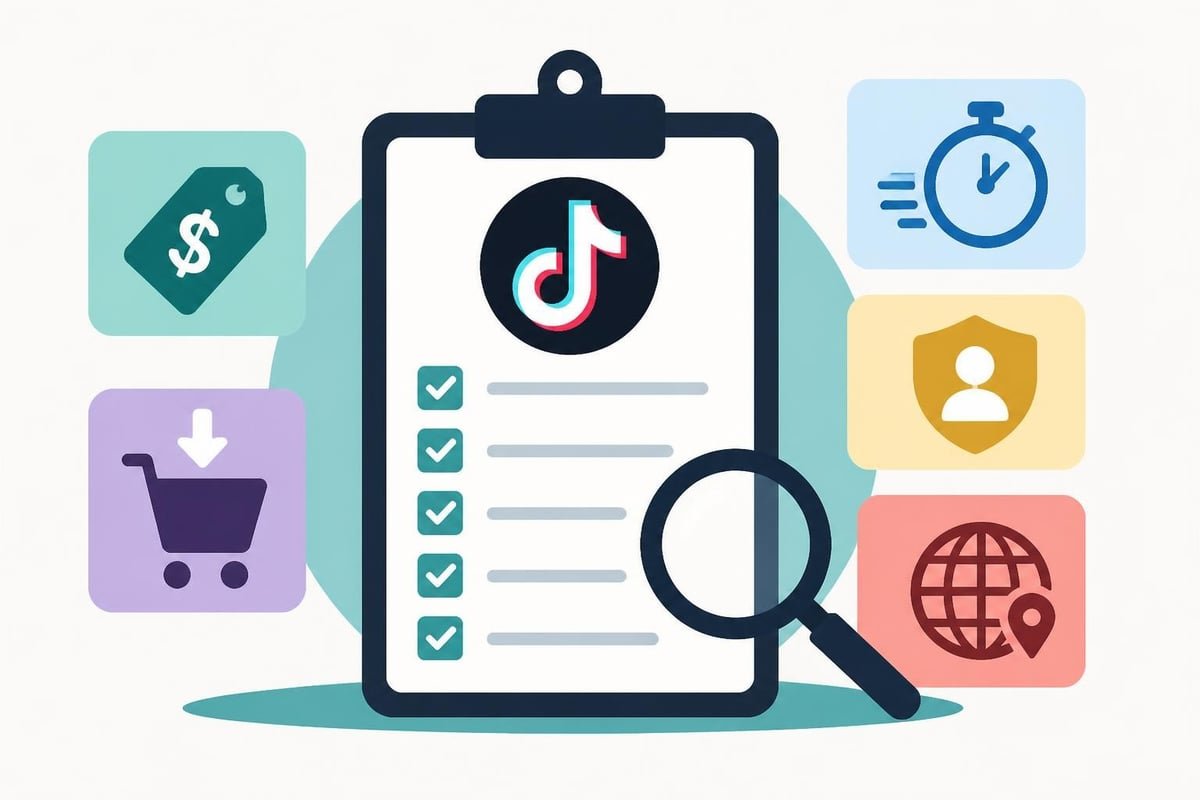
Before committing to purchased views, consider whether alternative strategies might deliver better long-term value at comparable or lower cost. TikTok’s own advertising platform allows precise targeting and campaign optimization with full transparency about costs and performance metrics.
Running a small TikTok Ads campaign with a $20-50 budget can generate hundreds or thousands of views from users who genuinely match your target audience. While the per-view cost may be higher than the cheapest purchased views (typically $3-8 per thousand depending on targeting), these views come from real users who saw your content in their feed, may engage with future posts, and won't suddenly disappear or trigger spam flags.
The platform's auction system rewards content quality with lower costs. According to Pew Research data on how users experience TikTok, the algorithm prioritizes engagement rate over follower count when distributing content. Well-targeted ads to small, relevant audiences can achieve watch times and engagement rates that signal quality to the algorithm, potentially triggering organic amplification that extends far beyond your paid reach.
Organic Optimization Strategies
Several no-cost approaches can boost view counts without purchasing engagement:
- Posting timing: Publishing when your specific audience is most active increases initial engagement, which signals the algorithm to expand distribution
- Hashtag strategy: Mixing niche-specific tags with broader trending tags helps content reach both targeted and exploratory audiences
- Series content: Multi-part series encourage viewers to watch multiple videos, increasing average session duration and algorithmic favor
- Duets and stitches: Engaging with trending content through TikTok's native features taps into existing audience bases
- Cross-promotion: Sharing TikTok content on other platforms drives external traffic that TikTok's algorithm recognizes and rewards
These methods require more time investment than purchasing views but build sustainable growth patterns that compound over time rather than requiring continuous spending to maintain appearance.
Calculating Total Cost of Ownership
The cheapest TikTok views measured by purchase price may carry higher total costs when accounting for replacement needs, platform risk, and opportunity cost. A comprehensive cost calculation includes:
Direct costs: The purchase price plus any fees, minimum orders above what you need, or bundled services you won't use. Some providers advertise low per-view pricing but add processing fees, rush delivery surcharges, or require simultaneous purchase of likes or followers at inflated rates.
Replacement costs: If 40% of views drop within 30 days and the provider offers no refills, your effective cost per sustained view is 67% higher than the advertised rate. Factor expected retention rates into your cost comparison, not just initial delivery price.
Opportunity costs: Time and resources spent researching providers, placing orders, monitoring delivery, and disputing issues represent real costs. A provider charging 20% more but delivering reliably without issues may cost less in total when accounting for your time.
Risk costs: Account restrictions, reach suppression, or credibility damage from detection create costs that are difficult to quantify but potentially catastrophic. A 5% risk of account limitation doesn't make the cheapest views 5% more expensive-it makes them potentially infinitely expensive if the limitation affects your ability to reach audiences or monetize content.
| Cost Component | Budget Provider | Mid-Range Provider | Premium Provider |
|---|---|---|---|
| Initial per-1K cost | $0.50 | $3.50 | $10.00 |
| Expected 30-day retention | 50% | 75% | 95% |
| Effective cost (retained views) | $1.00 | $4.67 | $10.53 |
| Refill policy | None | 30 days | 90 days |
| Support response time | 48+ hours | 12-24 hours | 2-6 hours |
When viewed through this total cost framework, premium providers often deliver better value than budget options for creators who need sustained view counts and can't afford account risk.
Package Structures and Bulk Discounts
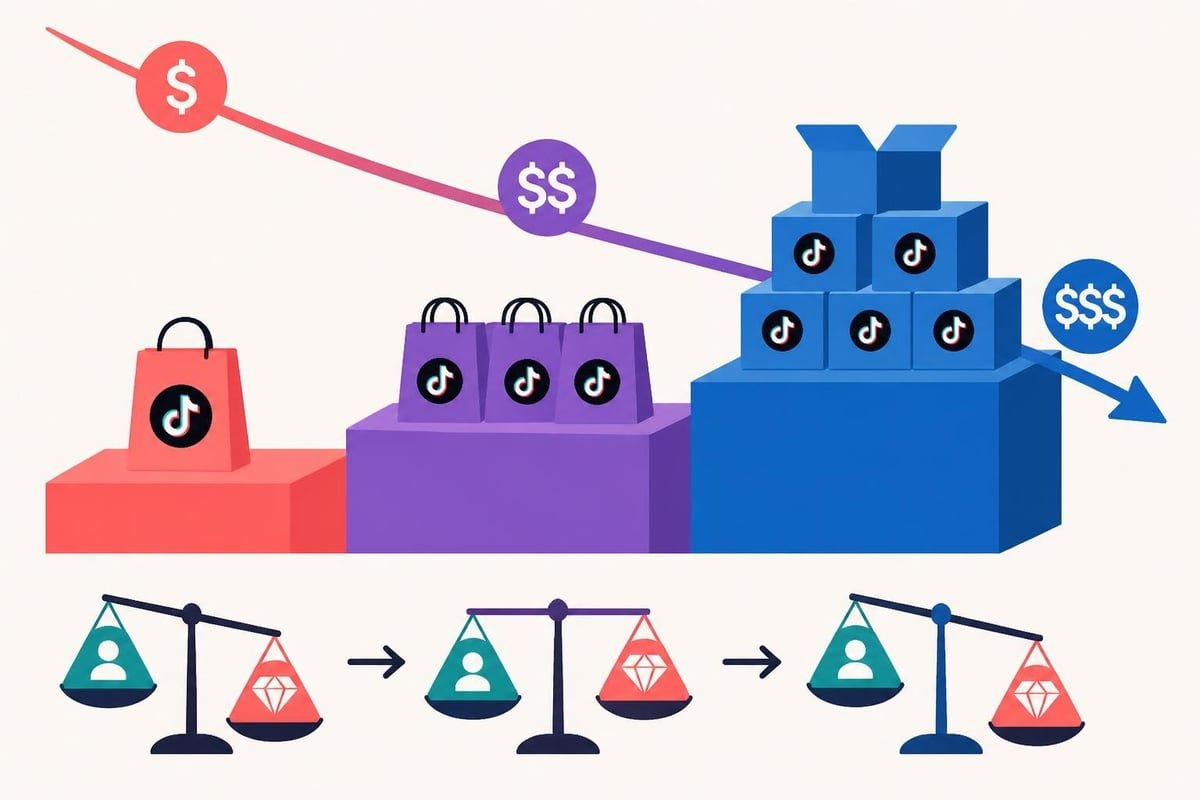
Most providers structure pricing in tiered packages, with per-view costs decreasing at higher volumes. A typical structure might offer 1,000 views for $5.00 ($5.00 per thousand), 5,000 views for $18.00 ($3.60 per thousand), and 25,000 views for $65.00 ($2.60 per thousand). The cheapest TikTok views on a per-unit basis always come in the largest packages, but these require significant upfront investment and amplify risk if the provider underdelivers or the views prove low-quality.
Smaller creators often face a dilemma: accepting higher per-view costs for manageable packages, or committing large budgets to secure bulk discounts. Some providers split the difference with subscription models, offering monthly view allotments at bulk pricing without requiring single large purchases. These typically run $25-150 per month depending on total view allocation and delivery guarantees.
Bulk purchasing considerations include:
- Distribution across multiple videos versus concentrating on one post
- Storage of unused views (some providers allow banking; others enforce use-by dates)
- Provider stability (can they deliver a 100,000-view package reliably over time?)
- Platform changes (will delivery methods remain viable throughout the service period?)
Unless you're confident in both the provider's reliability and your ability to absorb the loss if something goes wrong, starting with smaller packages to test quality and support responsiveness makes financial sense even at higher per-unit costs.
Geographic and Demographic Targeting
Basic view packages deliver traffic from global sources without filtering by location, language, or user characteristics. These represent the cheapest TikTok views available but may include engagement from regions or demographics entirely irrelevant to your content. A creator producing English-language content about US sports receives little value from views originating in countries where neither English nor American sports are popular.
Geographic targeting typically adds 30-100% to base pricing depending on specificity. Country-level targeting (e.g., "US only" or "UK only") usually costs 30-50% more than global views. State or city-level targeting, where available, can double or triple costs. For creators whose content has strong geographic relevance-local businesses, regional culture, location-specific humor-the additional cost delivers proportionally more value.
Demographic targeting (age ranges, gender, interests) is rarer in view-purchasing services and commands significant premiums when available. Providers who offer genuine demographic filtering charge 2-4x standard rates because they must source from more selective account pools or use more sophisticated delivery methods.
Analysis of epistemic uncertainty in fake account markets reveals that most low-cost providers cannot reliably deliver the targeting they advertise. Without independent verification systems, claims about geographic or demographic composition are difficult to validate. Paying for targeting from providers who don't offer detailed delivery reports or verifiable analytics often means paying premium prices for what amounts to untargeted traffic with spoofed location data.
Red Flags and Warning Signs
Certain pricing patterns and provider behaviors signal quality issues or outright scams. The cheapest TikTok views often come from providers exhibiting multiple warning signs:
Prices far below market: When one provider offers views at $0.20 per thousand while competitors cluster around $2-4, the outlier is either using inferior sources, unlikely to deliver, or operating a scam. Legitimate cost advantages from efficient operations or better relationships with traffic sources might produce 20-30% savings, not 90% discounts.
No contact information or support channels: Providers operating solely through social media DMs or messaging apps without websites, support tickets, or verifiable business information disappear easily when issues arise.
Upfront payment with no refund policy: Legitimate services typically offer some recourse for non-delivery or severe under-delivery. Providers demanding payment via cryptocurrency, gift cards, or other irreversible methods with explicit "no refunds" policies are structurally set up to take money and deliver nothing.
Unrealistic delivery promises: Claims of delivering 100,000 views within 1 hour, or guarantees that purchased views will lead to viral growth, indicate either technical impossibility or deliberate deception.
Bundled requirements: Providers who won't sell views unless you also purchase followers, likes, and comments at inflated rates are padding revenue through forced bundling rather than competing on service quality.
Strategic Use of Budget View Services
Despite the risks and limitations, cheap TikTok views serve legitimate purposes in specific contexts. Testing content concepts before investing in promotion, creating baseline social proof for new accounts, or jumpstarting visibility for time-sensitive content can all benefit from affordable view packages when used strategically.
Content testing represents perhaps the strongest case for budget views. If you're experimenting with a new content style or topic, purchasing 500-1,000 cheap views can help you evaluate whether the content resonates before committing to production of a full series. The views themselves may not be valuable long-term, but the data about watch time, engagement rate, and audience retention that TikTok's analytics provide can inform content decisions worth far more than the modest purchase price.
New account activation is another targeted use case. TikTok's algorithm may give more distribution opportunities to accounts showing any engagement versus complete zero. A small initial purchase of 200-500 views distributed across your first few posts can help clear the "new account" threshold, after which organic performance becomes the primary growth driver.
Time-sensitive content with inherent expiration dates-commentary on current events, seasonal material, limited-time offers-sometimes benefits from purchased views because the content's value window is too short to rely entirely on organic discovery. If you're producing content about a specific event happening this week, spending $10-20 to ensure it reaches audiences now rather than building organic momentum over weeks makes practical sense.
In all these cases, the cheapest TikTok views work because you're optimizing for a specific short-term objective rather than building sustainable long-term growth. The calculation changes entirely when purchased views become an ongoing requirement for maintaining appearance rather than a targeted tactical tool.
Monitoring and Measuring Results
Regardless of which provider or price point you choose, systematic tracking reveals whether you're receiving value for money. TikTok's native analytics provide baseline metrics: total views, average watch time, traffic sources, and audience territories. Comparing these metrics before and after purchased views arrive helps identify quality issues.
Suspicious patterns that indicate low-quality views include:
- Average watch time dropping significantly as purchased views arrive (suggests views from accounts that open videos but don't watch)
- Geographic distribution heavily weighted to countries you didn't target
- Engagement rate (likes, comments, shares per view) dropping sharply compared to your baseline
- Follower growth remaining flat despite increased view counts (suggests viewers aren't genuine accounts interested in your content)
Quality providers deliver views that roughly match your organic traffic's behavioral patterns. If your organic viewers typically watch 60% of your videos and 3% like posts they view, purchased views should approximate those ratios. Dramatic deviations-purchased views showing 15% average watch time and 0.1% like rates-indicate you're paying for bot traffic regardless of the provider's quality claims.
Set up comparison frameworks before purchasing. Document your typical metrics across 10-20 recent posts, calculate averages for watch time percentage, engagement rate, and follower conversion rate, then compare those baselines to posts receiving purchased views. Providers delivering genuine quality should produce metrics within 20-30% of your organic baseline, not 80% below it.
The cheapest TikTok views aren't always the most affordable when you account for quality, retention, and risk. Understanding pricing structures, evaluating providers on multiple dimensions, and knowing when purchased views serve strategic purposes versus when they create more problems than they solve helps you make informed decisions that align with your goals and budget. Best Social Media Growth Services 2026 provides detailed, independent comparisons of the leading providers with real pricing data, delivery guarantees, and platform coverage-helping you find services that balance cost with quality rather than simply chasing the lowest number.