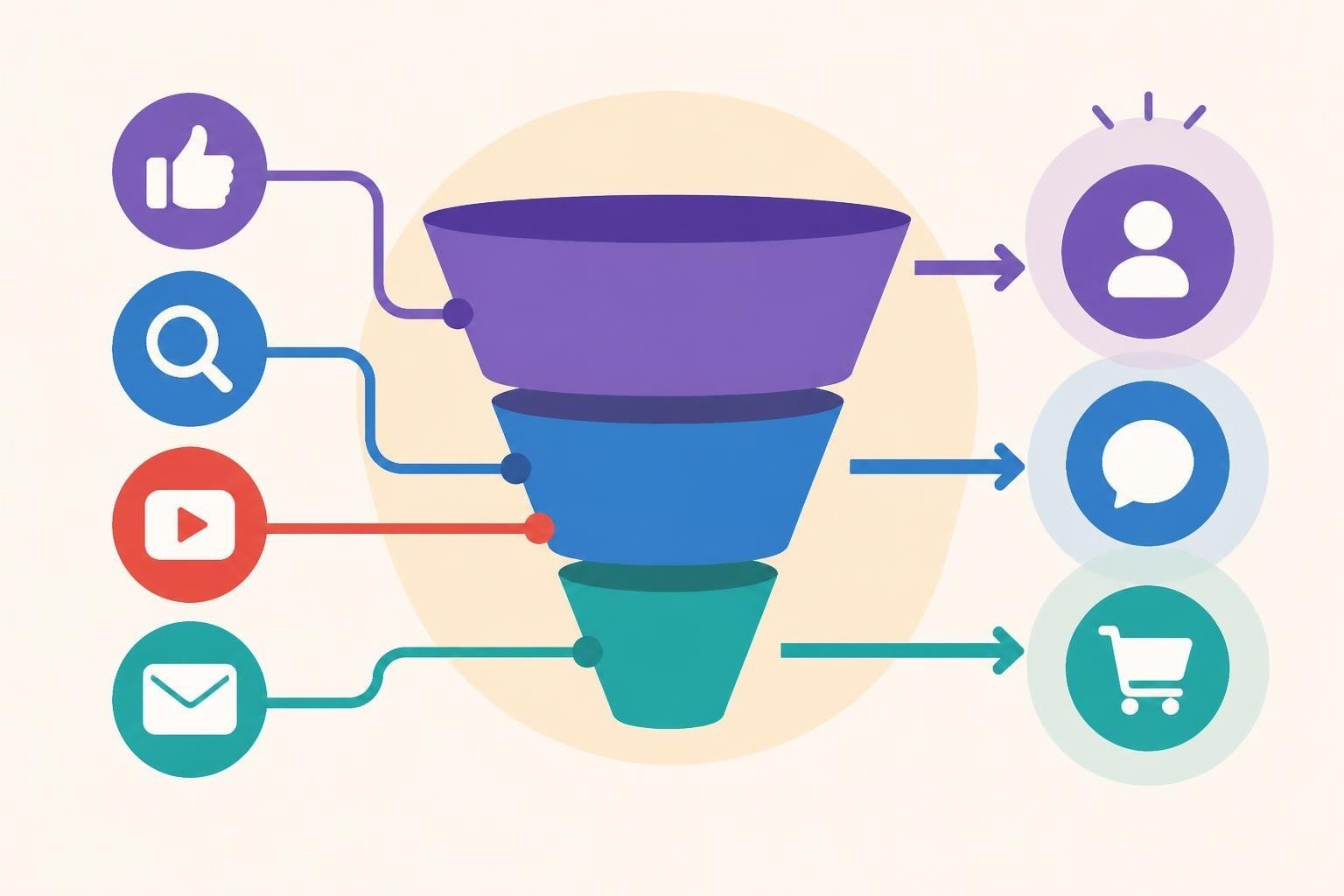
The convergence of media and marketing has fundamentally reshaped how businesses reach audiences in 2026. What once existed as separate disciplines-media buying and marketing strategy-now operate as an integrated ecosystem where platform choice, content creation, audience targeting, and performance measurement feed into a single growth engine. Understanding this relationship is essential for any business looking to maximize return on investment while building sustainable audience relationships across digital channels.
The Evolution of Media and Marketing Integration
Traditional boundaries between media planning and marketing execution have dissolved over the past decade. Media and marketing teams now share data pipelines, attribution models, and success metrics in ways that were impossible before programmatic advertising and unified analytics platforms became standard.
The shift began when digital platforms offered both distribution and measurement in a single interface. Facebook didn't just sell ad space-it provided audience insights, creative testing, and conversion tracking. Google unified search intent data with display advertising. This integration forced marketing departments to rethink organizational structure.
Key Changes in the Media Landscape
Platform fragmentation has accelerated even as consolidation continues among the largest players. According to research on how Americans consume news, audiences now split attention across an average of 7.3 different platforms weekly, up from 4.1 in 2020.
Major platform categories in 2026 include:
- Short-form video (TikTok, Instagram Reels, YouTube Shorts)
- Long-form streaming (YouTube, connected TV platforms)
- Social communities (Reddit, Discord, niche forums)
- Professional networks (LinkedIn, industry-specific platforms)
- Search ecosystems (Google, Amazon, app stores)
This fragmentation means media and marketing budgets must stretch across more touchpoints while maintaining consistent messaging and attribution across channels.
Budget Allocation Across Media Channels
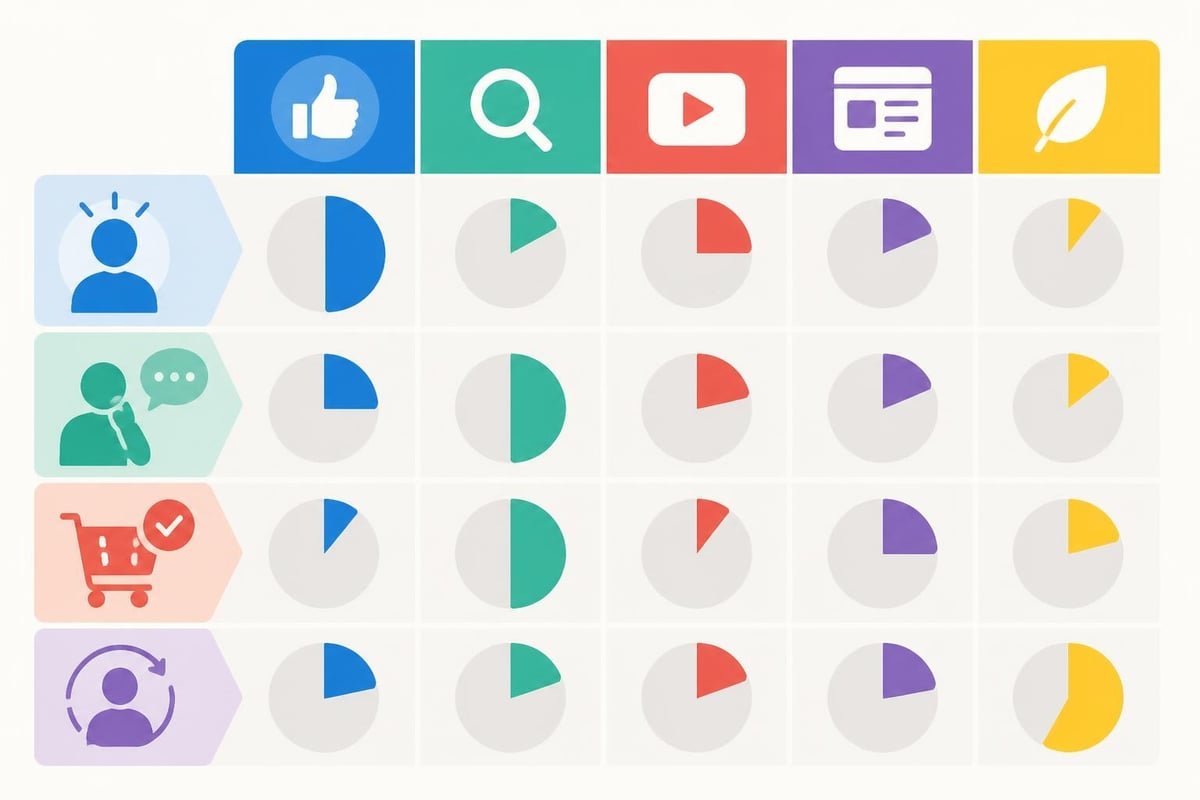
Smart allocation requires understanding both where your audience spends time and where each dollar generates the highest return. Internet advertising revenue reached $243.2 billion in 2025, with video formats claiming 39% of total spend-the largest single category.
Calculating Channel Mix by Business Stage
Early-stage businesses typically overweight awareness channels with lower cost-per-impression but higher volume. Mature brands shift budgets toward retention and lifetime value optimization.
| Business Stage | Awareness Channels | Consideration | Conversion | Retention |
|---|---|---|---|---|
| Launch (0-6 mo) | 50-60% | 20-25% | 15-20% | 5-10% |
| Growth (6-24 mo) | 35-45% | 25-30% | 20-25% | 10-15% |
| Mature (24+ mo) | 20-30% | 20-25% | 25-30% | 20-30% |
The shift reflects changing economics: acquiring new customers costs 5-7x more than retaining existing ones, but new customer acquisition remains essential for growth.
Platform Selection and Audience Targeting
Choosing the right media mix requires mapping your ideal customer profile to platform demographics and usage patterns. A B2B software company targeting enterprise decision-makers will allocate differently than a consumer brand targeting Gen Z.
Demographic and Behavioral Overlap
Most brands need presence on multiple platforms because customer journeys rarely follow linear paths. A buyer might discover your brand on TikTok, research on Google, compare options on Reddit, and convert through a retargeting ad on Instagram.
Critical platform selection factors:
- Audience concentration: Where your target demo indexes highest
- Purchase intent: Platform context (browsing vs. searching vs. researching)
- Content format fit: What your product/service demonstrates best in
- Competition density: Cost efficiency varies by platform saturation
- Attribution capability: How well you can measure contribution to revenue
The rise of first-party data strategies has made audience targeting more precise but also more complex. Cookie deprecation and privacy regulations mean media and marketing teams must build owned audiences through email, SMS, and community platforms rather than relying solely on third-party targeting.
When building initial awareness and social proof, many businesses compare social growth providers to accelerate early traction with followers, views, and engagement that prime algorithmic distribution and social credibility.
Content Strategy Across Media Formats
Media channel selection and content creation are inseparable decisions. Each platform rewards specific formats, lengths, and interaction patterns through its algorithm and user interface design.
Video dominates most platforms in 2026, but "video" encompasses formats as different as 15-second TikToks and 45-minute YouTube tutorials. Research on video-first marketing strategies shows that brands maintaining consistent presence across multiple video lengths see 3.2x higher engagement than those focusing on a single format.
Format-Platform Matching
| Format Type | Optimal Length | Best Platforms | Primary Goal |
|---|---|---|---|
| Short-form vertical | 7-45 seconds | TikTok, Reels, Shorts | Awareness, virality |
| Mid-form horizontal | 2-8 minutes | YouTube, Facebook | Education, consideration |
| Long-form deep-dive | 15-60 minutes | YouTube, podcasts | Authority, conversion |
| Live streaming | 20-90 minutes | Twitch, YouTube Live | Community, retention |
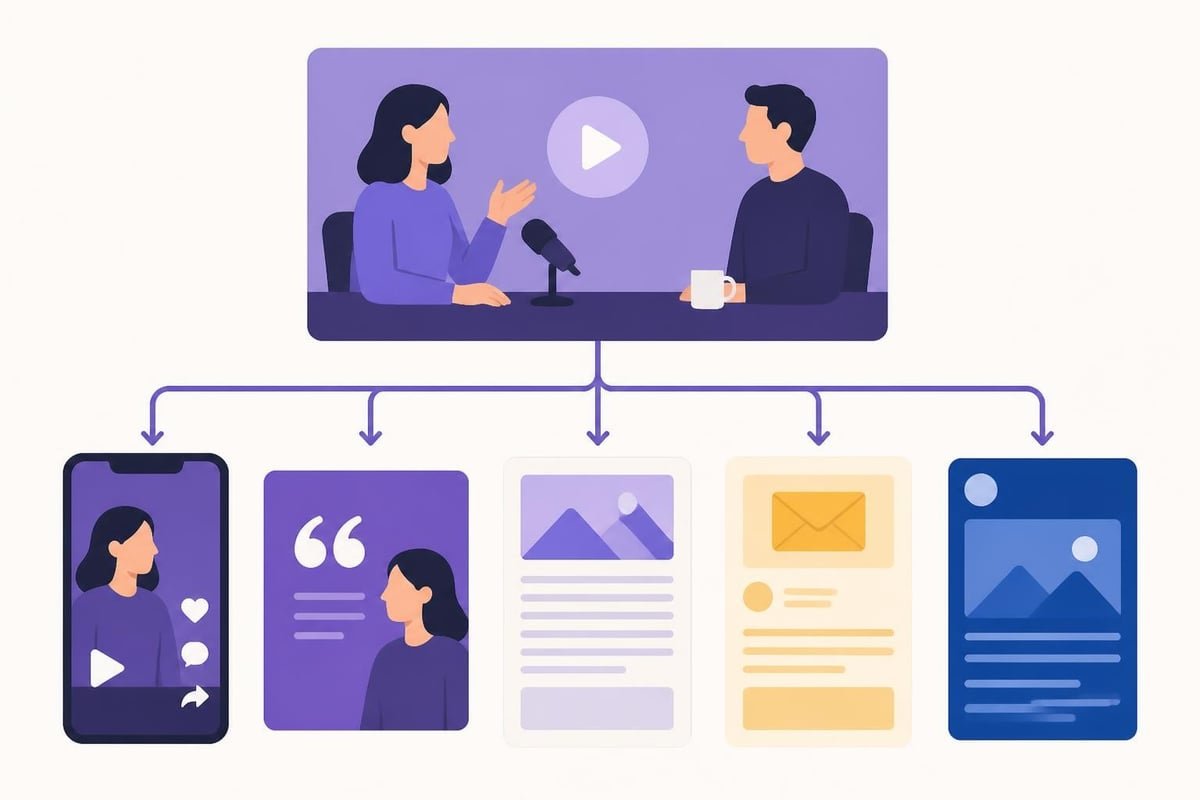
Content repurposing has evolved from simple cross-posting to strategic reformatting. A single 30-minute interview can yield: a full YouTube episode, six 60-second highlight clips, twelve quote cards, one blog post, four LinkedIn posts, and three email newsletter segments.
Measurement and Attribution Models
The most sophisticated media and marketing operations fail without proper measurement infrastructure. Attribution-determining which touchpoints deserve credit for conversions-remains one of the most challenging aspects of integrated campaigns.
Multi-Touch Attribution Approaches
Single-touch models (first-click or last-click) ignore the reality of modern customer journeys. Cross-media measurement insights reveal that B2C purchases average 9.7 touchpoints across 4.3 channels before conversion.
Common attribution models:
- Linear: Equal credit to all touchpoints (simple but often inaccurate)
- Time-decay: More credit to recent interactions (good for short sales cycles)
- U-shaped: Credits first and last touch most (highlights awareness and conversion)
- W-shaped: Credits first touch, mid-funnel conversion, and final touch (better for complex journeys)
- Algorithmic: Machine learning assigns credit based on historical patterns (most accurate but requires significant data)
The challenge intensifies with cross-device tracking limitations and privacy regulations. Many marketers now employ marketing mix modeling (MMM) alongside digital attribution, using statistical analysis of historical spending and outcomes to estimate channel contribution when individual tracking fails.
Organic vs. Paid Media Balance
The optimal mix of paid advertising and organic content varies dramatically by industry, competition level, and business maturity. Media and marketing strategies must integrate both approaches because they serve complementary functions.
Paid media provides immediate reach and precise targeting but stops delivering the moment spending ends. Organic content builds compounding value over time but requires months or years to generate significant traffic in competitive categories.
Building Sustainable Growth Engines
The most effective strategies use paid media to accelerate organic growth rather than replace it. Promoted content reaches new audiences who then follow your accounts, creating an organic base. Paid ads drive traffic to content that earns backlinks and search rankings.
Organic channel strengths:
- Compound growth through network effects and algorithms
- Lower marginal cost as audience grows
- Higher trust and engagement rates
- Sustainable without ongoing ad spend
- Builds owned audience assets
Paid channel strengths:
- Immediate reach and predictable volume
- Precise targeting and segmentation
- Rapid testing and optimization cycles
- Scalable on demand
- Access to competitive markets
Businesses typically start with 70-80% paid media during launch to gain initial traction, then shift toward 40-60% paid as organic channels mature. The exact balance depends on content production capacity, competition levels, and customer acquisition cost economics.
Platform Algorithm Navigation
Every major platform uses algorithmic distribution, meaning media and marketing success depends partly on understanding and optimizing for ranking factors. These algorithms change frequently, but core principles remain consistent across platforms.

Universal Algorithm Principles
Platforms prioritize content that keeps users engaged because engagement drives ad revenue. Your media strategy should align with this incentive by creating content that maximizes watch time, interaction, and return visits.
- Engagement velocity: How quickly content generates interactions after posting
- Completion rate: Percentage of viewers who watch/read to the end
- Relationship signals: Prior interactions between creator and viewer
- Content originality: Native creation vs. reposted content
- Recency: Fresh content receives temporary distribution boost
Research on advertising to distracted consumers demonstrates that the first three seconds determine whether 73% of viewers continue engaging with video content, making hooks more critical than ever.
Emerging Trends Reshaping Media and Marketing
The landscape continues evolving rapidly as technology capabilities, platform policies, and user behaviors shift. Staying ahead requires monitoring trend signals and testing new approaches before they become saturated.
Creator Economy Integration
Brand partnerships with creators now represent a significant portion of media budgets. Micro-influencers (10k-100k followers) often deliver better ROI than macro-influencers because of higher engagement rates and more authentic audience relationships.
The creator economy has professionalized dramatically, with most successful creators operating as media companies with production teams, agents, and multi-platform strategies. Brands increasingly work with creator networks rather than individual personalities to ensure consistent content flow.
AI-Powered Personalization
Generative AI now assists with content creation, ad copy testing, audience segmentation, and creative optimization. The technology hasn't replaced human creativity but has dramatically increased output capacity and testing velocity.
Media and marketing teams using AI tools report 40-60% faster content production cycles and 2-3x more creative variations tested per campaign. The advantage compounds over time as machine learning improves based on performance data.
Privacy-First Targeting Evolution
Cookie deprecation and privacy regulations continue forcing platform and strategy adaptations. Predictions on media and advertising trends suggest that contextual targeting will regain prominence alongside first-party data strategies.
Successful brands are building owned audience assets through email lists, SMS subscribers, app installations, and community memberships. These owned channels provide targeting capabilities independent of third-party cookies while offering higher engagement rates.
Cross-Platform Campaign Orchestration
Running coordinated campaigns across multiple channels requires careful message sequencing, budget pacing, and creative variation. The goal is consistent brand experience while optimizing for each platform's unique characteristics.
Sequential Messaging Strategies
Rather than broadcasting identical messages everywhere, sophisticated campaigns use platform sequences that guide audiences through awareness, consideration, and conversion stages across different media.
Example campaign flow:
- Week 1: TikTok/Reels short-form video for mass awareness
- Week 2: YouTube mid-form content for interested viewers
- Week 3: Search ads capturing active researchers
- Week 4: Retargeting display ads for cart abandoners
- Ongoing: Email nurture for subscribers
Each platform receives creative optimized for its context and user intent. TikTok viewers see entertaining brand introductions. YouTube viewers get detailed product explanations. Search ads answer specific questions. Retargeting reminds and incentivizes.
Budget pacing adjusts based on performance, with higher-converting channels receiving increased allocation while awareness channels maintain baseline presence.
Testing and Optimization Frameworks
Continuous improvement requires systematic testing of variables across creative, targeting, placement, and timing. Media and marketing teams should dedicate 10-20% of budget to structured experiments that inform future allocation decisions.
Test Design Best Practices
Valid tests isolate single variables while holding others constant. Testing ad creative requires consistent targeting and placement. Testing audiences requires consistent creative and timing.
| Test Type | Primary Variable | Metrics to Track | Minimum Sample |
|---|---|---|---|
| Creative | Visual/copy | CTR, engagement rate, conversion rate | 5,000 impressions per variant |
| Audience | Demographics/interests | CPA, ROAS, LTV | 50 conversions per segment |
| Placement | Platform/position | CPM, viewability, completion rate | 10,000 impressions per placement |
| Timing | Day/hour | Engagement, conversion rate, cost | 7 days minimum per window |
Statistical significance matters more than absolute performance differences. A 5% improvement that's statistically significant will compound more reliably than a 20% difference based on small sample noise.
Resource Allocation and Team Structure
Organizations structure media and marketing teams differently based on size, industry, and strategy. Some maintain separate departments; others integrate functions under unified leadership.
The trend favors integration because attribution, content, and distribution decisions are interdependent. A team structure that separates creative development from media buying often produces campaigns optimized for production ease rather than platform performance.
Integrated team roles:
- Strategy lead: Overall direction, budget allocation, goal setting
- Content creators: Platform-specific content production
- Media buyers: Paid placement, bidding, optimization
- Analysts: Attribution, reporting, test design
- Community managers: Engagement, customer service, organic growth
Smaller organizations often combine roles, with individuals wearing multiple hats. The critical requirement is ensuring strategy, creation, distribution, and measurement share data and align on objectives.
Industry-Specific Considerations
Media and marketing approaches vary significantly across industries based on regulatory constraints, purchase cycles, average order values, and customer behaviors.
B2B vs. B2C Dynamics
B2B campaigns typically emphasize thought leadership content, longer sales cycles, and account-based targeting. Decision-makers research extensively and involve multiple stakeholders, requiring content that addresses various roles and concerns.
B2C campaigns can move faster with emotional appeals, social proof, and impulse triggers. Purchase decisions are often individual, shorter-cycle, and more influenced by peer behavior and trends.
E-commerce businesses measure success in immediate revenue and ROAS. Service businesses focus on lead quality and sales cycle velocity. Digital media consumption trends show that fandom and community participation increasingly influence purchase decisions across categories, making community building a central media strategy component.
Successful media and marketing integration requires understanding how platforms, content formats, and audience behaviors intersect to create growth opportunities. The landscape will continue evolving, but the fundamentals-knowing your audience, testing systematically, and optimizing based on data-remain constant. Whether you're building initial awareness or scaling proven channels, compare Best Social Media Growth Services 2026 to find providers that match your platform mix, budget, and growth timeline with transparent pricing and delivery guarantees.