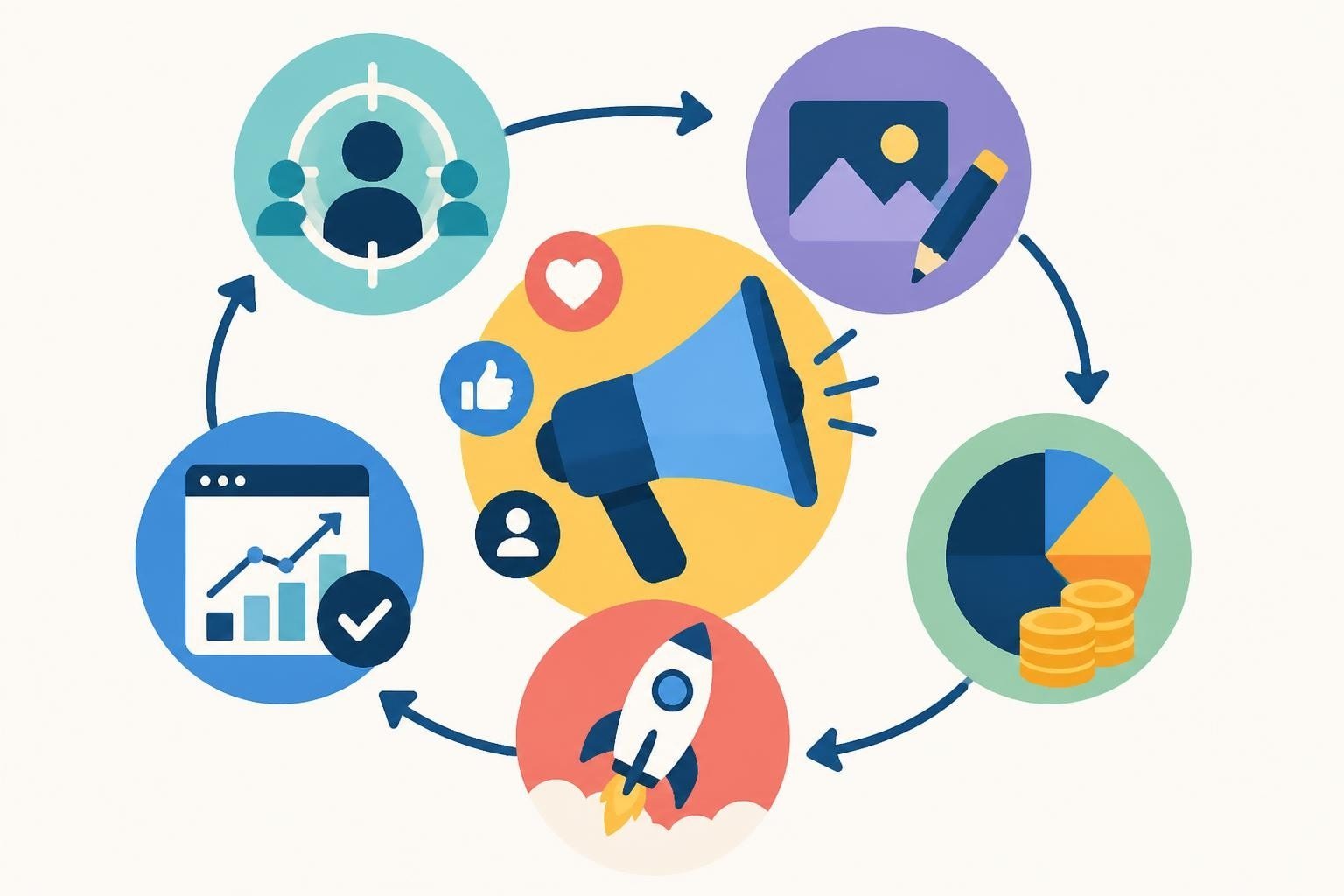
Creating a social media advert that drives real business results requires far more than posting a boosted update and hoping for the best. In 2026, advertisers face sophisticated platform algorithms, rising costs per click, privacy-driven targeting restrictions, and audiences who scroll past promotional content faster than ever. Understanding how to build campaigns that cut through noise, reach the right people, and deliver measurable outcomes is essential whether you're launching your first paid campaign or optimizing an existing strategy. If you're looking to amplify organic reach alongside paid efforts, you can compare social growth providers to find services that complement your advertising investment.
Understanding the Social Media Advertising Landscape
The social media advertising market reached $226 billion globally in 2025, and forecasts suggest continued double-digit growth through 2026. Platform competition remains fierce, with Meta (Facebook and Instagram), TikTok, LinkedIn, Snapchat, and Pinterest all competing for advertiser budgets.
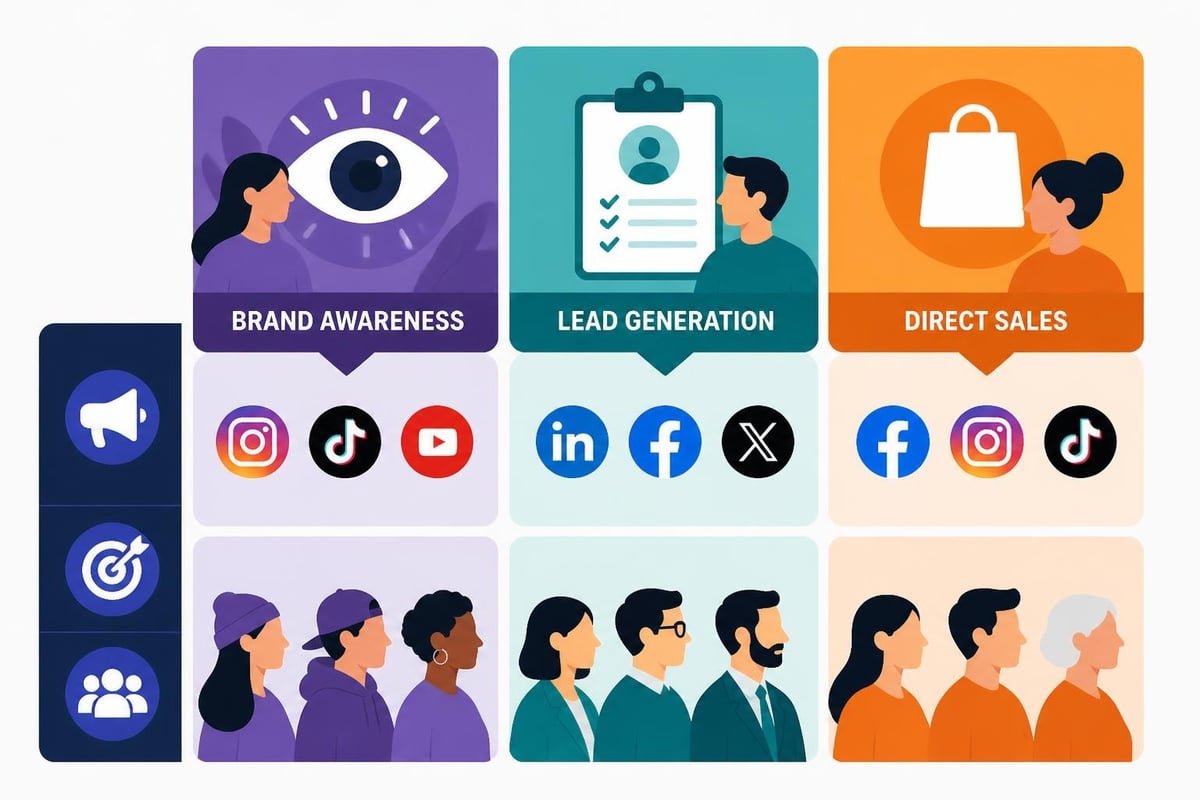
Each platform serves distinct audiences and use cases. According to recent survey data on platform usage, YouTube and Facebook maintain the broadest reach among U.S. adults, while TikTok dominates younger demographics and LinkedIn captures professional audiences. Your choice of platform fundamentally shapes who sees your social media advert and how they engage with it.
Platform-Specific Strengths
Different platforms excel at different objectives:
- Meta platforms (Facebook/Instagram): Broad demographic reach, sophisticated targeting, proven direct-response performance
- TikTok: Youth audiences, viral creative potential, high engagement rates
- LinkedIn: B2B targeting, professional services, high-value decision-makers
- Pinterest: Purchase intent signals, visual discovery, retail and lifestyle categories
- Snapchat: Gen Z reach, augmented reality creative formats, mobile-first execution
Platform selection should align with where your specific audience spends time and how they prefer to discover products or services. A social media advert optimized for LinkedIn's professional context will fail on TikTok, and vice versa.
Building Your Social Media Advert Strategy
Before creating a single asset or writing copy, successful campaigns begin with strategic foundation work. Skipping this phase leads to wasted spend and poor performance.
Audience Definition and Targeting
Modern social media advert targeting balances platform capabilities with privacy restrictions. iOS 14.5+ tracking limitations and privacy regulations have shifted emphasis from third-party data to first-party data and platform-native signals.
Core targeting approaches in 2026:
- Demographic targeting: Age, location, gender, language (available on all platforms)
- Interest and behavior targeting: Based on page likes, content engagement, app usage (increasingly limited)
- Lookalike/similar audiences: Platform algorithms find users similar to your existing customers
- Custom audiences: Upload customer lists, website visitors, app users (requires proper consent)
- Contextual targeting: Placement alongside relevant content without personal data tracking
The most effective campaigns layer multiple targeting methods. Start broad to gather performance data, then refine based on which segments convert best. Every social media advert should have a clearly defined audience hypothesis you can test and optimize.
Creative Development Principles
Creative quality determines whether your social media advert stops the scroll or gets ignored. In 2026, several creative principles consistently outperform:
Visual hierarchy matters: The first 0.3 seconds determine engagement. Your hook (headline, opening frame, or visual) must immediately communicate value or trigger curiosity.
Mobile-first design: Over 85% of social media consumption happens on mobile devices. Design for vertical formats, ensure text readability on small screens, and place key information in the safe zones (avoiding areas typically obscured by UI elements).
Platform-native creative: Ads that look like organic content perform better than obvious advertisements. Study top-performing organic posts in your niche and match their visual language and pacing.
| Creative Element | Best Practice | Common Mistake |
|---|---|---|
| Video length | 6-15 seconds for feed, up to 60 seconds for stories | Starting with brand logo or slow build-up |
| Text overlay | 20% or less of image area, large readable font | Dense paragraphs, small text |
| Sound | Design for sound-off viewing, add captions | Requiring audio to understand message |
| Call-to-action | Single clear action, specific language | Multiple CTAs, vague "learn more" |
The basic principles of effective social media advertising creative emphasize testing multiple variants and letting performance data guide optimization.
Campaign Structure and Budget Allocation
How you organize campaigns, ad sets, and individual social media advert units directly impacts performance and optimization potential.
Campaign Hierarchy Best Practices
Most platforms use a three-tier structure:
- Campaign level: Objective (awareness, consideration, conversion) and overall budget
- Ad set level: Targeting, placement, schedule, and bid strategy
- Ad level: Creative assets, copy, and destination URL
Resist the temptation to stuff everything into a single campaign. Separate campaigns by objective, product line, or funnel stage to maintain clear performance attribution.
Within each campaign, limit ad sets to 3-5 distinct audience segments. Too many ad sets fragment your budget and prevent the algorithm from gathering sufficient data to optimize delivery.
Budget Planning and Bidding
Social media advert costs vary dramatically by platform, audience competitiveness, and campaign objective. Cost-per-click (CPC) ranges from $0.50 to $3.00+ depending on these factors, while cost-per-thousand-impressions (CPM) typically runs $5-$15.
Budget allocation framework:
- Start with $20-50 per day minimum per ad set to give algorithms sufficient data
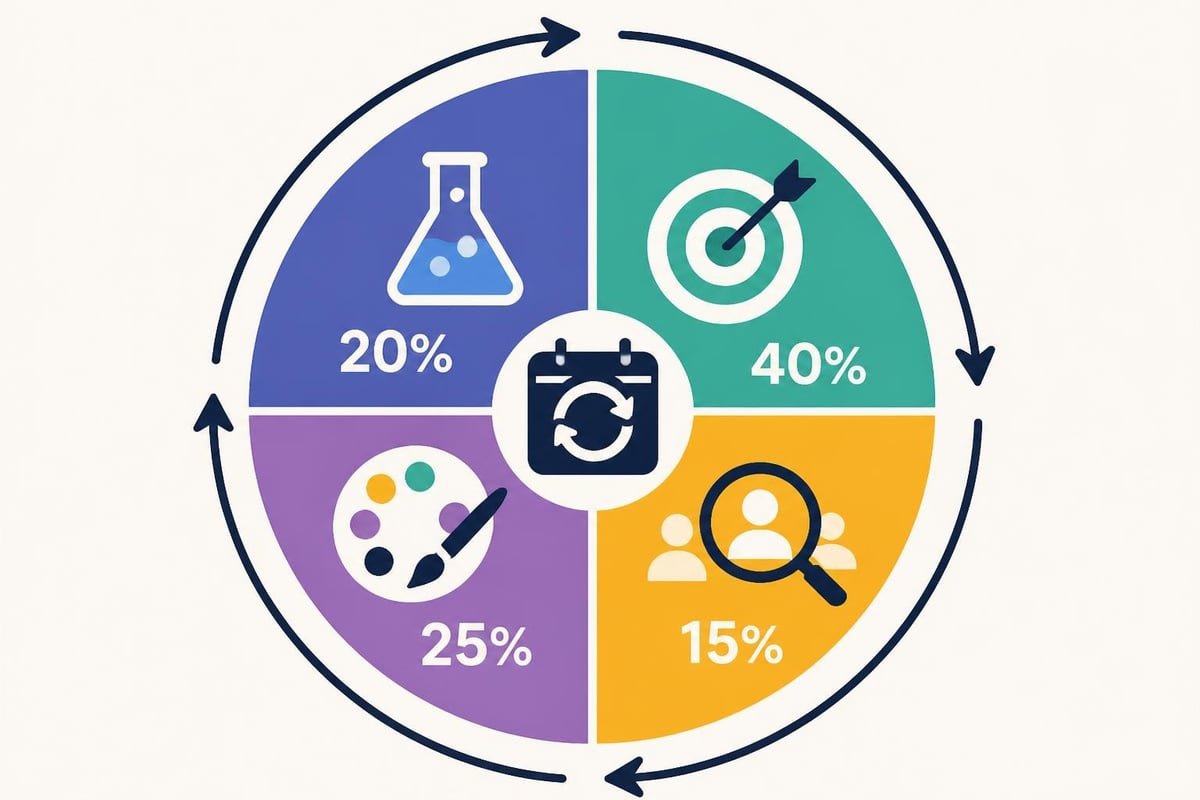
- Allocate 60-70% of budget to proven performers, 30-40% to testing
- Plan for a 7-14 day learning phase before making major changes
- Reserve 15-20% of total budget for creative production and testing
According to industry ad revenue data, social media advertising represents approximately 33% of total digital ad spend, reflecting its proven ROI across industries.
Measuring Performance and Optimizing Results
A social media advert campaign is only as good as your ability to measure its impact and act on those insights.
Key Performance Indicators by Objective
Different campaign objectives require different success metrics:
Awareness campaigns:
- Impressions and reach (unique users who saw your ad)
- Cost per thousand impressions (CPM)
- Video view rate and average watch time
- Brand lift studies (offered by major platforms)
Consideration campaigns:
- Click-through rate (CTR)
- Cost per click (CPC)
- Engagement rate (likes, shares, comments)
- Landing page bounce rate and time on site
Conversion campaigns:
- Conversion rate
- Cost per acquisition (CPA)
- Return on ad spend (ROAS)
- Customer lifetime value (LTV) to CAC ratio
Track both platform-reported metrics and your own analytics. Platforms may count conversions differently than your CRM or analytics platform, creating discrepancies that need reconciliation.
The Testing and Learning Framework
High-performing advertisers treat every social media advert as a hypothesis to validate:
- Hypothesis formation: "Carousel ads showing product use cases will outperform single-image ads for our target audience"
- Test design: Create matched ad sets with identical targeting, differing only in the variable being tested
- Data collection: Run tests for statistical significance (typically 100+ conversions or 1,000+ clicks minimum)
- Analysis: Compare performance across segments, identify winning variants
- Implementation: Scale winners, kill losers, form new hypotheses
The performance marketing best practices emphasize balancing short-term conversion optimization with long-term brand building for sustainable growth.
Compliance and Ethical Considerations
Running social media adverts comes with legal and ethical responsibilities that cannot be ignored in 2026.
Required Disclosures and Regulations
The FTC guidance on endorsements and advertising mandates clear disclosure of paid partnerships, sponsored content, and material connections. Every social media advert must be clearly identifiable as advertising.
Key compliance requirements:
- Use platform-native "Paid Partnership" or "Sponsored" labels
- Include clear disclosures in influencer collaborations (#ad, #sponsored)
- Ensure testimonials reflect typical results and include appropriate disclaimers
- Respect platform-specific advertising policies (prohibited content, restricted industries)
- Obtain necessary permissions for user-generated content or influencer likenesses
International campaigns face additional complexity, as European GDPR, UK rules, and other regional regulations impose different requirements. The UK ASA guidance on recognizing ads provides helpful frameworks that often exceed minimum legal requirements.
Data Privacy and Targeting Ethics
Privacy-first advertising is no longer optional. Users increasingly opt out of tracking, and platforms have responded with privacy-preserving measurement and targeting.
Build campaigns assuming limited tracking:
- Focus on contextual targeting and first-party data
- Implement server-side tracking and conversion APIs
- Use aggregated measurement and modeling for attribution
- Respect user privacy preferences and consent signals
Advanced Tactics for 2026
As the social media advert landscape matures, several advanced tactics separate exceptional campaigns from average ones.
Dynamic Creative and Personalization
Dynamic ads automatically generate personalized variations based on user behavior and preferences. A single campaign template can produce hundreds of customized social media advert variants showing different products, messaging, or offers to different audience segments.
Dynamic creative applications:
- E-commerce catalog ads showing products users browsed
- Travel ads displaying destinations based on search history
- B2B ads customizing messaging by job title or industry
- Retargeting ads highlighting abandoned cart items
Implementation requires proper product feeds, pixel/SDK integration, and template creative that works across variations.
Omnichannel Integration
The modern consumer decision journey spans streaming, scrolling, searching, and shopping across multiple devices and platforms. Your social media advert strategy should acknowledge this complexity.
Integration touchpoints:
- Social media discovery drives initial awareness
- Search ads capture high-intent research behavior
- Retargeting brings users back across platforms
- Email nurturing provides detailed information
- Social proof and reviews influence final decisions
Each channel plays a distinct role. Avoid attribution systems that over-credit last-click touchpoints and under-value early-funnel social media advert impressions that initiate consideration.

AI and Automation in Campaign Management
Platform automation has advanced significantly. In 2026, algorithmic campaign management handles much of the granular optimization that previously required manual intervention.
| Automation Feature | What It Does | When to Use It |
|---|---|---|
| Automated bidding | Adjusts bids in real-time to hit target CPA or ROAS | When you have conversion tracking and sufficient data |
| Automated placements | Distributes ads across available placements | When testing new platforms or expanding reach |
| Dynamic creative | Assembles optimal creative combinations per user | When you have multiple assets and want personalization |
| Automated rules | Pauses poor performers, scales winners | For hands-off campaign management at scale |
The tradeoff is control versus performance. Automation often outperforms manual management but reduces transparency into how decisions are made. Start with automated bidding while maintaining manual control over audiences and creative.
Emerging Trends and Future Considerations
Several trends will shape social media advert effectiveness through 2026 and beyond:
Short-form video dominance: Platforms prioritize video content, particularly vertical short-form videos under 60 seconds. Advertisers who master TikTok-style creative formats gain efficiency advantages.
Social commerce integration: In-app checkout and shopping features reduce friction between discovery and purchase. Social media adverts increasingly drive direct transactions rather than website clicks.
Influencer and creator partnerships: Branded content through trusted creators outperforms traditional ads for many audiences. Hybrid approaches combining paid amplification of organic creator content show strong results.
Privacy-first measurement: Attribution and tracking will continue evolving as third-party cookies disappear and privacy regulations expand. First-party data strategies and privacy-enhancing technologies become competitive advantages.
For brands seeking to complement paid social media advert campaigns with organic growth strategies, comparing service providers on delivery speed, platform coverage, and pricing helps identify the best fit for specific goals and budgets.
Building Your Social Media Advert Tech Stack
Success at scale requires the right tools and integrations:
Essential platform categories:
- Ad platforms: Native interfaces (Meta Ads Manager, TikTok Ads Manager, LinkedIn Campaign Manager)
- Third-party management: Unified dashboards for cross-platform campaigns and reporting
- Analytics and attribution: Google Analytics, platform pixels, multi-touch attribution software
- Creative tools: Video editors, graphic design platforms, user-generated content curation
- Automation and optimization: Bid management, budget pacing, creative testing platforms
Start with platform-native tools before investing in third-party solutions. Many advertisers over-invest in expensive management platforms before mastering platform basics.
Integration and Data Flow
Your social media advert data should flow into broader marketing and business intelligence systems:
- Platform pixels/SDKs track conversions and user behavior
- Conversion APIs send server-side events for privacy-compliant tracking
- UTM parameters enable granular traffic source attribution
- CRM integration connects ad performance to customer lifetime value
- Data warehouses aggregate cross-platform performance for unified reporting
Proper integration infrastructure enables questions like "What's the true ROI of our TikTok campaigns compared to Meta when accounting for customer lifetime value?" rather than surface-level platform metrics.
Testing Frameworks That Drive Results
Structured testing separates high performers from those stuck with average results. Every social media advert represents an opportunity to learn.
What to Test and How Often
High-impact test variables:
- Audience targeting (test weekly): Different demographic segments, interest categories, lookalike audiences
- Creative format (test bi-weekly): Video vs. image, carousel vs. single, aspect ratios, video length
- Messaging and copy (test weekly): Headlines, value propositions, calls-to-action, tone
- Offers and incentives (test monthly): Discount amounts, free shipping, limited-time urgency
- Landing page experience (test monthly): Destination URL, page design, form length
Maintain a testing calendar to ensure systematic learning rather than ad-hoc experimentation. Document results in a shared knowledge base so insights compound over time.
Statistical Rigor in Testing
A social media advert test is only valid if it reaches statistical significance. Running a test for two days with 50 clicks proves nothing.
Testing best practices:
- Calculate required sample size before launching tests (online calculators are freely available)
- Run tests simultaneously, not sequentially, to control for external factors
- Change only one variable per test to isolate cause and effect
- Set a predetermined test duration (typically 7-14 days minimum)
- Use confidence intervals and p-values to validate results
When possible, implement holdout groups to measure incremental impact. What percentage of conversions would have happened anyway without the social media advert exposure?
Scaling Campaigns Profitably
Once you've identified winning formulas, scaling while maintaining efficiency requires discipline.
The Scaling Framework
| Scaling Phase | Budget Range | Focus Area | Risk Level |
|---|---|---|---|
| Testing | $500-2,000/month | Finding product-market-channel fit | High |
| Validation | $2,000-10,000/month | Proving repeatability and economics | Medium |
| Scaling | $10,000-50,000/month | Expanding proven winners | Medium-Low |
| Optimization | $50,000+/month | Efficiency and incrementality | Low |
Many advertisers attempt to scale too quickly, overwhelming their audience and degrading performance. Increase budgets by 20-30% per week maximum, monitoring for efficiency drops.
Audience Saturation and Refresh Strategies
Every targeting audience has a finite size. As your social media advert reaches more of that audience repeatedly, performance degrades due to ad fatigue.
Saturation indicators:
- Increasing frequency (average impressions per user)
- Declining click-through rates
- Rising cost per acquisition
- Plateauing reach despite budget increases
Combat saturation through:
- Creative refresh (new assets every 2-4 weeks for active campaigns)
- Audience expansion (new targeting segments, broader parameters)
- Platform diversification (expand to additional social networks)
- Frequency capping (limit how often users see your ads)
According to social media ad spending research, advertisers increasingly allocate budgets across multiple platforms rather than concentrating spend, reducing platform-specific saturation risk.
Creating effective social media adverts in 2026 requires balancing creative excellence, strategic targeting, rigorous testing, and platform expertise across an increasingly complex landscape. The most successful campaigns integrate paid advertising with organic growth strategies to maximize reach and efficiency. Best Social Media Growth Services 2026 provides independent comparisons of top providers across price, delivery speed, platform coverage, and refund terms, helping you identify the right partners to complement your advertising investment and achieve your growth goals.