Growing your pinterest followers remains one of the most misunderstood metrics in social media marketing. Unlike other platforms where followers directly dictate your content's reach, Pinterest operates as a visual search engine where distribution depends on relevance, engagement quality, and Pin performance. Yet follower count still matters, particularly for brand credibility, merchandising potential, and establishing authority in your niche. Understanding how followers function on Pinterest, when they genuinely impact your goals, and which growth strategies actually work in 2026 will help you build an audience that converts rather than just inflates vanity metrics.
How Pinterest Followers Actually Work
Pinterest’s follower system differs fundamentally from Instagram or Twitter. When someone follows your profile, they opt to see your new Pins in their home feed, but Pinterest's algorithm doesn't guarantee that visibility. The platform prioritizes content based on relevance to each user's search behavior and engagement history, not chronological follower feeds.
This creates an important distinction: your pinterest followers represent potential reach, not guaranteed impressions. A profile with 10,000 followers might reach only 500 people per Pin if the content doesn't match what those followers actively search for or engage with. Conversely, a well-optimized Pin from an account with 1,000 followers can reach hundreds of thousands through search and recommendation algorithms.
The Three Types of Pinterest Followers
Understanding follower types helps you target growth efforts more strategically:
- Profile followers see your new Pins across all boards in their feed
- Board followers subscribe to specific topic boards without following your entire profile
- Engaged followers actively save, click, and share your Pins, signaling quality to the algorithm
The third category drives the most value. Ten engaged followers who regularly interact with your content contribute more to long-term reach than 1,000 passive followers who never click. According to Pinterest’s distribution guidance, engagement metrics weigh far more heavily than follower count in determining which Pins get distributed broadly.
Organic Growth Strategies That Work in 2026
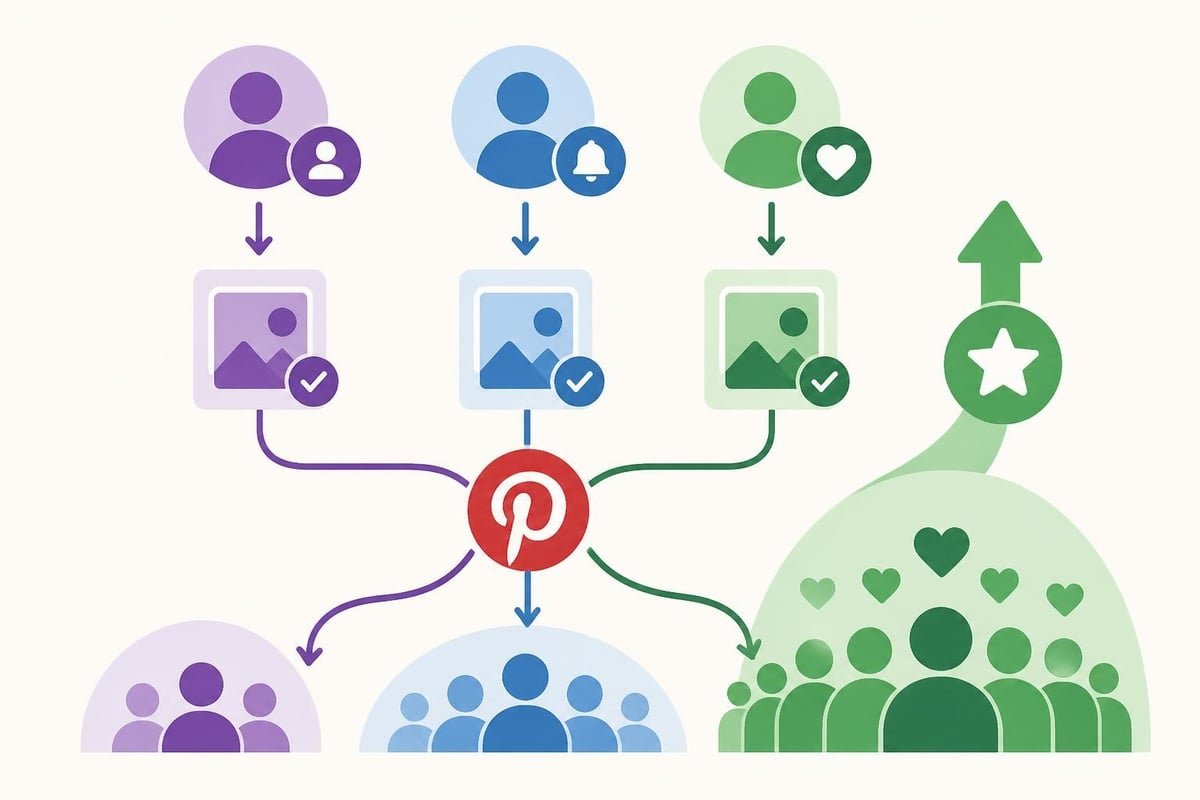
Building pinterest followers organically requires treating Pinterest as a search platform first and social network second. Your profile optimization, content strategy, and consistency all determine whether the right audience discovers and follows you.
Profile Optimization Fundamentals
Your Pinterest profile serves as both storefront and search result. Complete these elements to maximize discoverability:
| Element | Purpose | Best Practice |
|---|---|---|
| Username | Searchability + branding | Include primary keyword (e.g., "ModernHomeDecor") |
| Profile photo | Recognition + trust | High-quality logo or professional headshot |
| Description | SEO + value proposition | 165 characters with keywords and clear benefit |
| Website verification | Credibility + analytics | Claim your domain for attribution |
| Board organization | Navigation + topical authority | 10-15 focused boards with keyword-rich titles |
HubSpot’s Pinterest growth guide emphasizes that claimed websites see 10x more engagement than unclaimed profiles. Verification takes five minutes and immediately boosts credibility with potential followers browsing your profile.
Content Strategy for Follower Growth
Quality Pins attract followers who actually engage. Focus on these content characteristics:
Visual excellence matters more than follower count. Pinterest users save and follow accounts that consistently deliver high-quality, vertical images (2:3 ratio, minimum 1000×1500 pixels). Blurry, horizontal, or text-heavy images get ignored regardless of your existing audience size.
Keyword-rich descriptions improve discovery. Every Pin description should include 2-3 relevant search terms naturally woven into helpful context. The first 50 characters appear in feed previews, so front-load value and keywords there.
Fresh content signals active authority. Posting 5-10 new Pins daily (mixing original and curated content) tells both followers and the algorithm that your profile remains a current resource. Gaps longer than a week hurt distribution even after you resume posting.
Pin at least one original image per day and supplement with 4-9 curated Pins from other creators in your niche. This balance shows you contribute original value while staying connected to broader trends your target audience follows.
When Purchased Followers Make Sense
Some marketers consider purchasing pinterest followers to accelerate social proof or jumpstart a new profile. The decision requires understanding both the legitimate use cases and the significant risks involved.
Strategic Scenarios for Purchased Followers
Purchased followers serve narrow purposes in specific situations:
- New brand launches need baseline credibility when entering competitive niches where established competitors already have 50,000+ followers
- Profile resets following major rebrands or pivots may warrant a follower boost to match the new positioning
- A/B testing can compare organic performance between profiles with different follower counts to isolate the credibility effect
Even in these scenarios, purchased followers only work when combined with strong organic content. If you're considering this route, compare social growth providers that specify Pinterest coverage, delivery speed, and retention rates. The best services deliver followers gradually over days or weeks rather than dumping thousands instantly, which triggers platform flags.
Risks and Platform Policies
Pinterest's terms of service prohibit artificially inflating engagement metrics. Violations can result in:
- Reduced Pin distribution across your entire profile
- Removal of artificial followers by platform audits
- Account suspension for repeat violations
- Loss of claimed website status and verification
More importantly, purchased followers rarely engage. They don't save Pins, click through to your website, or contribute to the engagement signals that drive algorithmic distribution. A profile with 20,000 purchased followers and 0.1% engagement rate performs worse than a profile with 2,000 organic followers and 5% engagement.
Measuring What Actually Matters
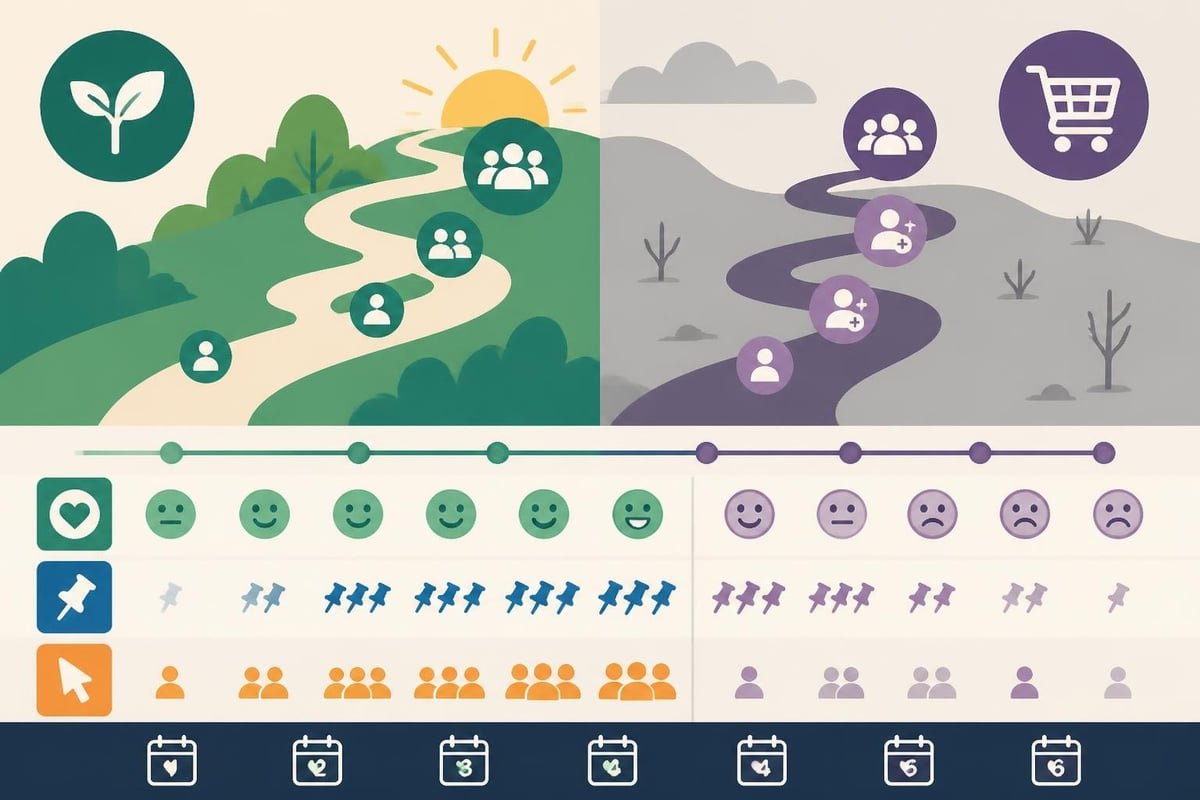
Tracking pinterest followers as a single metric provides incomplete insight. Your analytics strategy should connect follower growth to business outcomes like traffic, conversions, and revenue.
Key Metrics Beyond Follower Count
Pinterest Analytics reveals which numbers actually predict success:
| Metric | What It Measures | Why It Matters |
|---|---|---|
| Engaged audience | Monthly users who save or click your Pins | Shows genuine interest beyond passive following |
| Outbound clicks | Traffic to your website from Pins | Directly ties to conversion potential |
| Pin saves | How often users bookmark your content | Indicates long-term value and re-distribution |
| Impressions growth | Reach trend over time | Shows whether new followers expand visibility |
| Top Pins | Highest-performing content by engagement | Reveals what resonates for replication |
Engaged audience matters most. A growing engaged audience with steady follower counts indicates your content resonates increasingly well. Declining engaged audience despite rising followers suggests low-quality or inactive follower growth that won't support business goals.
Connecting Followers to Revenue
For businesses using Pinterest commercially, follower growth should correlate with downstream metrics. Track these connections monthly:
Traffic attribution: Use Google Analytics UTM parameters to see which Pins drive website visits. If follower growth doesn't increase attributed traffic after 30 days, your new followers aren't your target audience.
Conversion tracking: Pinterest Tag implementation shows which Pins lead to email signups, product purchases, or other conversions. Rising follower counts with static conversion numbers indicate audience quality issues.
Affiliate performance: Merchants using Pinterest for affiliate marketing should monitor how follower composition affects click-through and commission rates. Shopify’s Pinterest affiliate guide explains how engaged, niche-specific followers convert 3-5x better than broad, generic audiences.
Calculate your follower value by dividing monthly Pinterest-attributed revenue by total follower count. This reveals whether you're building an audience that actually supports business goals or just accumulating vanity metrics.
Platform Demographics and Audience Targeting
Understanding Pinterest's user base helps you determine whether growing pinterest followers aligns with your target market and how to position content for maximum relevance.
Current Pinterest Demographics
Recent data from Pew Research shows Pinterest's 2026 user composition remains distinct from other platforms:
- 76% of users identify as female, though male user growth accelerated 40% year-over-year
- Strongest adoption among 30-49 age group (42% penetration)
- Higher household income correlation than most social platforms
- Primary use cases: home improvement, recipes, fashion inspiration, event planning
This demographic concentration creates both opportunities and limitations. Brands serving Pinterest's core audience can build highly qualified follower bases. Companies targeting demographics outside this core must work harder to find and attract their specific niche within the platform.
Niche Targeting for Follower Quality
Generic follower growth wastes effort. Define your ideal follower profile before pursuing any growth tactic:
Create follower personas that specify interests, problems, search behavior, and content preferences. A home organization brand might target "suburban homeowners aged 32-45 who search for closet systems and garage storage solutions quarterly."
Use Pinterest Trends to identify rising search terms in your niche, then create content and boards around those specific topics. Followers who discover you through trending, specific searches engage more than those who stumble across generic content.
Join and contribute to group boards in your niche where your target audience already congregates. Active participation builds visibility with pre-qualified potential followers rather than broadcasting to random users.
The goal isn't maximizing follower count but rather building an audience that matches your customer profile. Ten thousand followers in your exact niche drive more business value than 100,000 general interest followers.
Content Consistency and Posting Strategy
Algorithm favorability and follower retention both depend on consistent, strategic posting. Your pinterest followers need regular, quality content to stay engaged and to signal the platform that your profile deserves ongoing distribution.
Optimal Posting Frequency
Pinterest rewards consistency over volume. Research across social media statistics suggests these benchmarks:
- Daily posting minimum: At least 5 new Pins per day maintains algorithm favorability
- Spread throughout the day: Schedule Pins across multiple time zones rather than batch posting
- Mix content types: Combine product Pins, infographics, blog images, and curated content
- Refresh old Pins: Re-Pin your best-performing content to new boards quarterly
Scheduling tools help maintain consistency when you can't manually post daily. Buffer, Tailwind, and Later all support Pinterest scheduling with varying features for content calendar management and performance analytics.
Seasonal Strategy and Trend Timing
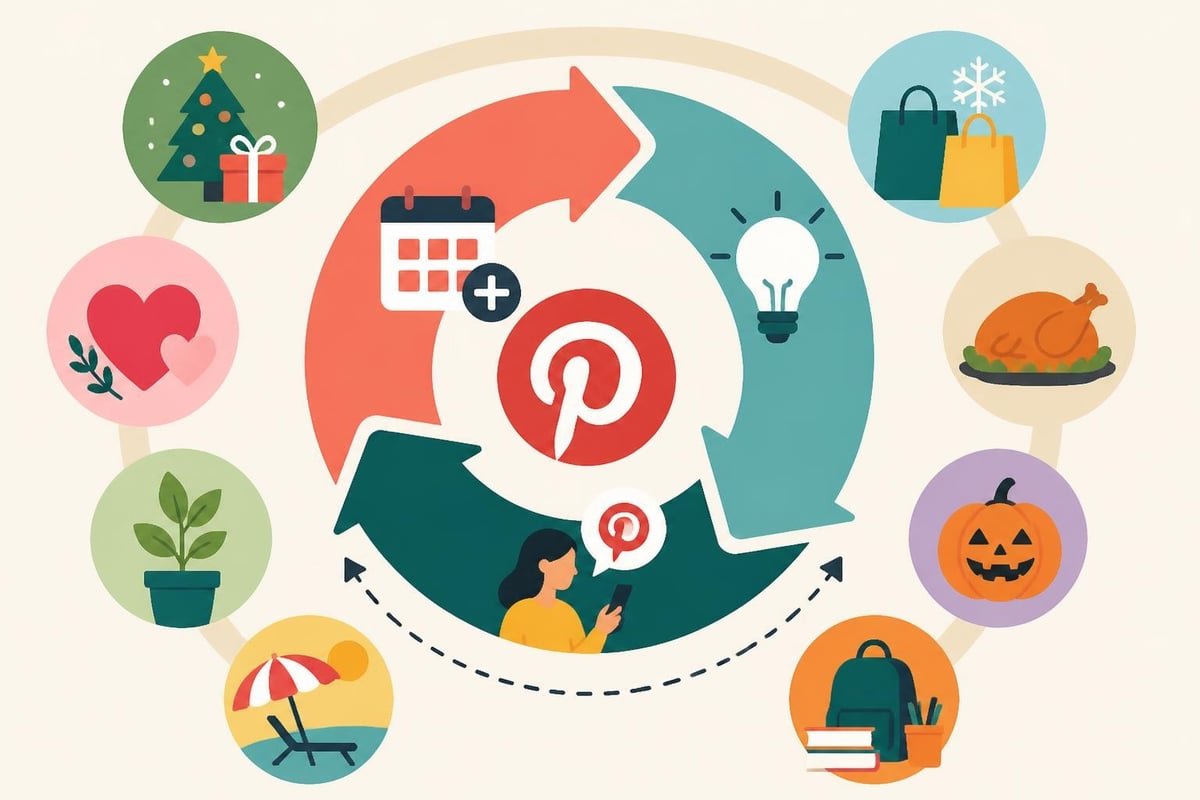
Pinterest users plan ahead more than any other platform. They search for Halloween ideas in August, Christmas content in September, and summer recipes in March. This forward-looking behavior creates specific follower growth opportunities:
Publish seasonal content 45-60 days early. Users searching ahead of trends discover your profile when actively planning and saving content. A follower gained during their planning phase engages more deeply than one acquired during the event itself.
Create evergreen boards for year-round growth. While seasonal content drives spikes, evergreen topics like "quick weeknight dinners" or "small bathroom ideas" attract steady new followers across all months.
Analyze yearly Pin performance cycles. Pinterest Analytics shows when specific topics peak in your account. Use this historical data to time similar content creation and board launches for maximum follower growth.
Cross-Platform Promotion and Integration
Your pinterest followers don't exist in isolation. Integrating Pinterest into broader marketing channels accelerates growth and maximizes the value of every follower you gain.
Email List Integration
Your email subscribers represent your warmest audience for follower conversion. Include Pinterest CTAs in:
- Welcome email series introducing your boards and pinning strategy
- Weekly newsletters featuring your latest Pins with direct links
- Product launch announcements with "Pin It" buttons for easy saving
- Seasonal content roundups that direct subscribers to Pinterest boards
Email subscribers convert to engaged Pinterest followers at 15-25% rates when you provide clear value propositions and easy follow buttons. They already trust your brand, making the follow decision simple.
Website Integration Strategies
Every website visit represents a follower growth opportunity:
Pin buttons on images let visitors save your content to their boards while exposing your profile to their followers. Install the official Pinterest Save button plugin for automatic image hover functionality.
Follow buttons in headers and footers provide one-click subscription for interested visitors. Place these prominently on blog sidebars, about pages, and resource libraries.
Pinterest feed widgets showcase your latest Pins directly on your website, demonstrating active content creation and giving visitors a preview before they follow.
Claimed websites also enable Pinterest's automatic profile attribution. When users save images from your domain, those Pins automatically link to your Pinterest profile even if the original saver doesn't tag you.
SEO Integration and Discovery
Pinterest's search engine nature means SEO tactics directly influence follower growth. Optimizing for Pinterest search helps your ideal audience discover your profile through the keywords they actively use.
Keyword Research for Pinterest
Unlike Google SEO, Pinterest keyword research focuses on visual intent and planning behavior. Use these sources:
Pinterest search bar autocomplete reveals actual queries users type. Start typing your core topic and note all suggested completions, which represent high-volume searches.
Pinterest Trends tool shows rising and declining search terms in your niche, helping you create timely content that captures surging interest.
Related Pins and searches at the bottom of search results show what Pinterest connects to your topic, revealing semantic relationships and audience interests you might have missed.
Document 20-30 core keywords across three categories: broad industry terms (high volume, high competition), mid-tail phrases (moderate volume and competition), and long-tail specific queries (lower volume but highly targeted).
On-Pin and Profile SEO
Apply keywords strategically across all Pinterest elements:
- Pin titles: Front-load primary keyword in first 40 characters
- Pin descriptions: Include 2-3 related keywords naturally in helpful context
- Board titles: Use exact-match keywords users search (check autocomplete)
- Board descriptions: Expand on title with semantic keywords and value proposition
- Profile description: Feature top 3 keywords within your brand story
Avoid keyword stuffing, which reduces both human readability and algorithmic performance. Pinterest's algorithm recognizes natural language patterns and penalizes obvious manipulation.
The relationship between Pinterest SEO and follower growth runs both directions. Better search rankings expose your profile to more potential followers. Growing follower counts with high engagement signal quality to Pinterest, improving your search rankings for competitive keywords.
Analyzing Follower Growth Patterns
Successful Pinterest marketers track follower acquisition sources, growth rates, and correlation with engagement metrics to continuously refine their strategy.
Growth Attribution and Sources
Pinterest Analytics doesn't directly show follower sources, but you can infer drivers by correlating follower spikes with specific activities:
Content attribution: Note follower growth in the 7 days after publishing specific Pin types. If infographic Pins consistently correlate with 50+ new followers while product photos average 10, shift content mix accordingly.
Campaign tracking: When running group board collaborations, guest Pin exchanges, or paid promotions, track follower growth during and after campaign periods to measure effectiveness.
Seasonal patterns: Compare year-over-year follower growth by month to identify when your niche naturally attracts new audiences. Double down on content creation during these peak acquisition windows.
Create a simple tracking spreadsheet logging weekly follower counts, top-performing Pins, and major marketing activities. Patterns emerge over 8-12 weeks that reveal your most effective growth levers.
Quality Indicators for New Followers
Not all follower growth indicates healthy progress. Monitor these quality signals:
| Indicator | Healthy Growth | Warning Sign |
|---|---|---|
| Engagement rate | Stable or increasing | Declining as followers grow |
| Traffic trend | Proportional to followers | Flat despite follower gains |
| Follower activity | Profiles save and interact | Empty profiles, no boards |
| Growth pace | Steady, consistent gains | Sudden spikes without cause |
Sudden follower spikes without corresponding content wins or campaigns often indicate bot follows or low-quality accounts. These don't contribute to reach and may eventually be removed by Pinterest audits, creating follower count drops that look negative to future profile visitors.
Long-Term Follower Retention
Acquiring pinterest followers represents only half the equation. Retention determines whether your follower count compounds over time or churns at rates that neutralize new growth.
Content Variety and Value Maintenance
Followers unfollow when accounts become repetitive or stop delivering value. Combat retention issues by:
Evolving content themes seasonally to match changing follower interests throughout the year. A fitness account might shift from weight loss in January to outdoor activities in summer, maintaining relevance across subscriber interests.
Introducing new Pin formats like Idea Pins (Pinterest's native story format) alongside standard Pins to keep feeds visually fresh and engaging.
Curating high-quality third-party content alongside your original Pins. Followers appreciate accounts that serve as trusted content filters, not just self-promotion channels.
Audit your content mix quarterly. If more than 70% of Pins promote your own products or content, you're likely positioning as broadcaster rather than value provider, which increases unfollow rates.
Community Engagement and Response
Pinterest allows limited direct interaction compared to Instagram or Twitter, but engagement opportunities still exist:
- Respond to comments on your Pins within 24 hours
- Follow back engaged users who regularly save your content
- Contribute valuable Pins to group boards where your followers participate
- Share follower success stories when they tag you in projects using your ideas
These small interactions build personal connection that increases retention. Followers who feel recognized as individuals rather than numbers stay subscribed longer and engage more consistently.
Growing your pinterest followers effectively in 2026 requires balancing search optimization, consistent quality content, and authentic engagement rather than chasing vanity metrics. Whether you pursue organic growth, explore strategic purchased followers, or combine approaches, always connect follower counts to actual business outcomes like traffic, engagement rates, and conversions. If you're evaluating whether purchased followers make sense for your strategy, Best Social Media Growth Services 2026 offers an independent comparison of providers with detailed pricing, delivery speeds, and platform coverage to help you make an informed decision that aligns with your goals.