
Social media isn't just where your customers hang out anymore. It's where they expect you to solve their problems, answer their questions, and make things right when something goes wrong. Social customer service has evolved from a nice-to-have marketing add-on into a critical business function that can make or break your brand reputation. Whether someone tweets about a shipping delay or drops a question in your Instagram DMs, how you respond matters more than ever. According to Pew Research Center data, the majority of Americans across all age groups use social media daily, making these platforms the natural first stop when they need help.
Why Social Customer Service Matters in 2026
The numbers tell the story. Customers who get help on social media tell an average of eight people about their positive experience. That's free marketing you can't buy. On the flip side, unresolved complaints on social platforms spread even faster, reaching potentially thousands of viewers before you've even noticed the post.
Traditional support channels like email and phone still have their place, but they're slow. When someone posts "Hey @YourBrand, where's my order??" on Twitter, they're not looking for a response in 24 hours. They want help now, and everyone's watching to see what you'll do.
Speed is the new currency of customer service. Your response time on social platforms directly impacts customer satisfaction, purchase decisions, and brand perception. People judge businesses not just on whether they respond, but how quickly they show up.
The Business Case for Going Social
Let's talk ROI because that's what actually gets budgets approved. Social customer service delivers measurable returns:
- Lower costs per interaction compared to phone support (no long hold times or call transfers)
- Higher customer satisfaction scores when issues resolve publicly
- Increased customer lifetime value from positive social interactions
- Better brand sentiment tracked through social listening tools
- Reduced support ticket volume in traditional channels
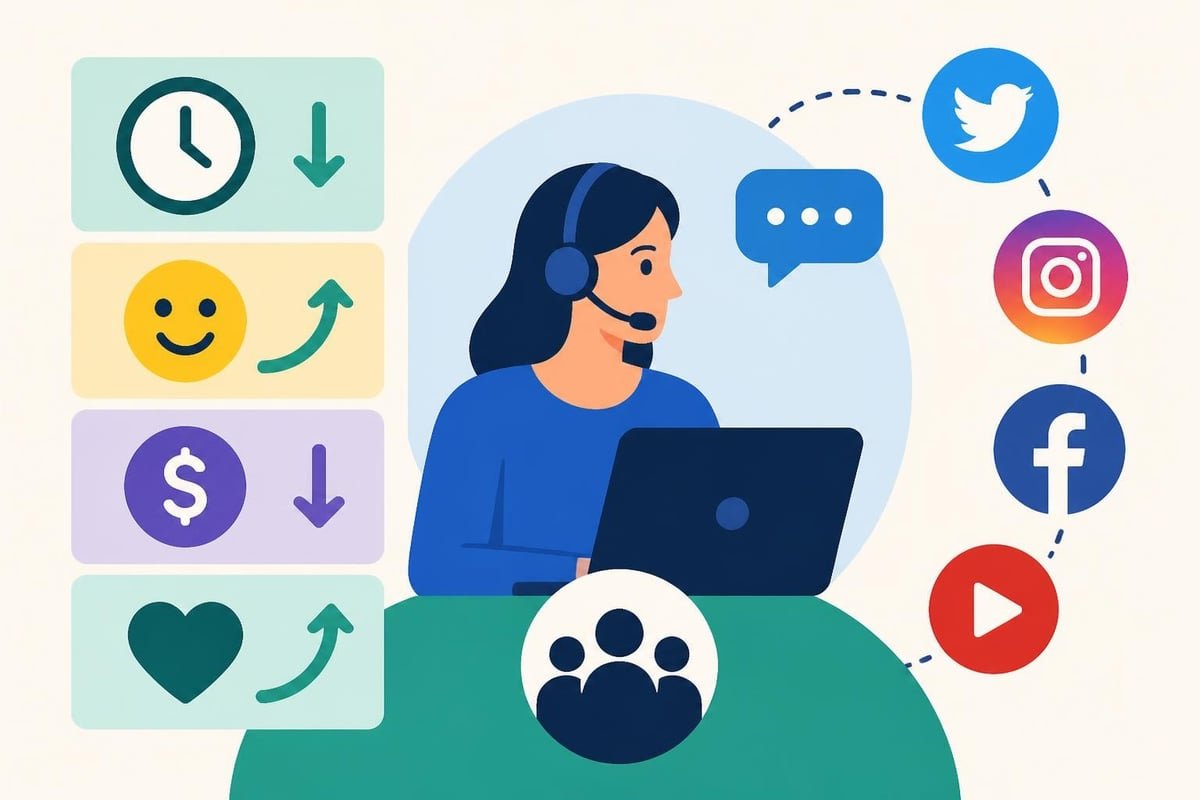
One major advantage? Public resolution. When you fix someone's problem on Twitter or Facebook, hundreds or thousands of other customers see that you actually care. That's brand-building you can't replicate in a private email exchange.
Choosing Your Social Support Platforms
You can't be everywhere at once, and trying to cover every social platform will stretch your team thin. The smart approach is strategic selection based on where your customers actually are and what they're trying to accomplish.
| Platform | Best For | Response Time Expectation | Complexity Level |
|---|---|---|---|
| Twitter/X | Quick questions, public complaints | Under 30 minutes | Medium |
| Detailed issues, community support | 1-2 hours | High | |
| Visual product issues, DM inquiries | 2-4 hours | Medium | |
| B2B support, professional services | 4-8 hours | Low | |
| TikTok | Young audiences, trending issues | Variable | High |
Start with two or three platforms max. The industry benchmarks from ContactBabel show that companies excelling at social customer service typically master a few channels rather than spreading resources too thin across many.
Platform-Specific Strategies
Twitter/X remains the fastest-moving platform for customer service. The character limit forces brevity, which actually works in your favor. Quick acknowledgment, clear next steps, and moving complex issues to DMs keeps things moving. Set up lists to monitor brand mentions even without the @ tag.
Facebook Messenger handles more complex conversations well. The chat format lets you go back and forth with customers, share screenshots, and escalate issues without the whole world watching. Many customers prefer this semi-private approach for sensitive account issues.
Instagram DMs are where visual businesses shine. If you're selling physical products, customers will send photos of damaged items, fit issues, or assembly questions. Make sure your support team can share images and videos back. The visual nature of Instagram makes it perfect for tutorial-style support.
Building Your Social Support Team
Your social customer service team needs different skills than traditional support agents. They're not just solving problems, they're protecting your brand voice in real-time across public platforms.
Essential Skills for Social Support Agents
The best social support agents are part customer service rep, part crisis manager, and part brand ambassador. They need to:
- Think on their feet because social moves fast
- Write conversationally while maintaining professionalism
- Recognize escalations before small issues become PR nightmares
- Balance empathy with efficiency across multiple conversations
- Stay calm under public pressure when dealing with upset customers
Training should cover your brand voice guidelines, platform-specific best practices, common issues and solutions, escalation procedures, and when to take conversations private. Role-playing exercises help agents practice handling difficult situations before they face real customers.
Staffing Models That Work
You've got options for structuring your social customer service team:
Dedicated social team: A specialized group handles only social channels. This works well for high-volume brands with 24/7 social activity. These agents become platform experts and develop quick response patterns.
Hybrid model: Traditional support agents rotate through social duty. This maintains consistency across channels but requires more training investment. Works better for smaller teams or B2B companies with lower social volume.
Follow-the-sun coverage: Teams in different time zones provide round-the-clock coverage. Essential if your customers span multiple continents or if you're building a strong international presence.
Response Strategies That Actually Work
Generic copy-paste responses kill your social customer service efforts faster than no response at all. Customers can smell canned replies from a mile away, and they'll call you out publicly for it.
The Golden Rules of Social Responses
Personalize every interaction. Use the customer's name, reference their specific issue, and write like a human. "Hey Sarah, I see your package got delayed – that's frustrating. Let me check what happened" beats "We apologize for any inconvenience" every single time.
Acknowledge fast, solve thoroughly. It's okay to respond initially with "We're looking into this" within minutes, then follow up with the actual solution once you've investigated. That quick acknowledgment buys you time and shows you're paying attention.
Know when to go private. If you need account details, payment info, or more than three back-and-forth messages, move to DMs or email. Public: acknowledge and show you care. Private: get into the details and actually fix it.
Handling Different Types of Issues
Simple questions (hours, shipping info, product availability) get answered immediately in public. These are opportunities to show responsiveness.
Complaints and problems need empathy first, solution second. Acknowledge their frustration, take ownership (even if it's not directly your fault), and commit to making it right.
Angry customers require de-escalation before problem-solving. Sometimes people just need to vent. Let them, show genuine empathy, then pivot to resolution. Never get defensive, even when they're unreasonable.
Trolls and spam get ignored or hidden. Don't feed them. Your regular customers will respect you for staying professional and not engaging with obvious troublemakers.
Measuring Social Customer Service Success
What gets measured gets managed. Your social customer service program needs clear KPIs to track performance and justify continued investment.
Core Metrics to Track
| Metric | Target Benchmark | Why It Matters |
|---|---|---|
| First response time | Under 30 min | Speed shows you're listening |
| Resolution time | Under 4 hours | Efficiency in fixing problems |
| Customer satisfaction (CSAT) | Above 85% | Direct feedback on service quality |
| Response rate | Above 95% | Catching all inquiries |
| Sentiment analysis | Positive trend | Overall brand perception |
| Volume trends | Decreasing over time | Fewer issues = better product/service |
According to Forrester’s contact center research, leading organizations are integrating social messaging capabilities directly into their contact center technology stack, enabling better tracking and more seamless customer experiences.
Beyond the Numbers
Quantitative metrics tell part of the story, but qualitative insights matter too. Review conversations monthly for:
- Common pain points that could be addressed proactively
- Product issues that engineering should know about
- Opportunities to improve documentation or FAQs
- Training gaps in your support team
- Positive feedback to share with your broader organization
Your social customer service interactions are a goldmine of product feedback and customer insights. Don't just solve problems – learn from them.
Technology and Tools for 2026
Managing social customer service across multiple platforms manually is a recipe for missed messages and burned-out team members. The right tools make the difference between chaos and control.
Essential Tool Categories
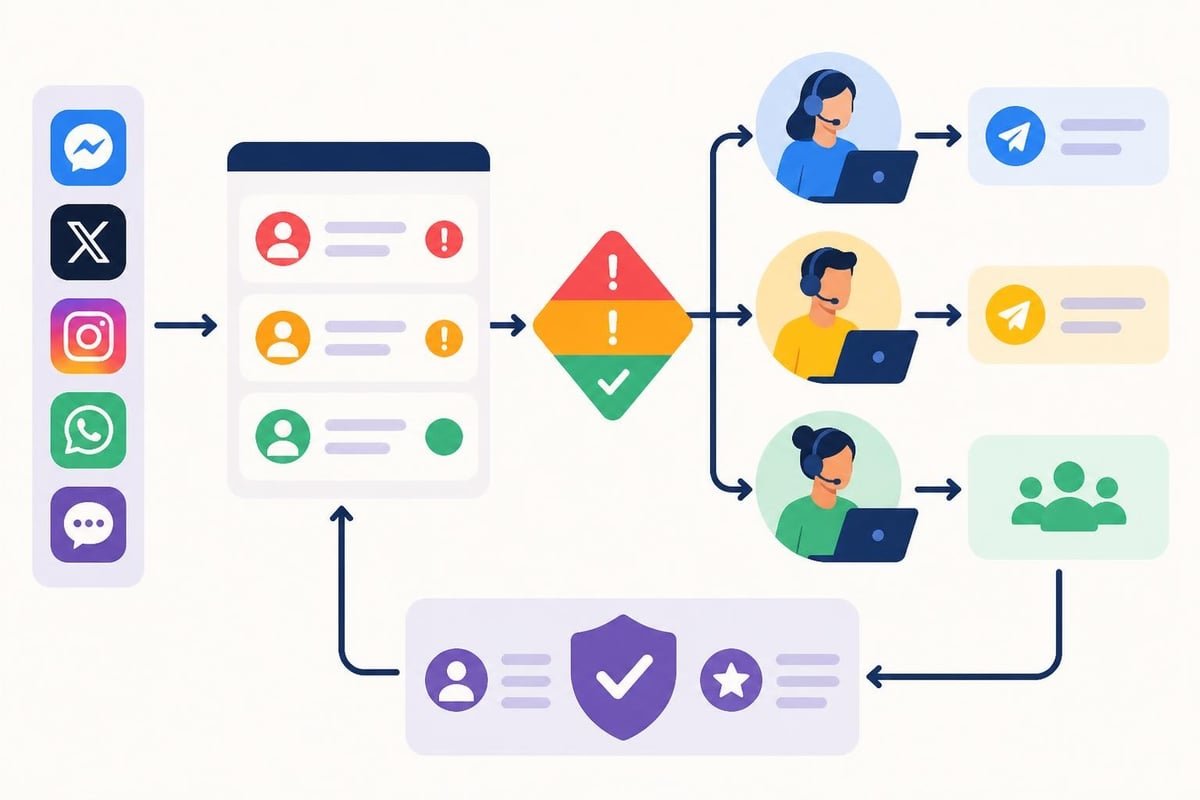
Social media management platforms (Hootsuite, Sprout Social, Buffer) consolidate all your social inboxes into one dashboard. No more switching between tabs or missing DMs buried in notifications.
Customer service software (Zendesk, Freshdesk, Intercom) with social integrations let you create tickets from social posts, track resolution, and maintain customer history across all channels.
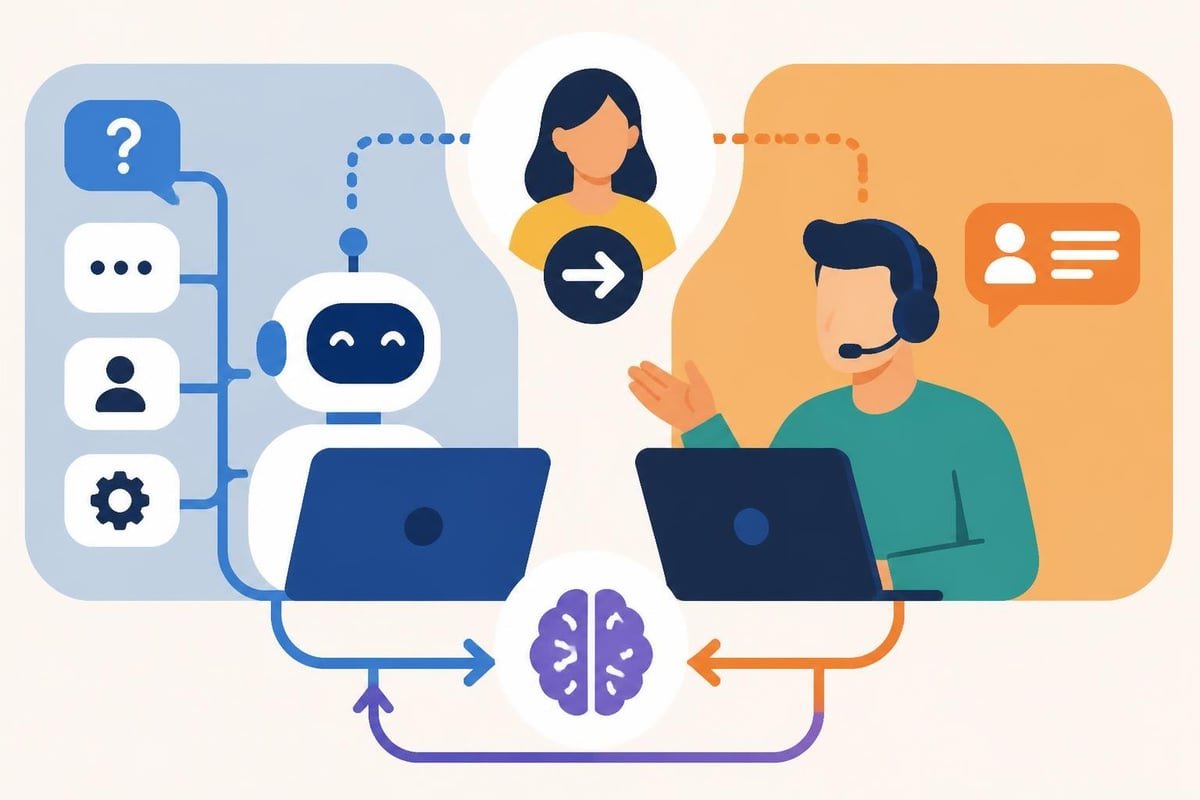
AI and automation tools handle routine questions, route complex issues to humans, and provide suggested responses based on past interactions. Deloitte’s research on generative AI in customer service highlights how AI-human collaboration is reshaping support teams in 2026.
Social listening tools (Brandwatch, Mention, Talkwalker) catch mentions of your brand even when customers don't tag you directly. Critical for proactive support.
Automation vs. Human Touch
The sweet spot in 2026 is intelligent automation that knows when to hand off to humans. Chatbots can handle:
- Frequently asked questions with clear, simple answers
- Order status lookups and tracking information
- Business hours and location information
- Initial triage and routing to the right department
Humans need to handle:
- Complex problems requiring judgment calls
- Upset or frustrated customers needing empathy
- Unusual situations outside standard procedures
- High-value customers or sensitive accounts
The goal isn't replacing humans – it's freeing them up to handle what they do best while automation covers the routine stuff.
Building a Proactive Social Service Strategy
The best social customer service doesn't wait for problems to arrive. Proactive engagement turns support into a competitive advantage.
Proactive Tactics That Build Loyalty
Monitor brand mentions aggressively. Many customers complain about brands without tagging them. Set up keyword alerts for your brand name, common misspellings, product names, and even competitor brands (to catch comparison questions).
Create self-service resources. Build a robust FAQ section, video tutorials, and troubleshooting guides. Then share them proactively in social posts. When someone asks a question, you can respond with "Great question! Here's a quick video showing exactly how to [solve problem]."
Anticipate peak support times. Product launches, sales events, and shipping deadlines always spike support volume. Staff up appropriately and post proactive updates on social about expected delays or high-volume periods.
Celebrate customer wins publicly. When someone shares how they love your product or solved a problem creatively, engage with them. This reinforces positive sentiment and shows potential customers you're an active, caring brand.
Crisis Management Preparation
Eventually, something will go wrong at scale. A product recall, a service outage, a shipping disaster, or worse. Your social customer service team becomes your first line of defense.
Have a crisis playbook ready:
- Pre-written holding statements for common crisis scenarios
- Clear escalation paths to legal, PR, and executive teams
- A designated crisis lead who can make real-time decisions
- Templates for updates and resolutions
- Monitoring intensity protocols for high-alert situations
During a crisis, your response speed and transparency on social media often determines whether the situation gets contained or explodes. Practice crisis scenarios with your team before they happen.
Privacy, Compliance, and Risk Management
Social customer service happens in public view, which creates unique compliance challenges. One wrong move can expose customer data or violate regulations.
Protecting Customer Data
Never share sensitive information publicly. Account numbers, email addresses, phone numbers, payment details – all of this stays private. Train agents to recognize PII (personally identifiable information) and move those conversations to secure channels immediately.
The FTC’s report on social media data practices underscores the importance of protecting customer information across social platforms, especially given the increasing sophistication of scams and data breaches.
Verify customer identity before discussing account-specific issues, even in DMs. Social platforms are easy to impersonate. Simple verification questions or sending a secure link to your customer portal prevents account takeovers.
Industry-Specific Regulations
Healthcare (HIPAA): Never discuss medical information or patient details on social media, period. Even acknowledging someone is a patient can violate regulations.
Finance (GLBA, PCI): No account numbers, balances, transaction details, or payment information on social platforms. Everything financial moves to secure channels.
General (GDPR, CCPA): Customers have rights to their data. Have processes for data deletion requests, and be prepared to document what customer information you collect through social interactions.
Integrating Social with Your Broader Support Strategy
Social customer service shouldn't exist in isolation. The best customer experience connects seamlessly across all channels.
Creating Channel Harmony
When a customer starts on Twitter and needs to call later, your phone team should see the social conversation history. When someone emails after getting initial help on Instagram, your email team should pick up where social left off.
This requires:
- Unified customer records that capture interactions across all channels
- Cross-training so agents understand what happens in other channels
- Consistent policies for refunds, escalations, and special accommodations
- Regular communication between channel teams to share insights
When to Guide Customers to Other Channels
Sometimes social isn't the right channel to complete a resolution. Technical troubleshooting that requires screen sharing works better on a video call. Complex account changes need the security of authenticated channels. Lengthy explanations benefit from the structure of email.
Guide customers gracefully: "I want to make sure we get this exactly right for you. Can I have our specialist team call you in the next hour to walk through the setup together? What number works best?"
Real-World Success Patterns
Companies crushing social customer service in 2026 share common patterns worth copying.
They respond genuinely fast. Not marketing-fast ("we respond within 24 hours!") but actually fast. Like, under-15-minutes fast for acknowledgment.
They empower agents to make decisions. Front-line social support can issue refunds, apply discounts, expedite shipping, and make judgment calls without escalating every little thing to managers.
They treat social support as a revenue opportunity. Happy customers buy more. Turned-around angry customers become loyal advocates. Smart brands track the customer lifetime value impact of great social service.
They invest in building communities. Strong social communities often handle basic support peer-to-peer, reducing team workload while increasing engagement. When customers help each other, everybody wins. For businesses focused on building social presence, services like Social Media Marketing can help grow engaged audiences who become valuable community members over time.
They learn and improve continuously. Monthly reviews of social conversations surface product improvements, policy changes, and training opportunities. They don't just put out fires – they prevent future ones.
The Future of Social Customer Service
Looking ahead, several trends are reshaping how brands handle social customer service:
Video responses are becoming standard. Customers send video questions, agents reply with personalized video solutions. It's faster than typing and builds stronger connections.
Voice-enabled social support lets customers ask questions via voice notes and get voice replies back. Particularly popular with younger demographics who prefer speaking over typing.
Augmented reality troubleshooting helps customers visualize solutions. "Point your camera at the product" becomes a powerful diagnostic tool.
Predictive support uses AI to identify customers likely to have issues and reaches out proactively. Your algorithm notices someone's been trying to check out for five minutes? Ping them with "Hey, need any help completing your order?"
Integration with emerging platforms means staying ready for whatever new social network captures audience attention. The principles of good social customer service transfer even as platforms change.
Social customer service in 2026 is where brand reputation gets built or destroyed in real-time. Master the fundamentals – fast responses, genuine empathy, and seamless channel integration – and you'll turn social platforms into your strongest customer loyalty engine. Best Social Media Growth Services 2026 helps you build the engaged social audience that makes delivering exceptional social customer service possible, comparing top providers to grow authentic followers who become the community foundation for effective support interactions.