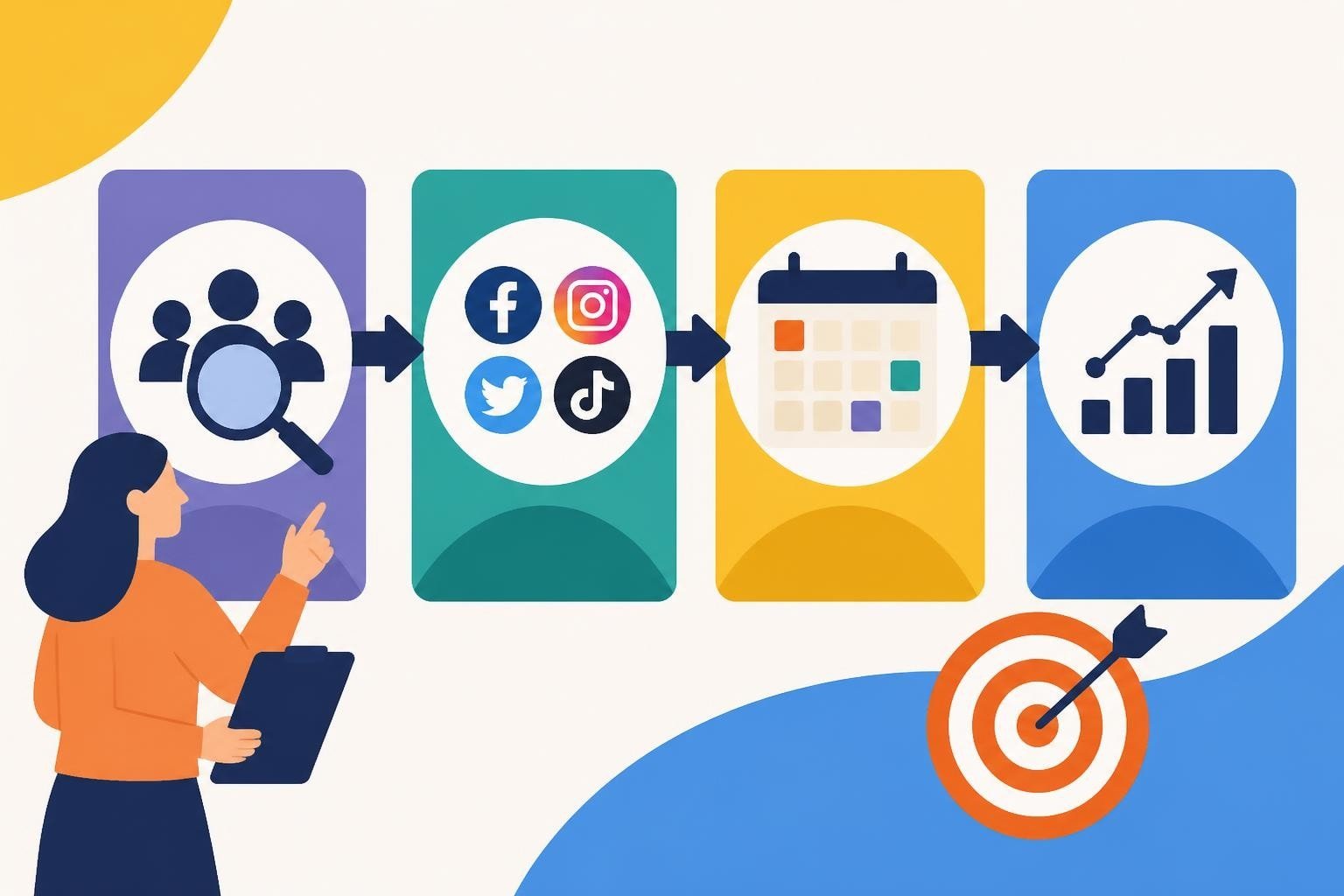
Social marketing campaigns have evolved dramatically over the past few years, transforming from simple promotional posts into sophisticated, multi-platform strategies that demand careful planning, creative execution, and data-driven optimization. In 2026, businesses face both unprecedented opportunities and complex challenges as they navigate algorithm changes, audience fragmentation, and rising expectations for authentic engagement. Whether you're launching your first campaign or refining an established approach, understanding the fundamental building blocks and current best practices will determine whether your efforts generate meaningful results or simply add to the noise.
Understanding Social Marketing Campaign Fundamentals
Social marketing campaigns represent coordinated efforts to achieve specific business objectives through social media platforms. Unlike ongoing social media management, campaigns have defined start and end dates, clear goals, dedicated budgets, and measurable outcomes.
The distinction matters because campaigns require different planning, resource allocation, and measurement approaches than day-to-day posting. A successful campaign aligns messaging across multiple touchpoints, coordinates timing to maximize impact, and concentrates resources during strategic windows.
Core Components Every Campaign Needs
Building effective social marketing campaigns requires several essential elements working in harmony:
- Clear objectives tied to business outcomes (awareness, leads, sales, retention)
- Defined target audience with demographic, psychographic, and behavioral characteristics
- Campaign messaging that resonates with audience motivations and pain points
- Content assets optimized for each platform and stage of the customer journey
- Distribution strategy specifying organic, paid, and earned tactics
- Measurement framework connecting activities to outcomes
Most campaigns fail not from poor execution but from unclear objectives. Before creating a single asset, define what success looks like in concrete terms. "Increase brand awareness" remains too vague; "generate 50,000 impressions among women 25-34 interested in sustainable fashion" provides actionable direction.

Audience Research and Platform Selection
The foundation of successful social marketing campaigns starts with understanding exactly who you're trying to reach and where they spend their time. Demographic data from Pew Research Center reveals significant variations in platform usage across age groups, income levels, and geographic locations, making audience research critical for platform selection.
Mapping Audience Characteristics to Platforms
Different platforms attract distinct user demographics and support different content formats. Your audience research should identify:
- Primary platforms where your target audience actively engages (not just browses)
- Content preferences including video length, image style, and text density
- Peak activity times when your audience is most likely to see and engage with content
- Influencers and communities your audience already follows and trusts
- Pain points and aspirations that motivate engagement and sharing
| Platform | Dominant Age Group | Content Strength | Campaign Use Case |
|---|---|---|---|
| 18-34 | Visual storytelling, Reels | Product launches, lifestyle brands | |
| TikTok | 16-24 | Short video, trends | Viral awareness, Gen Z engagement |
| 25-54 | Professional content, articles | B2B campaigns, thought leadership | |
| 35-65 | Community, events, video | Local business, broad demographics | |
| YouTube | All ages | Long-form video, tutorials | Education, product demos |
Many businesses spread resources too thin by attempting to maintain presence everywhere. Successful campaigns concentrate effort where audience attention and platform capabilities align with campaign objectives.
When planning campaigns that require rapid visibility and engagement metrics, some businesses compare social growth providers to supplement organic reach during critical launch phases, though this should complement rather than replace authentic community building.
Competitive and Trend Analysis
Beyond understanding your audience, analyze what competitors and industry leaders are doing. Identify content gaps, oversaturated approaches, and emerging trends that present opportunities for differentiation. Think with Google offers consumer behavior insights and platform trends that inform strategic positioning.
Campaign Content Strategy and Creation
Content remains the vehicle through which social marketing campaigns deliver messages, build relationships, and drive actions. The most successful campaigns in 2026 balance platform-specific optimization with consistent brand messaging across touchpoints.
Developing Campaign-Specific Content Themes
Rather than creating random content, develop 3-5 core themes that support campaign objectives. Each theme should:
- Connect to audience interests and needs
- Highlight different product benefits or use cases
- Support the customer journey from awareness to conversion
- Adapt naturally to multiple content formats
- Provide opportunities for user-generated content
For example, a fitness brand launching new workout equipment might develop themes around "Transform Your Home Gym," "15-Minute Workouts," "Real Results Stories," "Expert Training Tips," and "Community Challenges." Each theme generates multiple content pieces across formats while maintaining coherent campaign messaging.
Content Format Mix and Platform Optimization
Diversifying content formats increases reach and accommodates different consumption preferences. The Content Marketing Institute emphasizes that effective social distribution requires tailoring content to platform algorithms and user behaviors rather than cross-posting identical content.
High-performing format mix for 2026 campaigns:
- Short-form video (15-60 seconds): Platform algorithms currently favor video, especially vertical formats
- Carousel posts: Higher engagement than single images, excellent for storytelling and education
- User-generated content: Builds trust and provides social proof more effectively than branded content
- Live video: Creates urgency and fosters real-time community interaction
- Stories/Reels: Captures attention in high-frequency, lower-commitment consumption moments
- Long-form content: Establishes authority and serves high-intent audiences researching solutions
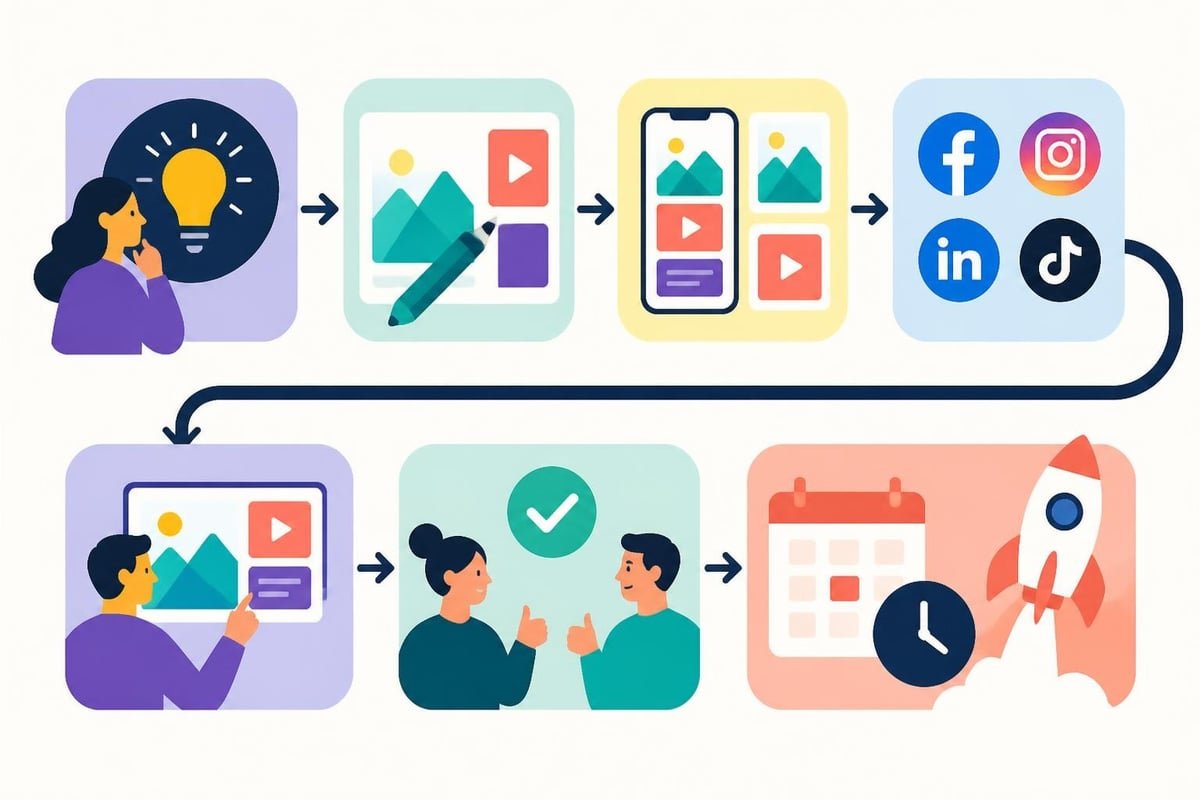
Maintain a content calendar that sequences these formats strategically throughout the campaign timeline. Front-load awareness-building content, transition to educational middle-funnel content, and conclude with conversion-focused assets and retargeting.
Paid Promotion and Budget Allocation
While organic reach remains valuable, algorithm changes mean most social marketing campaigns require paid promotion to achieve meaningful visibility. Strategic budget allocation across platforms, objectives, and campaign phases determines return on investment.
Platform-Specific Advertising Approaches
Each platform offers distinct advertising capabilities, audience targeting options, and cost structures:
Instagram and Facebook Ads provide sophisticated audience targeting based on interests, behaviors, and demographics. Best for mid-funnel engagement and retargeting. Average costs vary by industry but typically range from $0.50-$3.00 per click in competitive markets.
TikTok Ads excel at awareness campaigns targeting younger demographics. The platform's algorithm can rapidly scale winning creative. Costs generally run lower than Instagram but require highly engaging video content to perform.
LinkedIn Ads command premium pricing but deliver quality leads in B2B contexts. Cost per click often exceeds $5.00, making this platform most suitable for high-value products and services.
YouTube Ads support both skippable and non-skippable formats at various price points. Particularly effective for educational content and product demonstrations reaching audiences already searching for solutions.
Testing and Optimization Framework
Effective campaigns treat initial creative and targeting as hypotheses requiring validation through testing. Research on experimentation methodologies demonstrates that rigorous A/B testing significantly improves campaign outcomes compared to intuition-based decisions.
Structure tests to isolate variables:
- Audience tests: Compare performance across demographic segments, interests, and lookalike audiences
- Creative tests: Evaluate headlines, images, video hooks, and calls-to-action
- Placement tests: Assess feed versus stories, mobile versus desktop, in-stream versus discovery
- Timing tests: Identify optimal days, times, and campaign duration
- Offer tests: Compare different value propositions, promotions, and risk reducers
Allocate 20-30% of initial budget to testing, then concentrate remaining resources on proven winners. The IAB’s measurement guidelines provide industry standards for evaluating ad performance and attribution across platforms.
Measurement, Analytics and Performance Tracking
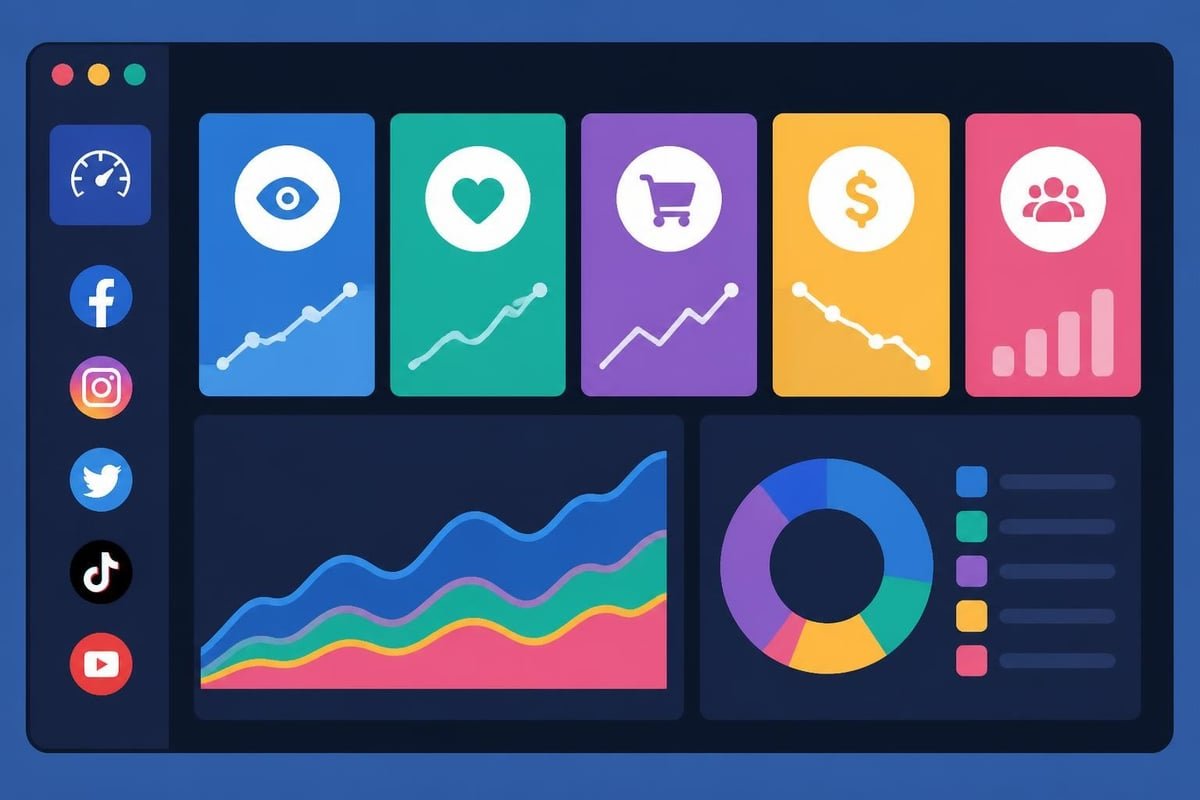
Social marketing campaigns generate vast amounts of data, but metrics only provide value when connected to business objectives. Building measurement frameworks before campaign launch ensures you track what matters rather than vanity metrics that don't drive decisions.
Connecting Metrics to Campaign Objectives
Different objectives require different primary metrics:
| Campaign Objective | Primary Metrics | Secondary Metrics |
|---|---|---|
| Brand Awareness | Reach, Impressions, Share of Voice | Brand recall, Search volume |
| Engagement | Likes, Comments, Shares, Saves | Engagement rate, Video completion |
| Lead Generation | Form submissions, Sign-ups | Cost per lead, Lead quality score |
| Sales/Conversions | Revenue, ROAS, Conversion rate | Average order value, Customer acquisition cost |
| Community Growth | Follower growth, Message volume | Follower quality, Community engagement rate |
Track platform-native analytics for campaign-level performance, but integrate data into broader business intelligence systems to understand cross-platform attribution and customer lifetime value. Many businesses discover that platforms receiving attribution credit differ from those that actually influence purchase decisions.
Real-Time Monitoring and Agile Adjustments
Unlike traditional marketing campaigns, social marketing campaigns allow real-time performance monitoring and mid-campaign adjustments. Establish daily check-ins during active campaigns to:
- Identify underperforming content for pause or adjustment
- Scale budget to high-performing audiences and placements
- Respond to audience questions and feedback
- Capture unexpected opportunities or trending topics
- Monitor competitor activities and market shifts
Set performance thresholds that trigger automatic alerts. If cost per acquisition exceeds targets by 25%, pause spending until you diagnose the issue. If engagement rates exceed benchmarks by 50%, increase budget to capitalize on momentum.
Legal Compliance and Risk Management
As social marketing campaigns have grown more sophisticated, regulatory scrutiny has intensified. The FTC’s Consumer Reviews and Testimonials Rule, updated in October 2024, imposes strict requirements on how businesses use reviews, testimonials, and influencer content in marketing.
Disclosure and Transparency Requirements
All material connections between advertisers and endorsers must be clearly disclosed. This includes:
- Paid influencer partnerships: Require #ad or #sponsored hashtags in prominent, unambiguous locations
- Employee advocacy: Identify when employees share company content
- Incentivized reviews: Disclose when customers receive compensation for testimonials
- Affiliate relationships: Clearly mark affiliate links and commission arrangements
Violations carry significant penalties and damage brand reputation. Build disclosure requirements into creator contracts, content approval workflows, and campaign guidelines from the start.
Crisis Preparedness and Response Planning
Social marketing campaigns occasionally trigger unexpected negative reactions or coincide with external events that require rapid response. The PRSA’s crisis management resources emphasize that preparation prevents panic.
Develop response playbooks addressing:
- Monitoring protocols: Systems for detecting emerging issues before they escalate
- Decision authority: Clear escalation paths and approval processes for different scenarios
- Response templates: Pre-approved holding statements and response frameworks
- Channel strategies: When to respond publicly versus privately, and which platforms to prioritize
- Documentation requirements: Recording decisions and actions for post-crisis analysis
Most "crises" are actually opportunities to demonstrate brand values and customer commitment when handled with transparency, speed, and appropriate tone. Delayed or defensive responses typically amplify rather than contain issues.
Integration with Broader Marketing Initiatives
Social marketing campaigns deliver maximum impact when integrated with email marketing, content marketing, paid search, and offline channels. Isolated social efforts miss opportunities for reinforcement and attribution across the customer journey.
Cross-Channel Campaign Coordination
Coordinate messaging, timing, and offers across channels while respecting platform-specific best practices:
Email amplification: Send campaign content to existing subscribers, encouraging social sharing and engagement. Segment lists based on social platform preferences to personalize calls-to-action.
Content hub creation: Build landing pages that aggregate campaign content, extend social messages with depth unavailable in social feeds, and capture leads from social traffic.
Retargeting sequences: Build custom audiences from social engagement (video viewers, post interactions, profile visitors) for email follow-up or ad retargeting with progression messaging.
Search coordination: Align paid search keywords and SEO content with social campaign themes to dominate multiple discovery pathways simultaneously.
Businesses running campaigns across social and email channels should evaluate their email platform capabilities as campaign complexity increases. The right tools enable sophisticated segmentation, behavioral triggers, and performance tracking that amplify social campaign results.
Influencer and Partnership Leverage
Strategic partnerships multiply campaign reach and credibility beyond owned audiences. Identify influencers, complementary brands, and industry voices whose audiences overlap with your targets.
Structure partnership arrangements with clear expectations:
- Content requirements: Number of posts, formats, platform distribution
- Messaging guidelines: Key points to communicate versus prescriptive scripts
- Timeline coordination: Publishing schedules aligned with broader campaign phases
- Performance tracking: Unique links, discount codes, or UTM parameters for attribution
- Rights and usage: Permissions to repurpose partner content across channels
Micro-influencers (10,000-100,000 followers) often deliver stronger engagement rates and authenticity than celebrity partnerships at dramatically lower costs. Prioritize audience alignment and engagement quality over follower counts.
Advanced Tactics and Emerging Opportunities
As platforms evolve and audience behaviors shift, social marketing campaigns must adapt to maintain effectiveness. Several emerging tactics show particular promise in 2026.
Community-Led Campaign Development
Rather than broadcasting messages to passive audiences, leading brands involve communities in campaign creation. User-generated content campaigns, co-creation contests, and community voting on product features transform audiences from recipients to participants.
This approach:
- Generates authentic content at scale
- Builds emotional investment in campaign outcomes
- Provides market research and product feedback
- Creates network effects as participants share their contributions
- Reduces production costs while increasing relevance
Structure community campaigns with clear participation instructions, attractive incentives, rights management for submitted content, and plans for showcasing top contributions.
AI-Powered Personalization and Automation
Artificial intelligence tools now enable personalization previously available only to enterprises with dedicated data science teams. Applications relevant to social marketing campaigns include:
- Dynamic creative optimization: Automatically testing ad variations and serving best-performing versions to different audience segments
- Predictive audience modeling: Identifying high-value prospects based on behavior patterns of existing customers
- Content generation: Creating variations of headlines, captions, and descriptions for testing
- Chatbot engagement: Responding to campaign-driven inquiries instantly and routing qualified leads to sales
- Sentiment analysis: Monitoring campaign reception and identifying concerns before they escalate
While AI augments capabilities, human creativity, strategic thinking, and empathy remain essential. Use AI to handle repetitive tasks and surface insights, freeing human team members for high-judgment decisions and authentic relationship building.
Platform-Specific Feature Adoption
Platforms prioritize content using their newest features in algorithm ranking. Early adoption of new capabilities often yields disproportionate reach:
Instagram: Collaborative posts, link stickers in Reels, product tags in organic content
TikTok: Series playlists, photo mode, shopping features, creator search insights
LinkedIn: Newsletters, document posts, native video, polls in articles
YouTube: Shorts, channel memberships, Super Thanks, live commerce features
Monitor platform announcements and beta programs for early access to capabilities that competitors haven't yet adopted. First-mover advantages typically last 3-6 months before saturation reduces effectiveness.
Budget Planning and Resource Allocation
Successful social marketing campaigns balance ambition with realistic resource constraints. Whether working with $5,000 or $500,000 budgets, strategic allocation across production, promotion, and performance monitoring determines outcomes.
Budget Distribution Framework
A balanced budget typically allocates resources across these categories:
- Content production (30-40%): Creator fees, photography, videography, design, copywriting
- Paid promotion (40-50%): Platform advertising, influencer partnerships, boosted posts
- Tools and technology (5-10%): Scheduling software, analytics platforms, creative tools
- Testing and optimization (10-15%): Dedicated budget for experiments and learnings
- Contingency reserve (5-10%): Buffer for opportunities and unexpected adjustments
New campaigns should allocate higher percentages to testing, while established approaches can shift more budget toward proven tactics. Never commit 100% of budget before gathering performance data.
ROI Expectations and Timeline
Social marketing campaigns typically require 30-90 days to deliver measurable results, with timelines varying by objective:
Awareness campaigns show reach and impression metrics within days but brand lift measurement requires 4-8 weeks of sustained exposure.
Engagement campaigns generate immediate metrics but building communities that drive business value takes months of consistent presence.
Conversion campaigns can produce sales within hours for high-intent audiences but typically require retargeting sequences spanning weeks for complex purchases.
Community growth compounds over time, with follower quality mattering more than raw numbers. Rapid growth through social media marketing services can jumpstart visibility but sustainable growth requires ongoing value delivery.
Set realistic expectations aligned with industry benchmarks while establishing systems to improve performance through continuous testing and optimization.
Social marketing campaigns in 2026 demand strategic planning, creative execution, and rigorous measurement to cut through noise and deliver business results. Success requires understanding your audience deeply, selecting platforms strategically, creating compelling content, and optimizing based on performance data rather than assumptions. When you're ready to amplify your campaign reach and accelerate social growth, Best Social Media Growth Services 2026 provides independent comparisons of top providers with real pricing, delivery speeds, and package options to find the solution that matches your campaign objectives and budget.