
Social marketing packages have become the standard way agencies and service providers deliver social media expertise to businesses. Rather than piecing together individual services, these bundled offerings combine strategy, content creation, community management, and performance tracking into predictable monthly tiers. Understanding how these packages are structured, what you should expect to pay, and which components deliver the most value helps you make smarter decisions about outsourcing your social presence. Whether you're a startup testing the waters or an established brand scaling across platforms, the right package can accelerate growth while keeping costs transparent and manageable. In 2026, the market offers everything from basic posting services to comprehensive programs that integrate influencer partnerships, paid media, and advanced analytics.
What Social Marketing Packages Typically Include
Most providers structure their social marketing packages around four core pillars: strategic planning, content production, audience engagement, and performance measurement. The exact mix varies by tier and price point, but understanding these building blocks helps you evaluate any proposal.
Strategic planning usually covers monthly goal-setting, competitor analysis, platform selection, and content calendar development. Entry-level packages might include a quarterly strategy refresh, while premium tiers often provide weekly planning calls and real-time campaign adjustments. Many agencies now include content calendar templates and approval workflows that streamline collaboration between your team and theirs.
Content Production Components
The content pillar determines how much creative work you receive each month. Common deliverables include:
- Graphic design for static posts and carousels
- Short-form video editing and caption writing
- Photography coordination or stock image curation
- Hashtag research and tagging strategy
- Platform-specific formatting (Reels, Stories, TikToks, LinkedIn articles)
Mid-tier packages typically deliver 12-20 posts per month across two or three platforms. Premium packages might include 30-50 posts, professional video production, and custom illustrations or animations. The quality and originality of this content largely determines package value.
Community management represents the human touch in social marketing packages. This includes responding to comments and direct messages, moderating discussions, flagging customer service issues, and engaging with relevant accounts in your niche. Basic packages often limit this to business-hours monitoring on weekdays, while comprehensive programs provide weekend coverage and faster response times.

Pricing Models and Market Ranges
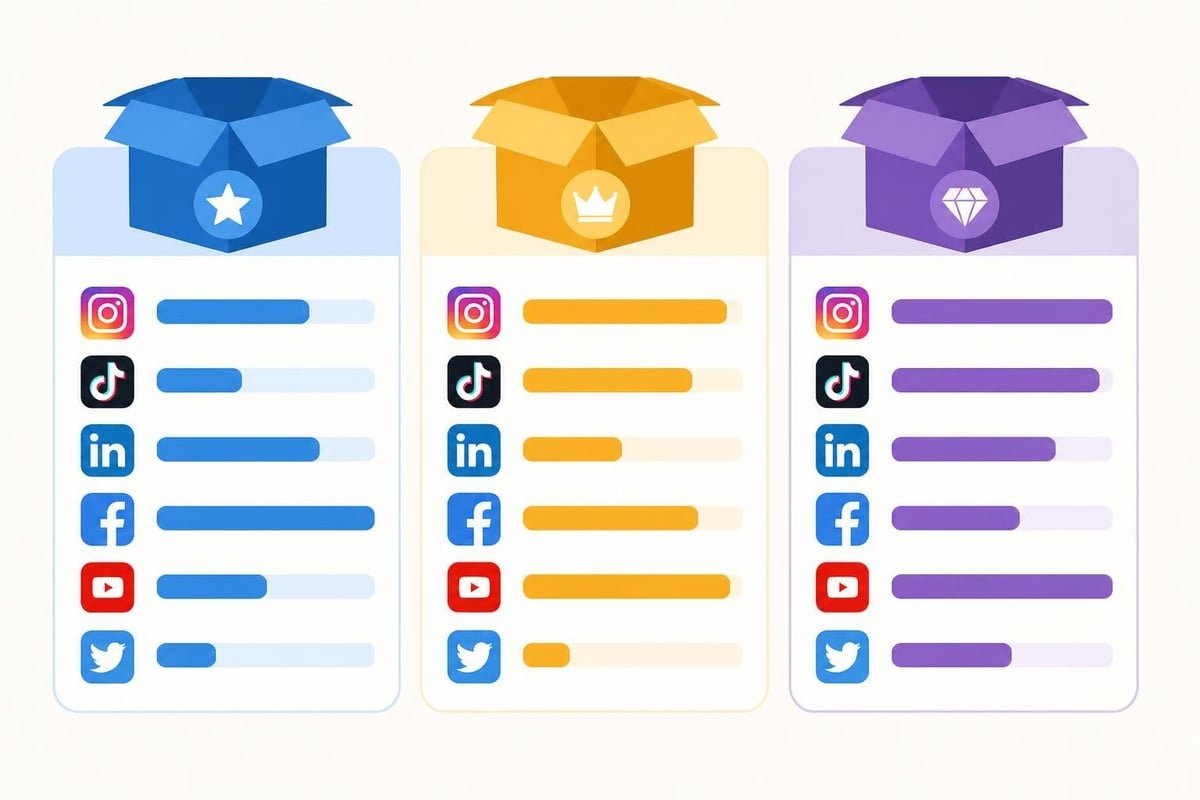
Social marketing packages in 2026 typically fall into three pricing bands, though the exact costs vary based on platform count, content volume, and service scope.
| Package Tier | Monthly Price Range | Platforms Included | Monthly Posts | Best For |
|---|---|---|---|---|
| Basic | $500 – $1,500 | 1-2 | 8-15 | Local businesses, startups |
| Standard | $1,500 – $4,000 | 2-4 | 15-30 | Growing brands, e-commerce |
| Premium | $4,000 – $10,000+ | 3-6 | 30-60+ | Established companies, multi-location |
These ranges reflect managed services where an agency handles everything. Some providers offer à la carte pricing that lets you pay only for specific components. For example, you might pay $800/month for content creation and scheduling but handle community management internally.
The pricing structure should match your business model and growth stage. Retainer agreements lock in monthly rates and guarantee availability, which works well for ongoing brand building. Project-based pricing makes sense for product launches or seasonal campaigns. Performance-based models, where you pay based on follower growth or engagement rates, have gained traction but require careful contract language to avoid misaligned incentives.
Hidden Costs and Add-Ons
Many social marketing packages exclude costs that surprise buyers during onboarding. Ad spend is almost always billed separately from creative and management fees. If your package includes paid social campaigns, clarify whether the quoted price covers management only or includes a media budget.
Other common add-ons include:
- Influencer partnership fees and product seeding
- Professional photography or videography sessions
- Graphic design assets beyond the monthly post allowance
- Crisis management or urgent response services
- Platform verification or account setup assistance
Review contracts carefully to understand what triggers additional charges. Some agencies bill hourly for revision rounds beyond two drafts, while others include unlimited revisions within the scope.
Comparing Package Components Across Providers
Not all social marketing packages deliver the same value at similar price points. When evaluating proposals, compare the specifics rather than just the headline price.
Content ownership matters more than many buyers realize. Some agencies retain copyright to all creative assets, meaning you lose access if you cancel. Others transfer full rights, letting you repurpose content indefinitely. This becomes especially important if you're building a long-term brand asset library.
The reporting cadence and depth separates superficial packages from strategic partnerships. Basic packages might provide monthly PDF reports showing follower counts and top-performing posts. Robust programs include weekly dashboards, competitive benchmarking, sentiment analysis, and clear connections between social activity and business outcomes like website traffic or lead generation.
According to Forrester research on social media strategy, marketers increasingly demand measurement frameworks that connect social investment to revenue impact, not just vanity metrics.
Platform Expertise and Specialization
Generic packages that promise identical service across all platforms often underdeliver. Each network has distinct best practices, content formats, and algorithm priorities. Instagram demands high visual polish and consistent aesthetic. LinkedIn rewards thought leadership and professional insights. TikTok requires trend awareness and authentic creator energy.
Ask potential providers about their platform-specific experience. Do they have case studies showing growth on the exact channels you prioritize? Can they explain recent algorithm changes and how they've adapted strategies? Teams that specialize in two or three platforms often outperform generalists spread thin across six.
Organic Growth vs. Paid Acceleration in Packages
The most effective social marketing packages blend organic community building with targeted paid amplification. Pure organic strategies take longer to show results but build authentic audiences. Paid promotion accelerates reach but requires ongoing budget.
Organic components focus on content quality, posting consistency, hashtag strategy, and genuine engagement. This foundation costs less but demands patience. Expect 3-6 months before seeing meaningful traction on new accounts.
Paid social integration includes sponsored posts, boosted content, influencer partnerships, and platform advertising. The IAB and PwC Internet Ad Revenue Report shows social ad spending continues growing as brands recognize paid distribution as essential, not optional.
Many mid-tier packages now bundle modest paid budgets, $300-500 monthly, to test messaging and identify high-performing content for larger campaigns. This hybrid approach often delivers better ROI than purely organic or paid-only strategies.
If your package includes paid media management, clarify the agency markup structure. Some charge a percentage of ad spend, 10-20% being common. Others bill a flat monthly fee regardless of budget size. Neither model is inherently better, but understanding the incentive structure helps you evaluate recommendations.
For businesses focused primarily on building social proof through followers, likes, and engagement metrics rather than managing ongoing content, exploring options to compare social growth providers offers a different approach with transparent pricing calculators for various platforms and package sizes.
Customizing Packages for Your Business Goals
Off-the-shelf social marketing packages rarely align perfectly with unique business needs. The best provider relationships begin with customization discussions that match deliverables to your actual goals.
E-commerce brands benefit from packages emphasizing product photography, user-generated content curation, and shoppable post setup. Community management should prioritize purchase-intent questions and abandoned cart recovery through social channels.
B2B companies need packages weighted toward LinkedIn, thought leadership content, and lead capture mechanisms. The content calendar should align with sales cycles and industry events. Community management focuses on relationship building with decision-makers rather than high-volume engagement.
Local service businesses require geo-targeted strategies, review management integration, and content showcasing customer testimonials. Posting schedules should match local audience behavior patterns, and community management must handle appointment scheduling questions promptly.
Industry-Specific Considerations
Certain industries face unique requirements that standard packages don't address:
- Healthcare: HIPAA compliance for patient stories, medical accuracy review processes
- Finance: SEC and FINRA disclosure requirements, risk language in promotional content
- Education: FERPA considerations, seasonal enrollment campaign support
- Hospitality: Real-time event coverage, user-generated content rights management
Discuss these needs during proposal development. Providers experienced in your sector will anticipate compliance issues and build appropriate review steps into workflow.
Evaluating Provider Track Records
Social marketing packages sound similar on paper, but execution quality varies dramatically. Before signing contracts, investigate provider credentials and past performance.
Request case studies with verifiable results from businesses similar to yours in size and industry. Generic testimonials carry less weight than detailed before-and-after metrics showing follower growth, engagement rate improvements, and business impact.
Check the provider's own social presence. Agencies that can't build and maintain engaged audiences for themselves rarely excel at doing it for clients. Review their content quality, posting consistency, and how they handle their community.
Reference calls with current and past clients reveal information proposals don't cover. Ask specifically about communication responsiveness, how the provider handles underperforming campaigns, and whether deliverables arrive on schedule.
Platform-specific performance data matters more than aggregate numbers. A provider might showcase impressive overall follower growth that came entirely from Facebook while your priority is Instagram. Request breakdowns by platform that match your focus areas.
Contract Terms and Flexibility
Social marketing packages come with contractual commitments that significantly impact your flexibility and risk. Understanding these terms before signing prevents expensive surprises.
Contract length typically ranges from month-to-month to 12-month agreements. Longer commitments usually unlock lower rates but reduce your ability to adjust if performance disappoints. Many providers offer a compromise: quarterly contracts with rate locks and defined exit points.
Notice periods dictate how far in advance you must announce cancellation. Thirty days is standard, but some contracts require 60-90 days. This matters when calculating true costs, if you decide to switch providers mid-year.
Performance Guarantees and Remedies
Few agencies guarantee specific follower counts or engagement metrics because algorithm changes and market conditions sit outside their control. However, reasonable contracts should include service-level agreements covering:
- Minimum monthly post counts and delivery schedules
- Response time targets for comments and messages
- Revision limits and approval timelines
- Reporting delivery dates and data access
The contract should specify remedies if the provider misses these commitments. Options might include service credits, fee reductions, or penalty-free cancellation rights.
Content approval processes need clear definition. How many revision rounds are included? What happens if you request changes after approving a post? Who has final say on content decisions? Ambiguous approval workflows cause most client-agency conflicts.
Rights to content created during the engagement should transfer to you upon payment. Some providers claim ownership of strategic documents like content calendars and competitive analyses. Negotiate this upfront, especially for research you paid to create.
Building Effective Package Combinations
The most successful social strategies often combine multiple service types rather than relying on a single package. Understanding how different offerings complement each other maximizes impact.
Foundational packages establish consistent presence through regular posting and community management. These keep your brand active and engaged but rarely drive explosive growth alone.
Growth acceleration services supplement foundations with targeted follower acquisition, engagement boosting, or viral content amplification. These create momentum that organic-only strategies achieve more slowly.
Campaign packages layer time-limited pushes around product launches, seasonal events, or promotional periods onto the baseline activity. This surge approach concentrates resources when attention matters most.
According to recent guidance on evolving social media strategy, successful brands increasingly adopt this multi-tier approach rather than expecting single packages to accomplish all goals.
The key is ensuring services integrate seamlessly rather than creating disconnected efforts. Your content calendar should align with growth campaigns. Community management must scale to handle increased engagement from boosted visibility. Analytics need to track performance across all components to identify what's working.
Platform Coverage and Multi-Network Strategies
Social marketing packages vary significantly in how many platforms they cover and how resources distribute across networks. Making smart choices requires understanding both your audience behavior and platform dynamics.
Current digital usage data shows Americans spend an average of 2 hours and 25 minutes daily on social platforms, but time distributes unevenly. YouTube commands the longest sessions, while TikTok drives the highest frequency of check-ins.
Single-platform packages make sense when your audience concentrates heavily on one network or when you're establishing presence before expanding. Instagram-only or LinkedIn-only packages let providers develop deep expertise and optimize for platform-specific algorithms.
Multi-platform packages distribute efforts across 2-4 networks. Common combinations include:
- Instagram + Facebook for consumer brands leveraging Meta's ad ecosystem
- LinkedIn + Twitter for B2B thought leadership and industry networking
- TikTok + Instagram Reels for reaching younger demographics with video
- YouTube + Instagram for long-form and short-form video integration
The challenge with multi-platform packages is resource dilution. A $2,000/month budget supporting four platforms yields just $500 per network, limiting content quantity and quality. Many experts recommend mastering 1-2 platforms before expanding rather than spreading thin across many.
Red Flags and Warning Signs
Certain characteristics signal problematic social marketing packages that often underdeliver or create future headaches.
Guaranteed follower counts represent the biggest red flag. Legitimate providers won't promise specific growth numbers because too many variables affect outcomes. Guarantees usually come from agencies using fake accounts, bots, or engagement pods that violate platform terms and damage long-term performance.
Packages that refuse to provide example content or client references before purchase lack transparency. Reputable providers showcase their work and connect prospects with satisfied customers.
Ownership claims over your accounts should trigger immediate concern. Never give an agency primary access or administrative control. They should operate as managers within your account, not own the properties themselves.
Contracts with automatic renewal clauses that require active cancellation often signal providers more focused on retention than results. Ethical agencies communicate clearly about renewal timelines and make exit simple.
Unusually low pricing compared to market averages often indicates offshore content mills producing generic, low-quality posts. While budget constraints are real, extremely cheap packages sacrifice the strategic thinking and audience understanding that drive results.
Measuring Package ROI and Performance
The true test of any social marketing package is whether it delivers measurable returns on your investment. Establishing clear metrics from the start makes evaluation objective rather than subjective.
Vanity metrics like follower counts and total impressions provide surface-level feedback but don't connect to business outcomes. Track them for context, but don't make them primary success indicators.
Engagement metrics including comments, shares, saves, and click-through rates better indicate content resonance and audience interest. Calculate engagement rate by dividing total interactions by reach, then compare across time periods to identify trends.
| Metric Category | What to Track | Why It Matters |
|---|---|---|
| Audience Growth | Net new followers, follower quality score | Shows brand awareness expansion and audience relevance |
| Engagement | Comments, shares, saves per post | Indicates content resonance and community strength |
| Traffic | Click-throughs to website, landing page conversions | Connects social activity to business outcomes |
| Conversions | Lead captures, purchases attributed to social | Demonstrates revenue impact and ROI |
Attribution tracking remains challenging because customer journeys span multiple touchpoints. Use UTM parameters on all social links to identify traffic sources in Google Analytics. Set up conversion tracking pixels to monitor purchases influenced by social content even when they don't occur immediately.
The most meaningful measurement framework ties social metrics to business objectives you defined when selecting the package. If your goal was brand awareness, focus on reach and impression growth. If you wanted lead generation, track form submissions and email signups. Revenue-focused strategies demand sales attribution and customer acquisition cost calculations.
Review performance monthly against benchmarks established during onboarding. Most packages need 90 days to show meaningful momentum as algorithms learn your content patterns and audiences discover your presence.
Scaling Packages as Your Business Grows
Social marketing packages should evolve with your business rather than remaining static. Understanding upgrade paths and scaling strategies maximizes long-term value.
Content volume scaling represents the most straightforward expansion. As budgets increase, add more posts per week or expand to additional platforms. This works well when your current quality and strategy are producing results that justify additional investment.
Service depth scaling keeps platform coverage constant but adds capabilities like video production, influencer partnerships, or paid media management. This approach often delivers better returns than spreading budget across more platforms.
Many businesses successfully graduate from packages to in-house teams, using agency services initially to establish presence and learn best practices. During this transition, packages might shift from full-service to consulting or training engagements that support internal staff.
The Creator Playbook from Google offers insights on incorporating creator partnerships into scaling strategies, recognizing that influencer collaboration often becomes important as brands mature beyond basic presence-building.
Seasonal Adjustments and Flexible Packages
Business cycles and seasonal patterns affect social media needs throughout the year. Smart package structures accommodate these fluctuations rather than forcing flat monthly commitments.
Retail brands need elevated support during Q4 holiday seasons, back-to-school periods, and major sales events. Flexible packages might include baseline year-round service with surge capacity add-ons during peak months.
Tax and accounting firms face January-April intensity followed by quieter summers. Their ideal packages scale down during slow periods while maintaining brand presence, then ramp up when demand returns.
Educational institutions align social efforts with enrollment cycles, requiring different content and engagement strategies during recruitment versus the academic year.
Discuss seasonal patterns during package selection. Providers offering flexible retainers that adjust monthly based on agreed minimums and maximums accommodate real business rhythms better than rigid fixed-fee arrangements.
Some agencies now offer banking models where you purchase annual hours or content units that draw down as used. This provides budget predictability while allowing monthly variation based on actual needs.
Integration with Broader Marketing Efforts
Social marketing packages deliver maximum value when coordinated with your overall marketing strategy rather than operating in isolation.
Email and social integration creates multiple touchpoints that reinforce messaging. Share email newsletter content as social posts, and use social engagement to grow email lists. Some providers offer bundled packages spanning both channels, though ensure expertise matches in each area rather than accepting mediocre email service just to consolidate vendors.
Content marketing alignment prevents duplication and maximizes asset value. Blog posts become LinkedIn articles and Twitter threads. Podcast episodes drive Instagram quote graphics. Video content adapts into multiple formats across platforms.
Paid search and social coordination ensures consistent messaging across channels where prospects research and compare. Use social insights about audience interests and pain points to inform search keyword targeting. Retarget website visitors from search campaigns with social ads.
The most sophisticated packages now include marketing automation integration that triggers social activity based on customer behaviors. Welcome new email subscribers with social engagement. Celebrate customer milestones with personalized posts. This level of coordination requires platforms and providers to share data seamlessly.
Selecting the right social marketing packages requires understanding your goals, evaluating provider capabilities honestly, and ensuring deliverables align with business priorities rather than just checking boxes. The best package combines appropriate platform coverage, quality content production, genuine engagement, and measurement that connects social activity to outcomes you actually care about. Whether you're building initial presence or scaling established channels, Best Social Media Growth Services 2026 helps you compare top providers on pricing, delivery speed, and service terms with transparent calculators that show exactly what growth solutions cost for your specific needs.