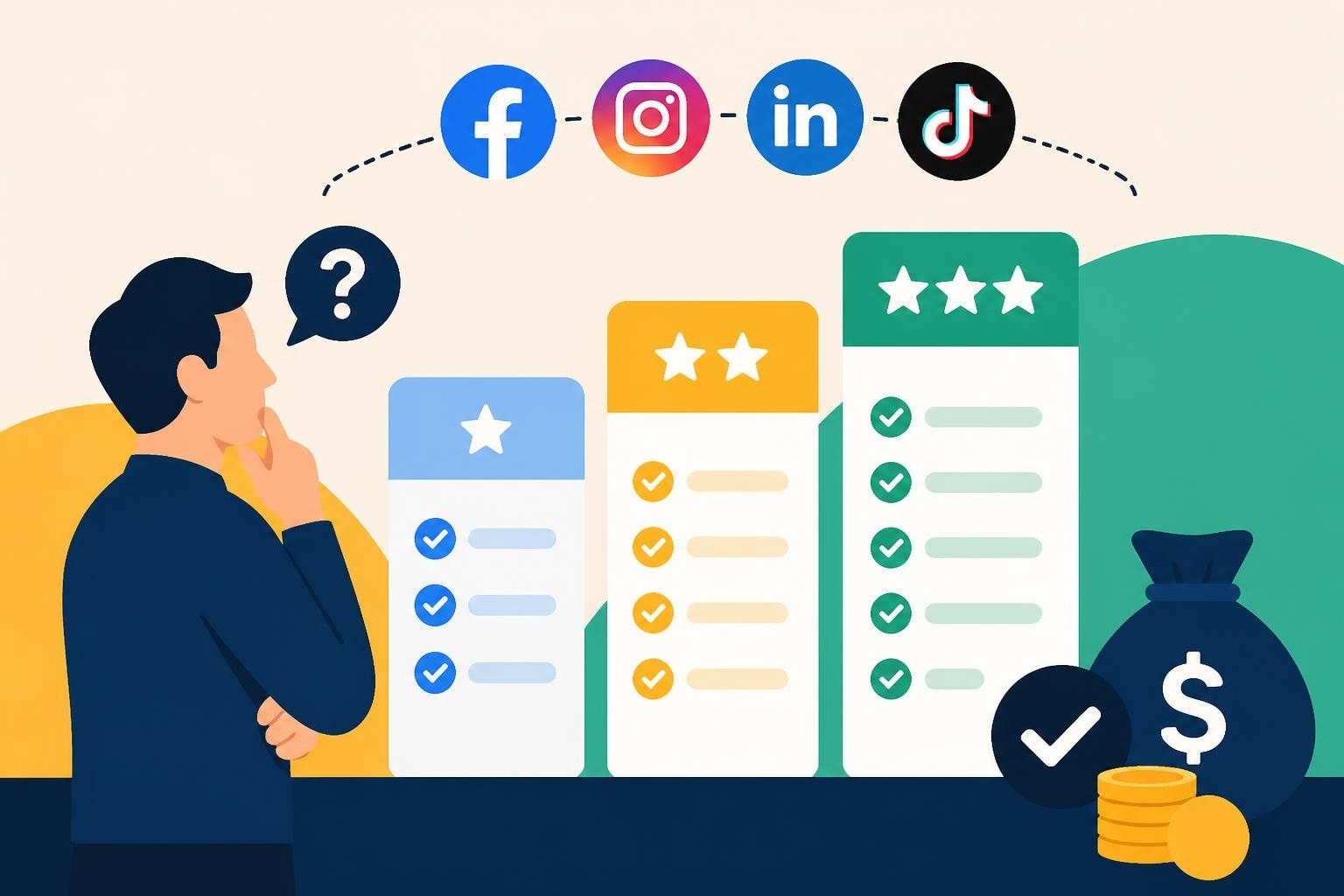
Social media marketing packages have evolved significantly as platforms multiply and audience expectations shift. In 2026, businesses face dozens of providers offering everything from basic post-scheduling bundles to comprehensive managed campaigns that span six or more platforms. Understanding what separates a $500 package from a $5,000 one-and which tier matches your growth goals-requires looking beyond headline prices to examine deliverables, platform coverage, reporting depth, and how providers structure their services. Whether you're a local retailer testing social ads for the first time or an e-commerce brand scaling influencer partnerships, the right package should align with your audience, budget, and capacity to act on insights. Before committing, compare social growth providers to see real pricing across package sizes and platforms with a live calculator.
What Social Media Marketing Packages Typically Include
Most social media marketing packages bundle several core services into monthly retainers or fixed-term contracts. At the foundation, you'll find content creation and scheduling: the provider produces text, images, or video posts and queues them for publication across agreed platforms. Mid-tier and premium packages layer on community management-monitoring comments, messages, and mentions, then responding on your behalf within defined hours or service-level agreements.
Paid advertising management appears in many packages above the starter tier. The provider allocates a portion of your budget to boosted posts or campaign ads, handles targeting and creative, and optimizes bids. Reporting and analytics round out the standard bundle: monthly dashboards or slide decks that track reach, engagement, follower growth, and conversions against benchmarks.
Add-Ons and Specialized Services
Beyond the base bundle, providers offer modules you can bolt onto any tier:
- Influencer partnerships: identification, outreach, contract negotiation, and compliance tracking for sponsored posts (noting that the FTC requires clear disclosures on all paid collaborations).
- Video production: short-form reels, product demos, or testimonial clips shot and edited in-house or by partner studios.
- Social listening and reputation monitoring: tools that scan brand mentions, competitor activity, and sentiment across platforms, feeding insights into content calendars.
- Lead-generation campaigns: gated content, chatbot flows, or form-fill ads designed to capture contact details, as outlined in HubSpot’s social lead-generation tactics.
- Platform-specific specialization: TikTok trend participation, LinkedIn Sales Navigator outreach, Pinterest catalog feeds, or Reddit community building.
Packages labeled "done-for-you" or "fully managed" typically include all core services and at least two add-ons, while "done-with-you" or "hybrid" packages split tasks between the provider and your in-house team.
How Providers Structure Pricing Tiers
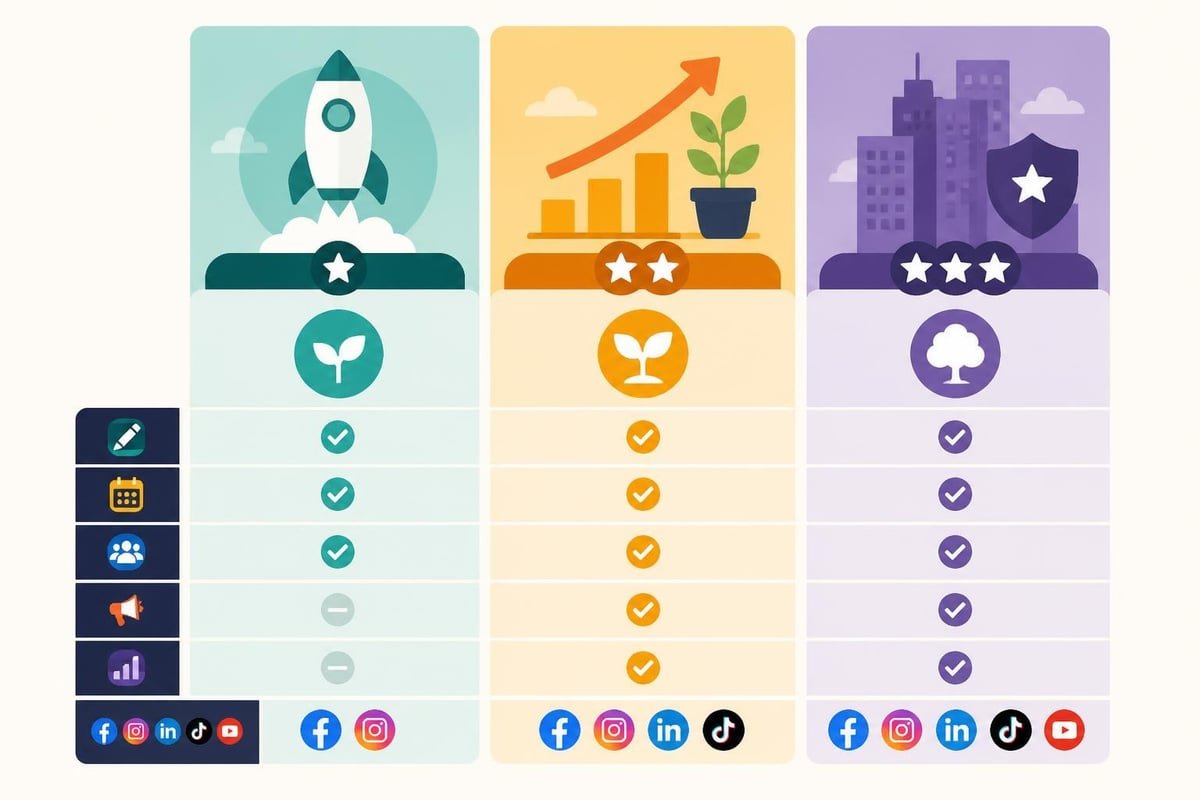
Social media marketing packages fall into recognizable pricing bands, each targeting a different business stage and complexity level. Understanding these tiers helps you assess proposals and compare apples to apples when evaluating multiple providers.
| Tier | Monthly Range | Platforms Included | Typical Deliverables | Best For |
|---|---|---|---|---|
| Starter / Basic | $500 – $1,500 | 1–2 (usually Facebook + Instagram) | 8–15 posts/month, basic scheduling, monthly report | Solopreneurs, local businesses, new accounts |
| Growth / Professional | $1,500 – $4,000 | 3–4 (Instagram, Facebook, LinkedIn, Twitter/X) | 20–40 posts/month, community management, quarterly strategy review, basic paid ads | SMBs, regional brands, steady organic growth |
| Premium / Enterprise | $4,000 – $15,000+ | 5–6+ (add TikTok, YouTube, Pinterest) | Custom content, video production, influencer campaigns, dedicated account manager, weekly reporting | E-commerce, national brands, product launches |
Starter packages prioritize consistency and presence. You'll receive a handful of posts each week, scheduled for optimal times, and a simple engagement report. Customization is limited: templates, stock photos, and reused captions are common. These packages suit businesses testing social channels or maintaining a baseline presence while resources are focused elsewhere.
Growth-tier packages introduce strategy and iteration. The provider audits your existing accounts, develops a 90-day content roadmap, and adjusts tactics based on performance data. Community management expands to daily monitoring, and you'll see more original graphics or short videos. Paid ad budgets start around $500–$1,000 per month in addition to the management fee, with ongoing A/B tests to improve cost-per-click or cost-per-acquisition.
Premium packages function as an extension of your marketing department. Expect weekly strategy calls, platform-specific campaigns (a TikTok series separate from your Instagram grid), influencer contracts that the agency negotiates and manages, and detailed attribution reporting that ties social activity to revenue. Many premium providers also offer crisis-management protocols and 24/7 monitoring during product launches or events.
Contract Length and Flexibility
Providers typically require three- to six-month minimums for managed packages, arguing that social algorithms reward consistent publishing and that meaningful results take time. Month-to-month agreements exist but often carry a 10–20 percent premium. Longer contracts (annual) may unlock discounts or bonus services-an extra platform, quarterly photo shoots, or waived setup fees.
Watch for auto-renewal clauses and cancellation windows. Some agreements require 30 or 60 days' notice to terminate, and early cancellation can trigger fees equal to one or two months of service. Before signing, confirm whether you retain ownership of content created during the contract and whether the provider will hand over login credentials and analytics history at the end.
Platform Coverage and Why It Matters
The number of platforms in a package matters less than whether those platforms reach your actual audience. Pew Research data from 2025 shows that YouTube remains the most widely used platform among U.S. adults (83 percent), followed by Facebook (68 percent) and Instagram (47 percent), with TikTok and LinkedIn gaining ground in specific demographics. A three-platform package that includes YouTube, Instagram, and LinkedIn may deliver better results for a B2B software company than a five-platform bundle that adds Snapchat and Pinterest.
Matching Platforms to Business Goals
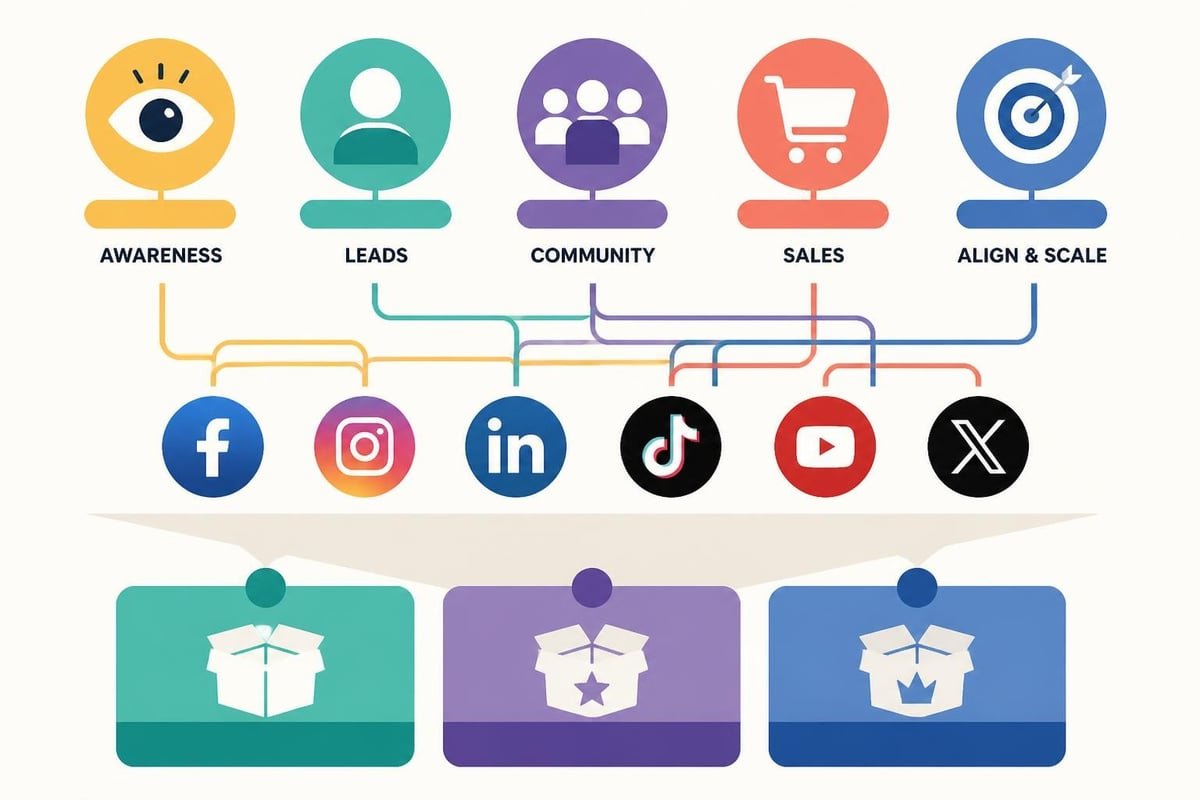
- Brand awareness and reach: YouTube, Facebook, Instagram (Reels and Stories), TikTok. Prioritize video-first formats and platforms with high daily active users.
- Lead generation and conversions: LinkedIn (B2B), Facebook and Instagram (e-commerce carousel ads, Shops), Pinterest (product discovery for home, fashion, food).
- Community building and support: Twitter/X (real-time updates, customer service threads), Reddit (niche communities), Facebook Groups.
- Influencer and UGC campaigns: Instagram, TikTok, YouTube (longer product reviews and unboxings).
A well-designed package aligns platform selection with your key performance indicators (KPIs)-follower growth, engagement rate, click-through rate, cost per lead, or revenue attributed to social. If your goal is to drive newsletter signups, a package heavy on Instagram Stories with swipe-up links and LinkedIn posts linking to gated content will outperform a Pinterest-focused plan.
Content Creation: Volume, Quality, and Ownership
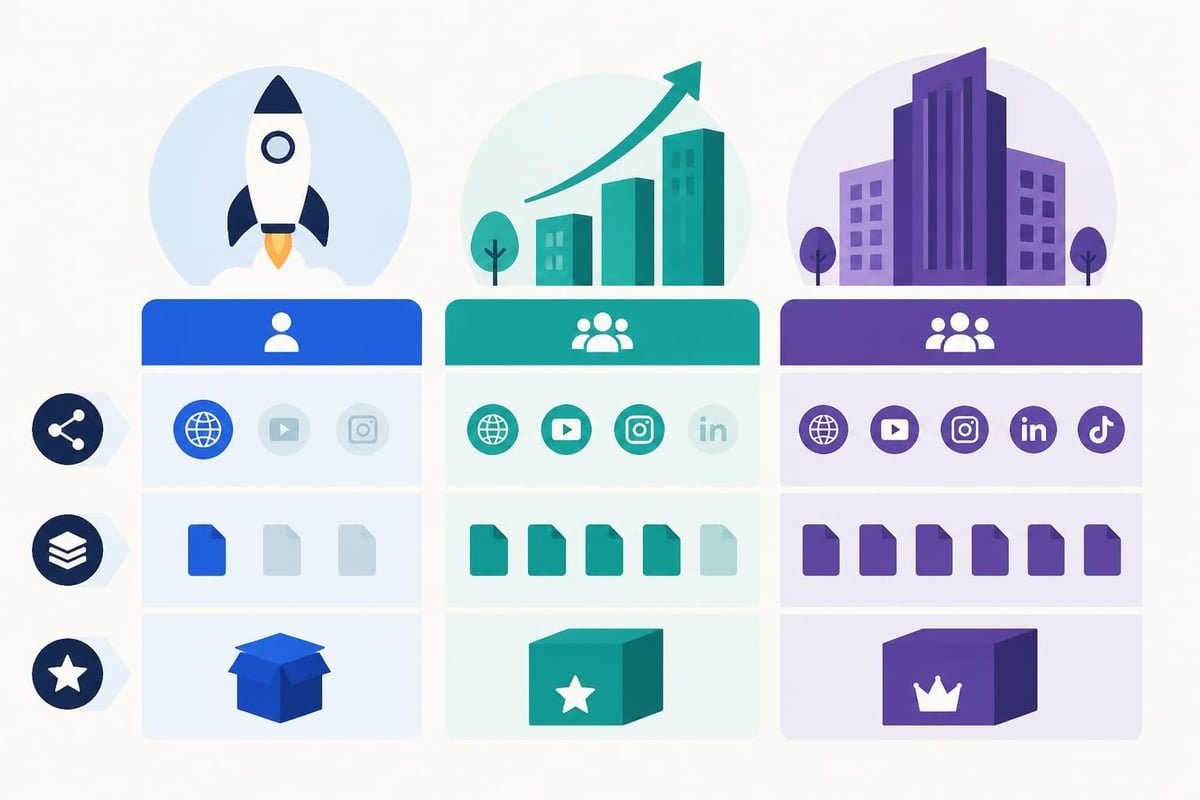
The number of posts per month is the most visible deliverable in any package, but post count alone doesn't reveal quality or fit. A starter package promising 30 posts might recycle generic stock images and motivational quotes, while a premium package delivering 20 posts includes custom illustrations, product photography, and platform-optimized captions.
Original vs. curated content is a key distinction. Original content-created specifically for your brand-builds unique voice and intellectual property. Curated content-resharing industry news, user-generated posts, or trending memes-fills calendars efficiently but offers less differentiation. Balanced packages blend both: original hero posts (product launches, case studies, how-to videos) supported by curated filler that keeps feeds active between tentpole moments.
Video and Visual Production
Video now dominates social feeds. Hootsuite’s 2025 Social Trends report finds that short-form video (under 90 seconds) generates the highest engagement across platforms, and algorithms increasingly favor Reels, Shorts, and TikToks over static images. Packages should specify:
- How many videos are included per month (e.g., four Reels, two YouTube Shorts)
- Whether filming happens on-site, remotely, or uses stock footage
- Revision rounds and turnaround times
- Ownership and licensing of finished assets
Premium packages may include a quarterly video shoot day, during which the team captures dozens of clips to edit and release over the following weeks. Starter packages often rely on templates, stock footage, or user-generated content you supply.
Content ownership deserves explicit clarification in every contract. Ideally, you own all content created during the engagement and retain rights to repurpose it after the contract ends. Some agencies claim perpetual rights to original graphics or footage they produce, limiting your ability to reuse assets internally or with future providers.
Reporting, Analytics, and Performance Guarantees
Monthly or quarterly reports translate activity into results. At minimum, expect to see platform-by-platform metrics: follower count (start vs. end), post reach and impressions, engagement rate (likes, comments, shares, saves), profile visits, and link clicks. Growth packages add funnel metrics-website sessions from social, form fills, purchases attributed to campaigns-and benchmark your performance against industry averages.
What to Look For in Social Media Reports
- Trend lines, not just snapshots: A single month's numbers mean little without context. Good reports show three- or six-month trends so you can spot momentum or stagnation.
- Engagement rate over vanity metrics: A thousand new followers matters less if they don't interact. Look for engagement rate (total engagements divided by reach or follower count) and click-through rate on links.
- Content breakdowns: Which post types (video, carousel, single image, text) and topics (product features, customer stories, industry news) drive the most engagement? Reports should surface patterns to inform future calendars.
- Paid vs. organic performance: If the package includes ads, separate organic reach from paid reach and compare cost per result (per click, per lead, per purchase) month over month.
- Competitive benchmarking: How do your growth rate and engagement compare to direct competitors or industry norms? Tools like Sprout Social’s Index provide sector-specific benchmarks.
Performance guarantees are rare in social media marketing packages because algorithms, platform policy changes, and audience behavior lie outside the provider's control. A few agencies promise minimum follower growth (e.g., 500 new followers per month) or engagement thresholds, but these often come with caveats-guaranteed results may apply only to paid follower campaigns rather than organic growth, or require you to supply a minimum ad budget. Read guarantee clauses carefully and confirm what happens if targets are missed: partial refunds, additional months of service at no cost, or simply a strategy adjustment.
Comparing Providers: Delivery Speed, Refund Terms, and Support
When evaluating social media marketing packages, pricing and deliverables sit alongside operational factors that determine how smoothly the partnership runs. Delivery speed-how quickly the provider produces and publishes content after onboarding-varies widely. Some agencies launch campaigns within a week of contract signature, while others require a four-week discovery and approval phase before the first post goes live. Clarify the onboarding timeline, especially if you're preparing for a product launch or seasonal campaign with a fixed deadline.
Refund and satisfaction policies protect your investment if results fall short or the relationship sours. Month-to-month agreements offer natural exit points, but multi-month contracts should include a satisfaction guarantee or performance review checkpoint at 30 or 60 days. A fair policy might offer a prorated refund if you terminate within the first month due to unmet deliverables, or allow you to pause service (without penalty) if your business faces an unexpected disruption.
Communication and account management shape day-to-day collaboration. Starter packages often route all questions through a ticketed support system with 24–48 hour response times. Growth packages assign you a shared account manager who handles multiple clients and schedules biweekly check-ins. Premium packages provide a dedicated manager-sometimes an entire pod (strategist, designer, copywriter)-with daily Slack or email access and weekly video calls. Decide how much hands-on involvement you want: if you prefer to approve every post before publication, ensure the package includes an approval workflow and sufficient revision rounds.
Choosing the Right Package for Your Business Stage
Your business's maturity, resources, and goals should guide package selection more than any single feature or price point. A venture-backed startup preparing for a Series A announcement has different needs than a family-owned retailer maintaining steady local sales.
Scenarios and Recommended Approaches
Scenario 1: New Business, Limited Budget, Testing Channels
Start with a basic one- or two-platform package (Instagram and Facebook, or LinkedIn if B2B). Focus on building a content library, establishing posting cadence, and learning which topics resonate. Avoid long contracts; opt for month-to-month or three-month trials. Allocate 10–20 percent of the package cost to paid ads so you can test audience targeting and gather performance data faster than organic reach alone allows.
Scenario 2: Established SMB, Steady Revenue, Ready to Scale
Invest in a growth-tier package covering three to four platforms, with a mix of organic content and managed ad campaigns. Prioritize providers that offer quarterly strategy reviews and can scale services as you expand-adding a platform, increasing post frequency, or launching an influencer pilot-without forcing you into an entirely new contract. Look for KPI-focused reporting that ties social metrics to business outcomes (leads, sales, customer acquisition cost).
Scenario 3: E-Commerce Brand, High Competition, Seasonal Peaks
Choose a premium package with video production, influencer partnerships, and the flexibility to surge capacity during peak seasons (back-to-school, Black Friday, holiday). Ensure the provider has experience with product feeds, dynamic ad catalogs, and retargeting campaigns. Request case studies from similar brands and confirm the team's familiarity with your e-commerce platform (Shopify, WooCommerce, BigCommerce) so they can track conversions accurately.
Scenario 4: B2B Service Provider, Long Sales Cycles, Thought Leadership
Prioritize LinkedIn and YouTube in your package, with an emphasis on long-form content-articles, whitepapers, webinar promotion, executive positioning. Community management should include LinkedIn comment engagement and group participation. Video content might focus on explainer animations, client testimonials, or panel discussions rather than quick Reels. Budget for lead-nurturing campaigns that move prospects through a multi-touch journey, as B2B content marketing research shows decision cycles often span several months and multiple stakeholders.
Red Flags and Questions to Ask Before Signing
Not all social media marketing packages deliver what their sales pages promise. Watch for warning signs and ask direct questions to separate reputable providers from those likely to underdeliver or lock you into unfavorable terms.
Common Red Flags
- Guaranteed follower counts without clarifying paid vs. organic: Promises like "5,000 new followers guaranteed" often mean the provider will purchase followers or engagement rather than grow your audience organically. Paid follower services can boost counts quickly but may attract low-quality or bot accounts that don't engage or convert.
- Vague deliverables: "Up to 30 posts per month" or "social media management" without specifying platforms, content types, or approval workflows leaves room for interpretation and disappointment.
- No clear reporting cadence: If the package doesn't state when and how you'll receive performance reports, you may wait months for insights or receive only superficial metrics.
- Bundled ad spend with no transparency: Some packages include "social ads" without itemizing how much of your payment goes to the provider's fee versus actual platform ad spend. Demand a clear split.
- One-size-fits-all content calendars: Providers who pitch identical content themes to every client in your industry (motivational Mondays, throwback Thursdays) likely aren't tailoring strategy to your brand's unique voice or audience.
Essential Pre-Contract Questions
- What platforms and post frequency are included, and can I see a sample content calendar?
- Who owns the content you create, and what happens to access and assets if I cancel?
- How do you measure success, and what KPIs will you track in monthly reports?
- What is your process for approving posts, and how many revision rounds are included?
- If the package includes paid ads, how much of my budget goes to ad spend versus your management fee?
- What is your cancellation policy, refund terms, and minimum contract length?
- Can you provide case studies or references from clients in my industry or at my business stage?
- How do you stay current with platform algorithm changes, new features, and best practices?
- What happens if a platform changes its API, ad policies, or features mid-contract-will you adapt the strategy at no extra cost?
- Do you offer a trial period or pilot month before I commit to a longer contract?
Request answers in writing and compare responses across at least three providers. If a provider hesitates to answer any of these questions or offers only generic replies, consider it a signal to look elsewhere.
Integrating Social Packages with Broader Marketing Efforts
Social media marketing packages rarely succeed in isolation. The most effective campaigns tie social activity to email nurturing sequences, content marketing pipelines, paid search, and offline events. When evaluating packages, consider how the provider integrates with your existing tools and workflows.
Email and social alignment amplifies reach and conversion. Social posts drive newsletter signups; email campaigns promote new social content or contests. If you use platforms like AWeber, GetResponse, or Moosend for email marketing, confirm the social provider can coordinate messaging themes and share audience data (within privacy regulations). Coordinated campaigns-such as a gated e-book promoted on LinkedIn and delivered via email-perform better than siloed efforts.
Content repurposing and distribution stretch budgets and reinforce messages. A blog post becomes a carousel on Instagram, a discussion thread on LinkedIn, a short video summary on YouTube, and pull-quotes for Twitter. Ask whether the package includes repurposing existing content or if the provider expects you to supply all raw material. Agencies experienced in multi-channel distribution can extract more value from every piece of content you produce.
Attribution and closed-loop reporting connect social activity to revenue. Use UTM parameters on every link shared in social posts, integrate your CRM (HubSpot, Salesforce, Zoho) with your social analytics, and set up conversion tracking pixels on your website. Premium packages often include attribution modeling that shows which touchpoints-organic post, paid ad, influencer mention-contributed to a sale, allowing you to allocate budget more effectively and prove social's ROI to stakeholders.
Seasonal and event-based coordination ensures social supports your broader marketing calendar. If you're launching a product in Q3, exhibiting at a trade show in Q1, or running a holiday promotion, the social package should flex to accommodate surge content needs, live coverage, and countdown campaigns. Clarify whether the provider charges extra for event support or if your monthly retainer includes a reasonable amount of schedule flexibility.
How Paid Social Fits into Managed Packages
Paid social advertising-boosted posts, feed ads, Stories ads, carousel campaigns-often appears as an optional or bundled component in social media marketing packages. Understanding how providers structure paid management helps you evaluate total cost and expected return.
Most packages separate the ad spend (money paid directly to Facebook, Instagram, LinkedIn, TikTok, etc.) from the management fee (the provider's charge for creating, targeting, optimizing, and reporting on ads). A typical arrangement might be: you commit to $1,000/month in ad spend, and the provider charges a 20 percent management fee ($200), for a total monthly outlay of $1,200. Some agencies use flat monthly fees regardless of spend, while others tier fees by total budget-managing $500/month in ads costs less than managing $5,000/month because higher budgets demand more testing, segmentation, and creative variation.
What Paid Social Management Should Include
- Audience research and targeting setup: Defining demographics, interests, behaviors, lookalike audiences, and retargeting segments.
- Ad creative production: Designing image or video ads, writing copy, and formatting assets to platform specs (1:1, 9:16, 4:5 aspect ratios).
- Campaign structure and bidding strategy: Choosing objective (awareness, traffic, conversions), placement (feed, Stories, Reels, Audience Network), and bid type (cost cap, bid cap, lowest cost).
- A/B testing: Running multiple ad variants simultaneously to identify which headlines, images, calls-to-action, or audiences perform best.
- Ongoing optimization: Pausing underperforming ads, reallocating budget to winners, adjusting bids, and refreshing creative to combat ad fatigue.
- Conversion tracking and reporting: Installing platform pixels, configuring event tracking (page views, add-to-cart, purchases), and reporting cost per result weekly or monthly.
According to IAB UK’s guide to paid social, best-practice campaigns combine platform native tools (Facebook Ads Manager, LinkedIn Campaign Manager) with third-party analytics to measure incrementality and avoid attribution double-counting. Ensure your package provider uses proper conversion tracking and can explain their attribution model-last-click, first-click, or multi-touch.
Be wary of packages that lump organic and paid performance into a single set of KPIs. Paid ads should be evaluated on cost-efficiency metrics (cost per click, cost per lead, return on ad spend), while organic content is better judged by engagement rate, share of voice, and audience growth. Mixing the two obscures which tactics actually drive results and makes it harder to optimize spending.
Self-Service vs. Managed Packages
Some providers offer self-service packages that give you access to tools, templates, and training but leave execution in your hands. These DIY options cost significantly less-often $50–$300/month-and suit businesses with in-house social media skills but limited time for strategy and content planning.
A self-service package might include:
- A content calendar template and monthly theme ideas
- Access to a stock photo library or design tool (Canva Pro, Adobe Express)
- Scheduling software (Buffer, Later, Hootsuite) with multi-platform posting
- Monthly group coaching calls or a community forum for troubleshooting
- Pre-written caption templates and hashtag sets
These packages work well for solopreneurs, early-stage startups, and local businesses where the owner or a part-time team member enjoys social media and has 5–10 hours per week to dedicate. They don't work if you lack design skills, struggle with consistent posting, or need hands-off delegation.
Managed packages handle execution for you, freeing your time but requiring higher investment. The tradeoff is speed and expertise: professional designers, copywriters, and strategists typically produce higher-quality content faster than generalists learning on the job. Managed packages make sense when social media directly drives revenue (e-commerce, SaaS, local services with online booking) and the opportunity cost of your time exceeds the package fee.
Hybrid models-sometimes called "done-with-you"-split responsibilities: the provider creates a content calendar and key assets (graphics, video), and you handle posting, community management, and daily engagement. Hybrids balance cost and control, though they require discipline to execute consistently and clear communication to avoid gaps where each party assumes the other is handling a task.
The Role of Organic Growth Services in Your Social Strategy
While full-service marketing packages emphasize content, ads, and community management, some businesses supplement these efforts with targeted organic growth services that boost follower counts, post engagement, or video views through third-party providers. These services deliver measurable visibility quickly, which can be useful when launching a new account, entering a competitive niche, or creating social proof that attracts organic followers.
When considering whether to pair a traditional social media marketing package with a growth service, evaluate delivery speed, quality of engagement, and how well the added followers align with your target audience. Premium growth providers allow you to specify demographics, interests, and geographic targeting, ensuring new followers match your customer profile rather than arriving as generic, disengaged accounts. Pricing varies by platform, package size, and delivery timeline, so using a comparison tool with a live calculator helps you see real costs across multiple providers before committing.
Integrating growth services with a managed marketing package requires coordination. For example, if your package includes monthly reporting on follower growth, notify your account manager when you purchase additional followers or engagement so they can accurately attribute changes and adjust organic strategy accordingly. Transparency prevents confusion when reports show sudden spikes in metrics and ensures both the managed package and growth service work toward the same business goals rather than at cross purposes.
Trends Shaping Social Media Marketing Packages in 2026
The social media landscape continues to evolve rapidly, and the best social media marketing packages adapt to emerging platforms, content formats, and audience expectations. Several trends are reshaping what providers include and how they price services this year.
Short-form video dominance remains the defining format. Instagram Reels, TikTok, YouTube Shorts, and even LinkedIn video posts consistently outperform static images in reach and engagement. Packages that don't include at least a handful of short videos each month risk falling behind. Expect providers to expand video offerings, whether through in-house production teams, partnerships with freelance videographers, or AI-assisted video creation tools that streamline editing and captioning.
AI-powered content creation and optimization is moving from experimental to standard practice. Tools like ChatGPT, Jasper, and platform-native AI (Meta Advantage+, TikTok Smart Creative) now assist with caption writing, hashtag generation, image creation, and even ad creative. Some packages explicitly include AI-assisted workflows to increase output without proportionally increasing cost. As a buyer, ask how the provider uses AI-ideally as an efficiency booster that frees human strategists for higher-level thinking, not as a replacement for brand-specific voice and creative judgment.
Platform diversification and niche communities challenge the Facebook-Instagram duopoly that dominated packages in prior years. Statista’s 2026 social media usage data shows continued fragmentation, with younger audiences favoring TikTok, Discord, and Reddit, while professionals engage on LinkedIn and Twitter/X. Expect more packages to offer à la carte platform add-ons rather than fixed bundles, allowing you to start with two core platforms and add a third or fourth as budget and bandwidth allow.
Creator and influencer collaboration is shifting from ad hoc to systematized. Rather than treating influencer campaigns as one-off projects, forward-looking packages build ongoing ambassador programs-long-term relationships with a handful of micro or mid-tier influencers who post regularly about your brand. This approach yields more authentic content and sustained reach than sporadic sponsored posts. Packages may include influencer identification, contract templates, compliance tracking (ensuring FTC disclosure rules are followed), and performance measurement across influencer-driven traffic and conversions.
Privacy and data changes continue to reshape targeting and measurement. Apple's App Tracking Transparency, Google's deprecation of third-party cookies, and ongoing privacy regulations limit the data available for ad targeting and attribution. Providers that rely heavily on retargeting or lookalike audiences built from website traffic must adapt by investing in first-party data collection (email lists, CRM integrations, loyalty programs) and contextual targeting. Confirm that your package provider stays current with these changes and has contingency strategies if a platform restricts data access mid-contract.
Choosing the right social media marketing packages depends on aligning platform coverage, content volume, and budget with your specific business goals and audience. By comparing providers on deliverables, pricing transparency, reporting depth, and operational factors like refund terms and delivery speed, you can avoid mismatched expectations and secure a partnership that drives measurable growth. MarketDeals' independent comparison at Best Social Media Growth Services 2026 lets you evaluate top providers side by side, with live pricing calculators that show real costs per platform and package size, helping you make a confident, informed decision.