
Social marketing represents one of the most powerful approaches to influencing behavior and driving meaningful outcomes through social media platforms. Unlike traditional social media marketing focused purely on brand awareness or sales, social marketing applies commercial marketing principles to promote beneficial social change, public health initiatives, or community behaviors. Organizations ranging from nonprofits to government agencies and socially conscious brands use social marketing to address issues from environmental sustainability to public health compliance, leveraging the reach and targeting capabilities of platforms like Facebook, Instagram, TikTok, and YouTube.
Understanding how to build effective social marketing campaigns requires mastery of audience segmentation, behavioral psychology, platform-specific content formats, and measurement frameworks that track real-world outcomes beyond engagement metrics. Whether you're comparing approaches through resources like social media growth services or developing campaigns from scratch, the strategic fundamentals remain consistent across contexts and platforms.
Understanding Social Marketing Fundamentals
Social marketing differs from commercial marketing in its primary objective: changing behaviors for social good rather than driving product purchases. The discipline emerged in the 1970s when researchers recognized that commercial marketing techniques could be adapted to promote health behaviors, environmental conservation, and social welfare initiatives.
The core framework relies on the "4 Ps" adapted for behavioral change:
- Product: The desired behavior or practice being promoted
- Price: Barriers (time, effort, social cost) the audience must overcome
- Place: Where and when the target audience can adopt the behavior
- Promotion: Communication strategies across channels to motivate action
Modern social marketing adds digital sophistication to this foundation. Platforms now offer unprecedented targeting precision, allowing campaigns to reach specific demographics based on interests, behaviors, location, and life events. According to recent data on Americans’ social media usage, platform adoption varies significantly by age group, making audience research essential before campaign planning.
Audience Segmentation and Behavioral Insights
Successful social marketing begins with deep understanding of target audiences. Rather than broad demographic categories, effective campaigns segment audiences by psychographic factors, current behaviors, readiness to change, and perceived barriers.
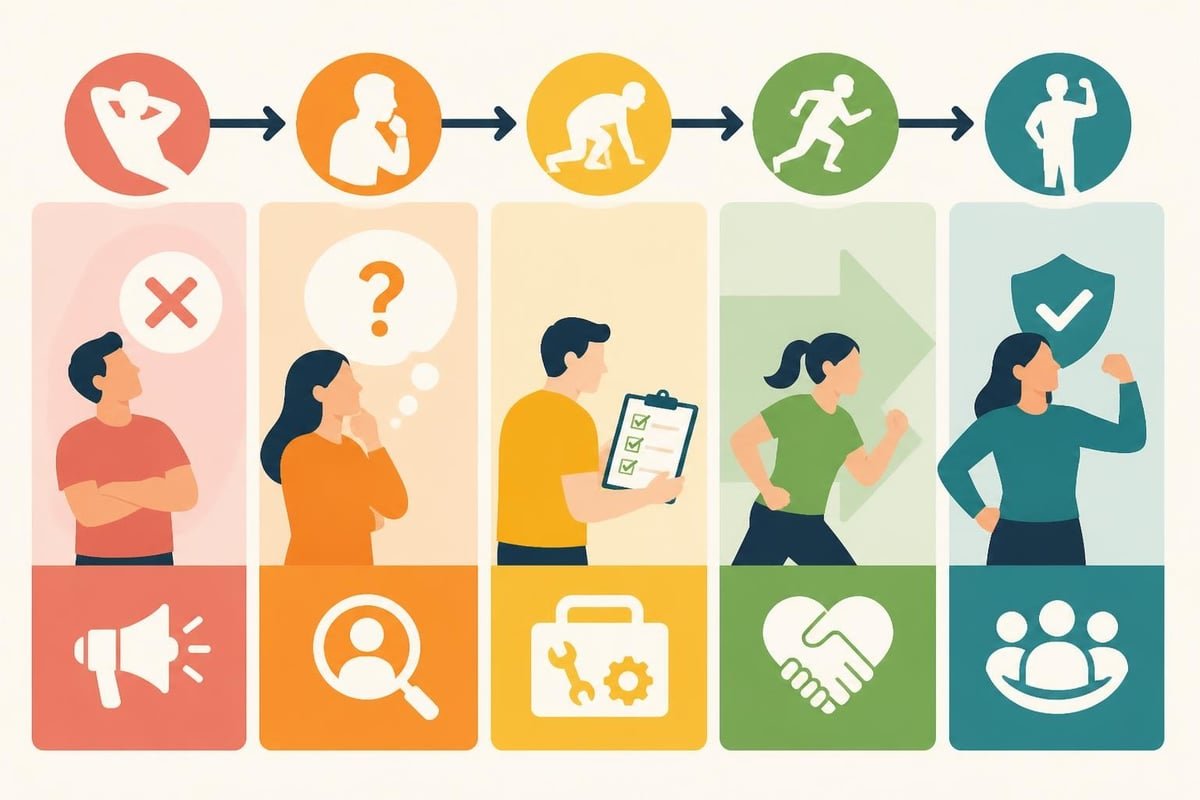
The Transtheoretical Model (Stages of Change) provides a valuable framework:
| Stage | Audience Mindset | Marketing Approach |
|---|---|---|
| Precontemplation | Unaware or resistant to change | Awareness content, problem education |
| Contemplation | Considering change, weighing pros/cons | Benefits messaging, testimonials, barrier reduction |
| Preparation | Planning to act soon | Practical how-to guides, resources, support systems |
| Action | Recently adopted behavior | Reinforcement, troubleshooting, community building |
| Maintenance | Sustained behavior over time | Recognition, advanced tips, relapse prevention |
Tailoring content and messaging to each stage dramatically improves campaign effectiveness. A person unaware of an issue needs different messaging than someone actively seeking implementation tools.
Platform Selection and Content Strategy
Choosing the right platforms forms the foundation of any social marketing campaign. Each platform attracts distinct demographics, supports specific content formats, and enables different engagement patterns. Strategic platform selection aligns with where target audiences already spend time and which formats best communicate your behavioral change message.
Platform Demographics and Use Cases
Platform choice should reflect both audience presence and message fit. Instagram and TikTok excel at visual storytelling and reaching younger demographics, while Facebook maintains broader age representation and sophisticated targeting for localized campaigns. YouTube dominates for educational long-form content, and LinkedIn serves professional behavioral change initiatives.
Consider these platform strengths:
- Facebook: Broad demographics, community building, event promotion, precise geographic targeting
- Instagram: Visual storytelling, younger adults, lifestyle integration, Stories for daily engagement
- TikTok: Gen Z and Millennials, short-form education, trend participation, authentic messaging
- YouTube: In-depth tutorials, testimonials, sustained engagement, searchable evergreen content
- LinkedIn: Professional audiences, workplace behavior change, B2B social initiatives
Research from Think with Google on video trends shows that short-form video continues dominating attention in 2026, with audiences expecting quick, actionable content that fits mobile consumption patterns.
Content Formats That Drive Behavior Change
Social marketing content must do more than inform. It must motivate action by addressing emotional drivers, removing barriers, and making desired behaviors feel achievable and rewarding. The WHO’s guidance on actionable communications emphasizes creating messages that are specific, immediate, and easy to implement.
Effective content formats include:
- Transformation stories: Before/after narratives showing real people achieving the desired behavior
- How-to tutorials: Step-by-step guides removing knowledge barriers
- Social proof content: Community members demonstrating widespread adoption
- Barrier-busting tips: Practical solutions to common obstacles
- Progress tracking tools: Shareable milestones that build momentum
Video consistently outperforms static content for behavioral messaging. A 60-second clip demonstrating proper recycling techniques generates higher retention and action than an infographic with the same information. User-generated content adds authenticity that professionally produced material often lacks.
Building Campaign Infrastructure
Successful social marketing campaigns require more than compelling content. They need robust infrastructure including measurement frameworks, compliance protocols, partnership strategies, and optimization systems that improve performance throughout the campaign lifecycle.
Measurement and Analytics Frameworks
Tracking the right metrics separates effective social marketing from wasted effort. While vanity metrics like followers and likes provide surface-level feedback, behavioral change campaigns must track deeper indicators tied to actual outcomes.
| Metric Type | Examples | Strategic Value |
|---|---|---|
| Awareness | Reach, impressions, view-through rate | Understanding message penetration |
| Engagement | Saves, shares, comments, click-through | Measuring resonance and interest |
| Consideration | Landing page visits, resource downloads, sign-ups | Tracking intent and information-gathering |
| Action | Behavior adoption reports, participation, commitments | Measuring actual behavior change |
| Maintenance | Repeat engagement, community participation, peer influence | Assessing sustained change |
The IAB’s measurement guidelines provide standardized definitions ensuring consistent tracking across platforms. Establishing clear measurement protocols before launch allows for meaningful optimization and ROI calculation.
Attribution becomes particularly complex in social marketing. Unlike e-commerce where conversions happen on-platform, behavioral change often occurs offline or across extended timeframes. Multi-touch attribution models, control group comparisons, and longitudinal surveys help connect social media exposure to real-world outcomes.
Compliance and Ethical Considerations
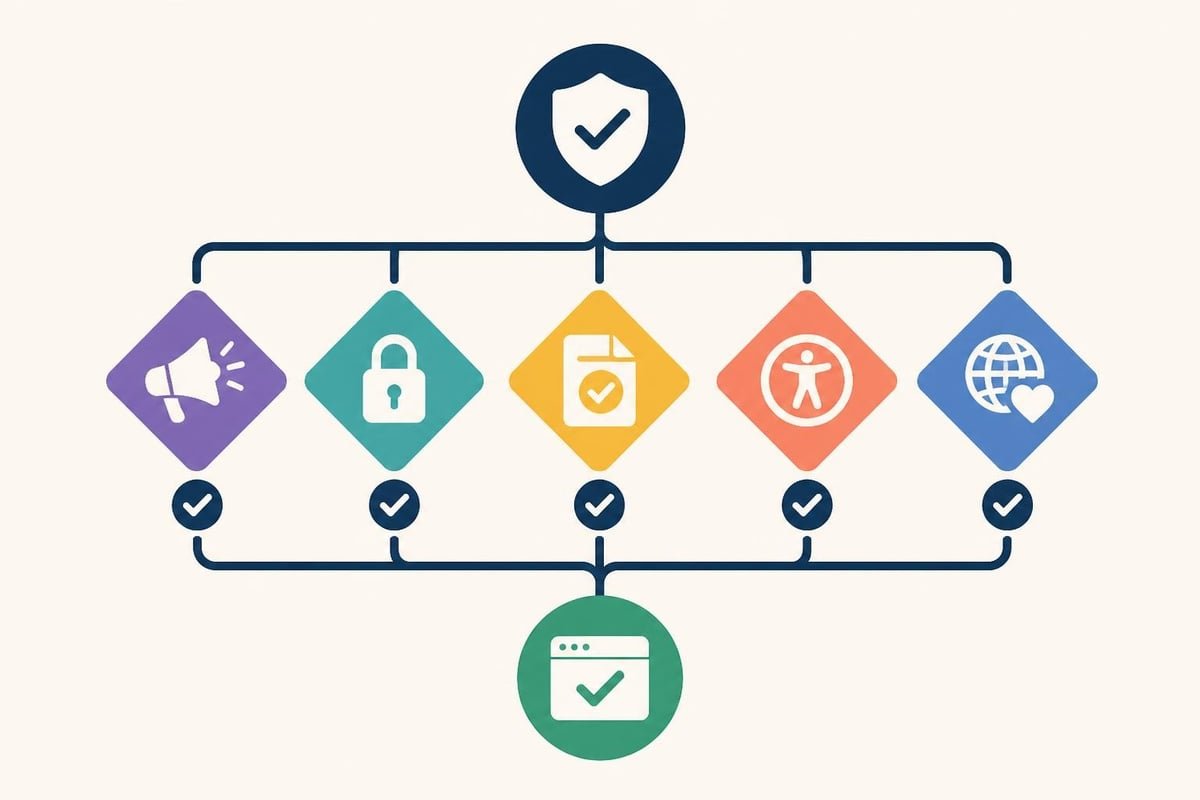
Social marketing campaigns face heightened ethical responsibilities since they attempt to influence personal behaviors. Transparency, honesty, and respect for audience autonomy must guide every campaign decision.
Key compliance areas include:
- Disclosure requirements: When partnering with influencers or paying for promotion, follow FTC endorsement guidelines requiring clear, conspicuous disclosures
- Data privacy: Obtain proper consent for retargeting and audience data collection under GDPR, CCPA, and platform policies
- Truthful messaging: Avoid exaggeration, fear-mongering, or misleading claims about behavior outcomes
- Accessibility: Ensure content includes captions, alt text, and accommodations for diverse audiences
- Cultural sensitivity: Test messaging with target communities to avoid offense or misunderstanding
Organizations working on sensitive topics like health behaviors or social issues should consult legal counsel and community representatives before launching campaigns.
Influencer and Creator Partnerships
The creator economy has transformed social marketing effectiveness. Rather than brands speaking directly to audiences, partnering with trusted creators allows messages to reach communities through authentic voices with established credibility.
Strategic Creator Selection
Not all influencer partnerships deliver equal value in social marketing contexts. Mega-influencers with millions of followers often generate impressive reach but limited engagement. Micro-influencers (10,000-100,000 followers) and nano-influencers (1,000-10,000 followers) typically deliver higher engagement rates and stronger community trust.
Selection criteria should prioritize:
- Audience alignment: Creator's followers match target demographic and psychographic profiles
- Authentic connection: Creator genuinely supports the cause or behavior
- Engagement quality: High comment rates and meaningful interactions, not just likes
- Content expertise: Creator produces formats (tutorials, stories, reviews) that fit campaign needs
- Values alignment: Creator's public positions and past content align with campaign messaging
Harvard Business Review’s analysis of the creator economy emphasizes long-term partnerships over one-off promotions. Creators who become genuine advocates produce more authentic, effective content than those fulfilling transactional sponsorships.
Collaboration Models and Content Co-Creation
The most effective creator partnerships involve true collaboration rather than top-down directives. Creators understand their audiences better than brands do. Providing creative freedom within strategic guardrails typically produces better results than scripted content.
Partnership structures include:
- Ambassador programs: Long-term relationships where creators consistently feature the behavior
- Challenge campaigns: Creators initiate behavior-change challenges encouraging audience participation
- Educational series: Multi-part content co-developed with subject matter experts
- Community takeovers: Creators moderate brand channels, bringing their audience into the conversation
- User-generated campaigns: Creators prompt their followers to create and share their own content
Compensation models vary from monetary payment to product donations, platform support, or revenue sharing. For social marketing campaigns, many creators appreciate opportunities to contribute to causes they care about, making mission alignment a powerful recruitment tool.
Optimizing Campaign Performance
Social marketing campaigns require continuous optimization based on performance data, audience feedback, and platform algorithm changes. The most successful campaigns treat launch as the beginning of an iterative improvement process rather than a finished product.
A/B Testing and Creative Iteration
Systematic testing reveals which messages, formats, and calls-to-action drive the strongest behavioral outcomes. Rather than guessing what will work, test variations and let data guide decisions.
Test variables include:
- Messaging angles: Fear-based vs. benefit-focused, individual vs. community framing
- Visual styles: Photography vs. illustration, light vs. bold colors, minimal vs. detailed
- Content length: 15-second vs. 60-second videos, single-image vs. carousel posts
- Call-to-action: "Learn more" vs. "Take action today" vs. "Join the movement"
- Posting times: Morning vs. afternoon vs. evening across different days
Start with larger variations testing fundamentally different approaches, then narrow to optimize successful concepts. A minimum sample size of several thousand impressions per variant ensures statistical significance before drawing conclusions.
Retargeting and Funnel Optimization
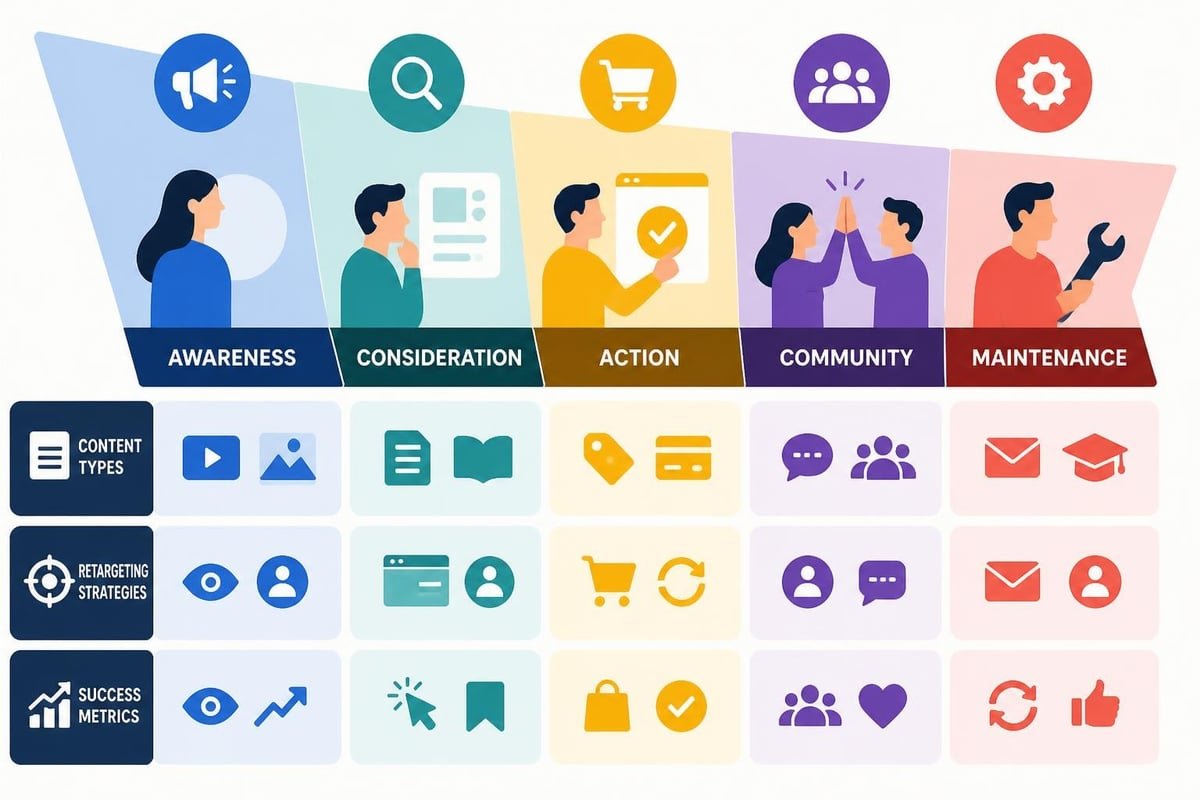
Moving audiences from awareness to action rarely happens with single exposure. Retargeting campaigns nurture prospects through the behavior change journey, providing stage-appropriate content at each step.
A typical social marketing funnel might include:
- Awareness content: Broad targeting introducing the issue and desired behavior
- Consideration retargeting: Showing detailed how-to content to engaged viewers
- Action prompting: Retargeting considerers with specific calls-to-action and barrier removal
- Community building: Inviting new adopters to join ongoing support groups
- Maintenance reinforcement: Ongoing content preventing relapse and celebrating progress
Each funnel stage requires different creative, messaging, and frequency. Awareness content can reach cold audiences, while action prompts work best with warm audiences who've engaged with previous content. Building this infrastructure properly often involves coordinating efforts across multiple platforms and formats, which is where services that help manage social media growth can provide strategic support for scaling campaigns efficiently.
Budget Allocation and ROI Calculation
Demonstrating return on investment remains challenging in social marketing since benefits often manifest as societal outcomes rather than direct revenue. Nevertheless, establishing clear budget frameworks and value calculations proves essential for securing funding and optimizing resource allocation.
Strategic Budget Distribution
Social marketing budgets typically divide across several categories. The optimal allocation depends on campaign goals, platforms, and available resources, but typical distributions provide starting guidance:
| Budget Category | Recommended % | Purpose |
|---|---|---|
| Content production | 25-35% | Video, graphics, photography, copywriting |
| Paid media | 30-40% | Platform advertising, promoted posts, sponsored content |
| Creator partnerships | 15-25% | Influencer fees, product donations, collaboration costs |
| Tools and technology | 5-10% | Analytics software, scheduling tools, management platforms |
| Research and testing | 5-10% | Audience research, A/B testing, performance analysis |
Smaller campaigns might allocate more heavily toward organic content and community building, while larger initiatives benefit from paid amplification to achieve necessary reach. The key is ensuring every dollar connects to measurable outcomes rather than arbitrary spending.
Calculating Social Marketing ROI
Traditional ROI calculations divide profit by investment. Social marketing requires adapted frameworks that quantify behavioral change value. Methods include:
Cost per behavior change: Total campaign cost divided by number of people who adopted the desired behavior. Surveys, tracking pixels, and community reporting provide adoption data.
Social value calculations: Assigning monetary value to outcomes (healthcare costs avoided, environmental impact reduced, productivity gained) and comparing to campaign investment.
Comparative effectiveness: Measuring cost per outcome against alternative intervention methods (direct mail, events, traditional advertising) to demonstrate relative efficiency.
Long-term impact modeling: Projecting sustained behavior change over time and calculating cumulative value of campaign-initiated actions.
A public health campaign might calculate that each person adopting regular exercise through social marketing interventions generates $2,800 in lifetime healthcare savings, making a $50 cost-per-adopter extremely cost-effective.
Emerging Trends and Future Directions
Social marketing continues evolving as platforms introduce new features, audiences shift consumption habits, and technology enables more sophisticated targeting and measurement. Staying current with emerging trends separates cutting-edge campaigns from outdated approaches.
Platform Evolution and New Opportunities
Social platforms constantly experiment with new formats and features. Early adoption of emerging formats often delivers outsized reach as algorithms favor novel content types:
- AI-powered content creation: Tools generating personalized variations at scale for different audience segments
- Augmented reality filters: Interactive experiences that normalize desired behaviors through play
- Social commerce integration: Removing friction between inspiration and action through in-app purchasing
- Community-first features: Platform evolution toward closed groups and intimate sharing over public broadcasting
- Audio and podcast integration: Growing importance of voice-based content and audio storytelling
Short-form video continues dominating, but platforms are expanding monetization for creators, making influencer partnerships more accessible for campaigns with modest budgets. Algorithms increasingly favor content that generates saves and shares over passive views, rewarding genuinely useful information.
Privacy Changes and Targeting Adaptations
Platform privacy changes driven by regulation and user demand are reshaping targeting capabilities. Cookie deprecation, iOS tracking limitations, and increased data restrictions require adapted strategies:
- First-party data building: Creating owned audiences through email lists, community memberships, and direct relationships
- Contextual targeting: Placing content based on environment rather than individual tracking
- Broad targeting with creative testing: Allowing algorithms to find audiences while testing creative variations
- Privacy-compliant measurement: Implementing aggregated, anonymized tracking that respects user preferences
These changes actually benefit social marketing by forcing focus on message quality and genuine value rather than intrusive retargeting. Campaigns built on compelling content and community building prove more sustainable than those dependent on invasive tracking.
Integration with Broader Marketing Ecosystems
Social marketing increasingly connects with other channels in coordinated campaigns. Email marketing, events, traditional media, and community programs reinforce social messaging, creating multiple touchpoints that improve behavior change rates.
Coordinated campaigns might include social media driving awareness, email providing detailed implementation guides, in-person events offering hands-on support, and traditional media reaching audiences less active on digital platforms. Each channel serves specific functions within the broader behavior change strategy.
Advanced Tactics for Behavior Change
Beyond fundamental strategies, advanced social marketing practitioners employ sophisticated techniques drawn from behavioral economics, psychology, and persuasion science. These tactics amplify campaign effectiveness when applied ethically and strategically.
Behavioral Science Applications
Modern social marketing leverages decades of research on what actually motivates behavior change. Key principles include:
Social proof and normative messaging: People adopt behaviors they perceive as common and normal. Highlighting that "7 out of 10 neighbors already recycle" proves more effective than "You should recycle."
Loss aversion framing: Emphasizing what people lose by not acting (wasted money, missed opportunities, health risks) often motivates more strongly than equivalent gains.
Implementation intentions: Prompting specific plans ("I will exercise Monday at 6am at the gym") dramatically increases follow-through compared to general goals.
Commitment devices: Public pledges, signed agreements, or small initial commitments increase likelihood of sustained behavior change.
Feedback loops: Providing visible progress tracking (steps walked, pounds lost, money saved) maintains motivation through tangible evidence of success.
These principles should be applied ethically, enhancing genuine benefits rather than manipulating audiences into actions against their interests.
Community Building and Peer Support
Sustainable behavior change rarely happens in isolation. Building communities around desired behaviors creates social support, accountability, and positive reinforcement that maintains long-term adoption.
Effective community-building tactics include:
- Creating branded hashtags that gather adopters in searchable conversations
- Establishing Facebook Groups or Discord servers for ongoing discussion
- Featuring user stories and celebrating member milestones
- Facilitating peer mentorship between experienced adopters and newcomers
- Organizing virtual or in-person events that strengthen community bonds
Communities transform individual behavior change into collective identity. Members maintain behaviors partly because they've become "the kind of person who does this" within a supportive social context.
Crisis Response and Real-Time Engagement
Social marketing campaigns must adapt to current events, platform changes, and emerging conversations. The most effective campaigns maintain flexibility to respond to opportunities and challenges as they arise.
Real-time tactics include:
- Trend participation: Adapting relevant trending formats, sounds, or hashtags to campaign messaging
- Newsjacking: Connecting campaign themes to breaking news when authentically relevant
- Rapid response: Addressing misinformation or concerns that emerge in comments and discussions
- Seasonal alignment: Timing campaign pushes to match relevant holidays, events, or seasonal behaviors
- Crisis pivoting: Adjusting messaging when external events make original framing insensitive or ineffective
Real-time engagement requires monitoring tools, clear approval processes, and team members empowered to make quick decisions within established guidelines.
Social marketing represents a powerful methodology for driving meaningful behavior change through strategic use of social media platforms, creator partnerships, and audience-centered messaging. Success requires deep understanding of target audiences, platform-specific tactics, measurement frameworks that track real outcomes, and continuous optimization based on performance data. If you're ready to amplify your social marketing campaigns or need to scale engagement efficiently, explore Best Social Media Growth Services 2026 to compare providers on pricing, delivery speed, and platform coverage with live calculators that show exactly what results cost across different services.